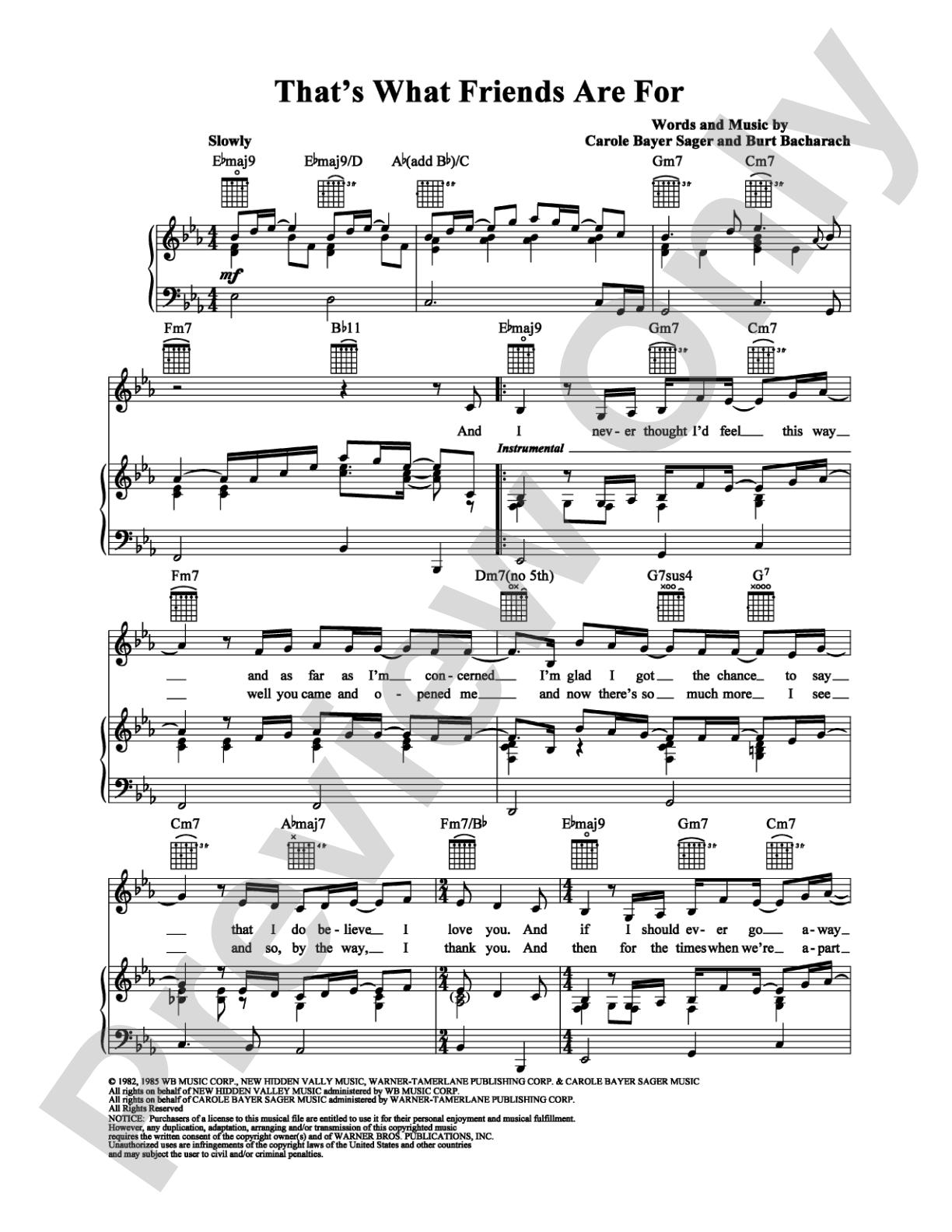
That's What Friends Are For: Piano/Vocal/Chords Digital Sheet Music

That's What Friends Are For: Piano/Vocal/Chords Digital Sheet Music

Carole Bayer Sager, Elton John, Dionne Warwick, Stevie Wonder, Gladys Knight

Item: 00-PS-0005663

Digital Download
$3.99
Description

That's What Friends Are For: Piano/Vocal/Chords Digital Sheet Music isn't in MakeMusic Cloud just yet...but it could be. Let us know you'd like to see it, and you'll help shape what comes next. In the meantime, start a free trial and dive into thousands of interactive titles your students can play along with today.

Sample Audio
No sample audio found.
Sample Video
Additional Details
SKU: 00-PS-0005663

More about this title

About the Artist: Elton John

Elton John emerged as one of popular music's most distinctive voices in the 1970s, known for his extravagant piano playing, soaring vocal melodies, and unforgettable pop-rock arrangements. His decades-long career spans numerous chart-topping hits and collaborations with artists across genres, making him a central figure in contemporary music education and performance contexts.

Why we love this

This is a masterclass in accessible piano/vocal writing that maintains genuine emotional depth without sacrificing singability. The chord changes reward thoughtful interpretation while remaining playable at multiple skill levels, and the original star power of this ensemble recording makes it instantly recognizable to students across age groups.

What to expect

Warm, conversational, and deeply human. The song breathes with the intimacy of four voices joined in friendship, supported by piano figures that are both elegant and unpretentious. There's genuine tenderness here alongside rhythmic vitality.

Who it's for

Piano students and singers working at intermediate to advanced levels who want to explore contemporary pop standards with musical substance. This arrangement appeals equally to music theater students, adult amateur musicians, and anyone preparing a recital program that bridges classical and popular idioms.

How to get the most out of it

  • Balance the vocal line against the piano so that lyrics remain clear; the accompaniment should support rather than overshadow the melody.
  • Pay attention to dynamics in the verse sections to build momentum toward the memorable chorus without rushing the tempo.
  • Lean into the warmth of the chord progressions, allowing rubato where the arrangement permits to capture the reflective quality of the lyrical content.
  • Use the chord symbols to explore voicing options that fit your hand span and technical level, adapting rather than strictly adhering to printed voicings if needed.

How to use it

Program this in a recital celebrating songwriting across genres, or pair it with other contemporary standards to show how popular music can sustain artistic rigor. It works equally well as a solo piano piece or as a vocal feature, making it flexible for student showcases and informal performance settings.

Skills your students will build

  • Reading and interpreting lead sheet notation (melody, lyrics, and chord symbols)
  • Balancing melody and accompaniment in piano/vocal performance
  • Executing clean chord voicings and understanding harmonic function in popular progressions
  • Sustaining legibility and emotional intent across a mid-range song form
  • Collaborating between pianist and singer through listening and ensemble awareness

You May Also Like