
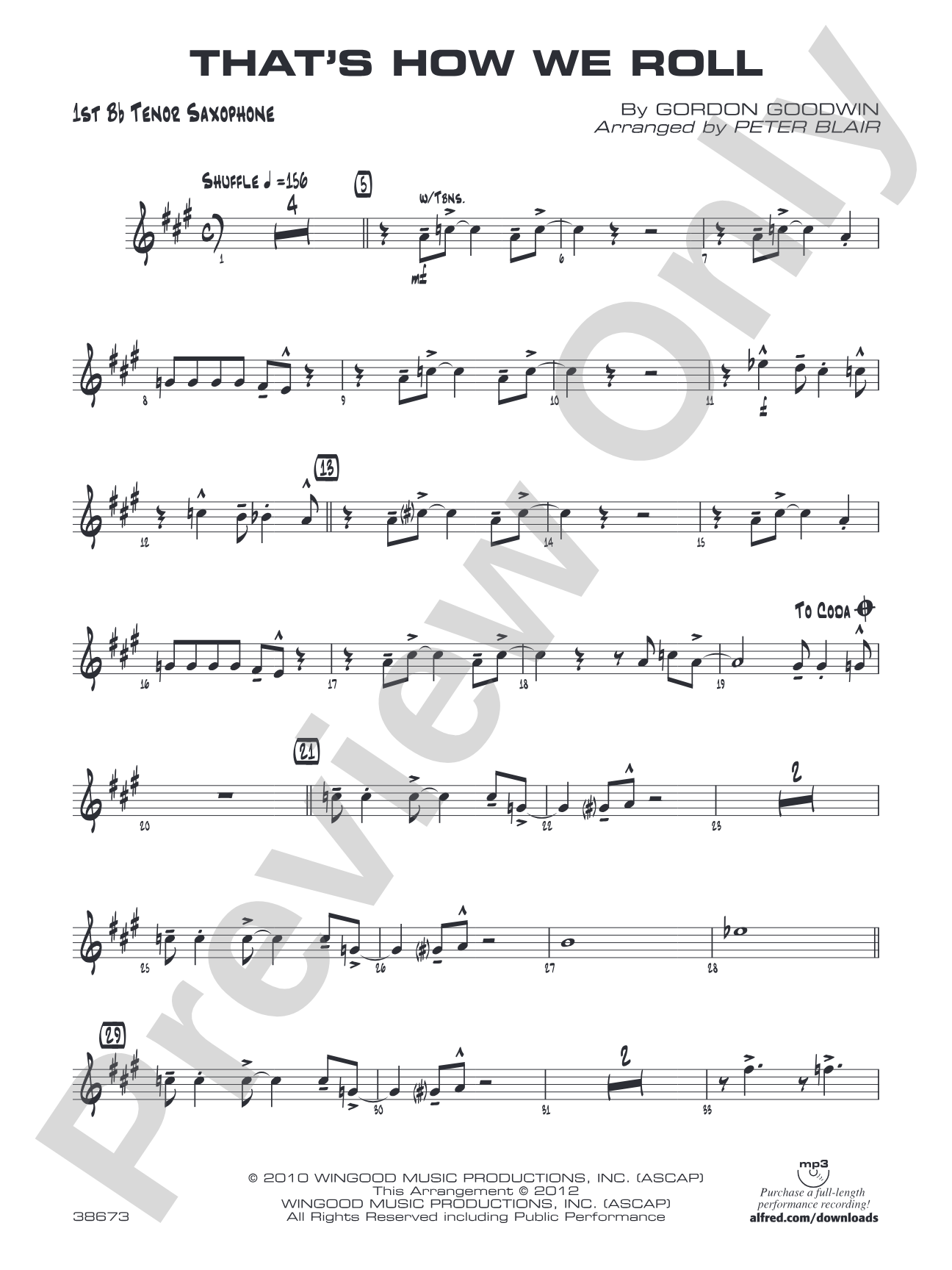

That's How We Roll: B-flat Tenor Saxophone
By Gordon Goodwin / arr. Peter Blair
Grade: 2 (Medium Easy)
Item: 00-PC-0017221_TX1
$3.00
Pickup currently not available
Description
An easy-to-play shuffle swing adapted from Gordon Goodwin's high-end chart for the grade 2 level. Arranger Peter Blair gets it right with accessible rhythms, written solos for alto and trumpet and this catchy melody. While not a trumpet section feature, the trumpets get most of the spotlight melody lines with lead trumpet range to written G on top of the staff with one last note A above the staff. It's good to play Goodwin! This title is available in MakeMusic Cloud.


Don't just read it, hear it, play along with it, and watch your students grow with it. In MakeMusic Cloud, That's How We Roll: B-flat Tenor Saxophone comes alive with professional accompaniment, adjustable tempo, and built-in practice tools that turn solo practice into real progress.
Open in the Player
Jump straight in and assign it today.
Start Your Free Trial
Open this title and explore the full library in minutes.
Sample Audio
1
Audio File
--:--
0:00
0:00
Sample Video
No sample videos found.
Additional Details
Series:
Young Jazz Ensemble
Publisher:
Alfred Music
Page Count:
90
SKU:
00-PC-0017221_TX1
More about this title
About the Composer: Gordon Goodwin

Gordon Goodwin's compositional voice emerged early and fully formed. At five years old, he was transcribing complete compositions from memory, not fragments or ideas but finished works. By thirteen, he had already written his first big band chart, Hang Loose, signaling a maturity and scope that would define his entire career.
Goodwin's gifts across composition, arranging, and performance have earned him three Emmy Awards and multiple Grammy nominations. His orchestrations appear throughout film and television, from Bad Boys II and Remember the Titans to Star Trek: Nemesis. He has written for and performed alongside luminaries including Ray Charles, Christina Aguilera, and Quincy Jones. As founder and leader of Gordon Goodwin's Big Phat Band since 2000, he continues to shape contemporary big band jazz while creating accessible arrangements for student ensembles that preserve the integrity of his original vision.
Why we love this
Peter Blair's adaptation captures the infectious energy of Goodwin's original without sacrificing the groove or sophistication that makes the tune memorable. Grade 2 ensembles rarely get to perform real jazz with this much personality and swing feel built into every phrase. The written solos and clear melodic lines keep the arrangement straightforward to conduct while still delivering that "Big Phat Band" sound your students will recognize and want to play again.
What to expect
Easygoing shuffle swagger. This tune has attitude without attitude problems. The melody sits naturally under the fingers, the rhythm section grooves immediately, and the entire piece breathes with the relaxed confidence of a real big band tune that just happens to fit Grade 2 ranges.
Who it's for
Grade 2 jazz ensembles ready to play real jazz with shape and swing. This works for bands exploring the Young Jazz Ensemble series for the first time, as well as more developed groups looking for a reliable, energetic opener or closer that won't require months of preparation.
How to get the most out of it
- Lock in the shuffle swing feel early in sectional rehearsals. This isn't straight eighth notes; the triplet-based swing rhythm is essential to how the melody and rhythm section sit together.
- Balance the lead trumpet melody against the rest of the section. The trumpet gets the primary spotlight, but the entire section needs to support that line without overpowering it.
- Prepare your alto and trumpet soloists ahead of time. Written solos remove the improvisation barrier, but they still need musicality and confidence. Have soloists practice with the rhythm section to nail the groove.
- Watch the range demands on first trumpet carefully, especially that final high A above the staff. Make sure your lead player is ready for it and build up to it naturally in rehearsals.
How to use it
Open a jazz concert with this to set the room's energy and establish your ensemble's command of swing. It also pairs well in a mixed-level jazz program where you want an accessible piece that doesn't sound simplified. The catchy melody and rhythmic clarity make it a natural fit for community concerts or school assemblies where you want to showcase what student jazz musicians can do.
Skills your students will build
- Swing eighth-note feel and triplet-based rhythm interpretation
- Leading and supporting roles within a section (especially trumpet section balance)
- Reading and executing jazz comping rhythms in the rhythm section
- Solo performance with written melody (alto and trumpet)
- Listening to and responding to groove and ensemble cohesion