That's All Right Sheet Music Preview

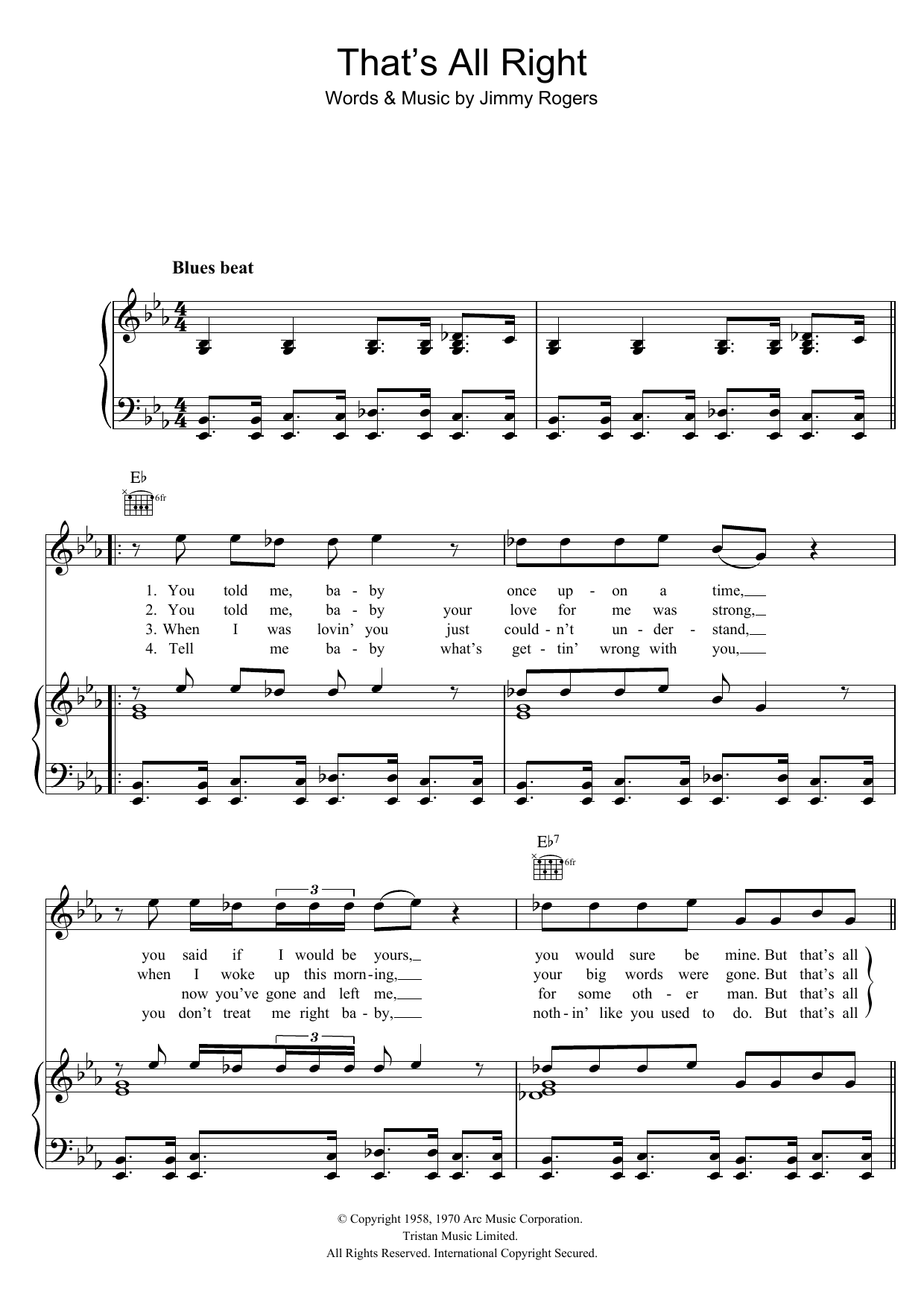
That's All Right: Piano/Vocal/Guitar (Piano Accompaniment)

As performed by Mose Allison

Item: 35-DS00366748

Digital Download
$5.99

One moment…

One moment…

Description

That's All Right: Piano/Vocal/Guitar (Piano Accompaniment) isn't in MakeMusic Cloud just yet...but it could be. Let us know you'd like to see it, and you'll help shape what comes next. In the meantime, start a free trial and dive into thousands of interactive titles your students can play along with today.

Sample Audio
No sample audio found.
Sample Video
Additional Details
Publisher: Hal Leonard
Page Count: 2
SKU: 35-DS00366748

More about this title

About the Artist: Mose Allison

Mose Allison was a pianist and singer-songwriter who bridged blues, jazz, and folk traditions with a distinctly American voice. Born in Mississippi in 1927, he developed a sparse, conversational style at the piano that prioritized storytelling over virtuosity, influencing generations of musicians across genres.

Why we love this

Allison's compositions sit in that rare pocket where blues fundamentals meet sophisticated harmonic thinking. The piano arrangement captures his signature restraint and melodic clarity, making it genuinely rewarding to teach alongside more contemporary material without losing any authenticity.

What to expect

Understated and knowing, with the easy confidence of someone who has lived the story they are telling. The piano sits close to the voice, conversational rather than accompanying.

Who it's for

Pianists and singers exploring American blues vernacular, as well as guitarists working through Allison's catalog. It suits intermediate to advanced players who want to understand how blues language translates across instruments.

How to get the most out of it

  • Anchor the groove with the left hand; this isn't about flashy voicings but about locking the pocket between piano and rhythm section.
  • Sing through the lyric conversationally first, separate from the accompaniment, to find the natural phrasing before layering it over changes.
  • Balance vocal texture against sparse piano fills. The arrangement breathes precisely because it doesn't fill every space.

How to use it

Pair this with other twentieth-century American song forms to show students how blues shaped popular music across decades. It also works well in a jazz history unit examining the influence of piano blues on contemporary songwriting.

Skills your students will build

  • Blues harmonic progressions and voice leading
  • Conversational phrasing in vocal blues style
  • Left-hand groove foundation in blues piano
  • Integration of melodic simplicity with harmonic sophistication
  • Cross-genre understanding of blues forms in popular music

You May Also Like