That Old Feeling Sheet Music Preview

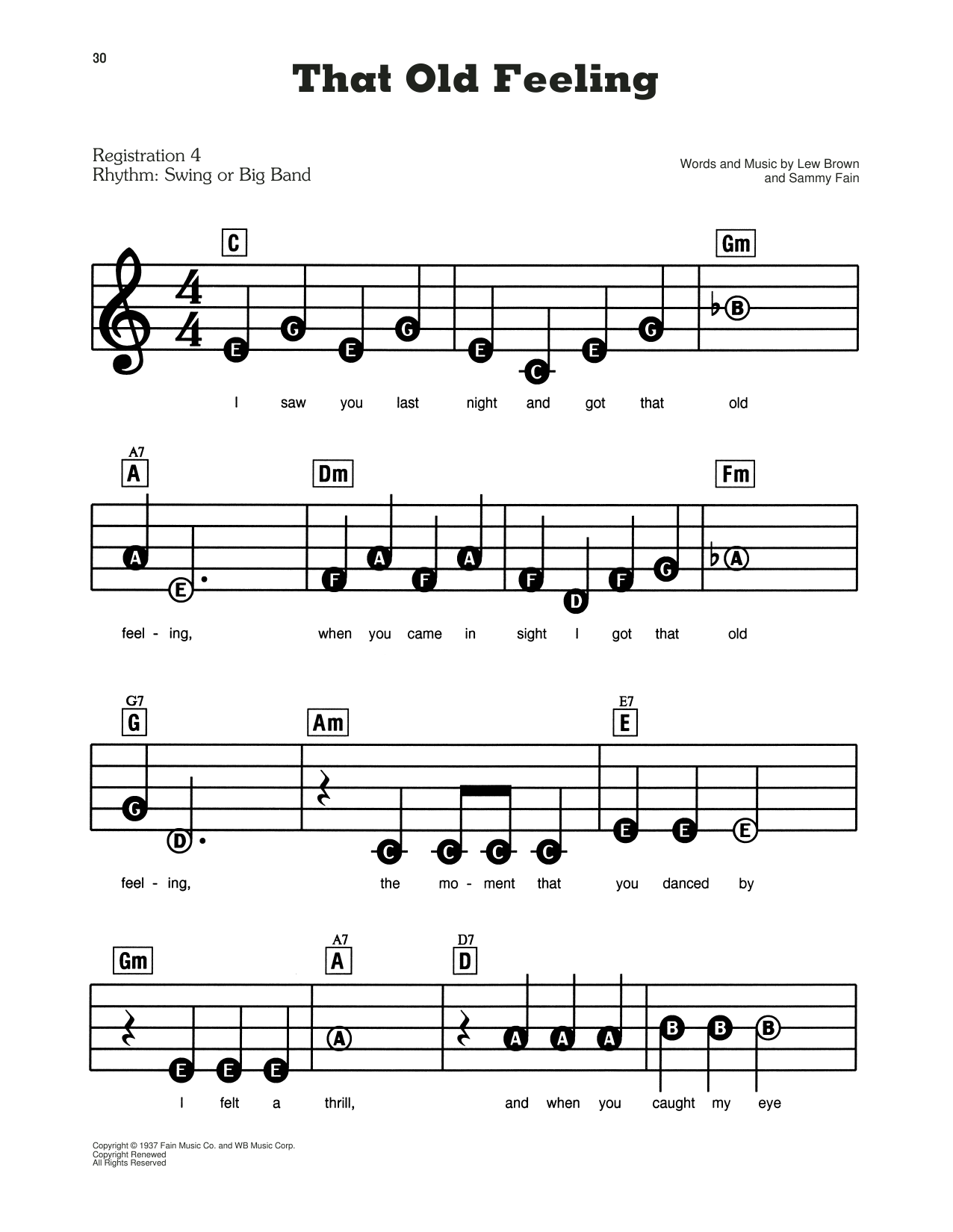
That Old Feeling: E-Z Play Today

As performed by Rod Stewart

Item: 35-DS01129441

Digital Download
$4.99

One moment…

Description

That Old Feeling: E-Z Play Today isn't in MakeMusic Cloud just yet...but it could be. Let us know you'd like to see it, and you'll help shape what comes next. In the meantime, start a free trial and dive into thousands of interactive titles your students can play along with today.

Sample Audio
No sample audio found.
Sample Video
Additional Details
Publisher: Hal Leonard
Page Count: 3
SKU: 35-DS01129441

More about this title

About the Artist: Rod Stewart

Rod Stewart built his reputation as one of rock's most distinctive vocalists, but his artistry extends far beyond his signature raspy delivery. Throughout his career, he's demonstrated deep knowledge of the Great American Songbook and jazz standards, recording multiple albums of classic material that showcase his interpretive gifts and genuine affection for the idiom.

Why we love this

Stewart's treatment of this standard strips away unnecessary arrangement complexity while preserving the song's inherent sophistication. Students encounter a piece that respects the melody's architecture and rewards careful attention to dynamic shaping and rubato rather than technical pyrotechnics.

What to expect

Warm and introspective, with the quality of a late-night recollection. The harmonic movement has the unhurried quality of someone reflecting on memory, and the melody sits comfortably in a range that invites listeners to lean in and listen closely.

Who it's for

Pianists seeking authentic standards repertoire that bridges classical training and popular music. Advanced students and teachers can mine this arrangement for lessons in jazz harmony, interpretive phrasing, and how to honor a song's melodic integrity while maintaining musical sophistication.

How to get the most out of it

  • Let the melody breathe. This standard thrives on space and phrasing rather than rushing through chord changes. Give yourself permission to sit comfortably on important melodic notes.
  • Balance sophistication with accessibility. The harmonic language is jazz-informed but remains grounded; avoid overcomplicating voicings or adding unnecessary chromatic passing tones.
  • Shape the accompaniment to support the singer's phrasing. When performing this as a solo piano piece, treat the left hand as a responsive partner rather than a steady timekeeper.

How to use it

Include this in a jazz standards recital or pops concert where it provides emotional contrast without demanding technical fireworks. It works beautifully alongside other accessible standards or as a bridge between classical and contemporary repertoire in a mixed program.

Skills your students will build

  • Interpreting jazz harmony and seventh chord voicings
  • Shaping melodic phrasing with sensitivity to harmonic rhythm
  • Balancing left-hand accompaniment patterns with lyrical right-hand writing
  • Understanding the traditions of the Great American Songbook

You May Also Like