

Thankfully: SATB Choral Octavo
Words and music by Michael Souders and Angela Souders
Item: 00-PO-0007479
$2.30
Minimum order quantity: 20 copies
Pickup currently not available
Related Items
Thankfully: 3-Part Mixed Choral Octavo |
$2.30
|
View | |
Thankfully: 2-Part Choral Octavo |
$2.30
|
View | |
Thankfully: SoundTrax Digital Audio Download |
$29.99
|
View | |
Thankfully: SATB Choral Octavo |
$2.30
|
View | |
Thankfully: 3-Part Mixed Choral Octavo |
$2.30
|
View | |
Thankfully: 2-Part Choral Octavo |
$2.30
|
View | |
Thankfully: SoundTrax CD |
$29.99
|
View |
Description
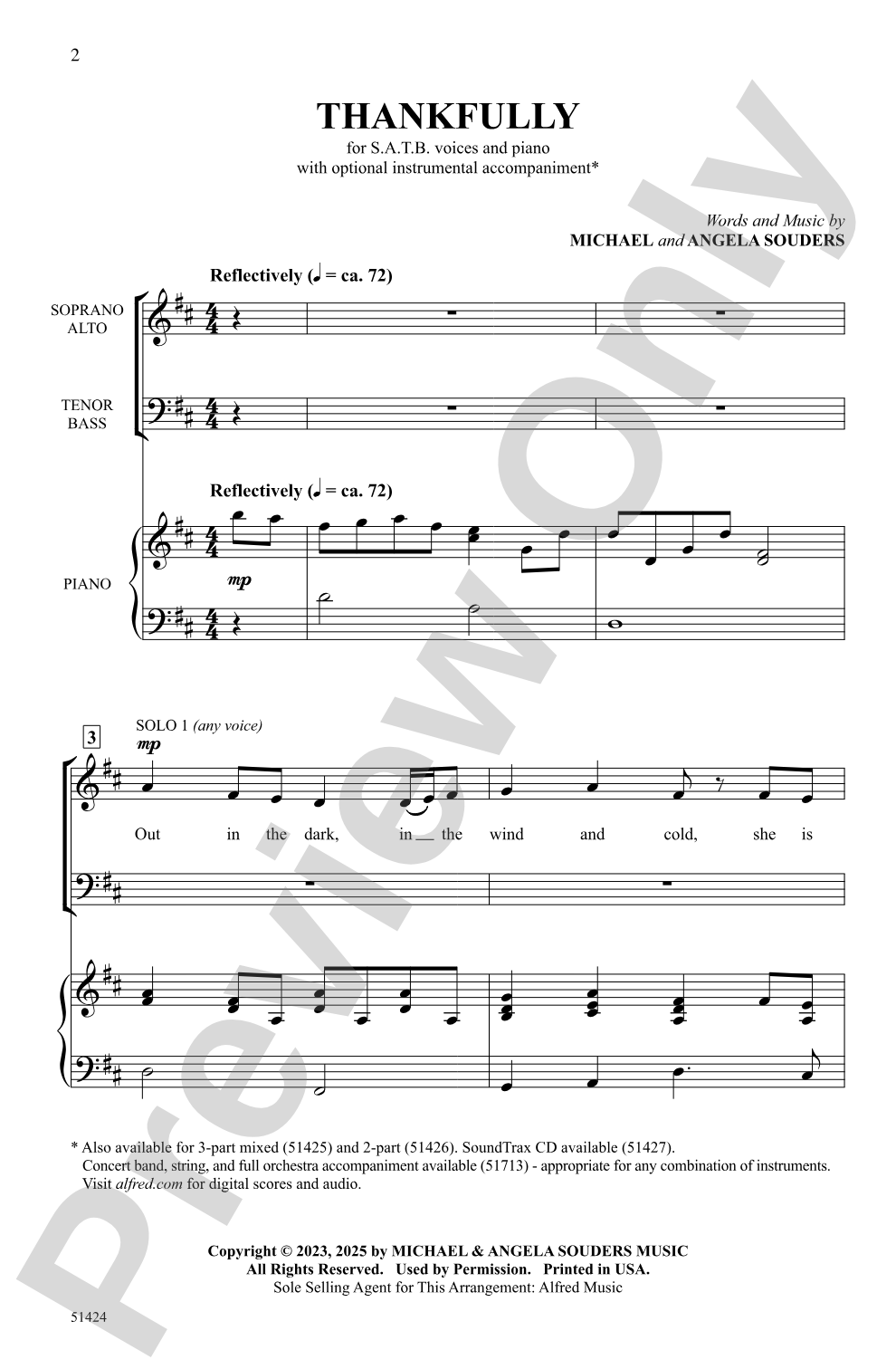
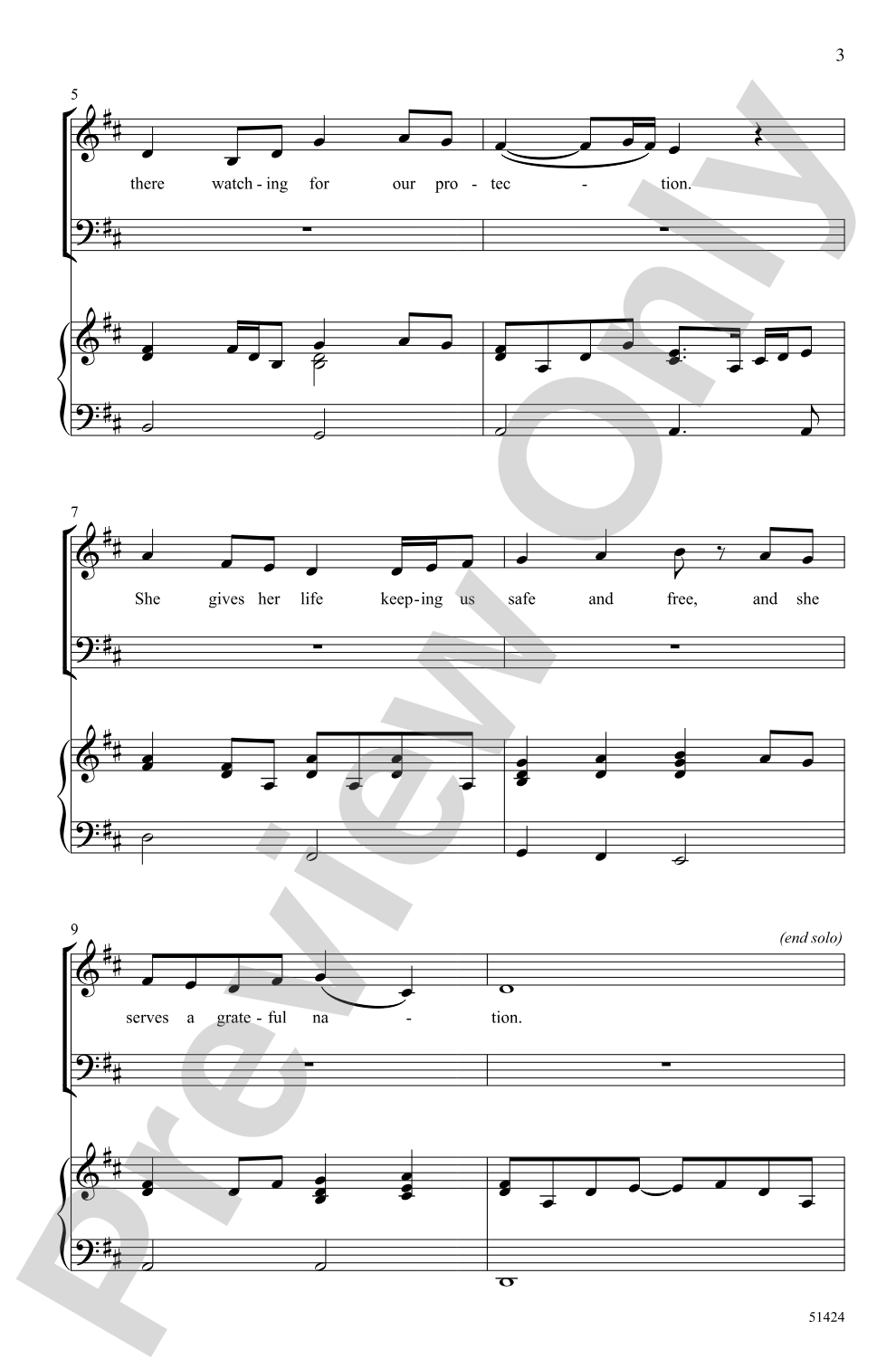
Honor active military and veterans at any time of year with this stately patriotic anthem, available in a variety of voicings. Bookended with optional solos, it's a sincere tribute to the armed forces that flourishes to a dramatic chorus. Perform with piano alone or any combination of concert band, strings, or full orchestra.


Thankfully: SATB Choral Octavo isn't in MakeMusic Cloud just yet...but it could be. Let us know you'd like to see it, and you'll help shape what comes next. In the meantime, start a free trial and dive into thousands of interactive titles your students can play along with today.
Request This Title
Tell us you want it.
Start Your Free Trial
Explore everything that's ready to play right now.
Sample Audio
1
Audio File
--:--
0:00
0:00
Sample Video
Additional Details
Series:
Alfred Choral Designs
Publisher:
Alfred Music
Page Count:
12
SKU:
00-PO-0007479
More about this title
About the Composer: Michael Souders

Michael Souders teaches music at Colonial Heights Public Schools in Virginia and has become one of Alfred Music's bestselling choral composers. His compositions, rooted in what he calls "Positive American Music," have resonated globally; his YouTube channel (msouders37) has accumulated over 4.5 million views and more than 3,600 subscribers.
Souders studied music and worship at James Madison University, where he performed with top ensembles, served as pianist for the jazz ensemble, and was featured as a trumpet soloist with the Marching Royal Dukes. He went on to study composition and arranging with renowned composer Robert W. Smith. Since entering the classroom in 2005, Souders has written music specifically for his students, which is why his compositions feel immediately relevant and singable for school choirs. His song "Thank You, Soldiers" established his voice in patriotic repertoire.
Why we love this
Souders gives you a piece that actually works for patriotic programming without veering into saccharine territory. The optional solo bookends mean you can feature a strong singer or two while keeping the focus on the ensemble statement, and the flexibility to use piano, band, strings, or orchestra gives you real options depending on what your school can field.
What to expect
Stately and earnest, with a reflective opening that transforms into something grander and more resonant. The writing has genuine warmth without oversinging the emotion, allowing the tribute itself to carry the weight.
Who it's for
This octavo works for any SATB choir looking to honor veterans and active military with integrity. It's equally suitable for a community chorus, high school choir, college ensemble, or church choir willing to tackle a piece with both lyrical solos and moments of powerful ensemble statement.
How to get the most out of it
- Balance the optional solos intentionally; they should feel like intimate reflections within a larger tribute, not showpieces that overshadow the choral moments.
- If performing with instrumental accompaniment beyond piano, schedule at least one full rehearsal with the ensemble so the choir can lock in ensemble and blend with the added voices.
- Shape the dramatic chorus with dynamic contrast; resist the urge to pile on volume uniformly; instead, let the architecture of Souders' writing guide where climaxes naturally build.
- Attend to diction clarity in patriotic repertoire; clean consonants and resonant vowels will let the heartfelt text land with your audience.
How to use it
Program this alongside other Americana repertoire during spring or fall concerts, or use it as a standalone tribute concert piece for Veterans Day events. The dual flexibility of voicing options and accompaniment choices makes it a smart pick when you're building a concert that includes both choral and instrumental forces.
Skills your students will build
- Sustaining tone through lyrical passages while maintaining ensemble unity
- Shaping dynamic architecture in patriotic texts with emotional restraint
- Blending SATB voicing across sectional and tutti moments
- Responding to optional solo writing and how it relates to ensemble context