
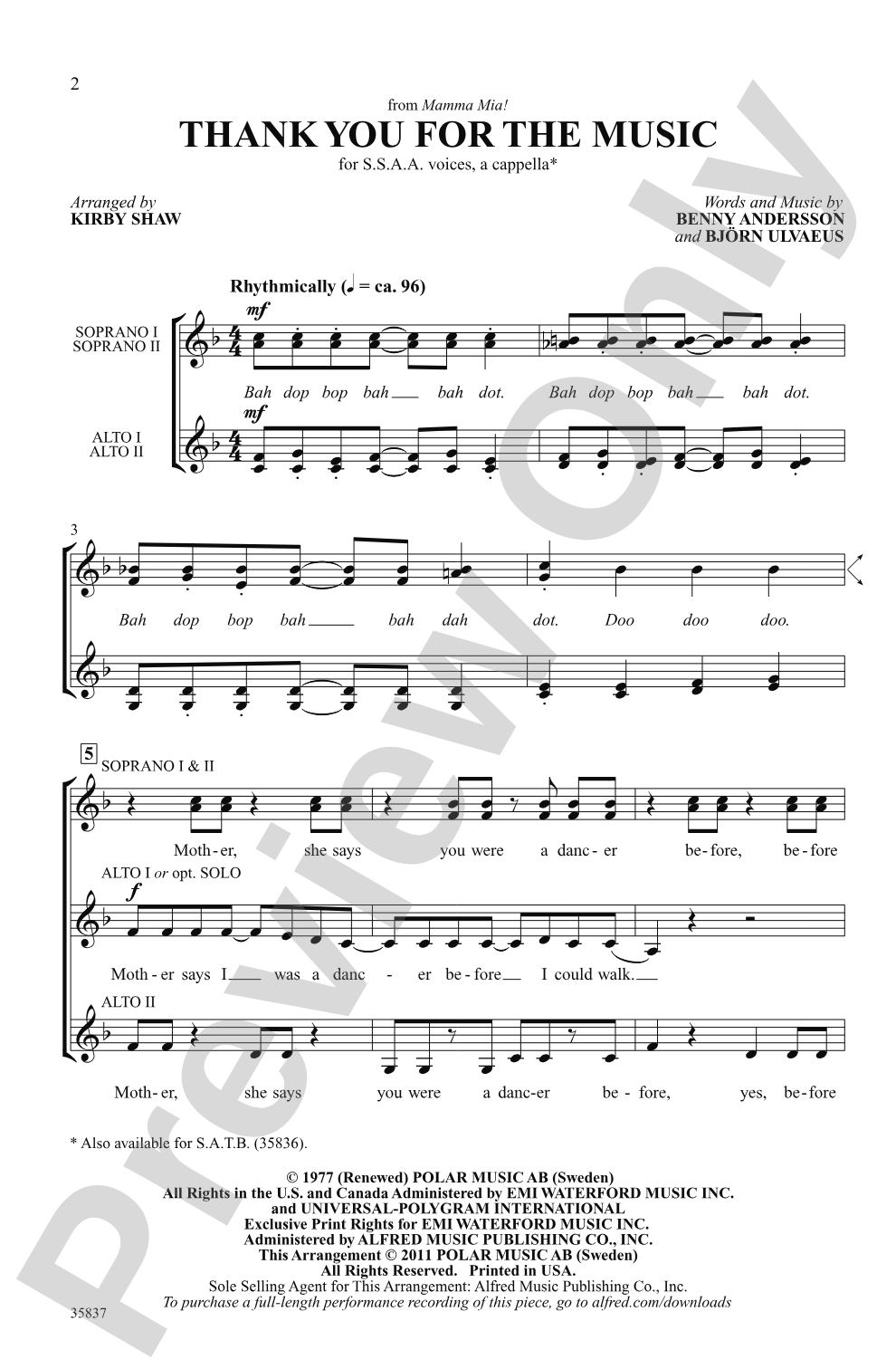
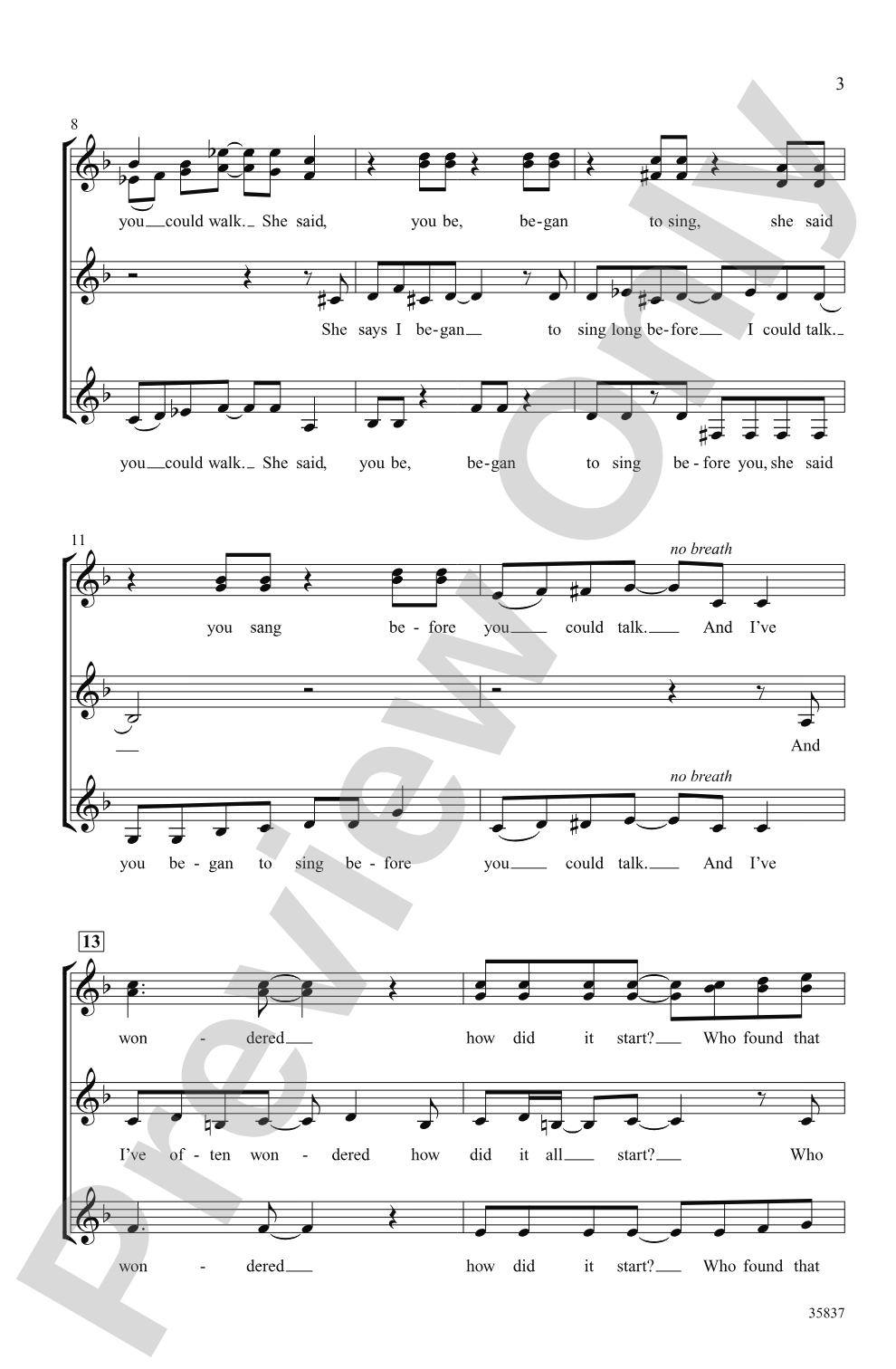

Thank You for the Music (from Mamma Mia!): SSAA, a cappella Choral Octavo
From Mamma Mia!
Words and music by Benny Andersson and Björn Ulvaeus [ABBA] / arr. Kirby Shaw
Item: 00-PO-0001123

$1.90
Minimum order quantity: 20 copies
One moment…
Description
Considered to be their farewell single, this 1983 ABBA hit gently grooves in this contemporary a cappella setting from Kirby Shaw. A great choice for smaller ensembles or concert groups. "Without a song or a dance, what are we?"


Don't just read it, hear it, play along with it, and watch your students grow with it. In MakeMusic Cloud, Thank You for the Music (from Mamma Mia!): SSAA, a cappella Choral Octavo comes alive with professional accompaniment, adjustable tempo, and built-in practice tools that turn solo practice into real progress.
Open in the Player
Jump straight in and assign it today.
Start Your Free Trial
Open this title and explore the full library in minutes.
Sample Audio
1
Audio File
--:--
0:00
0:00
Sample Video
No sample videos found.
Additional Details
Series:
Alfred Pop Choral Series
Publisher:
Alfred Music
Page Count:
8
SKU:
00-PO-0001123
More about this title
About the Composer: Benny Andersson
Benny Andersson is one half of the songwriting partnership that defined ABBA, the Swedish pop phenomenon that dominated the 1970s and early 1980s. His melodic instincts and harmonic sophistication set the foundation for some of the most enduring pop songs ever written, making him a master of craft that educators can study alongside classical composition.
For music teachers, Andersson's catalog offers an exceptional opportunity to engage students with songs that blend pop accessibility with genuine musical complexity. His work demonstrates how memorable melodies, intelligent harmonic progressions, and strong song structure can create music that lasts across generations.
Why we love this
Kirby Shaw's arrangement strips away the studio production of the original and reveals the song's emotional core through pure vocal lines and blend. The SSAA texture accommodates smaller choirs while maintaining the sophistication that made ABBA's songwriting so distinctive, and the a cappella format puts all the focus on ensemble precision and musicality.
What to expect
The arrangement preserves the quiet gratitude and warmth of the original while letting voices create the groove instead of instruments. There's an intimacy here that feels almost like the ensemble is singing directly to an audience about why music matters, which tends to land emotionally with listeners.
Who it's for
This octavo works beautifully for choirs of 20-40 singers who want to include well-known pop material without sacrificing musical integrity. It's ideal for concert groups, show choirs, and chamber ensembles looking for accessible yet satisfying contemporary repertoire.
How to get the most out of it
- Shape the arrangement's gentle grooves by maintaining strict rhythmic precision in the accompaniment voices; ABBA's pop sensibility relies on steady pocket and forward motion rather than expressive rubato.
- Balance the melody against the supporting voices so the tune stays clearly audible without feeling forced. This arrangement asks the ensemble to sing as a unit, which requires careful listening from all sections.
- Treat the dynamic shape with restraint. The emotional power of this song comes from warmth and connection, not volume. Even your forte passages should feel intimate.
- Pay attention to vowel consistency across all four parts. Pop material often exposes uneven vowels more readily than classical literature, and blend depends on matching all voices on the same pure sound.
How to use it
Program this as a moment of reflection within a concert; its contemplative quality offers strong contrast to higher-energy pop selections or classical pieces. It also works exceptionally well on programs celebrating the musical legacy of ABBA or exploring how excellent songwriting transcends genre.
Skills your students will build
- Balancing melody and harmony voices in four-part pop voicing
- Maintaining rhythmic precision in grooved, contemporary material without written accompaniment
- Achieving consistent vowel shape and blend across complex harmonic movement
- Singing with stylistic authenticity in a cappella pop idiom