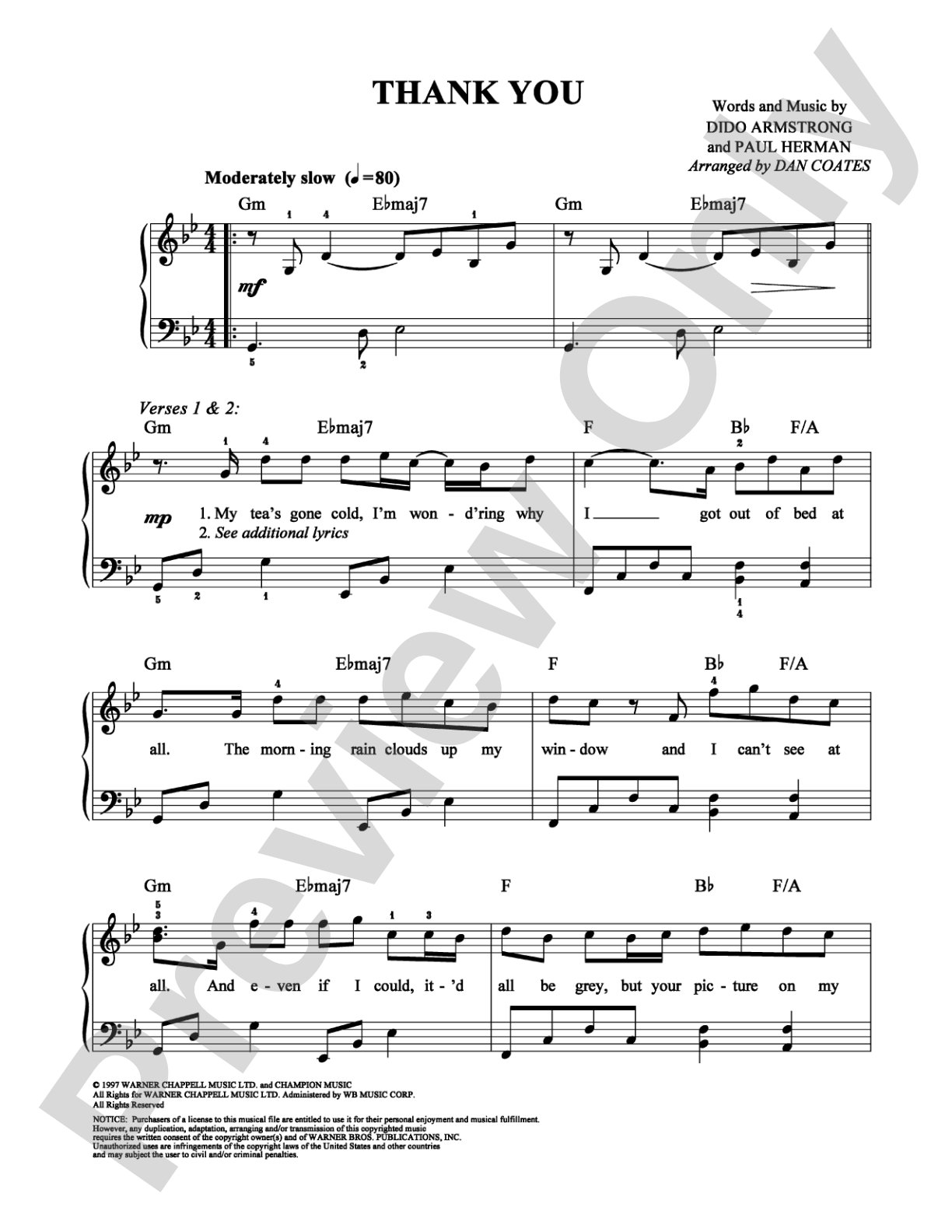
Thank You: Easy Piano Digital Sheet Music

Thank You: Easy Piano Digital Sheet Music

Dido, Dido Armstrong, Paul Herman

Item: 00-PS-0003501

Digital Download
$3.99
Description

Thank You: Easy Piano Digital Sheet Music isn't in MakeMusic Cloud just yet...but it could be. Let us know you'd like to see it, and you'll help shape what comes next. In the meantime, start a free trial and dive into thousands of interactive titles your students can play along with today.

Sample Audio
No sample audio found.
Sample Video
Additional Details
SKU: 00-PS-0003501

More about this title

About the Artist: Dido

Dido rose to prominence in the late 1990s with her debut album "No Angel," which became a global phenomenon and established her as a distinctive voice in pop and electronic music. Known for her understated vocal delivery, introspective songwriting, and innovative use of loops and samples, she has influenced a generation of singer-songwriters who value emotional clarity over technical showmanship.

Why we love this

This arrangement captures what made "Thank You" resonate across so many listeners, a melody that sits naturally under the hands and lyrics that carry genuine weight without requiring vocal gymnastics. It works beautifully as a bridge between classical technique and contemporary songwriting, showing students how pop music can demand real musicianship and interpretive choices.

What to expect

Quiet gratitude. The music unfolds without urgency, built on patterns that feel almost hypnotic. There's an intimacy here that invites the listener close, as if the pianist is sharing something personal rather than performing.

Who it's for

This arrangement serves pianists who are developing independence between hands and beginning to balance melody against accompaniment. It's equally valuable for students discovering that modern songs deserve the same interpretive care as classical repertoire.

How to get the most out of it

  • Honor the space between phrases. Dido's songs thrive on silence, so resist the urge to fill every rest. Let the listener breathe.
  • Shape the melodic line with subtle dynamic shifts rather than dramatic swells. Think of speaking conversationally, not declaring.
  • Layer the accompaniment thoughtfully. Even in an easy arrangement, the texture should feel composed, not mechanical.

How to use it

Pair this with other accessible pop or contemporary art songs to create a recital segment that bridges classical and modern ears. It works especially well in student recitals where demonstrating musicianship through restraint is the goal.

Skills your students will build

  • Balancing melody and accompaniment texture
  • Maintaining consistent rhythmic patterns against a flowing melodic line
  • Interpreting through dynamics and phrasing rather than technical display
  • Playing with emotional restraint and clarity

You May Also Like