

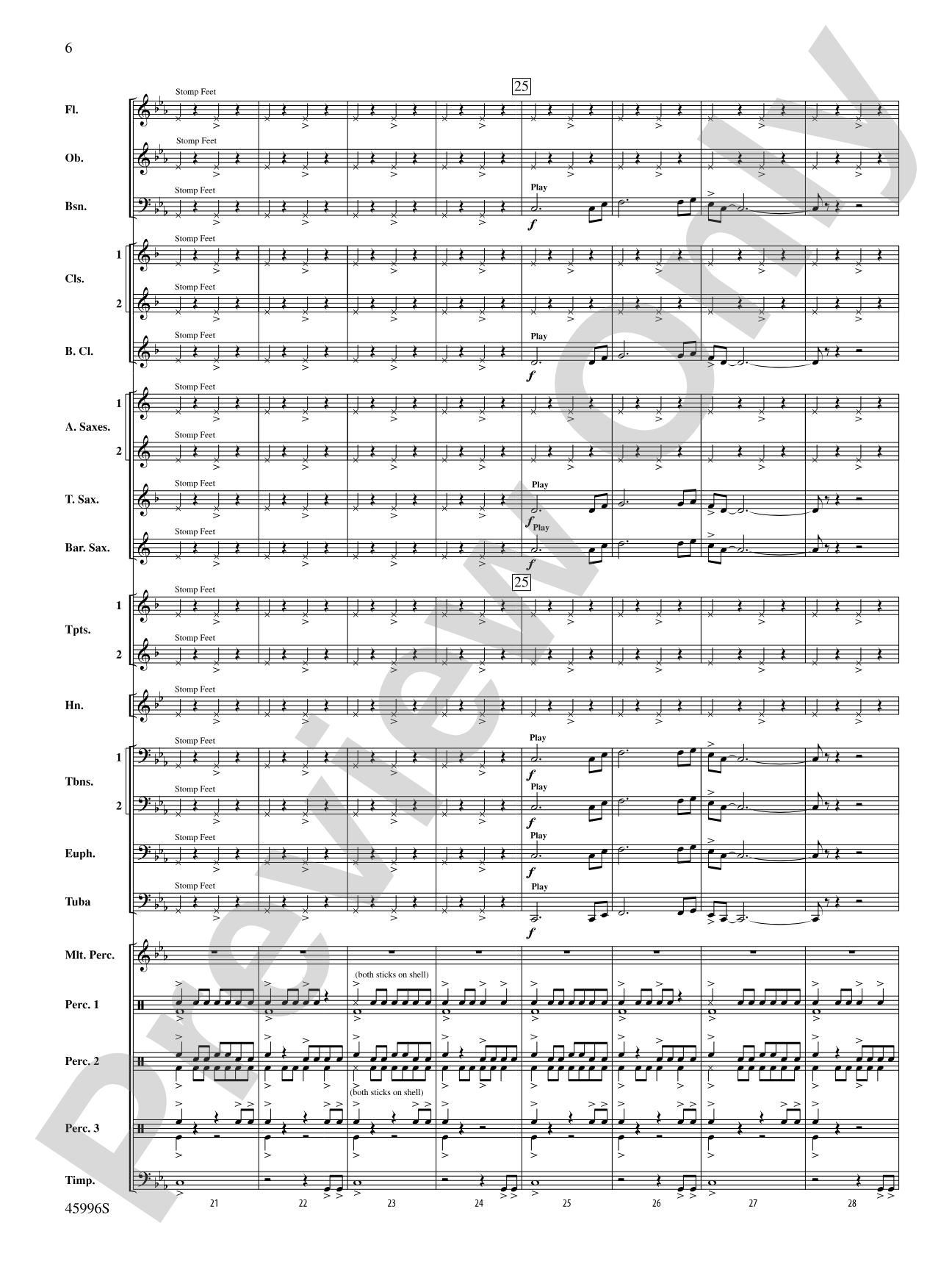
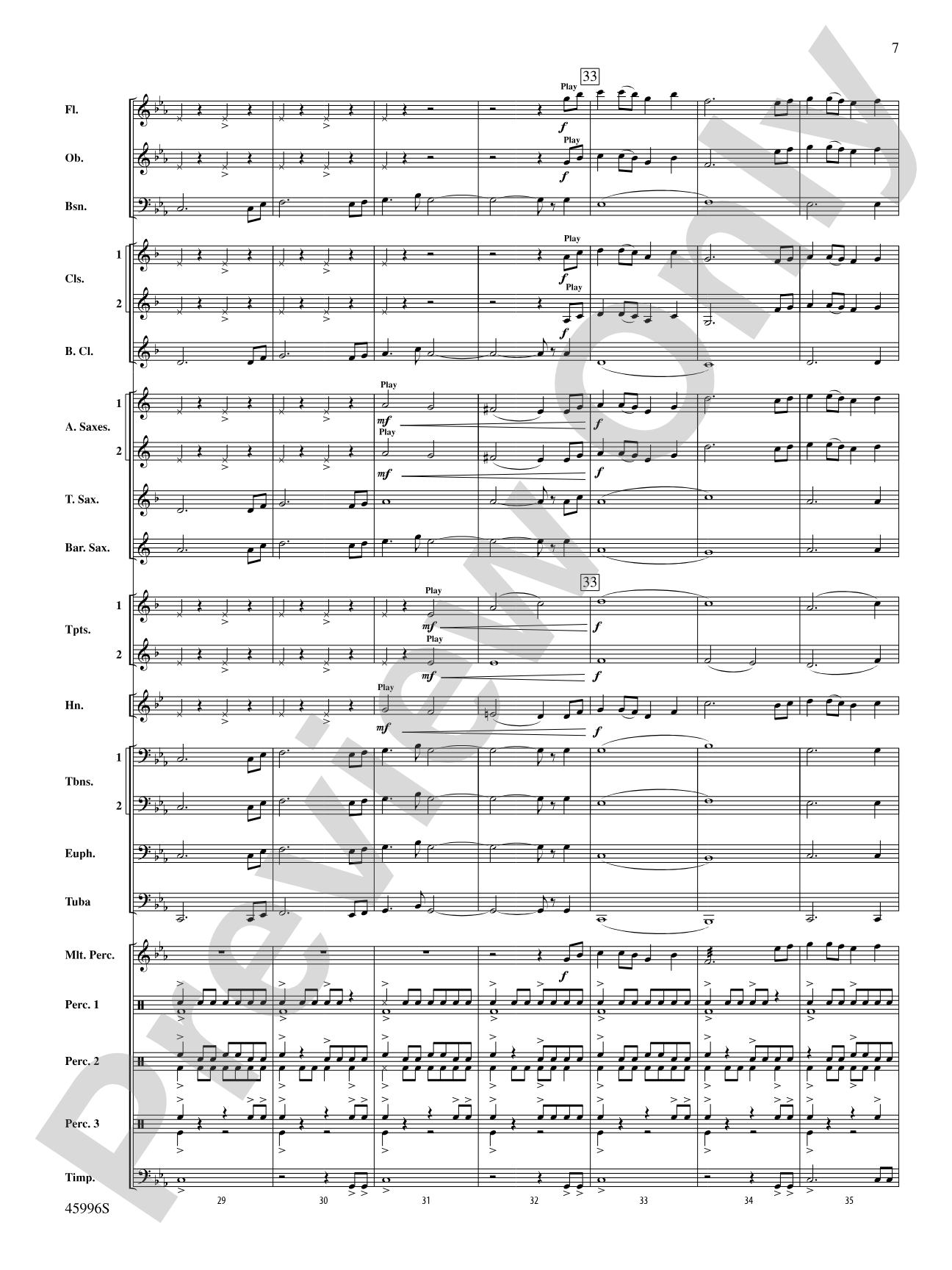
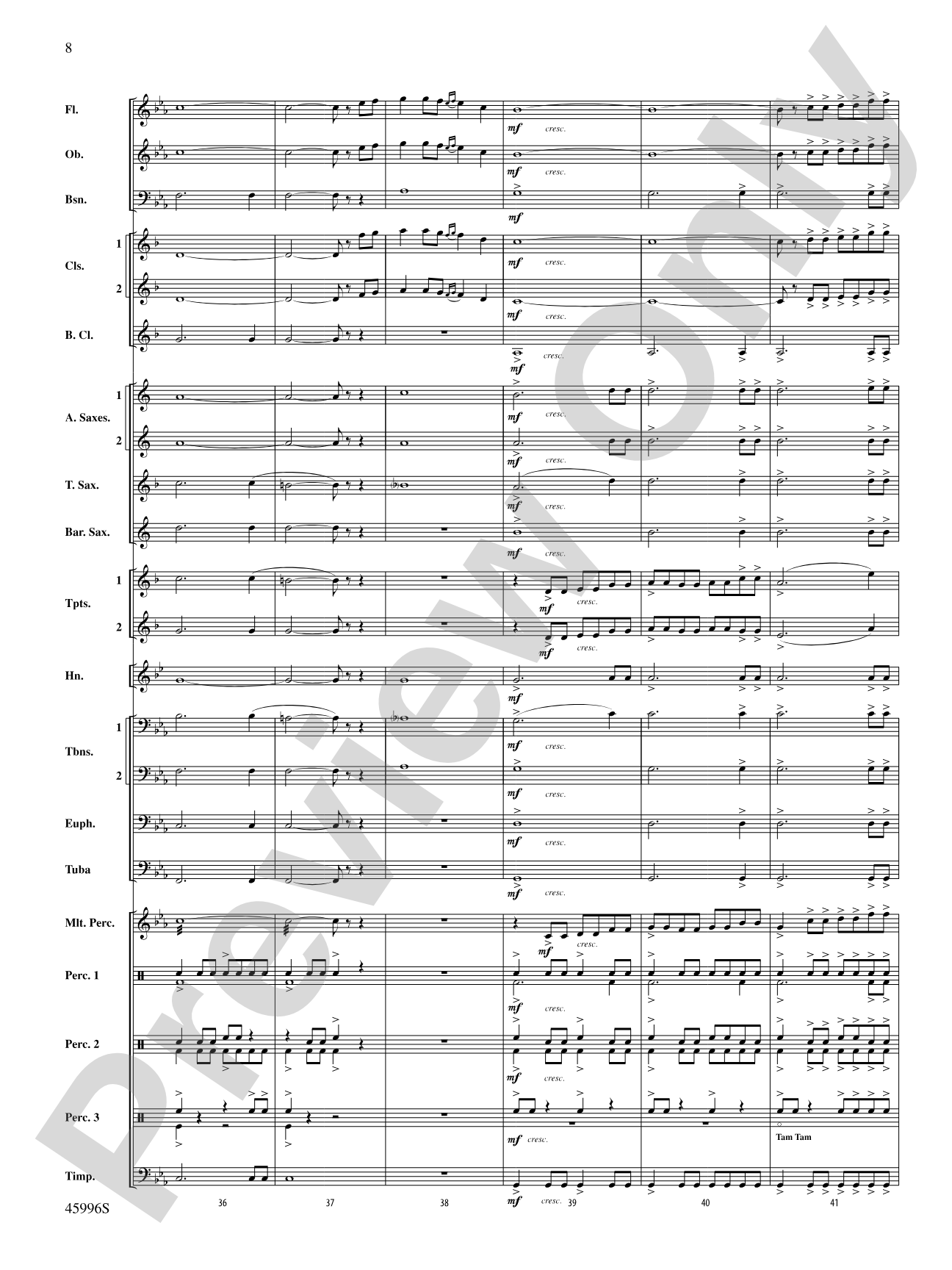
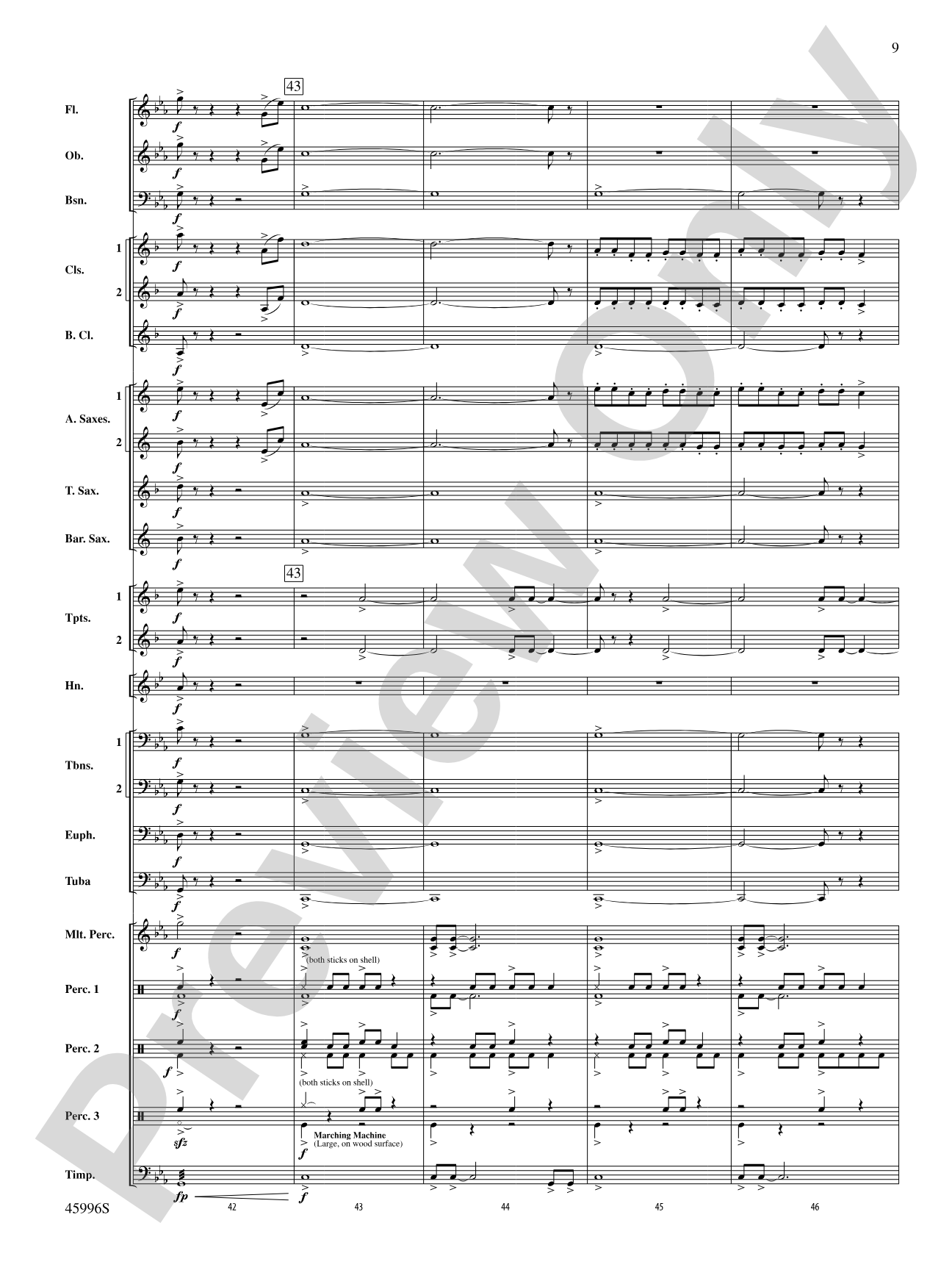
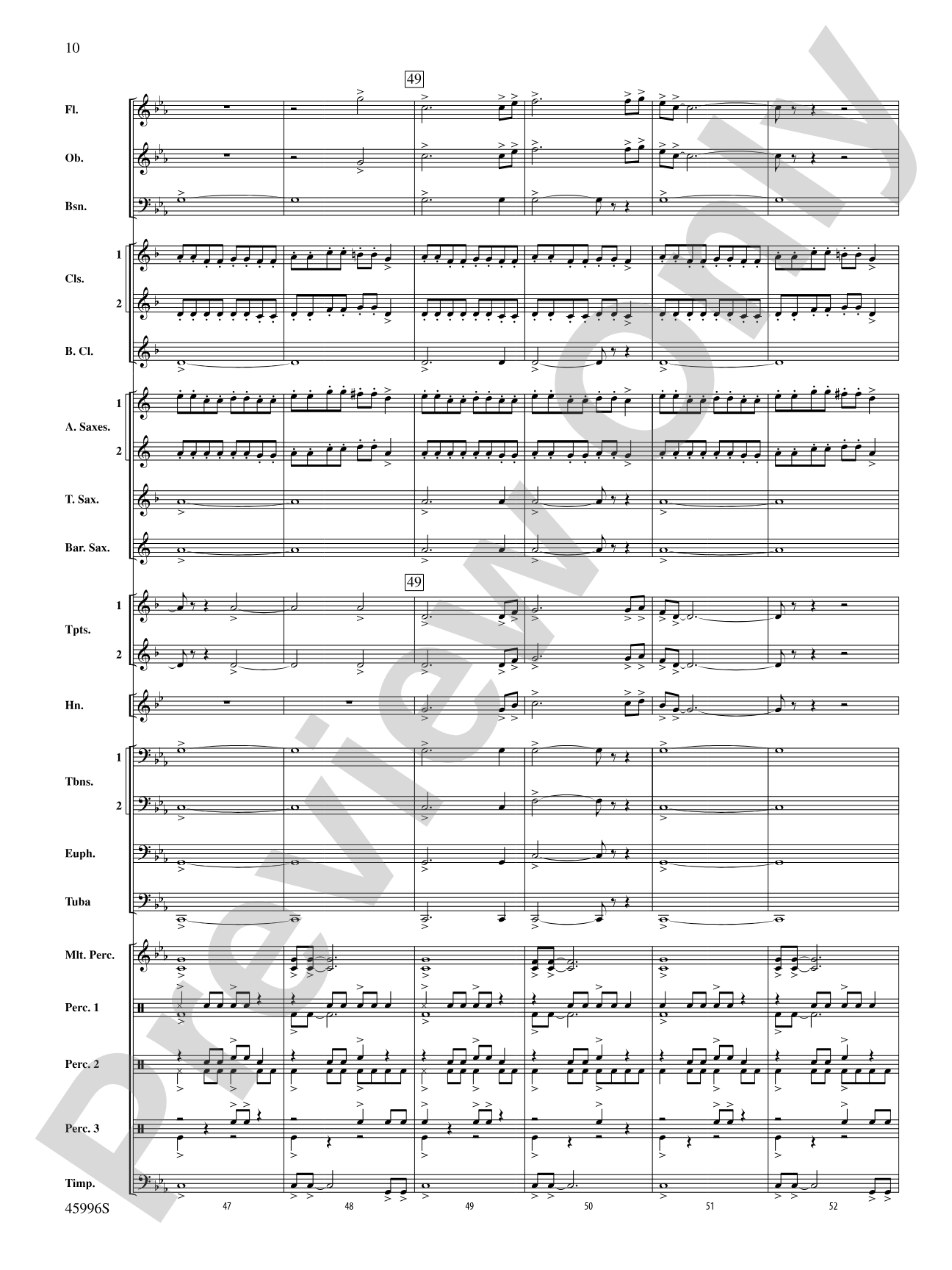
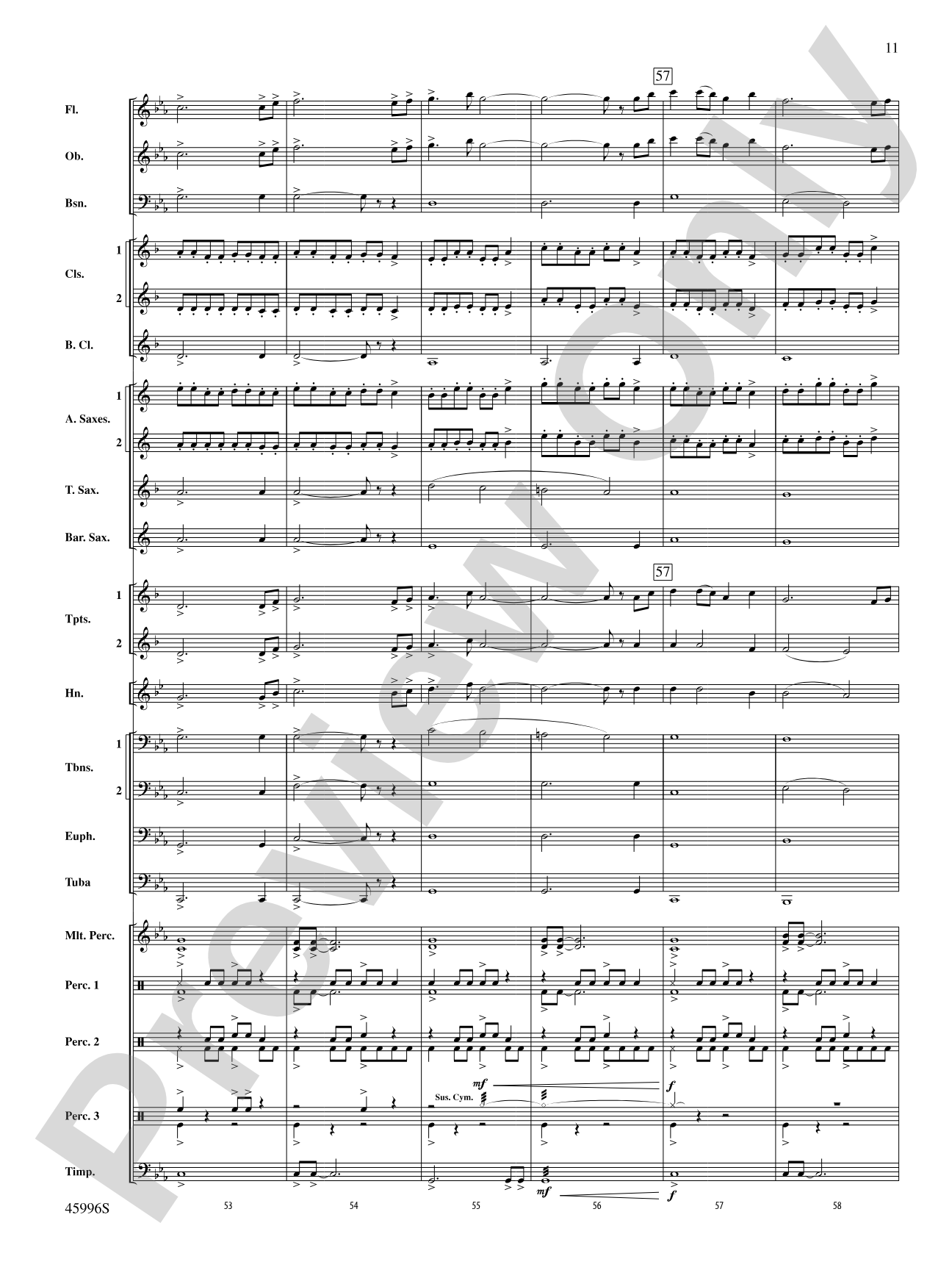
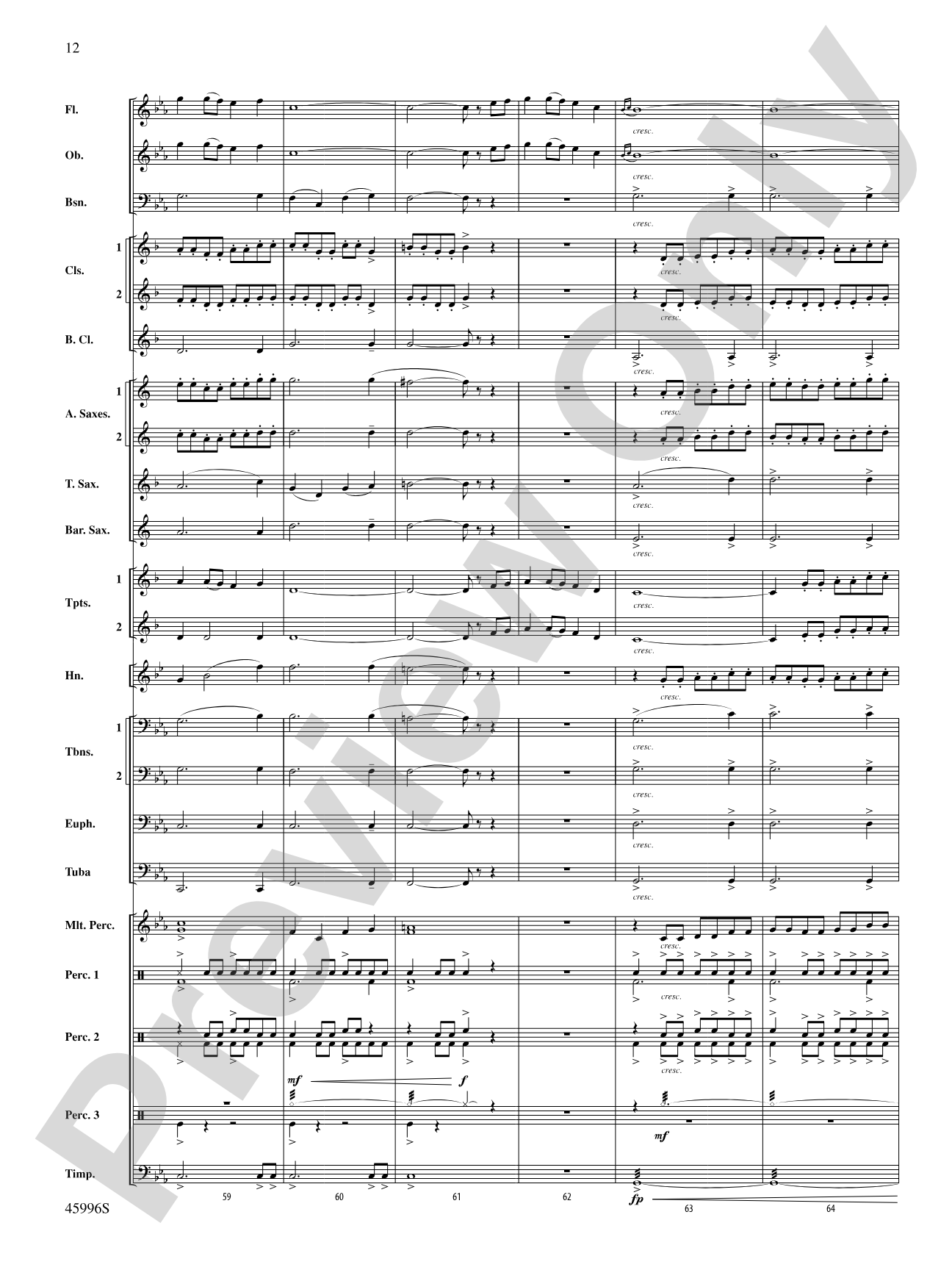
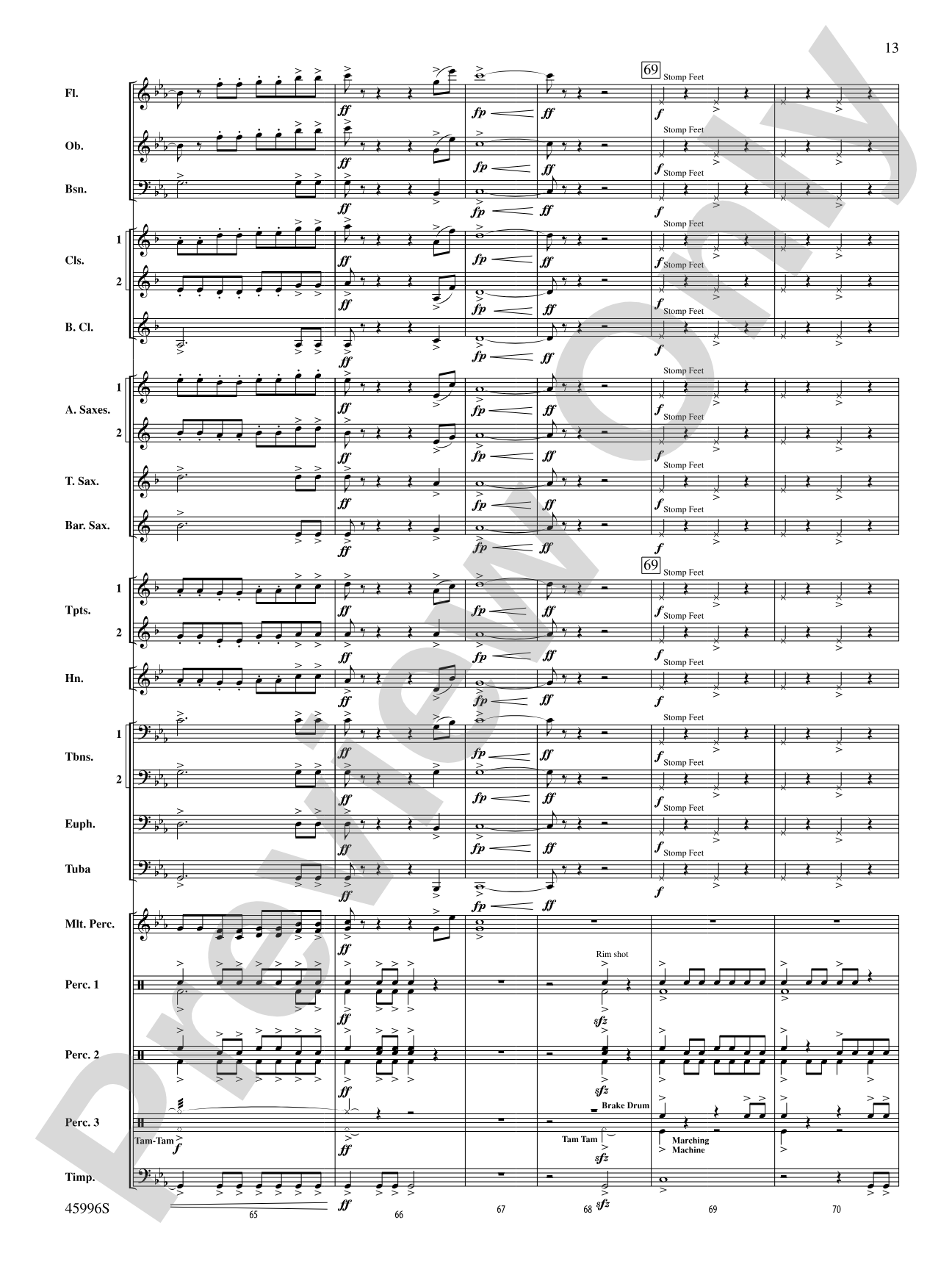
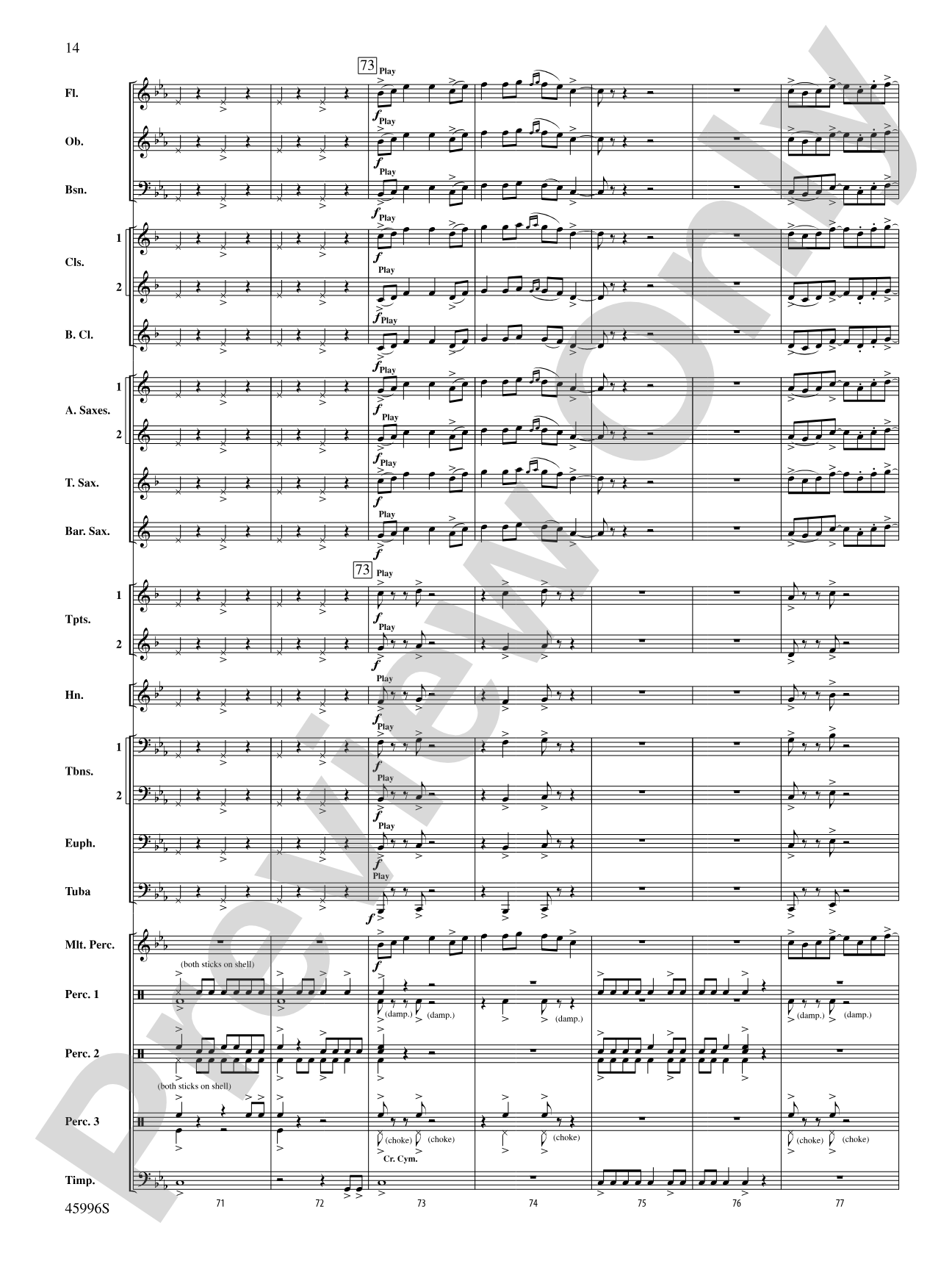
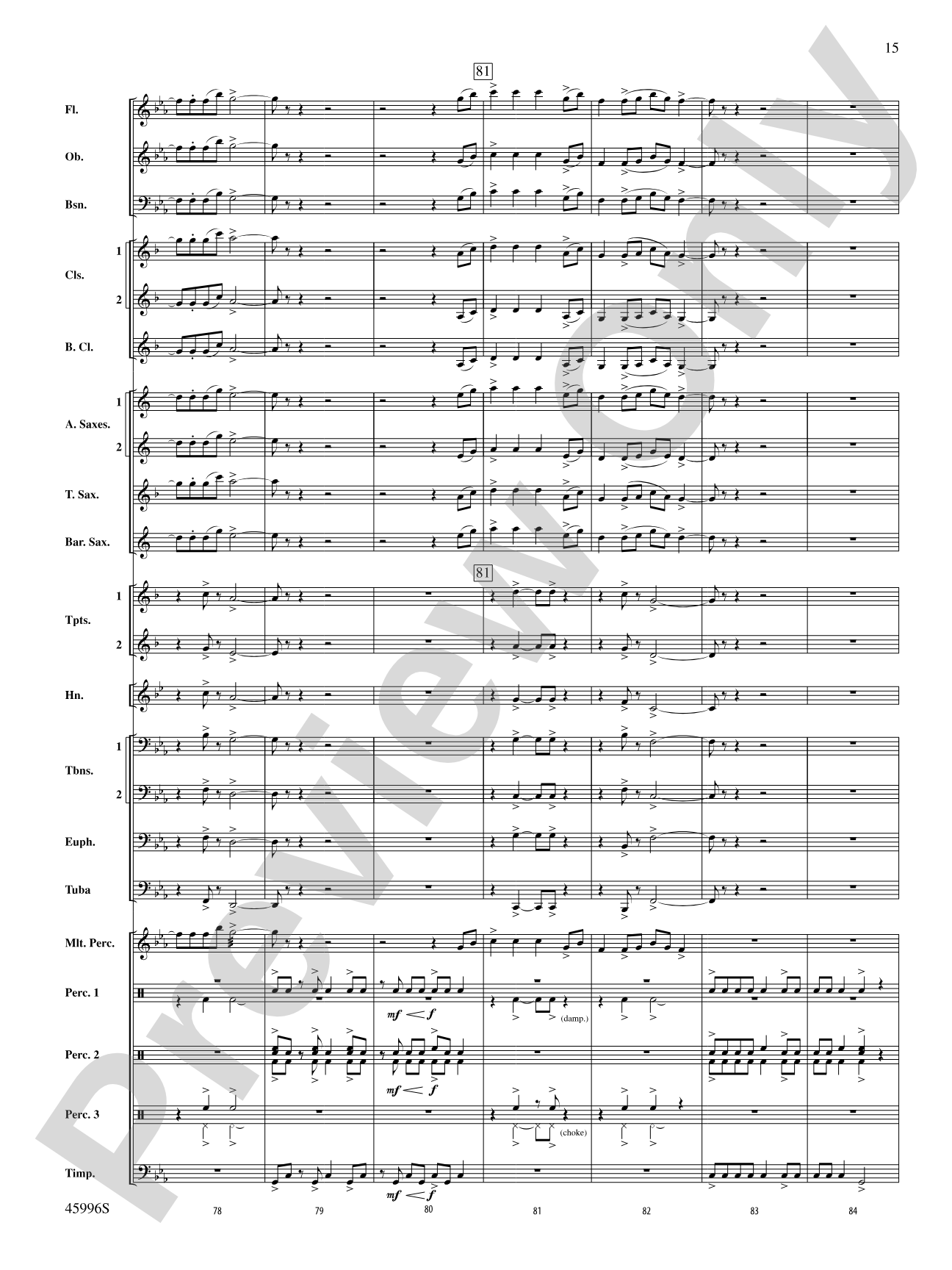
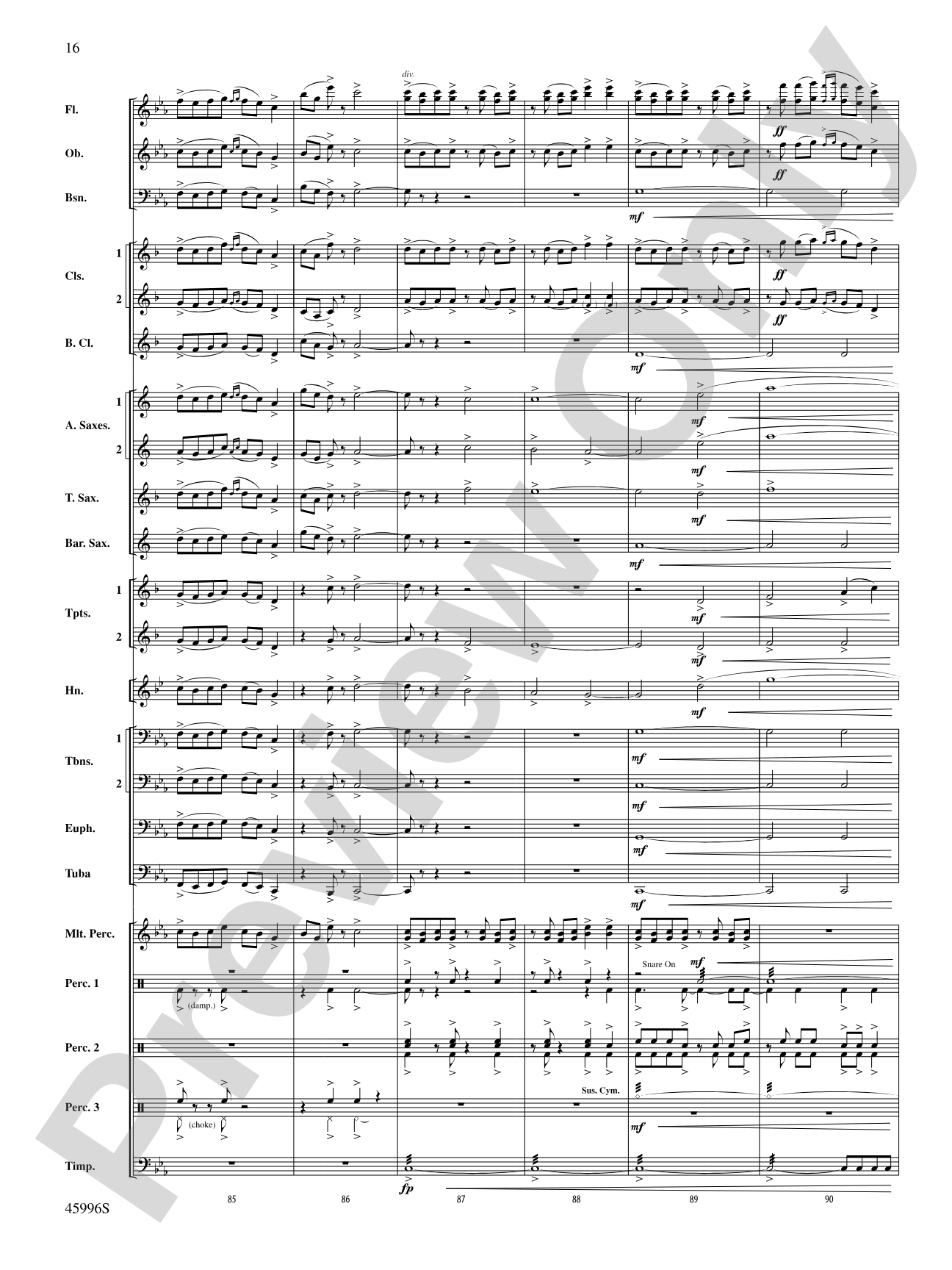
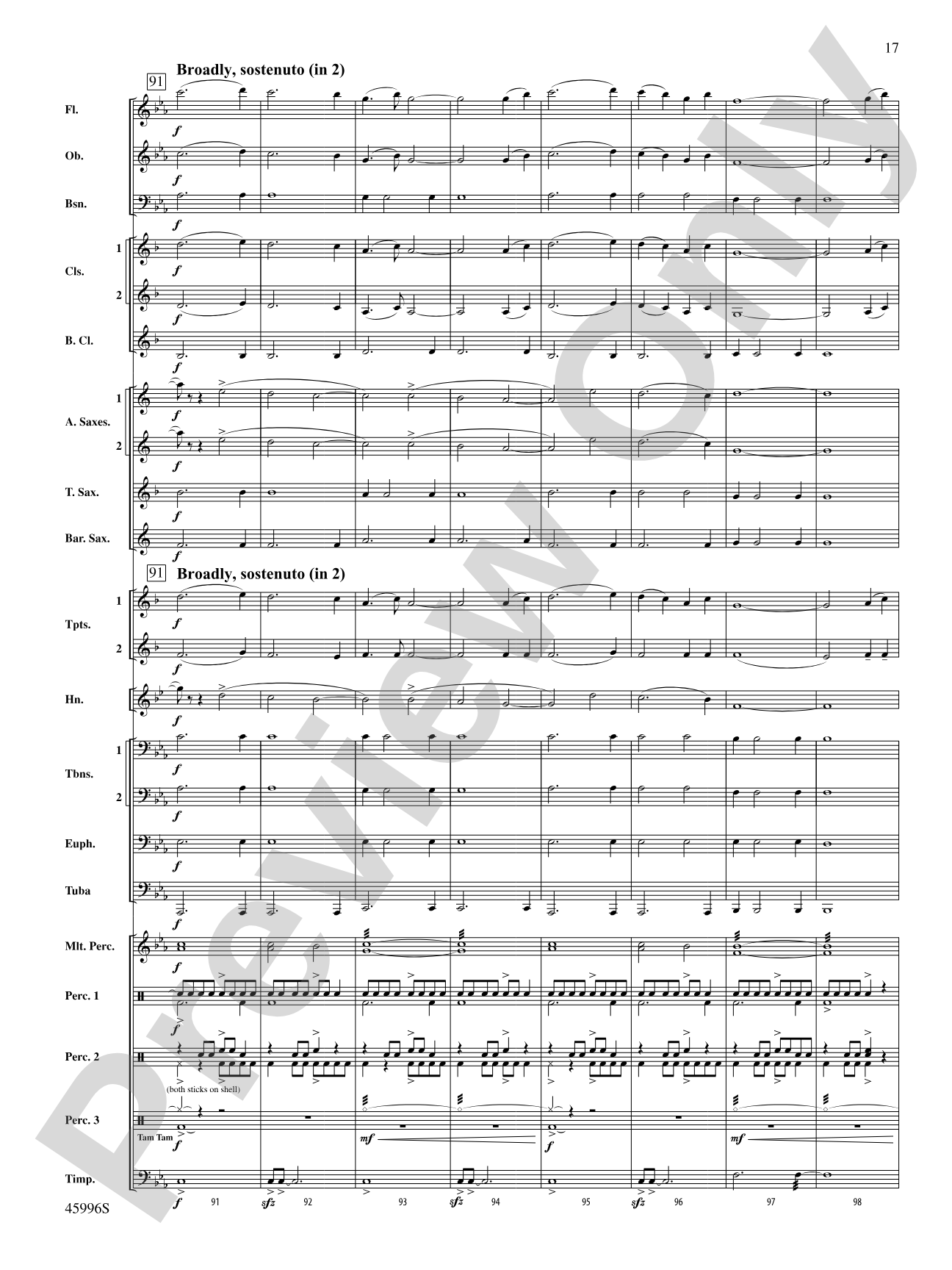

Terracotta Warriors: Concert Band Conductor Score & Parts
By Scott Watson
Grade: 2 (Medium Easy)
Item: 00-PK-0007429

$70.00
Pickup currently not available
Buy Extra Parts (Digital PDF Download)
Parts Added to Cart!
Description
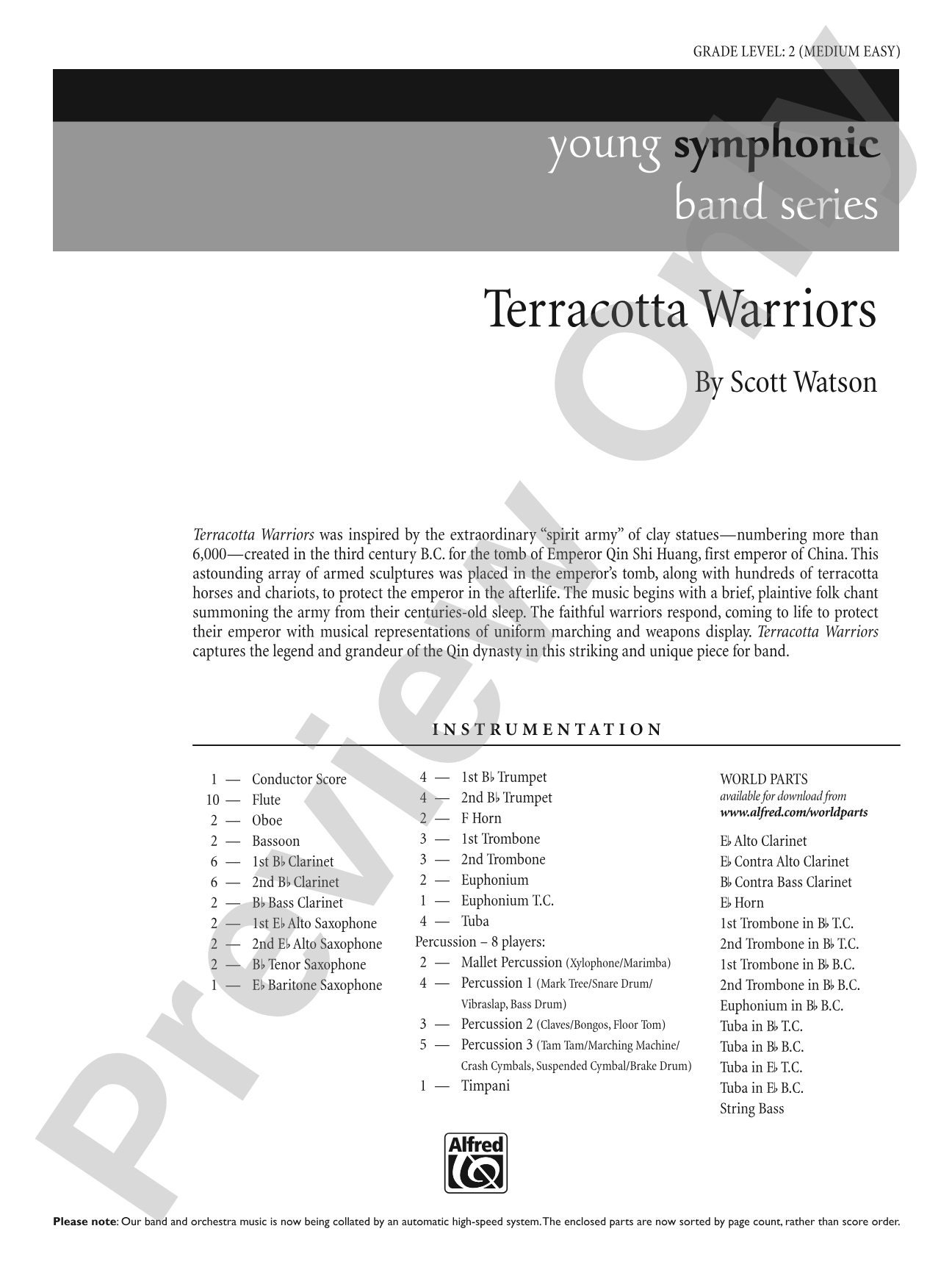
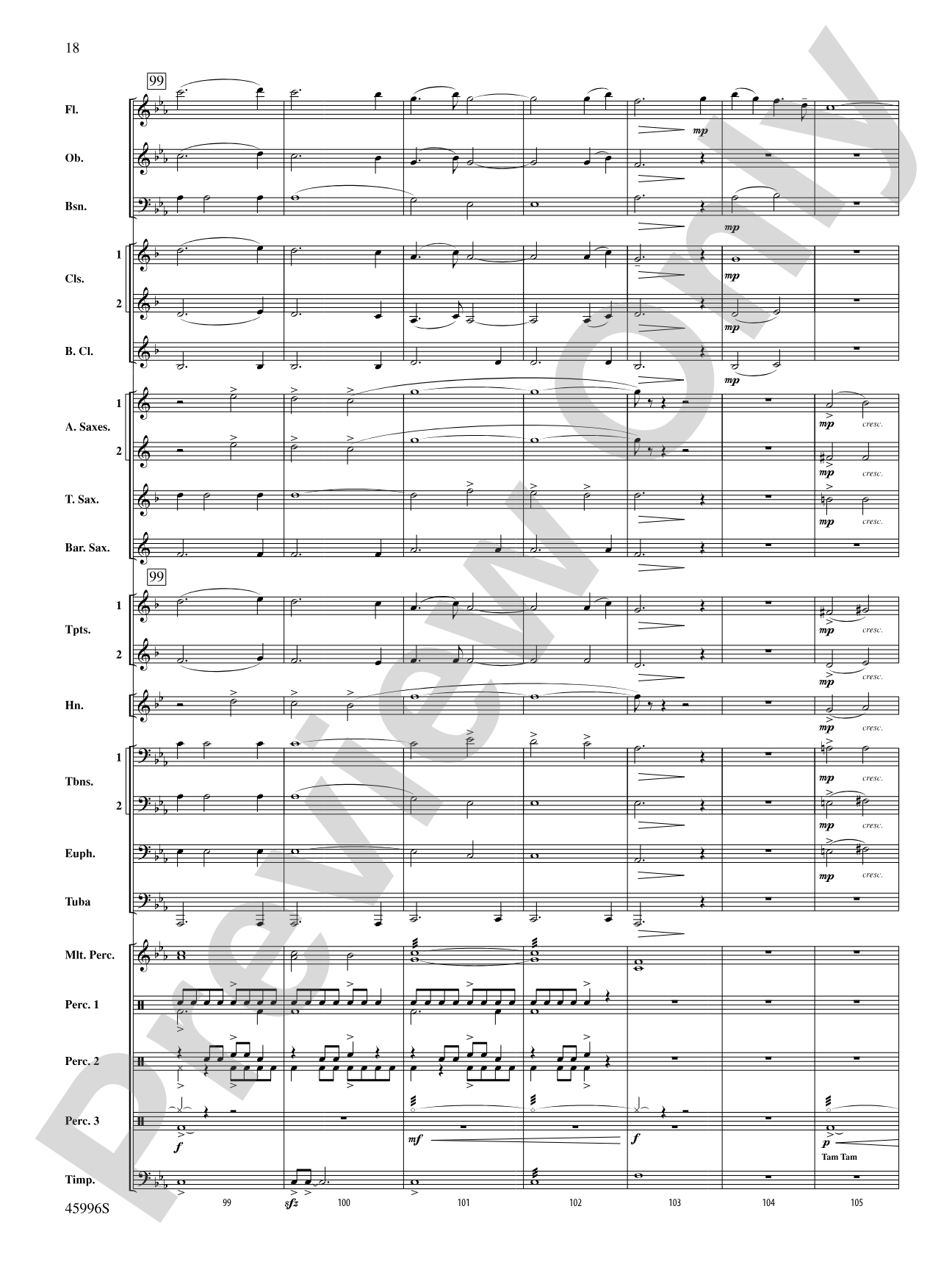
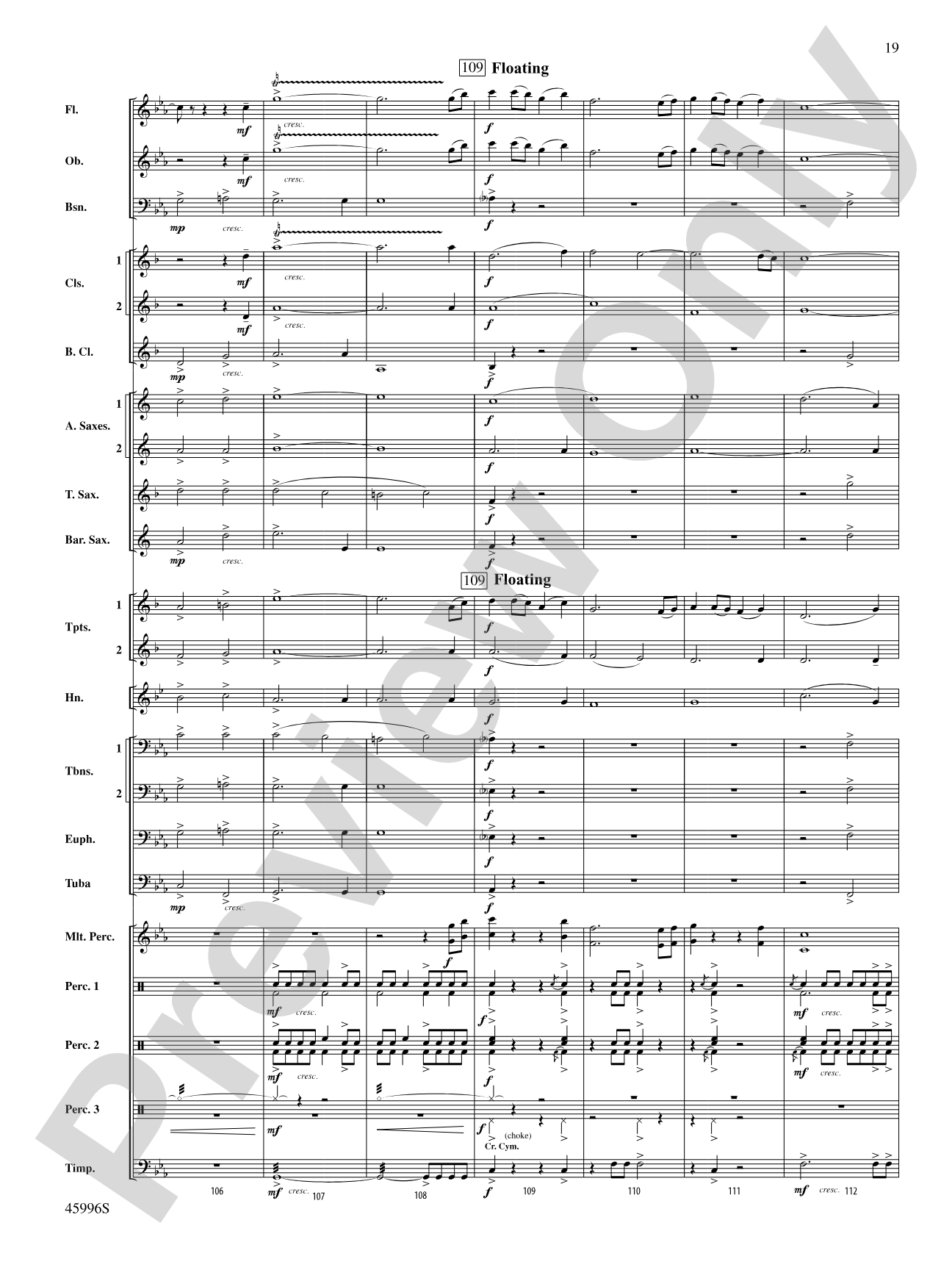
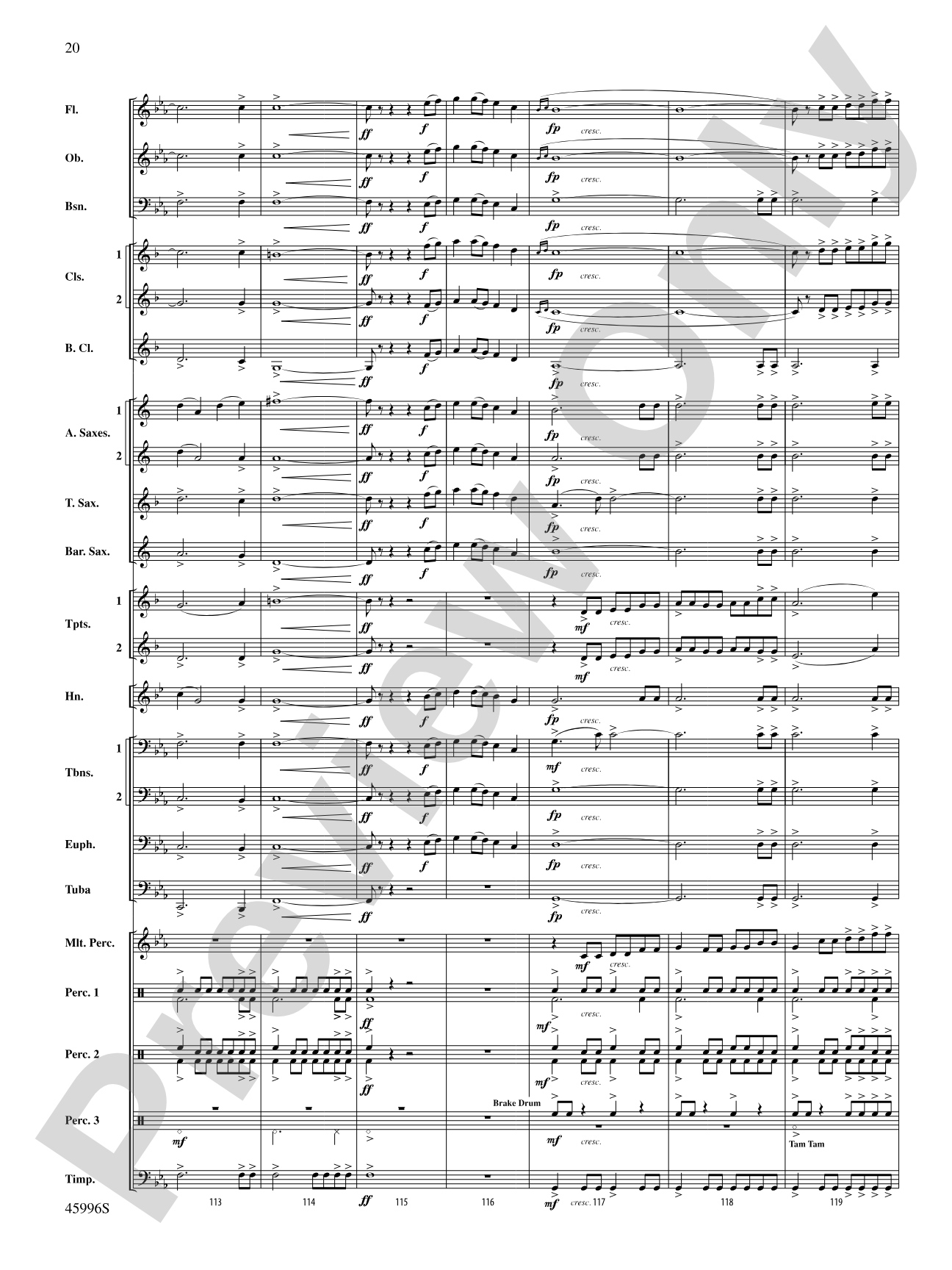
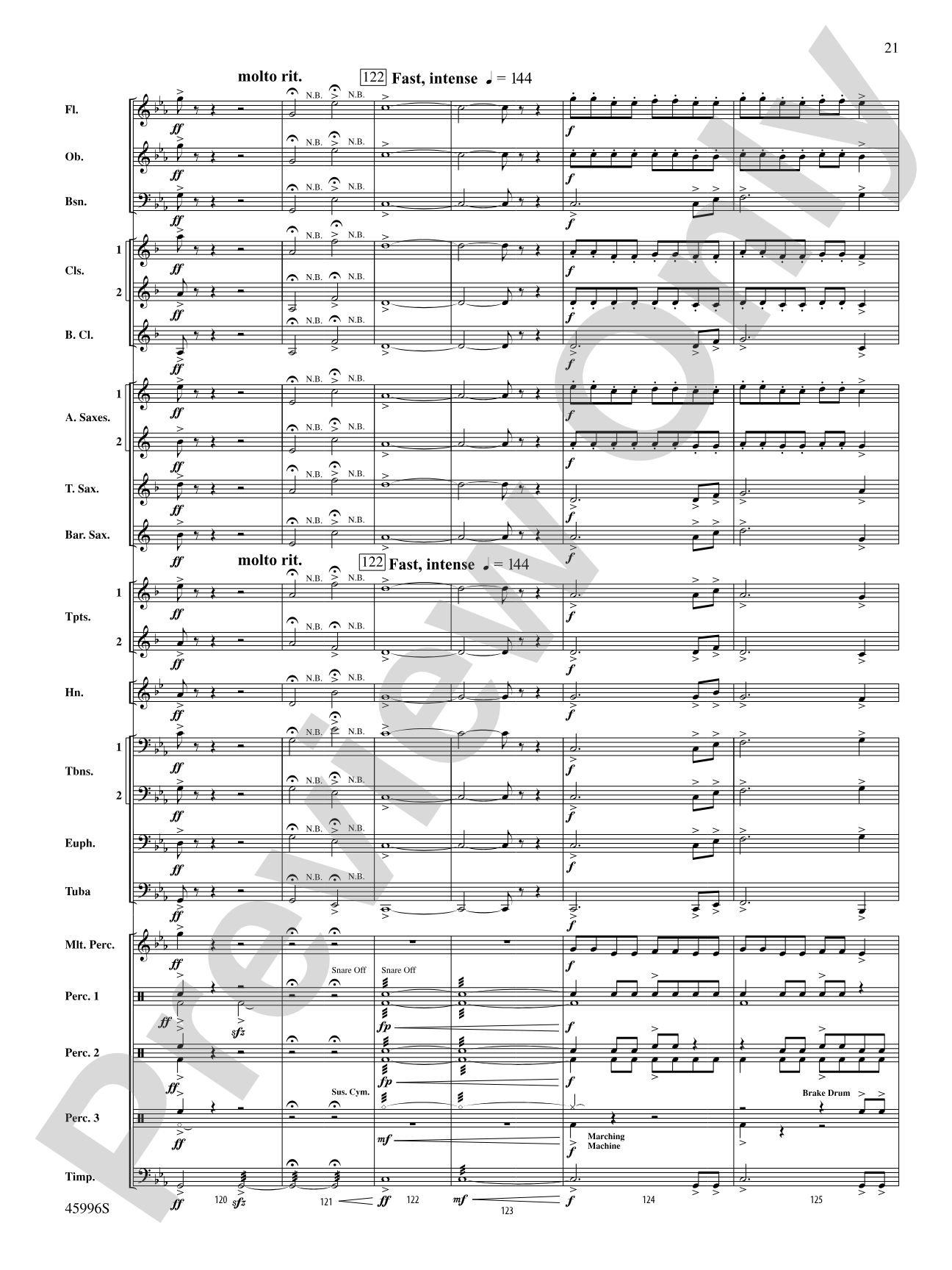
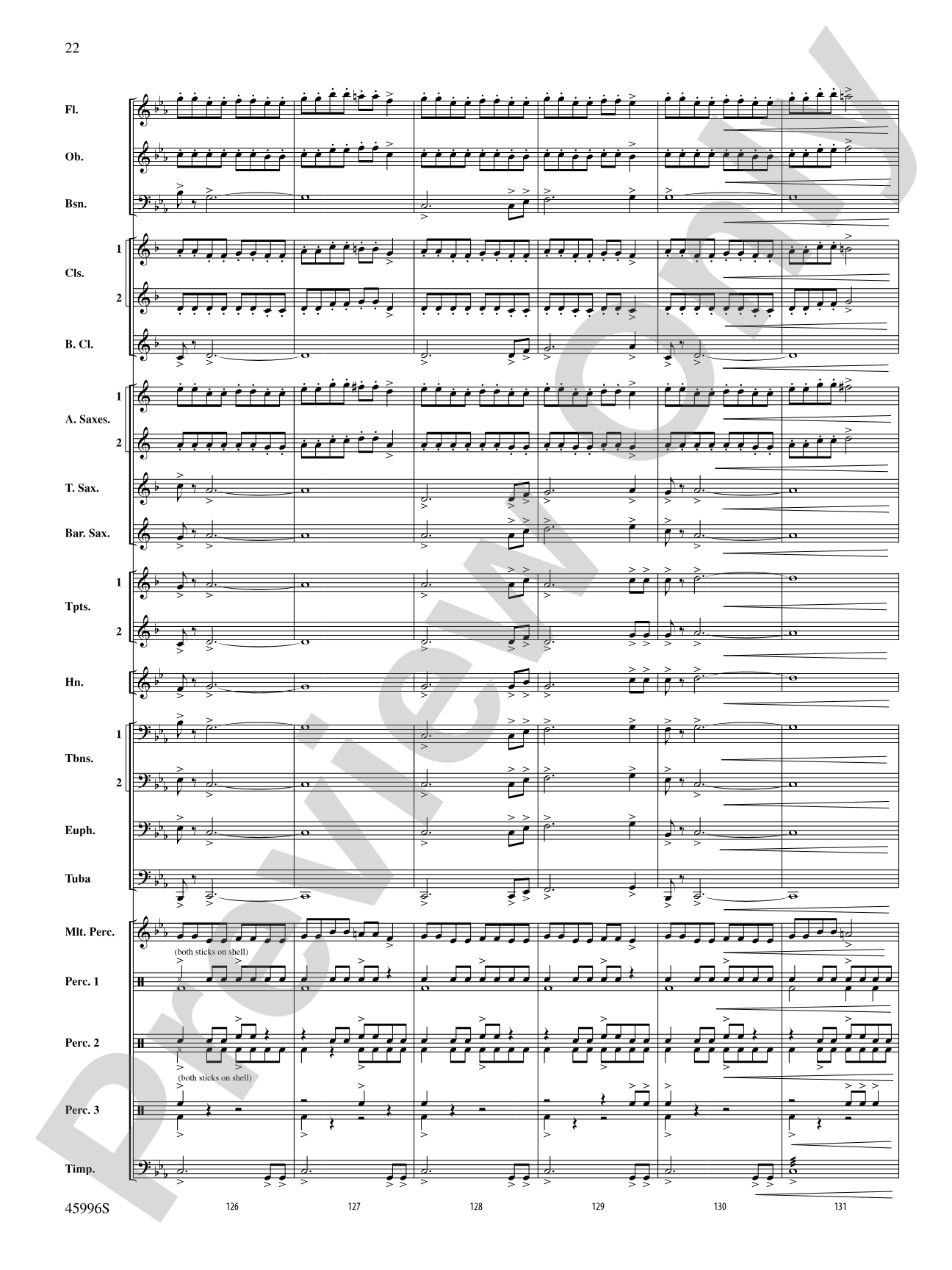
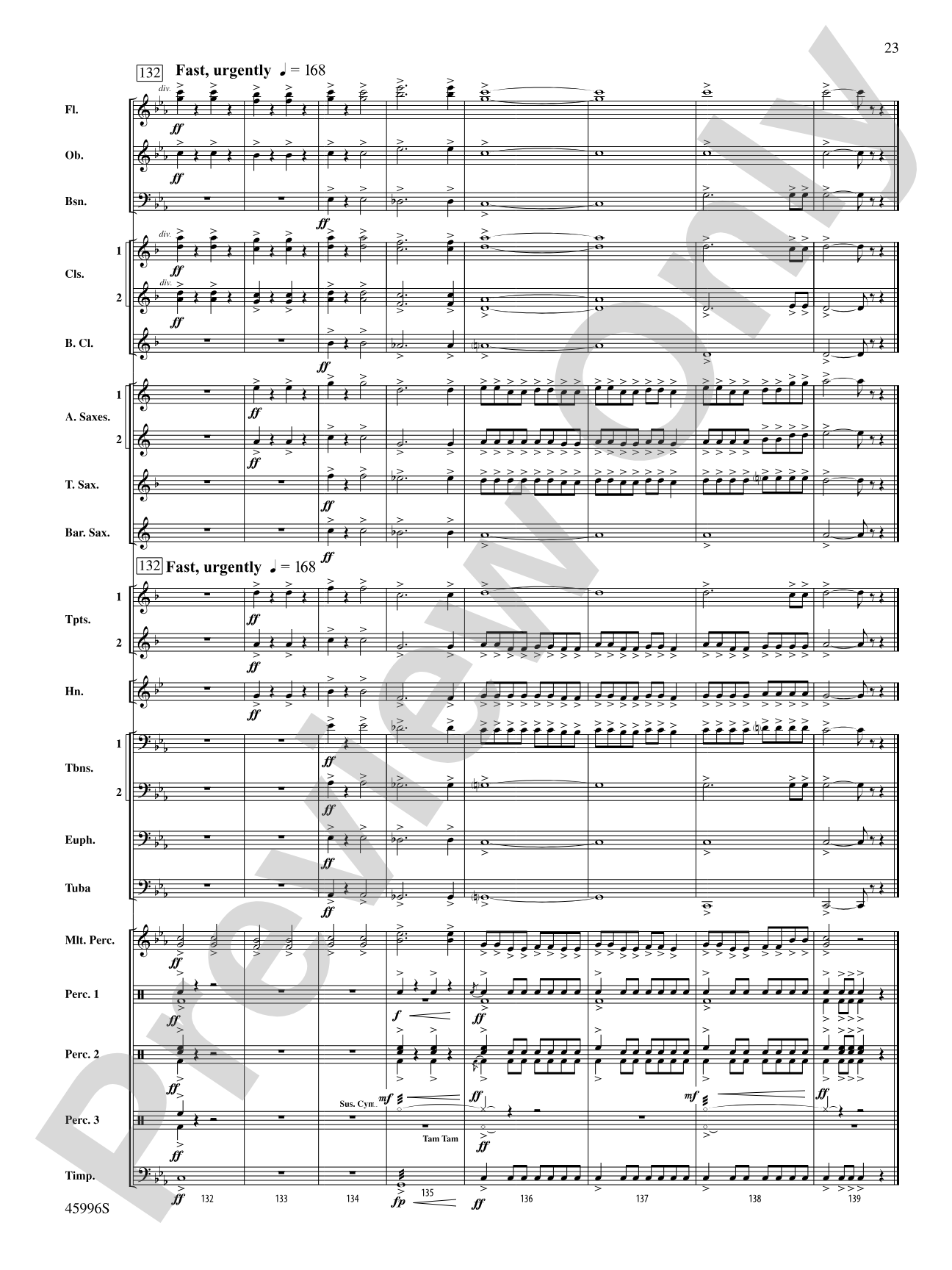
This original work was inspired by the "spirit army" of 6,000 clay statues created in the third century B.C. for the tomb of the first emperor of China. A brief, plaintive folk chant summons the army from their centuries-old sleep. The warriors respond, with musical representations of uniform marching and weapons display. (4:25) This title is available in MakeMusic Cloud.


Don't just read it, hear it, play along with it, and watch your students grow with it. In MakeMusic Cloud, Terracotta Warriors: Concert Band Conductor Score & Parts comes alive with professional accompaniment, adjustable tempo, and built-in practice tools that turn solo practice into real progress.
Open in the Player
Jump straight in and assign it today.
Start Your Free Trial
Open this title and explore the full library in minutes.
Sample Audio
1
Audio File
--:--
0:00
0:00
Sample Video
Additional Details
Series:
Young Symphonic
Publisher:
Alfred Music
Page Count:
292
SKU:
00-PK-0007429
More about this title
About the Composer: Scott Watson

Scott Watson has spent his career straddling two worlds: the contemporary classical music scene and the working band director's podium. His 35 years leading instrumental programs in the Parkland School District (Allentown, PA), first as high school Director of Bands and later coordinating the district's elementary band and strings offerings, gave him direct insight into what teachers need and what students can accomplish. Since joining Cairn University as Associate Professor of Music, he has continued to write prolifically, with over 120 published works for concert band, string orchestra, and chamber ensembles across all difficulty levels.
Watson's compositions have reached audiences worldwide and graced venues including the Academy of Music in Philadelphia, the Midwest Clinic in Chicago, and the White House. An exclusive composer and clinician for Alfred Publications, he also authored "Using Technology to Unlock Musical Creativity" (Oxford University Press, 2011) and regularly leads clinics and guest conducting residencies for festival and honor bands. His distinctive musical voice draws equally from his engagement with contemporary concert art and his deep roots in the band world.
Why we love this
Watson brings a cinematic sensibility to this programmatic work without ever losing sight of what makes Grade 2 bands tick. The narrative arc is clear enough to engage young players, yet the orchestration and harmonic palette feel sophisticated and purposeful. Programming this alongside your standard contest repertoire signals to your community that you take artistic storytelling seriously, even at accessible difficulty levels.
What to expect
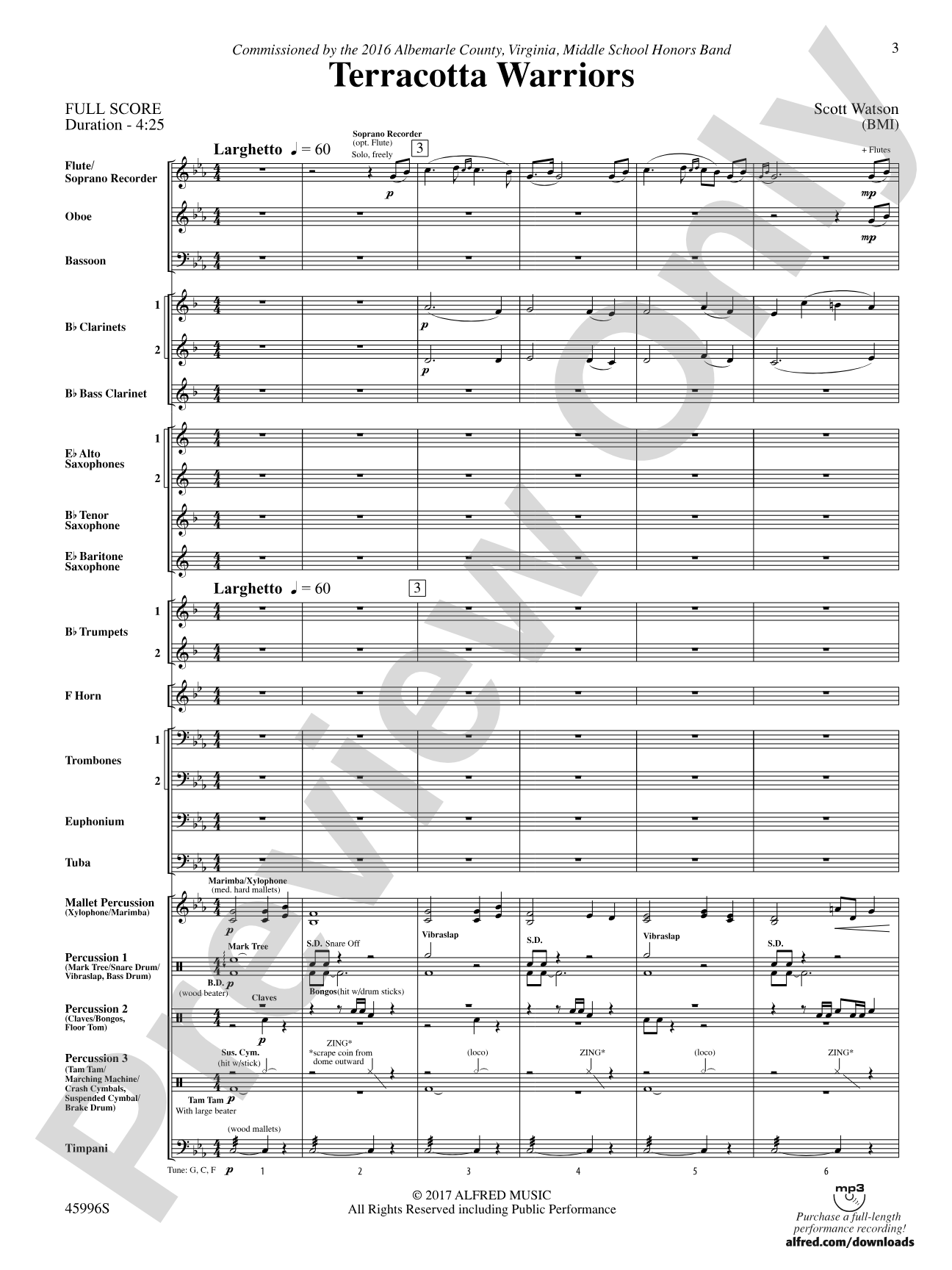
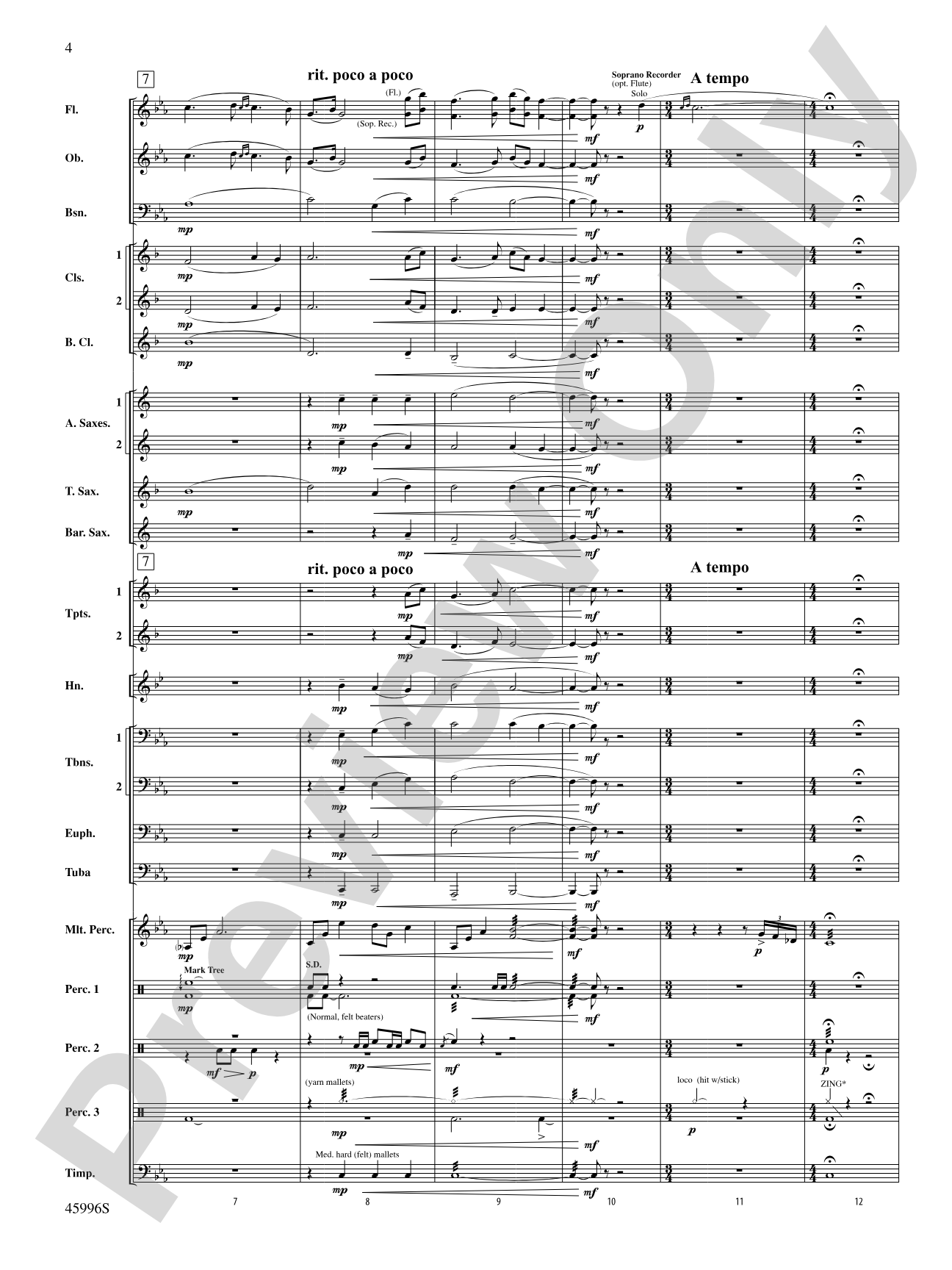
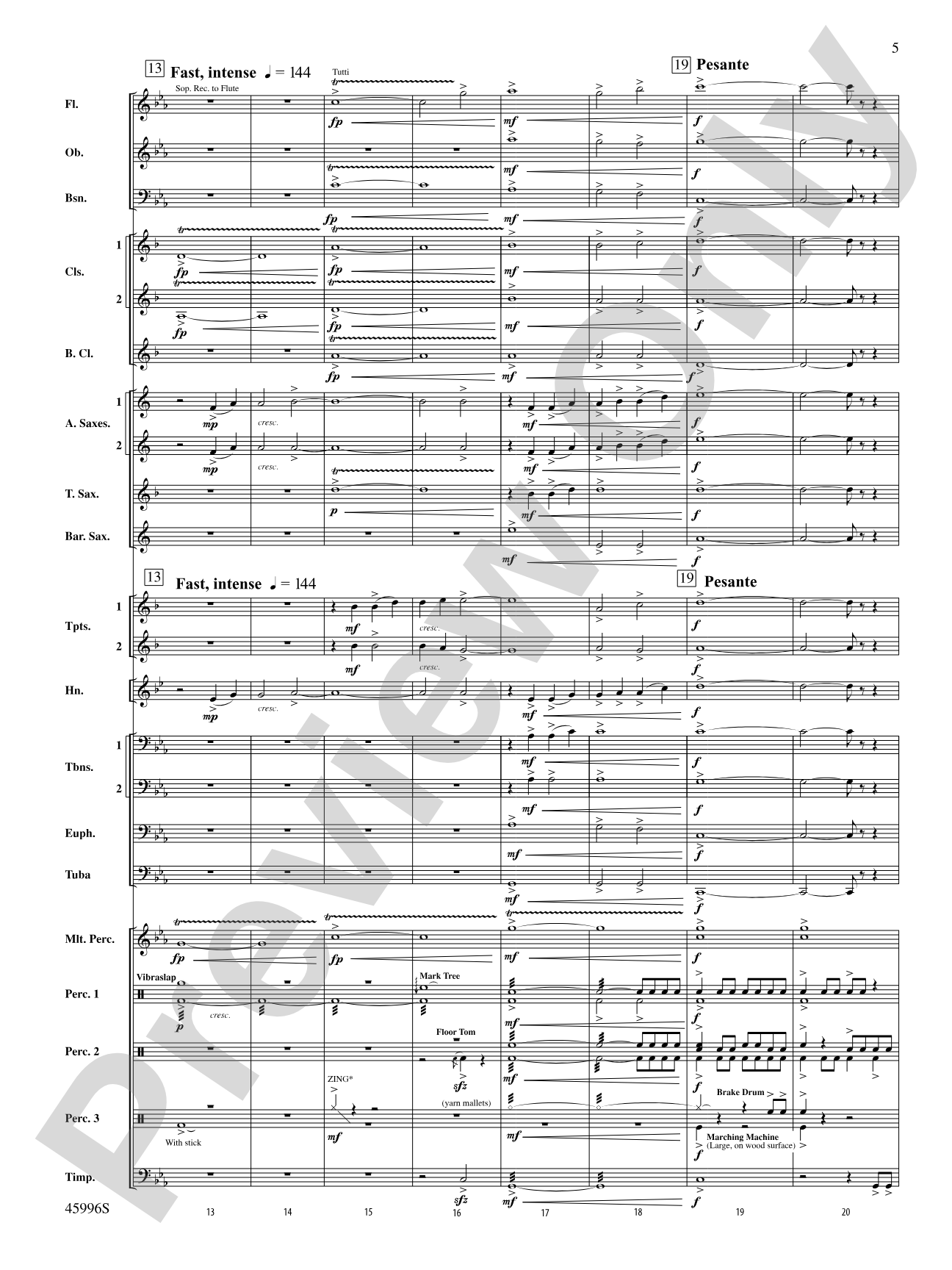
You begin in a place of whispered reverence as a haunting folk melody drifts across centuries of silence. Then something stirs. The energy shifts from contemplative to visceral as thousands of clay feet begin their eternal march, weapons gleaming in formation. The piece pulses with purposeful momentum, weighty and unified, before fading back into the dust and mystery from which it came.
Who it's for
This work fits perfectly in the Grade 2 band looking to step beyond technical exercises into genuine musical storytelling. It rewards bands that have solid fundamentals and the maturity to respond to a conductor's interpretive choices, making it ideal for concert programs, festival competitions, or the student musician discovering what concert band literature can express.
How to get the most out of it
- Shape the opening folk chant with genuine melancholy. This moment sets the entire narrative; treat it as a prayer rather than an announcement.
- Maintain crisp articulation during the marching sections to project the uniformity and discipline of the warriors without sacrificing musical character.
- Balance the weapons display passages so no single section overwhelms the texture. The effect is strongest when the band sounds unified in purpose rather than competitive in volume.
- Use the recorded accompaniment provided in MakeMusic Cloud to lock ensemble precision, especially during the rhythmic ostinatos that represent the army's movement.
How to use it
Program this as a centerpiece for a thematic concert exploring world cultures or historical narratives in music. Its moderate length (4:25) and engaging subject matter make it particularly effective in school assemblies or community outreach performances where you want to capture non-musician attention. It also holds its own in festival competition, where the combination of accessible difficulty and musical substance often resonates with adjudicators.
Skills your students will build
- Maintaining steady pulse through extended rhythmic ostinatos
- Responding to subtle dynamic shadings and articulation changes that shape narrative
- Balancing independent melodic lines across the ensemble while supporting the overall harmonic structure
- Interpreting programmatic intent through ensemble sound and phrasing rather than literal imitation