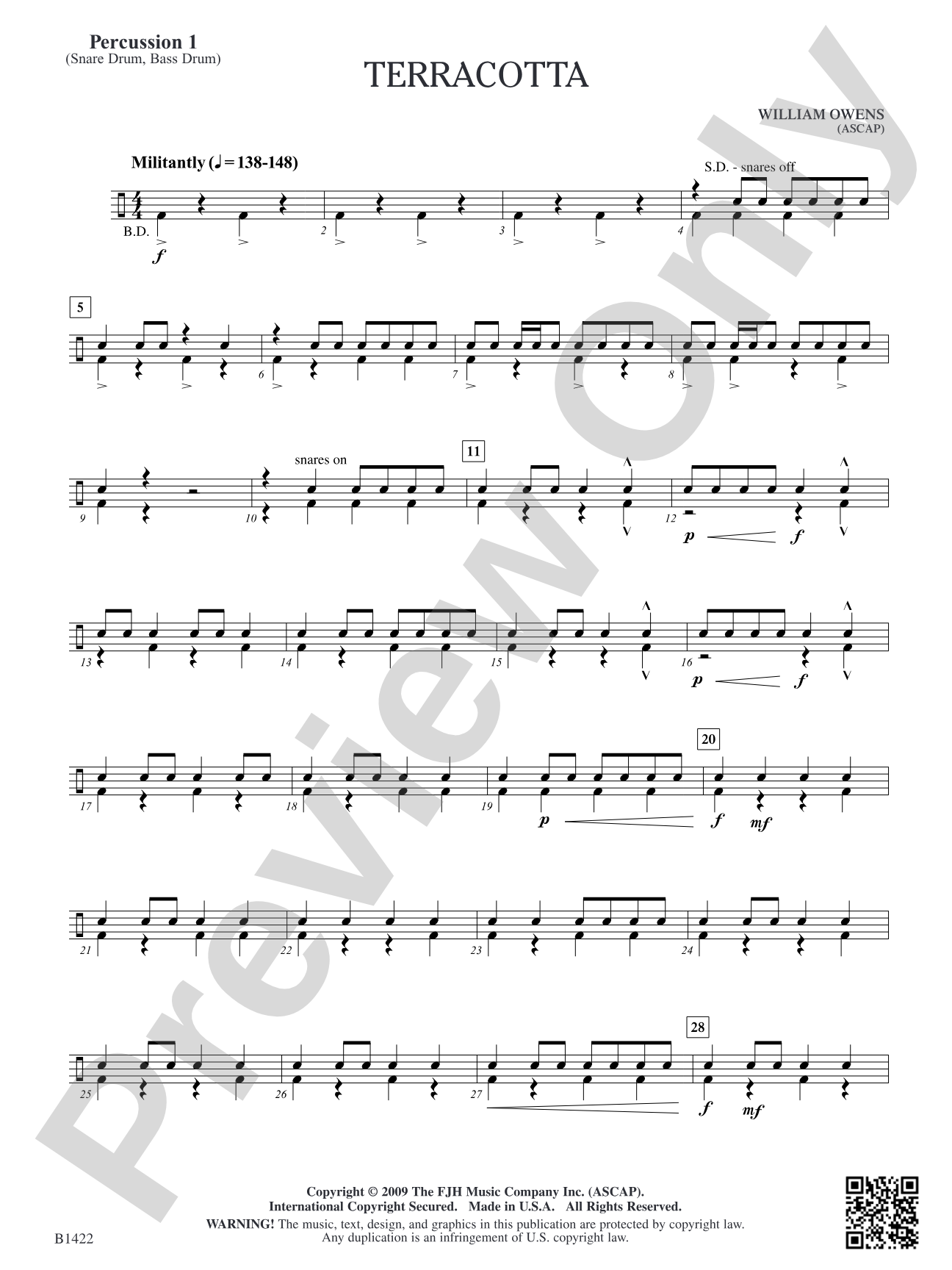
Terracotta: Percussion 1 Sheet Music Preview

Terracotta: Percussion 1

By William Owens

Grade: 1

Item: 98-PC-DB1422_PC1

Digital Download
$7.00
Description
This stunning work portrays the Terracotta Army of ancient China - an army of lifelike statues consisting of over 8,000 soldiers, 130 chariots, and 520 horses. Moments of discord and massive percussion symbolize the plight of the 700,000+ workers that took nearly 40 years to complete the project. Intense and epic, this work will be an unforgettable portion of your program!

Terracotta: Percussion 1 isn't in MakeMusic Cloud just yet...but it could be. Let us know you'd like to see it, and you'll help shape what comes next. In the meantime, start a free trial and dive into thousands of interactive titles your students can play along with today.

Sample Audio
0:00
0:00
Sample Video
Additional Details
Series: FJH Beginning Band
Publisher: The FJH Music Company, Inc.
SKU: 98-PC-DB1422_PC1

More about this title

About the Composer: William Owens

William Owens

William Owens brings three decades of classroom experience to his compositional work. A VanderCook College of Music graduate and Distinguished Alumnus, he spent 30 years leading bands in Texas before retiring in 2014. His catalog exceeds 300 works across concert band, string orchestra, and chamber settings, with pieces regularly appearing on state required lists and in music education texts.

Owens has established himself as a trusted voice in young band repertoire through a compositional approach grounded in practical classroom realities. He holds commissions from the American Bandmasters Association, Phi Beta Mu International, and South Plains College, and maintains active memberships in ASCAP and the Texas Music Educators Association. Based in Fort Worth with his wife Georgia, Owens continues to impact music education through compositions that engage both students and audiences.

Why we love this

Owens crafts a Grade 1 work that refuses to play small. The narrative clarity of the Terracotta Army provides students with a vivid dramatic anchor, while the musical contrasts between solemn, methodical sections and explosive percussion passages teach the power of dynamic storytelling without overwhelming developing musicians. This is accessible writing that still demands musical maturity.

What to expect

The music captures the monumental patience of the Terracotta Army's creation, moving from meditative passages that feel almost sculptural to moments of raw, jarring conflict. The contrast between the ordered precision of thousands of statues and the human toll beneath creates a striking emotional tension that Grade 1 bands can genuinely communicate.

Who it's for

Beginning bands ready to program something with genuine dramatic weight. Students need secure fundamentals but not advanced technique; the appeal lies in the concept and emotional arc. This works equally well for festival contests or concert programming where you want to showcase your ensemble's ability to interpret narrative through sound.

How to get the most out of it

  • Build the intensity gradually through the discord moments. Resist the urge to push tempo; let the texture thicken and the dissonance accumulate for maximum impact.
  • Balance the percussion section carefully during the massive moments. These passages should feel overwhelming but remain unified with the band's pulse.
  • Use the story as your rehearsal anchor. Remind students they're portraying 700,000 workers over 40 years, not just playing notes.

How to use it

Program this as a centerpiece for a concert exploring world history or cultural themes. Its Grade 1 accessibility makes it ideal for early-season performances when you're building ensemble confidence, yet the dramatic scope prevents it from feeling like a filler piece. The festival designation also makes it a smart choice for spring contests.

Skills your students will build

  • Dynamic contrast and shaping across extended phrases
  • Balanced chord voicing in dissonant harmonic contexts
  • Rhythmic precision during rapid ensemble changes
  • Listening for blend while maintaining individual voice clarity in thick textures
  • Narrative interpretation and emotional communication through instrumental performance

You May Also Like