
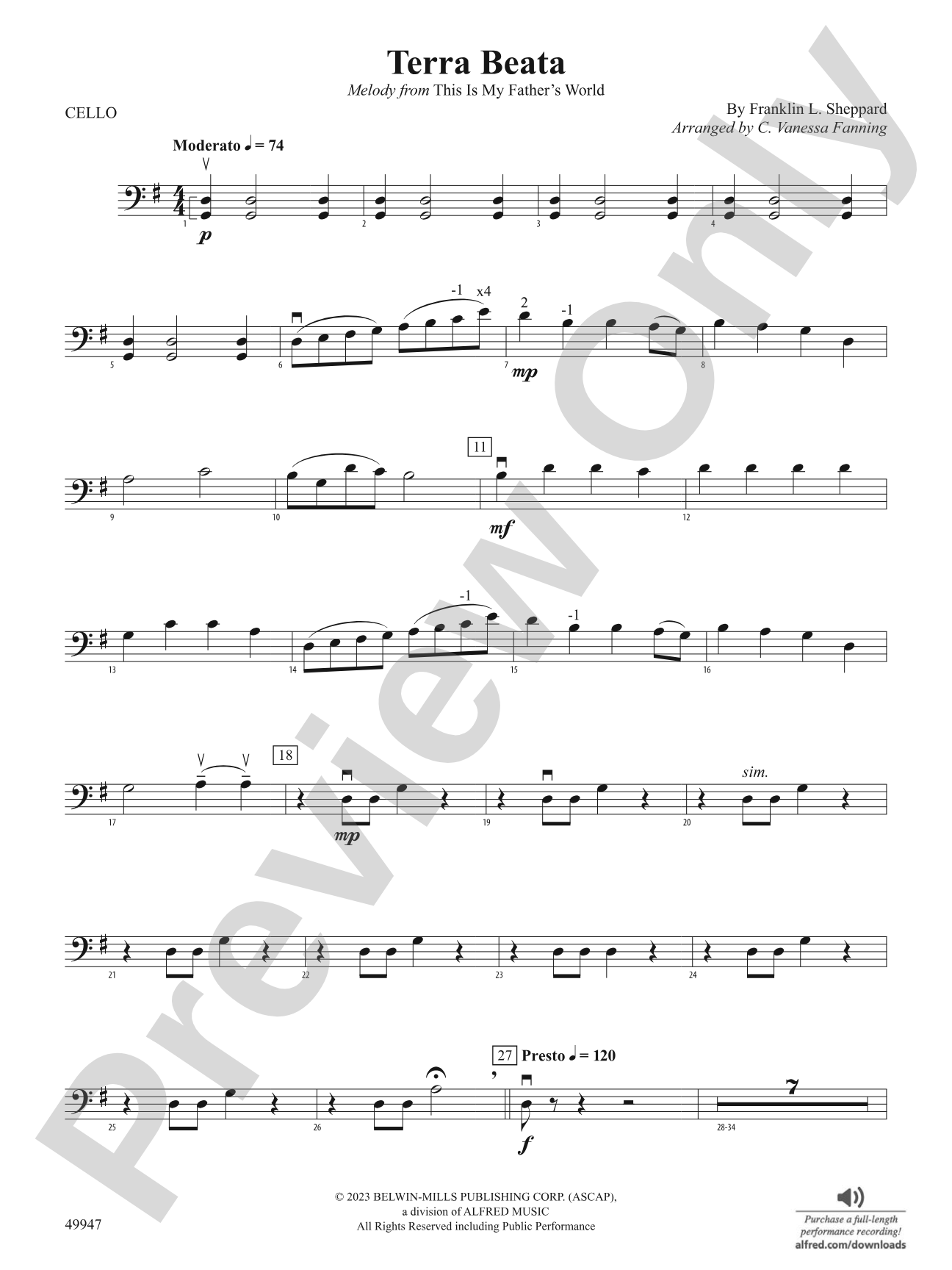

Terra Beata: Cello
Melody from This Is My Father's World
By Franklin L. Sheppard / arr. C. Vanessa Fanning
Grade: 2
Item: 00-PC-0019131_VC1
$3.00
Pickup currently not available
Description
Similar to life, Terra Beata, arranged by Vanessa Fanning, carries the listener through a series of pleasant and more intense experiences, ending victoriously. Written in the key of C, the melody begins calmly played by the first violins, accompanied by a flowing rhythmic pattern. Later, the violas offer the theme with a slightly more aggressive accompaniment. After moments of peace and tranquility, the pace of life steadily picks up. A fugue-like intensity propels the upper ensemble. The cello and bass sections enter, offering a sense of stability, resolve, and determination, unifying all voices. The ensemble then plays in unison and strength, with hints of previous themes. Terra Beata concludes with bold chordal structures to portray a resolute affirmation that, despite the turmoil and trials of life, this is "a beautiful world." (3:00)
The PerformancePlus+ series is an innovative addition to the ever-expanding MakeMusic Cloud interactive library. These engaging selections are presented with educational resources designed to enrich the rehearsal process and create outstanding performances. Including:


The PerformancePlus+ series is an innovative addition to the ever-expanding MakeMusic Cloud interactive library. These engaging selections are presented with educational resources designed to enrich the rehearsal process and create outstanding performances. Including:
- Assignment, recording, and assessment tools within MakeMusic Cloud
- Piece-specific exercises focused on skills and techniques
- Educational tips and suggestions to support learning
Available in print and digital formats.
Don't just read it, hear it, play along with it, and watch your students grow with it. In MakeMusic Cloud, Terra Beata: Cello comes alive with professional accompaniment, adjustable tempo, and built-in practice tools that turn solo practice into real progress.
Open in the Player
Jump straight in and assign it today.
Start Your Free Trial
Open this title and explore the full library in minutes.
Sample Audio
1
Audio File
--:--
0:00
0:00
Sample Video
No sample videos found.
Additional Details
Series:
Belwin String Orchestra - PerformancePlus+
Publisher:
Alfred Music
SKU:
00-PC-0019131_VC1
More about this title
Why we love this
Sheppard and arranger Vanessa Fanning have crafted a piece that works as both a musical journey and a teaching vehicle. The structural arc—calm opening, building intensity, unification, and triumphant conclusion—gives conductors a clear narrative to shape, while the Grade 2 accessibility means even developing orchestras can execute the dramatic arc convincingly. The fugue-like section and strategic sectional entrances create teachable moments without overwhelming players.
What to expect
The piece mirrors the emotional contours of life itself: serene and introspective at first, gradually building through moments of urgency and struggle, then crystallizing into quiet resolve and ultimately bold affirmation. By the final cadence, listeners and players alike feel the weight of that journey resolved into something clear and beautiful.
Who it's for
String orchestras at the Grade 2 level seeking a concert piece with emotional depth and structural sophistication. Directors who want students to experience narrative arc and dynamic contrast without technical barriers will find this especially rewarding.
How to get the most out of it
- Shape the opening first violin melody with gentle direction; the flowing rhythmic accompaniment from the supporting strings should feel like gentle waves rather than mechanical pulses.
- When the violas take the theme, coach them to play with confidence and slightly more weight than the opening presentation, marking the shift in emotional intensity.
- Lock the rhythmic precision during the fugue-like section by having the upper ensemble anchor to a steady conducting pulse; this passage propels the piece forward only if the rhythm feels inevitable, not rushed.
- Balance the cello and bass entrance carefully so their entry reads as a grounding force that unifies the ensemble rather than as added volume; use dynamics to clarify their supportive function.
How to use it
This works beautifully as a concert centerpiece or as the final selection on a program where its triumphant conclusion provides real closure. Pair it with a lighter opening piece and perhaps a contrasting chamber work to create a program that spans different emotional territories while keeping performance demands manageable.
Skills your students will build
- Sustaining long melodic lines with proper phrase shape
- Dynamic contrast between sections (soft accompaniment figures vs. prominent melodic statements)
- Fugue-like textures and independent part independence
- Sectional balance and ensemble unification in unison passages
- Reading and responding to narrative/emotional arc in music