
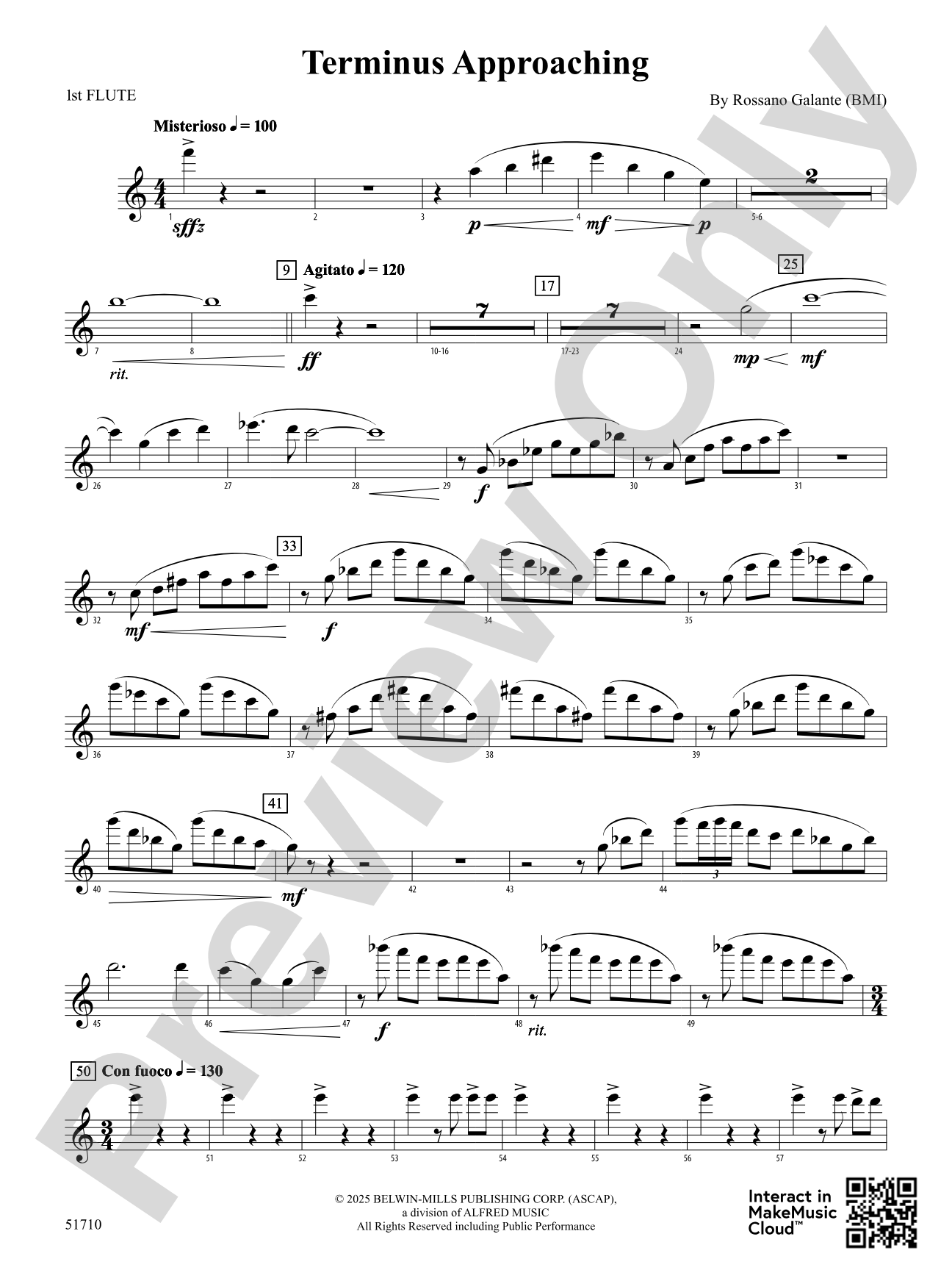

Terminus Approaching: Flute
By Rossano Galante
Grade: 4.5
Item: 00-PC-0019467_F1
$3.00
Pickup currently not available
Description
Throughout history, humanity has feared the end of civilization---whether by natural disaster, cosmic collision, or the eventual burnout of our sun. Terminus Approaching, by Rossano Galante, brings this looming fate to life in a powerful cinematic orchestral work. Sweeping harmonies, soaring string lines, bold horn themes, and relentless rhythmic ostinati build an atmosphere of suspense and inevitability. With its dramatic intensity and evocative scoring, this advanced piece will leave a lasting impact on performers and audiences alike. (4:15)


Don't just read it, hear it, play along with it, and watch your students grow with it. In MakeMusic Cloud, Terminus Approaching: Flute comes alive with professional accompaniment, adjustable tempo, and built-in practice tools that turn solo practice into real progress.
Open in the Player
Jump straight in and assign it today.
Start Your Free Trial
Open this title and explore the full library in minutes.
Sample Audio
1
Audio File
--:--
0:00
0:00
Sample Video
No sample videos found.
Additional Details
Series:
Belwin Symphonic Full Orchestra
Publisher:
Alfred Music
SKU:
00-PC-0019467_F1
More about this title
About the Composer: Rossano Galante

Rossano Galante earned his Bachelor of Arts in Trumpet Performance from SUNY Buffalo in 1992, then immediately pursued advanced study at the University of Southern California's Film Scoring Program, where he trained under the legendary Jerry Goldsmith. His education led to a distinguished career in Hollywood orchestration; over the past twenty-five years, he has served as orchestrator on more than eighty studio films, collaborating with Oscar-nominated composers Marco Beltrami, Christophe Beck, Brian Tyler, and Christopher Lennertz on major releases including the Avengers, A Quiet Place, Fast X, and The Super Mario Brothers Movie.
Beyond film work, Galante has become a prolific composer of concert music. He receives commissions for concert bands and orchestras worldwide and maintains a catalog of over 68 published compositions with leading music publishers including Alfred, Schirmer, Hafabra, C.L. Barnhouse, Musikverlag Frank, and Dehaske/Curnow. His dual expertise in cinematic scoring and concert writing gives his orchestral music its distinctive dramatic voice.
Why we love this
Galante's film orchestration experience translates into visceral, expertly layered scoring that keeps an audience gripped from start to finish. The sweeping string writing and bold brass themes create the kind of dramatic momentum that contests and festival audiences respond to immediately, while the disciplined use of rhythmic ostinati ensures clarity even at this advanced level. Performers feel the stakes of the piece the moment they begin playing.
What to expect
From its opening moments, Terminus Approaching creates an atmosphere of inexorable forward motion and cosmic scale. The piece builds through layered orchestration and mounting harmonic tension, evoking both the majesty and dread of an approaching catastrophe that cannot be stopped or negotiated with. It lands somewhere between contemporary film scoring and programmatic concert music, using orchestral color as narrative tool.
Who it's for
This work demands an orchestra with secure advanced players capable of balancing complex textural demands and sustaining long lines with control. Conductors leading ensembles at the Grade 4.5 level and above will find the dramatic scope and technical requirements appropriate for mature student orchestras, festival showcases, or recordings.
How to get the most out of it
- Balance the relentless rhythmic foundation with the soaring melodic lines above it; the ostinati should propel rather than overwhelm the strings and horns.
- Shape the sweeping harmonic progressions with attention to voice leading in the inner parts, especially where tension builds toward climactic moments.
- Coordinate the brass themes carefully between sections (horns, trumpets, trombones) so each restatement feels intentional rather than repetitive.
- Use tempo flexibility sparingly; the piece's power comes from its inevitability, so maintain rhythmic precision even as you shape phrase contours.
How to use it
Program this as a substantial centerpiece for a festival or concert devoted to contemporary orchestral works or film-inspired music. Its four-minute-fifteen-second duration and dramatic arc make it an ideal closer for a concert program, or pair it with other programmatic pieces that explore themes of nature's power or human resilience. The film scoring credentials and cinematic language will resonate with mixed audiences beyond traditional orchestra enthusiasts.
Skills your students will build
- Balancing dense, layered orchestration while maintaining textural clarity
- Sustaining long melodic lines in upper strings with consistency of tone and intonation
- Executing complex rhythmic ostinati with precision under varying dynamic pressure
- Coordinating thematic material across multiple brass sections (horns, trumpets, trombones)
- Responding to subtle conducting gestures that shape harmonic tension and phrase contour