
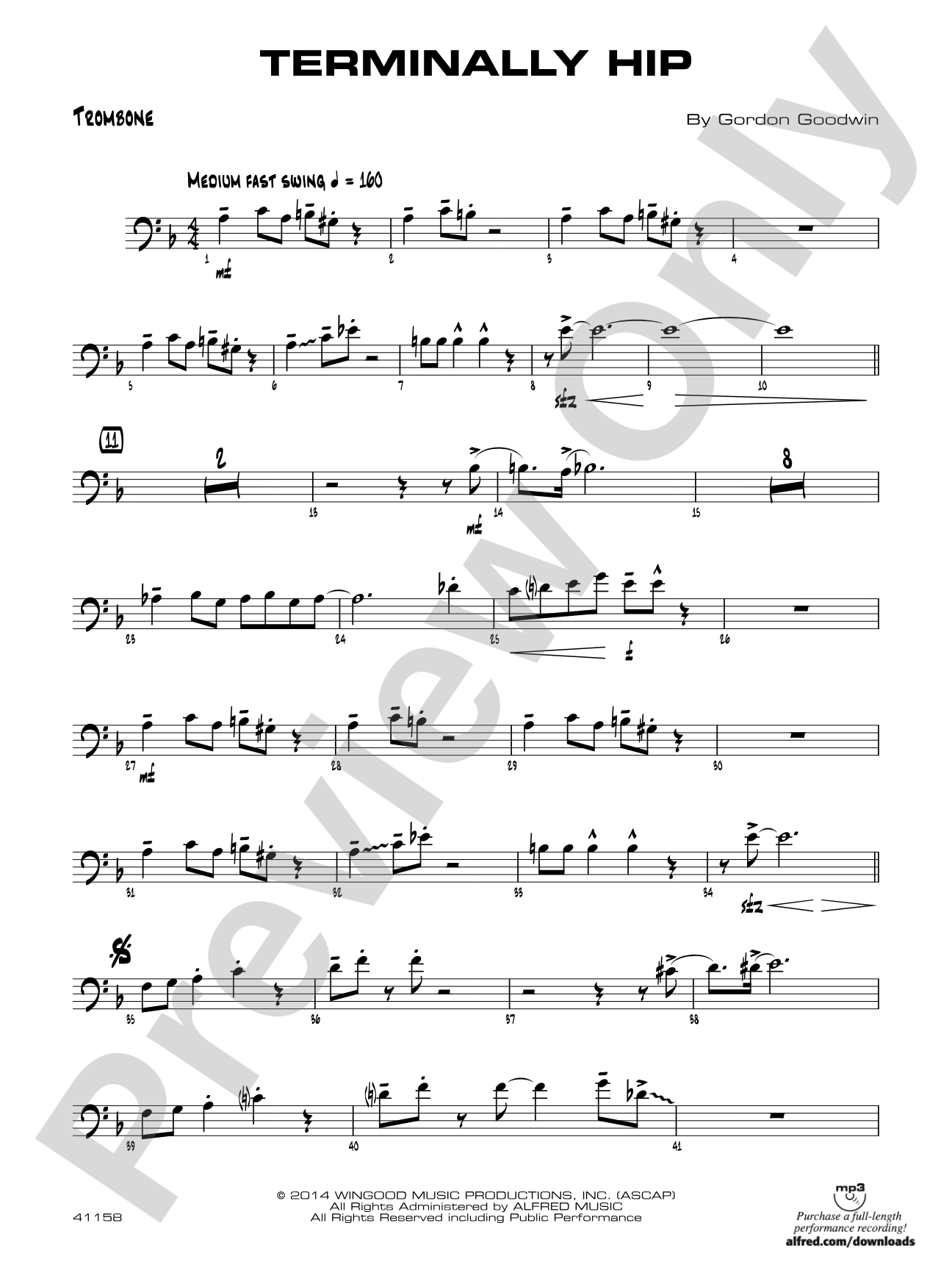

Terminally Hip: 1st Trombone
As Performed by Gordon Goodwin's Little Phat Band
By Gordon Goodwin
Grade: 3 (Medium)
Item: 00-PC-0016287_TN1
$5.99
Pickup currently not available
Description
A medium bright swing at 160 BPM for Grade 3. The instrumentation is for tenor sax, trumpet, trombone, piano, bass, guitar, and drums, and the chart includes solo space for all. (3:52)


Don't just read it, hear it, play along with it, and watch your students grow with it. In MakeMusic Cloud, Terminally Hip: 1st Trombone comes alive with professional accompaniment, adjustable tempo, and built-in practice tools that turn solo practice into real progress.
Open in the Player
Jump straight in and assign it today.
Start Your Free Trial
Open this title and explore the full library in minutes.
Sample Audio
1
Audio File
--:--
0:00
0:00
Sample Video
Additional Details
Series:
Gordon Goodwin Little Phat Band Series
Publisher:
Alfred Music
Page Count:
30
SKU:
00-PC-0016287_TN1
More about this title
About the Composer: Gordon Goodwin

Gordon Goodwin heard complete compositions in his head from early childhood and began transcribing them at age five. By thirteen, he had already written his first big band chart, Hang Loose, signaling the compositional maturity that would define his career. His work in film and television earned him three Emmy Awards and multiple Grammy nominations, with orchestrations featured in films ranging from Bad Boys II to Remember the Titans. He has written for and performed alongside major artists including Quincy Jones, Christina Aguilera, Ray Charles, and Sarah Vaughn, conducting with symphony orchestras across North America and Europe.
Since 2000, Goodwin has led Gordon Goodwin's Big Phat Band, an LA-based jazz ensemble that has become a Grammy-nominated force in contemporary big band jazz. His recordings have pushed technical boundaries in audio format and continue to showcase his distinctive approach to big band writing: energetic, accessible, and deeply rooted in the swing tradition.
Why we love this
Goodwin writes jazz charts that sound far more sophisticated than their Grade 3 designation suggests, giving student ensembles genuine musical gratification. The swing groove is infectious and the solo opportunities across the full instrumentation mean every section of your band gets a moment in the spotlight. His writing here balances straightforward section writing with just enough harmonic color to keep advanced listeners engaged.
What to expect
Buoyant and contemporary, with the easy confidence of a seasoned bandleader who knows exactly how to make a group sound unified and swinging. The piece moves with purpose at 160 BPM while maintaining the laid-back pocket that defines medium-tempo swing, giving the band room to breathe and the soloists room to shine.
Who it's for
Jazz ensemble directors working with capable Grade 3 groups who want authentic big band repertoire without the note-reading demands of more complex charts. Students benefit from learning swing articulation, section discipline, and solo jazz language from a composer with serious credentials in the professional jazz world.
How to get the most out of it
- Lock the rhythm section into a tight pocket at 160 BPM. The groove rides on how cleanly the piano, bass, guitar, and drums communicate with each other, so rehearse them as a unit separate from the horns.
- Shape the unison horn lines with clear articulation and consistent phrasing. These carry the melodic identity of the piece and define the "bright" quality Goodwin is after.
- Give soloists room to stretch their sound. Because each soloist has dedicated space, encourage them to develop a personal voice rather than rushing through the changes. The rhythm section can help by locking in completely underneath.
- Balance the texture between the front line and comping instruments. The piano and guitar should complement rather than overpower the melody, especially in the head.
How to use it
Program this as a centerpiece for a jazz-focused concert or as evidence of sophistication when building a mixed-genre evening. Its accessibility and genuine swing feel make it an excellent choice for audiences new to jazz ensemble music, and the energy level provides an ideal platform to demonstrate what a well-rehearsed student band can achieve.
Skills your students will build
- Swing articulation and phrasing in unison horn lines
- Maintaining a steady jazz groove as a rhythm section
- Trading solos and comping changes over a walking bass
- Balancing section sound with individual voice in improvisation
- Reading jazz lead sheets and interpreting chord changes