
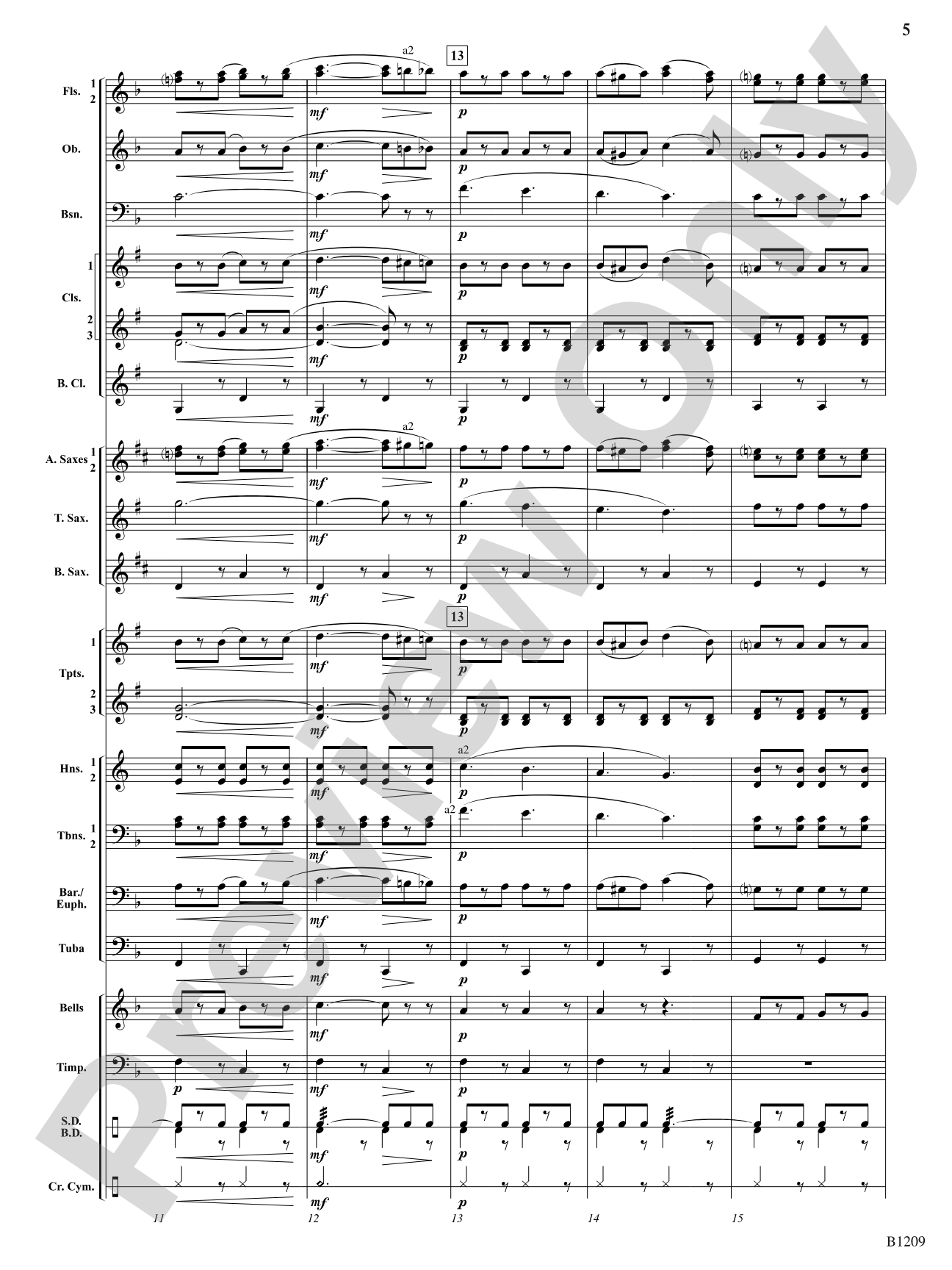
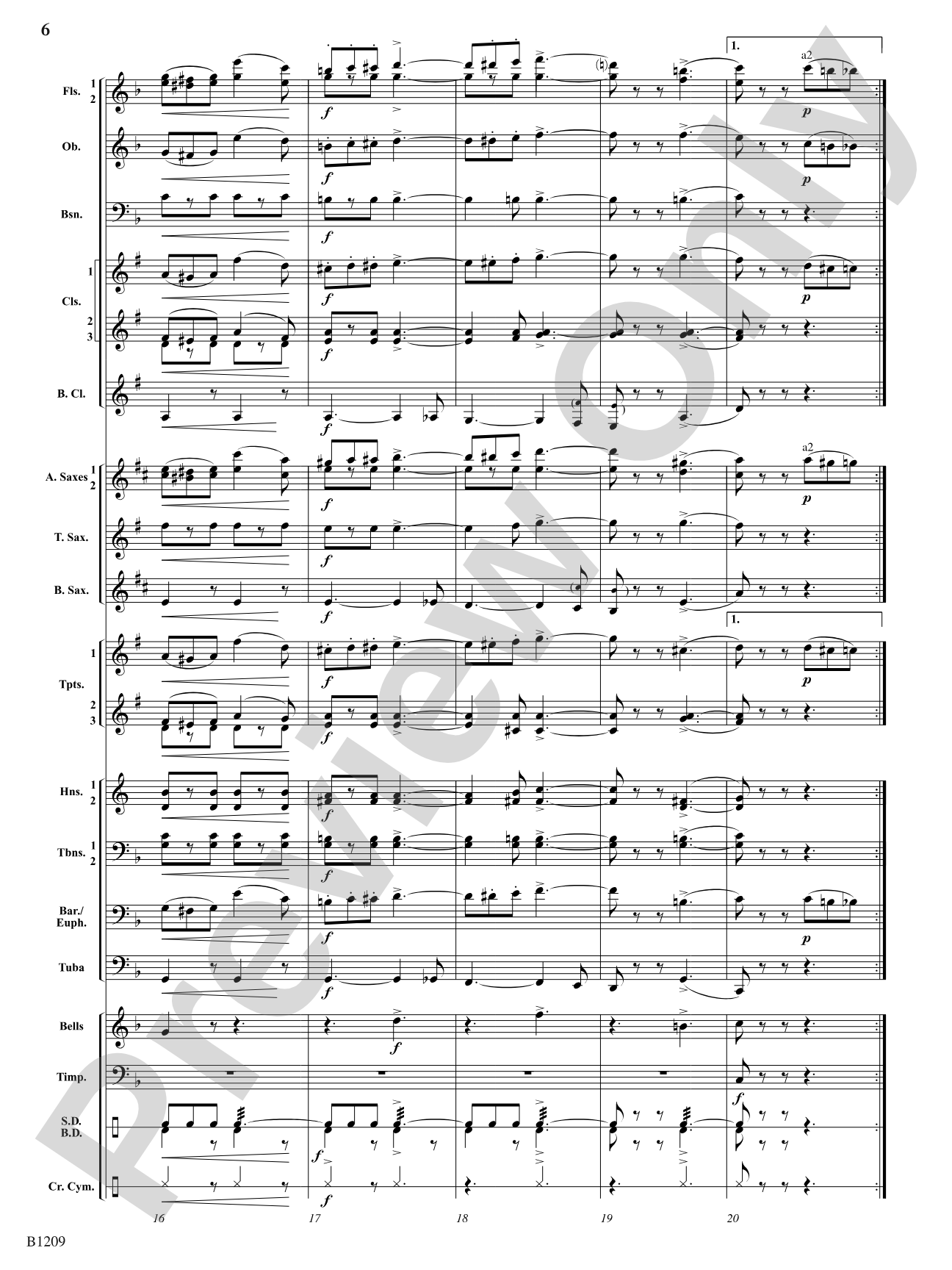
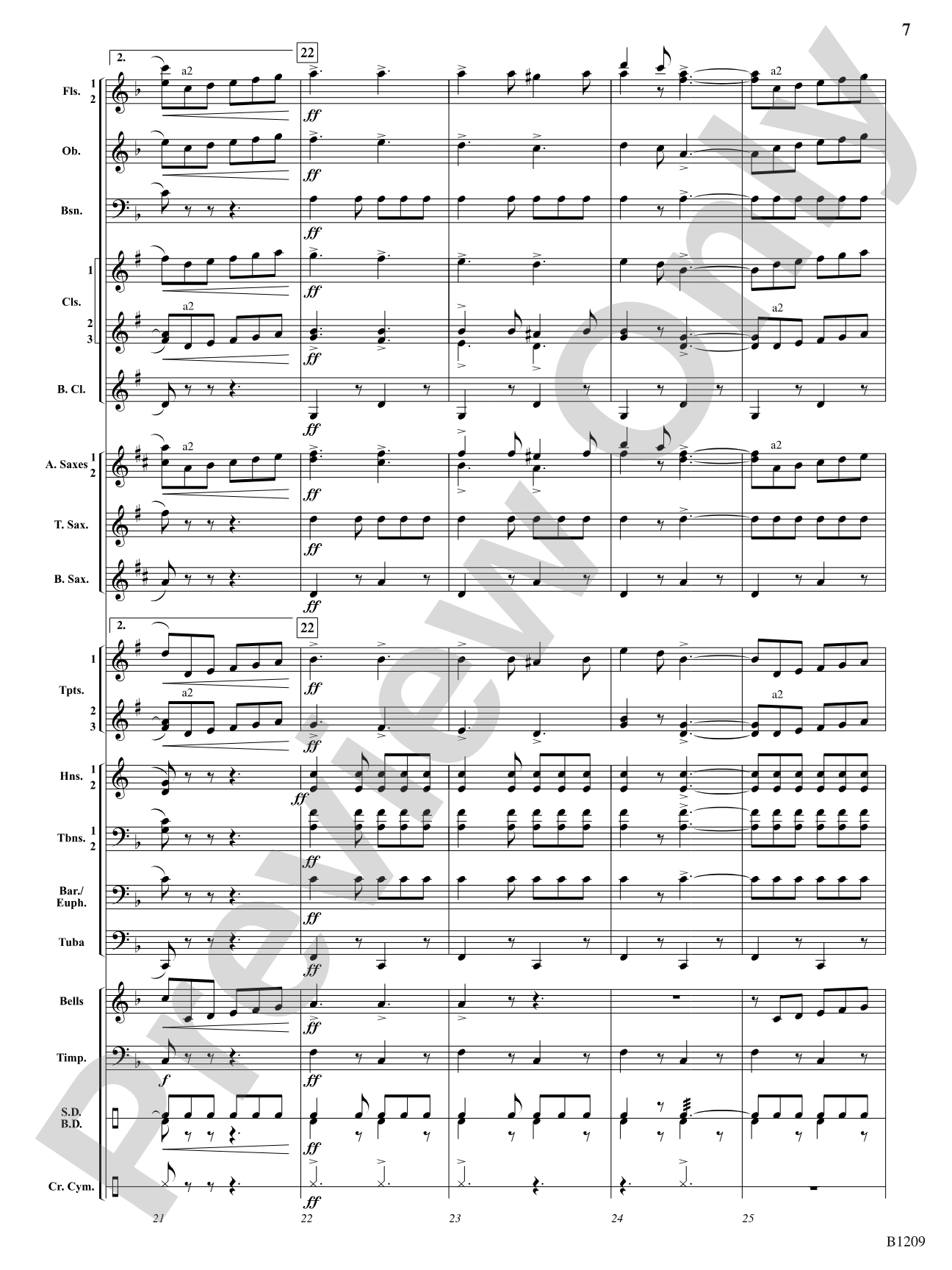
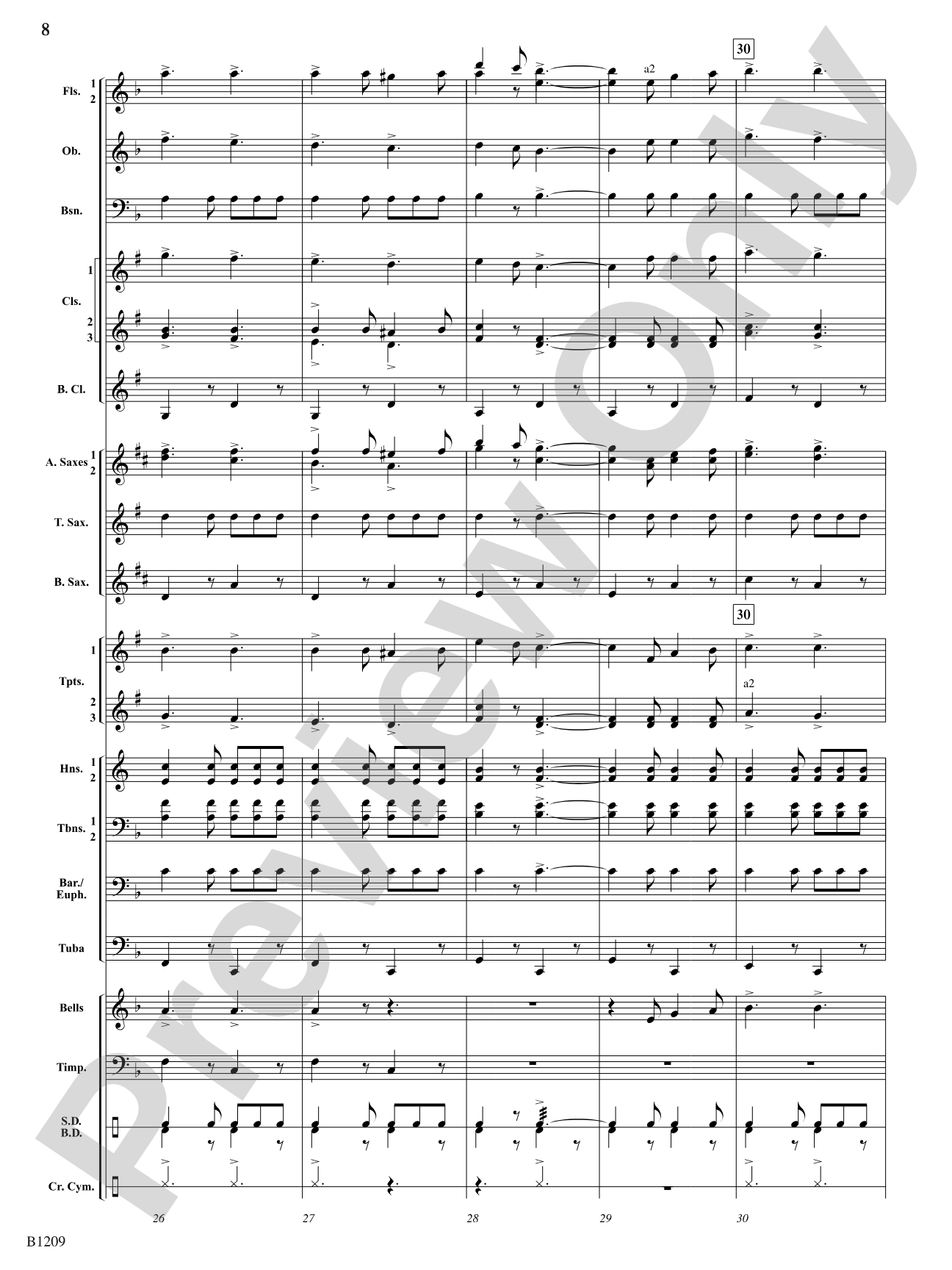
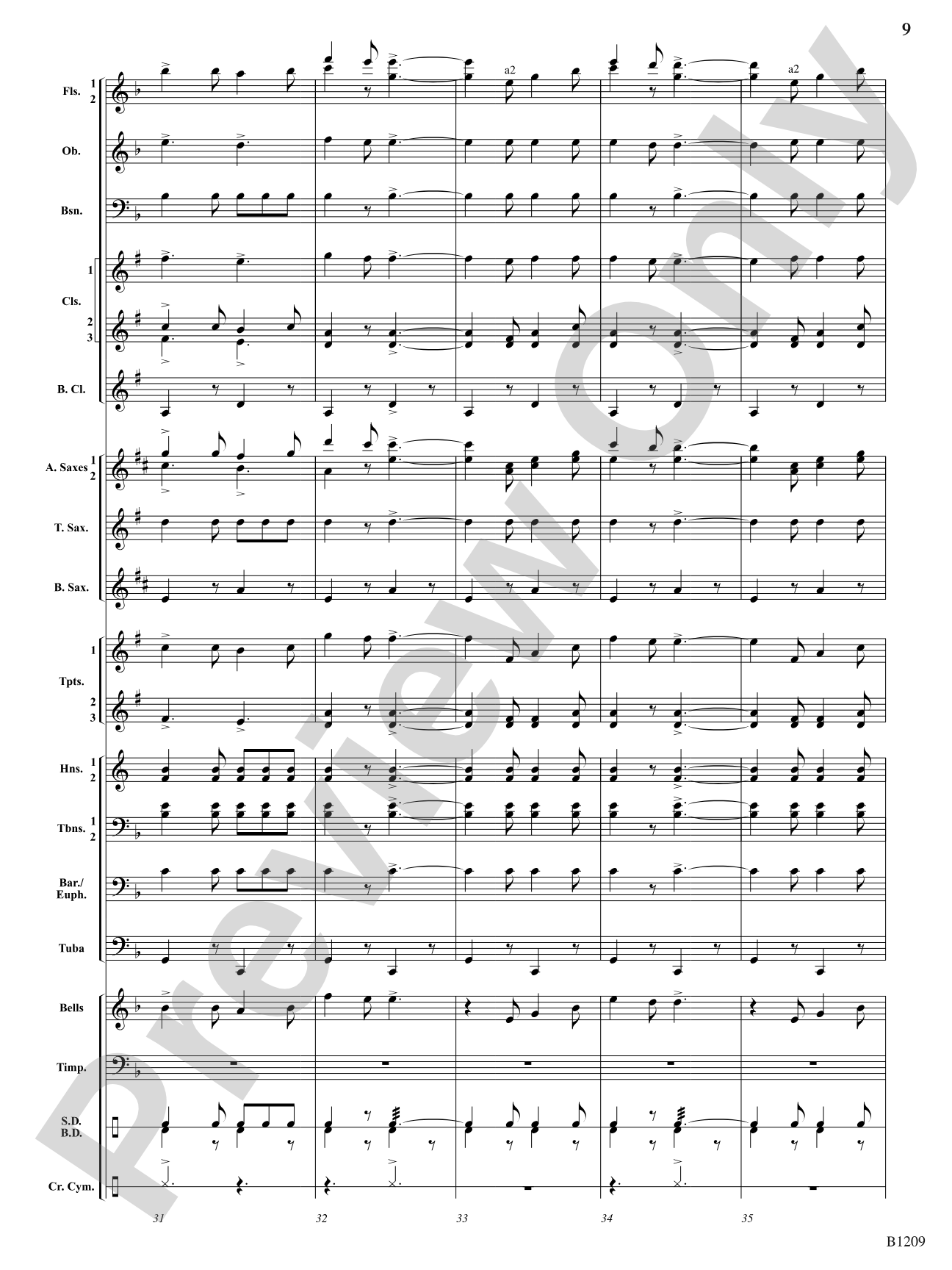
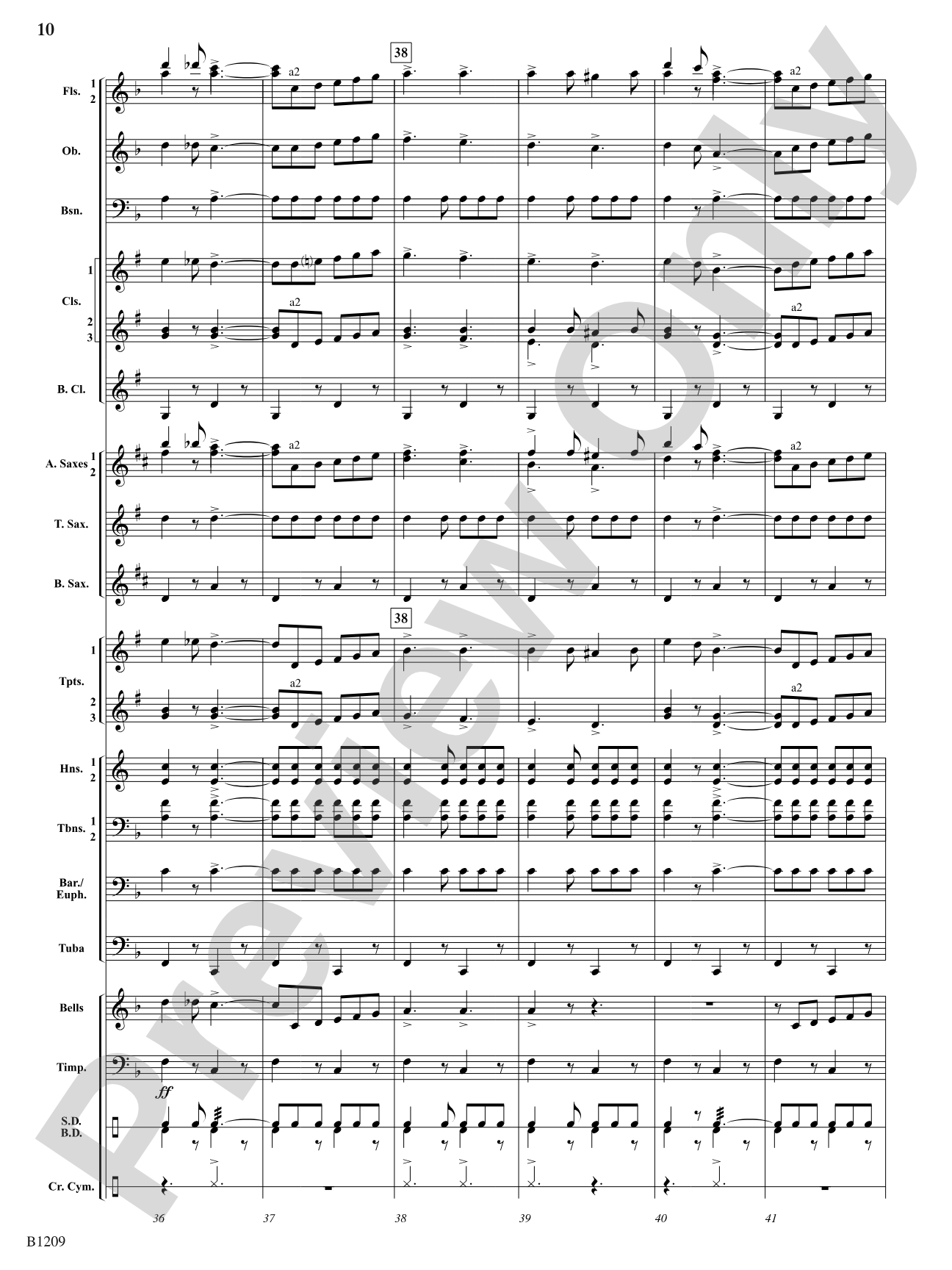
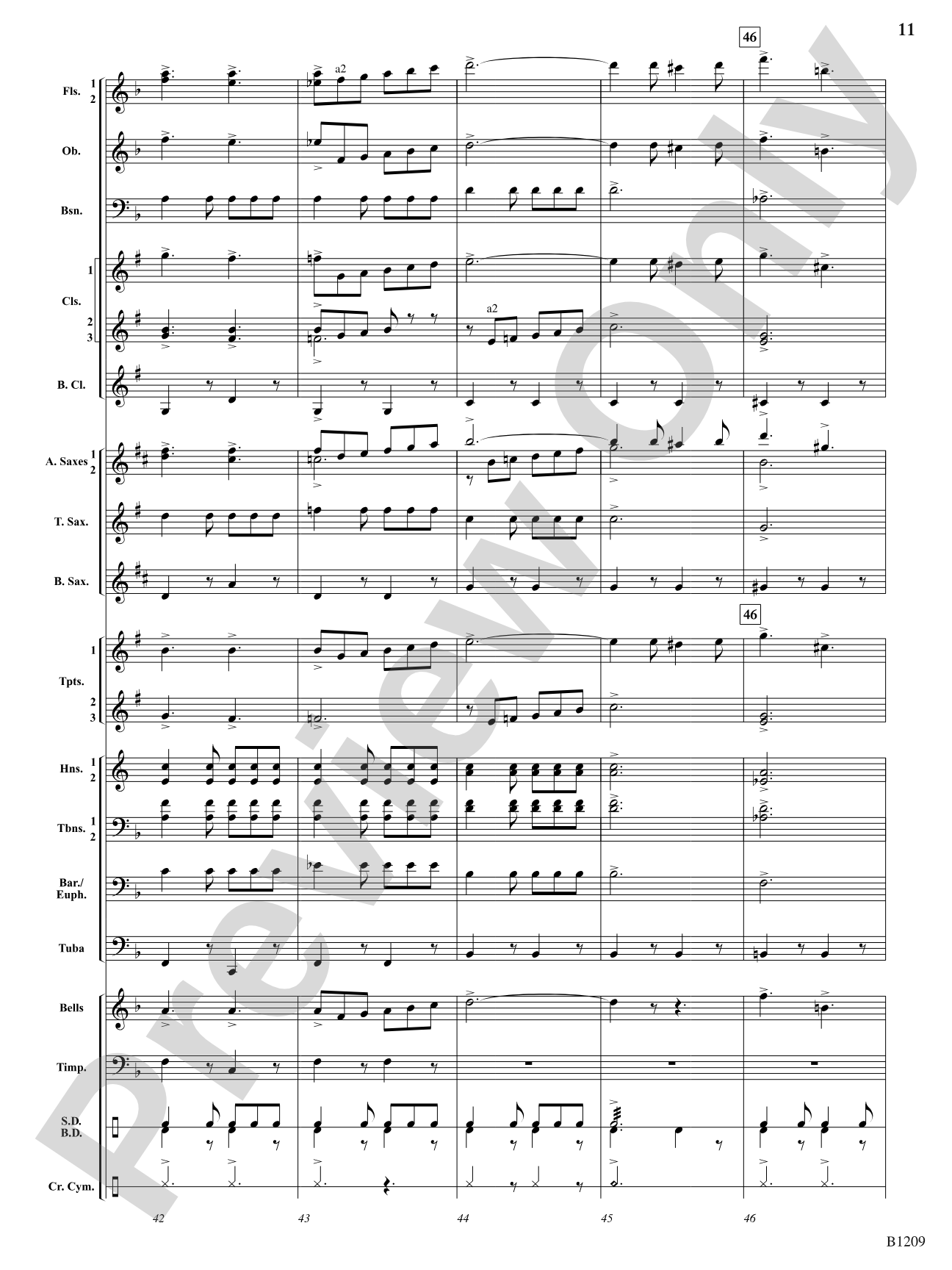
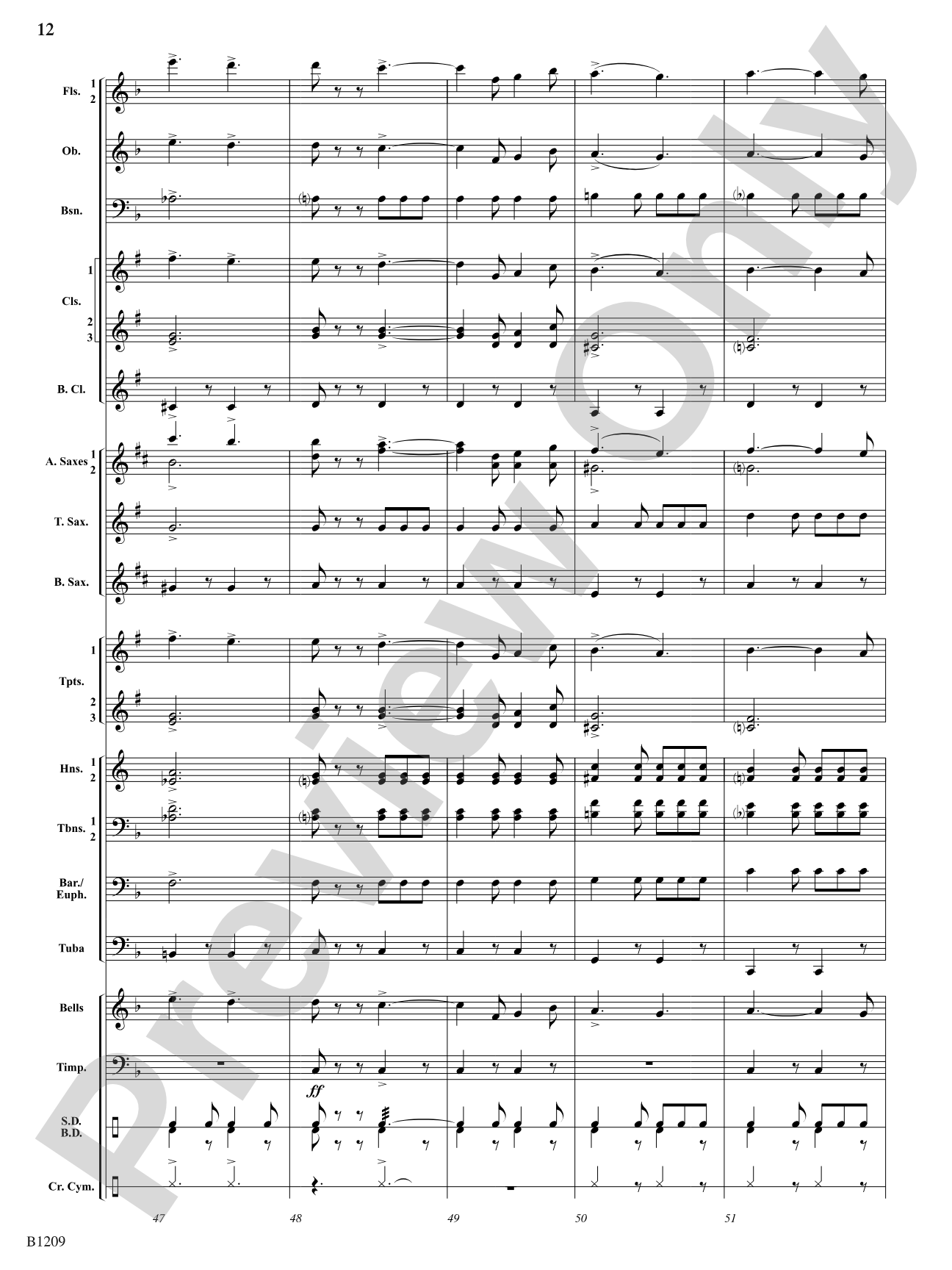
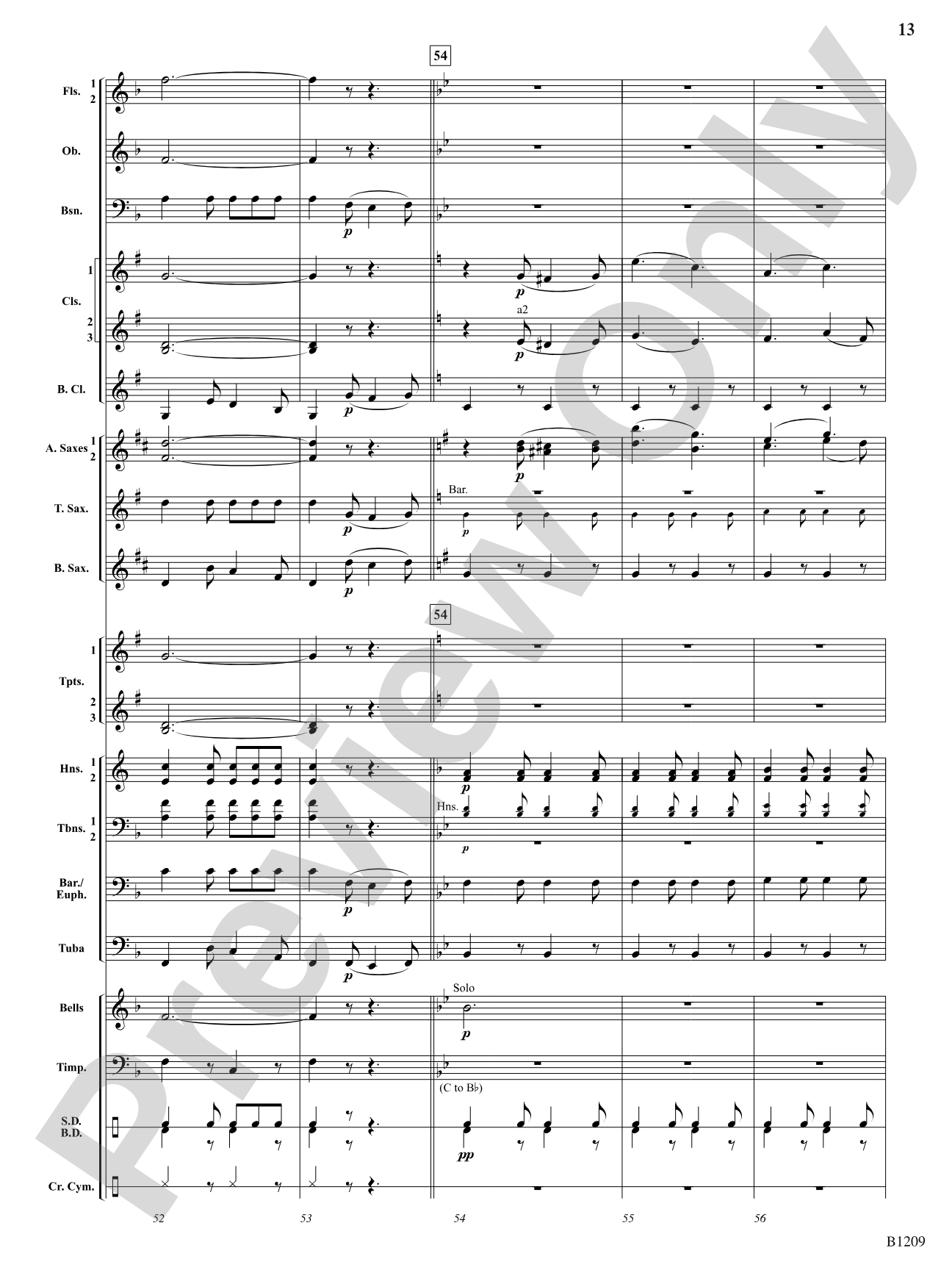
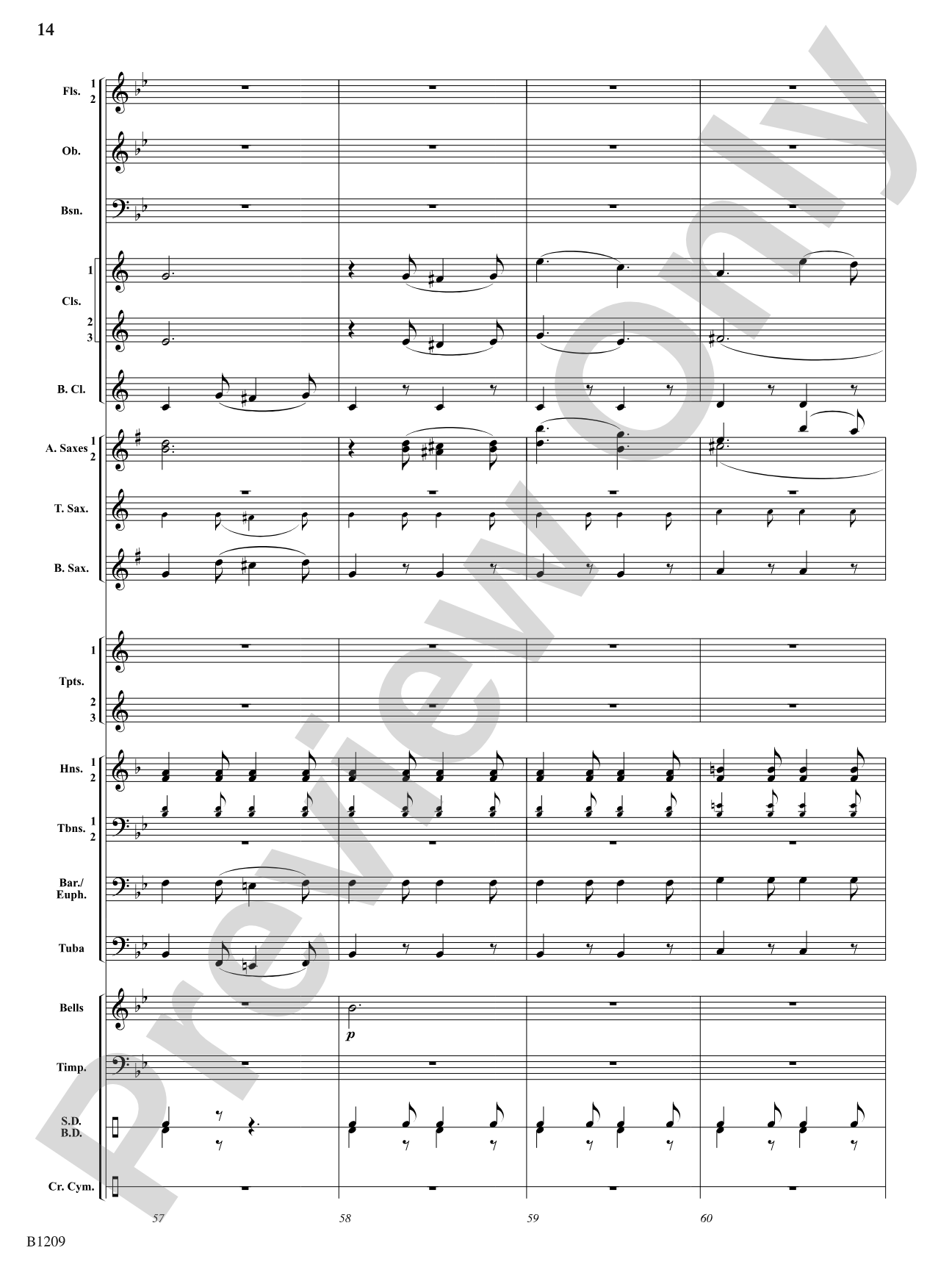
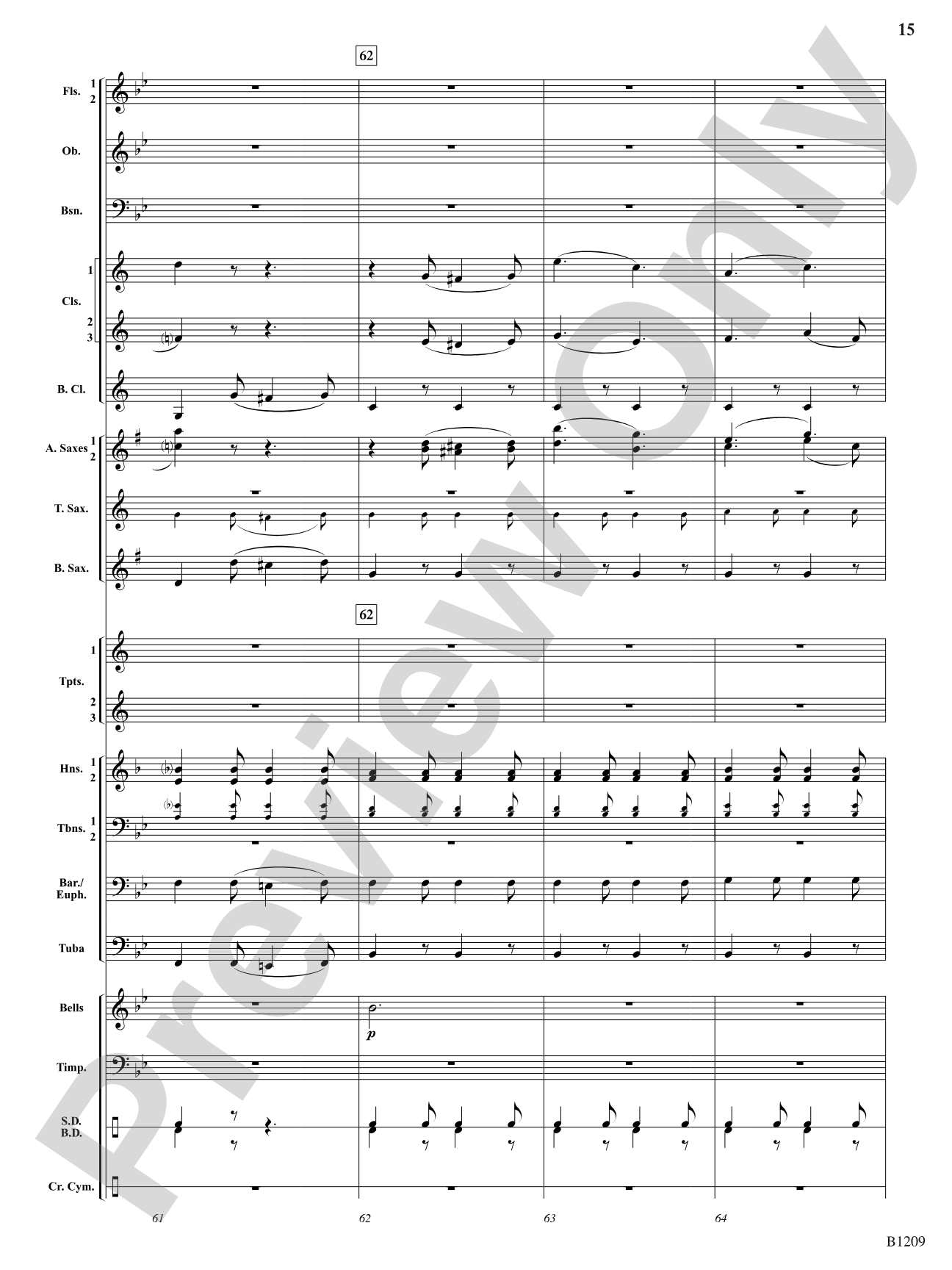
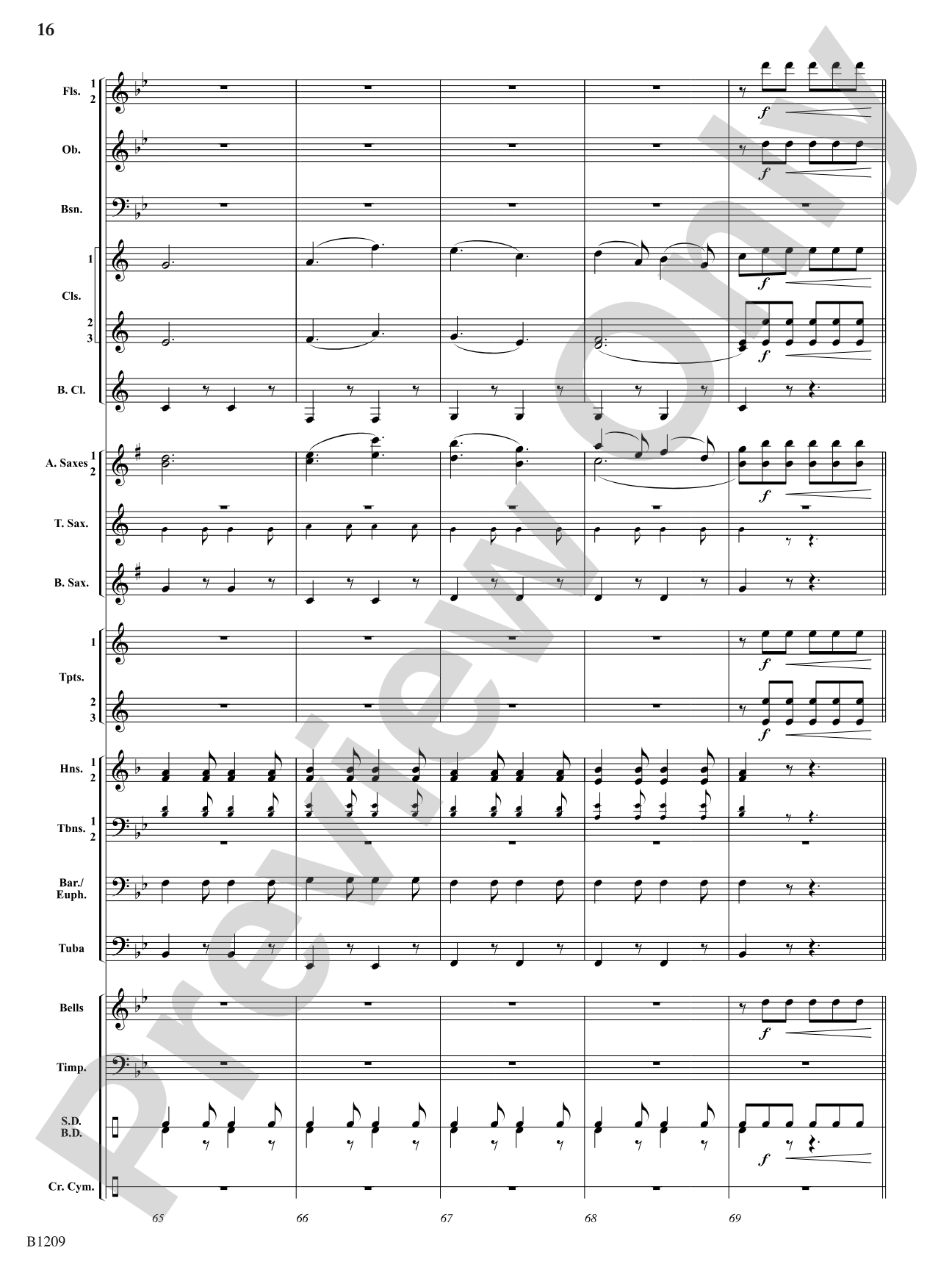
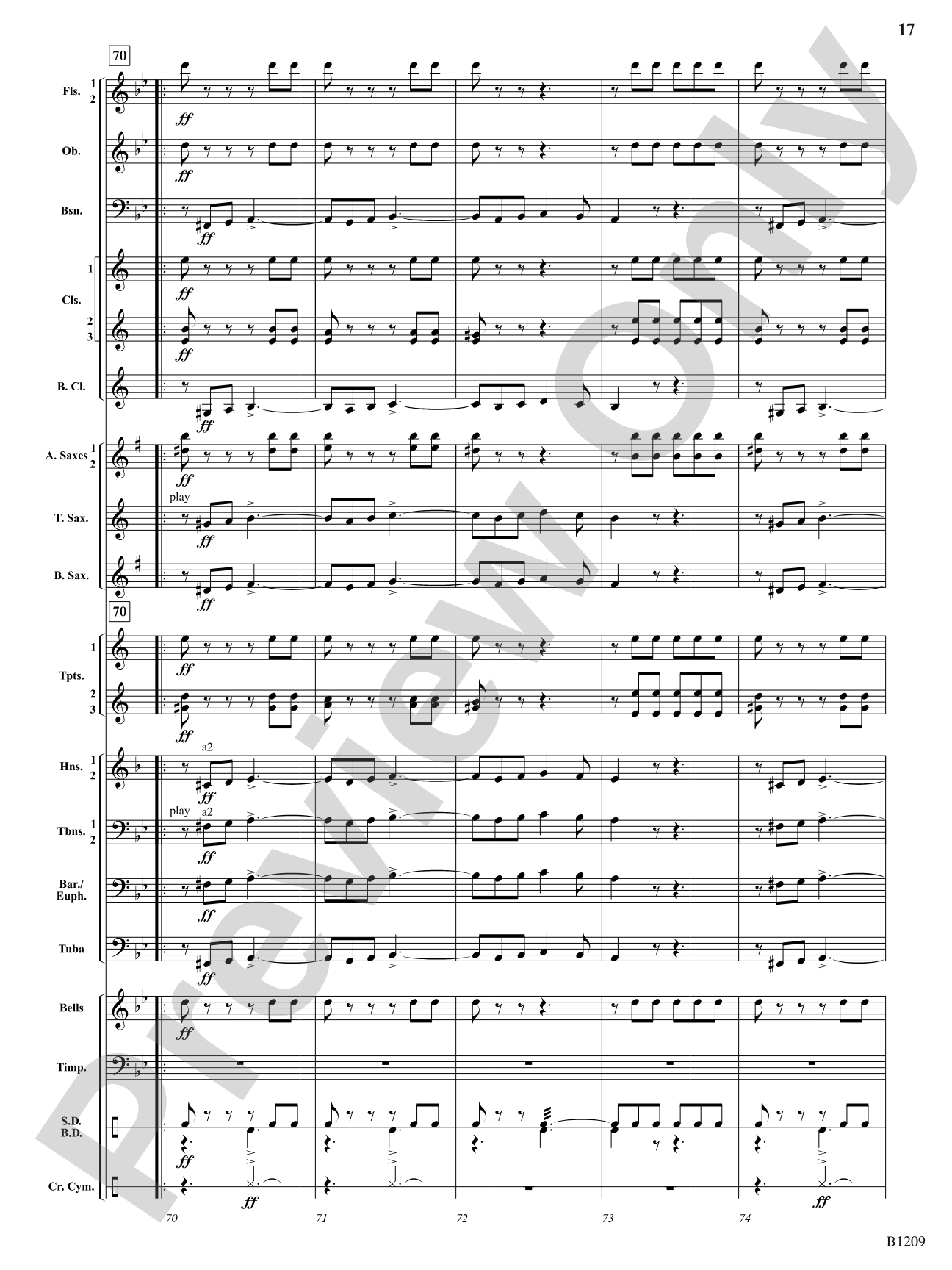
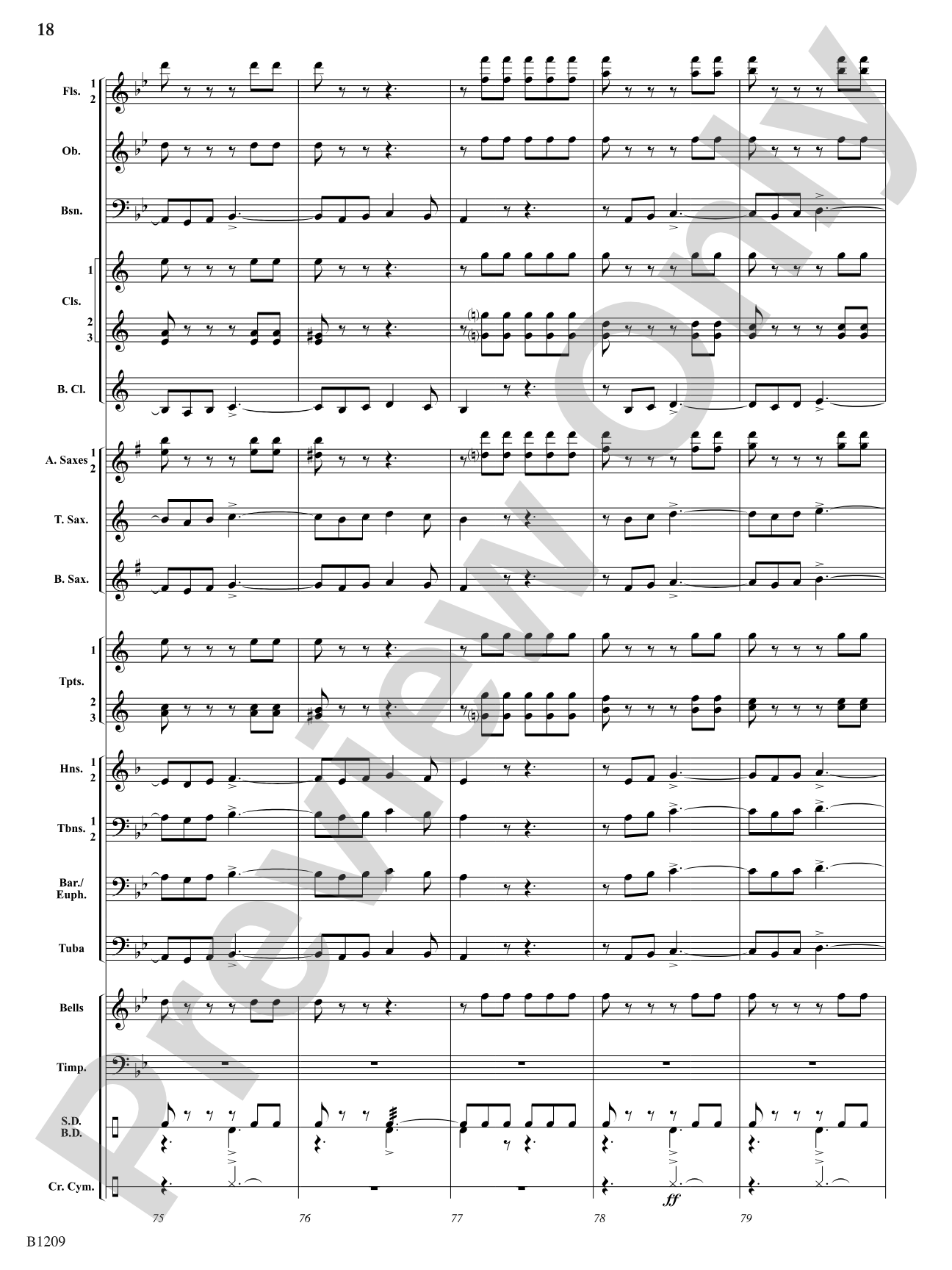
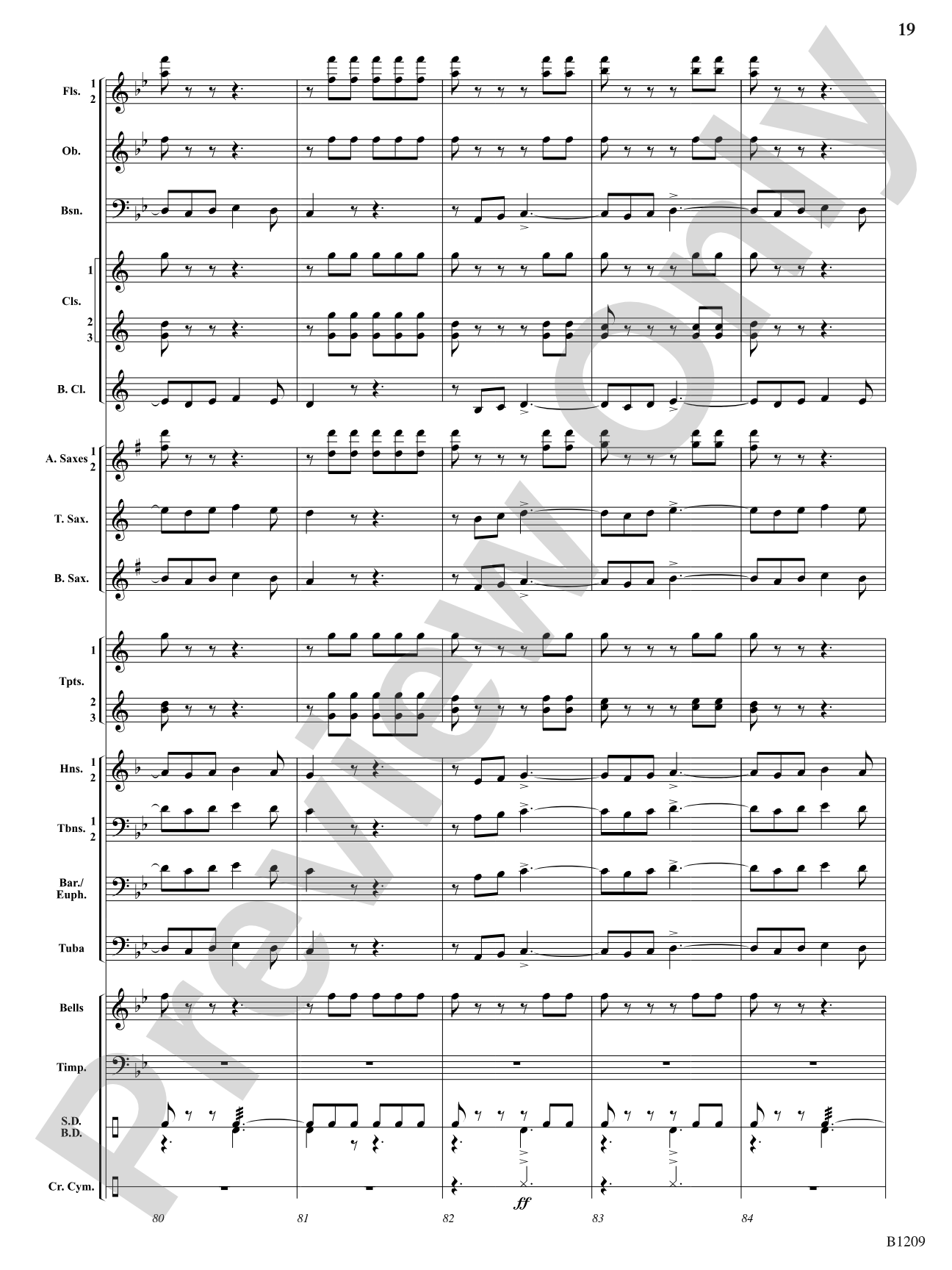
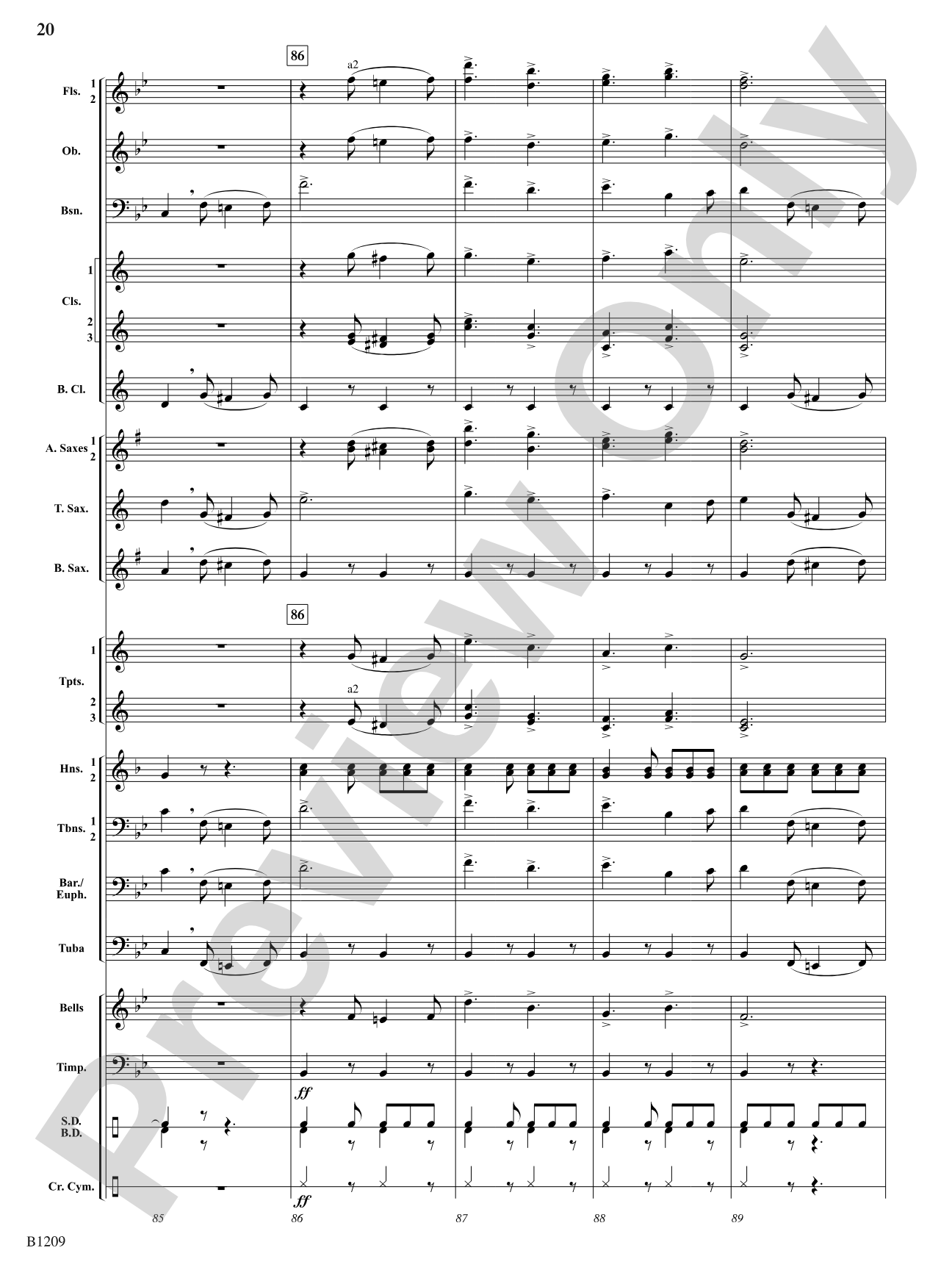
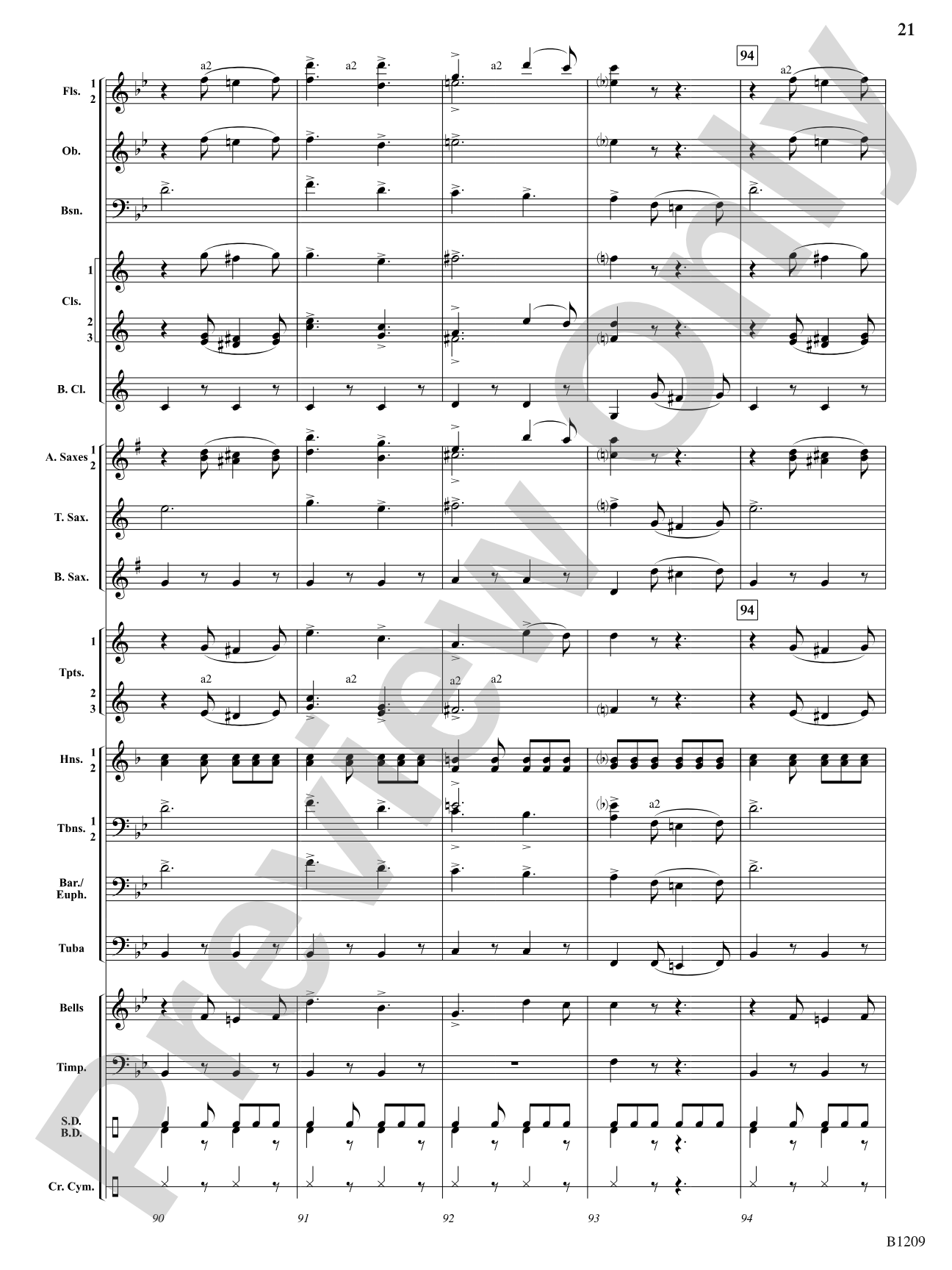
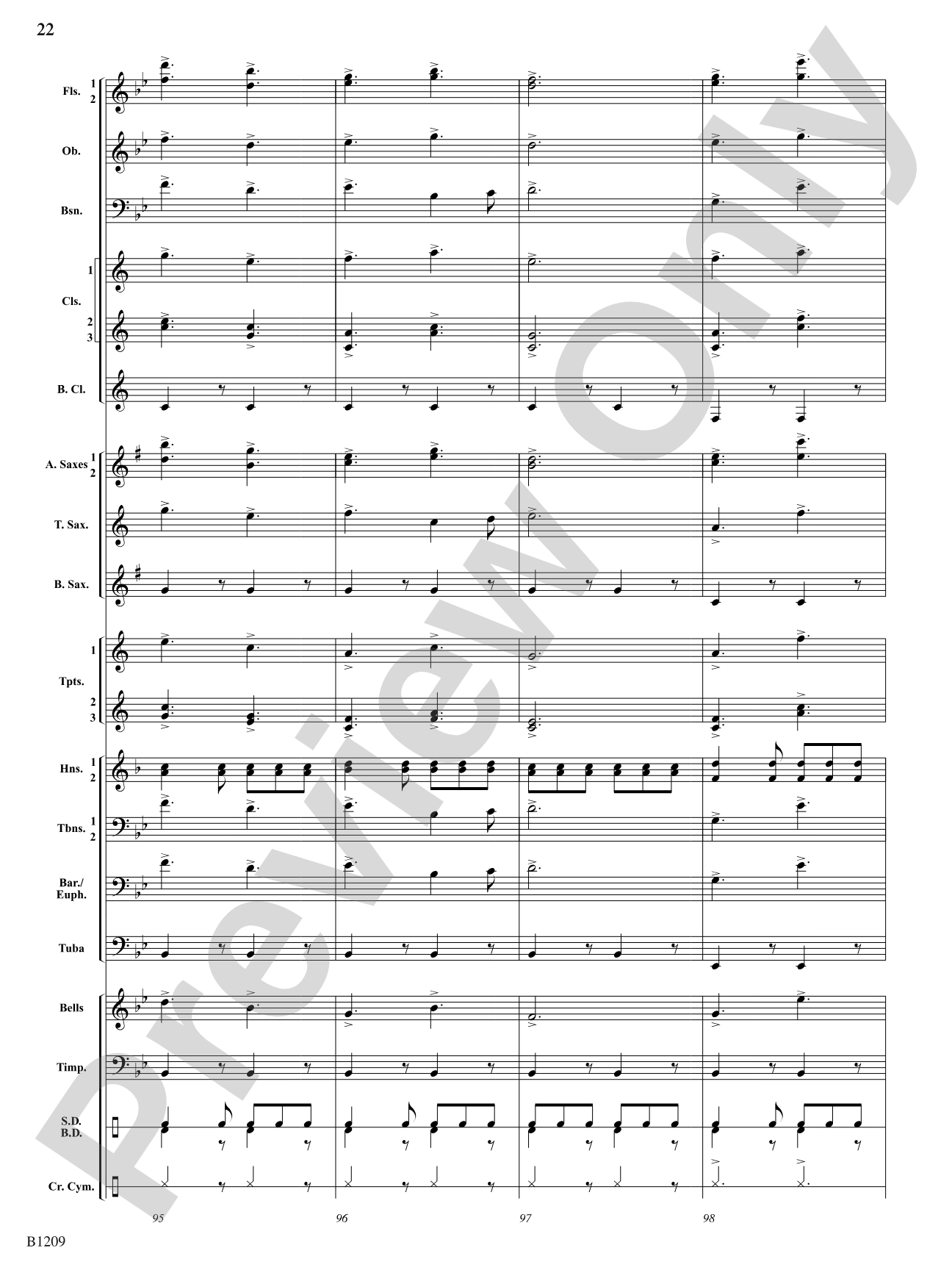
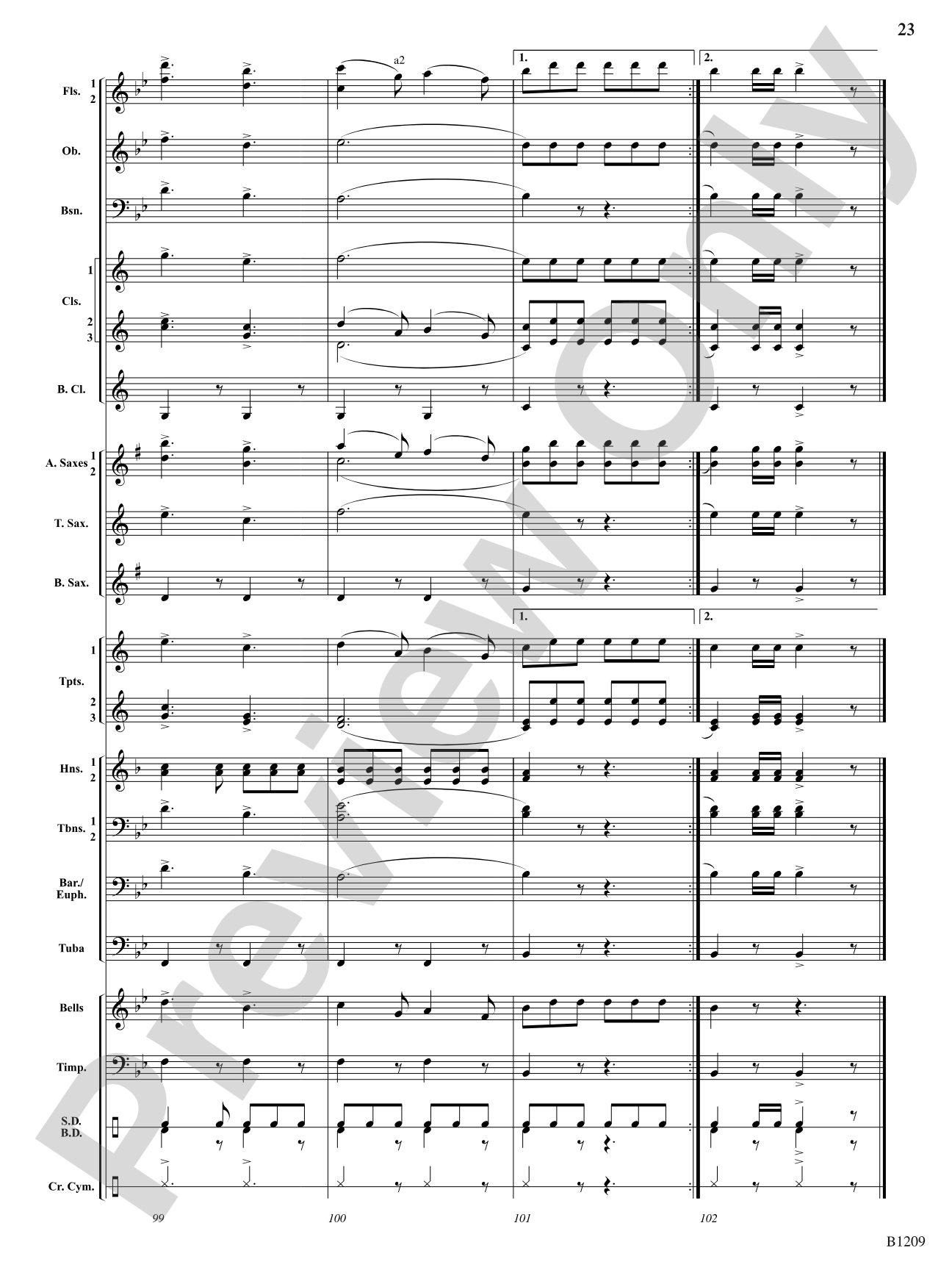

Tenth Regiment March: Score
By Robert Brown Hall / arr. Andrew Balent
Grade: 3
Item: 98-DB1209S
$7.00
Pickup currently not available
Description
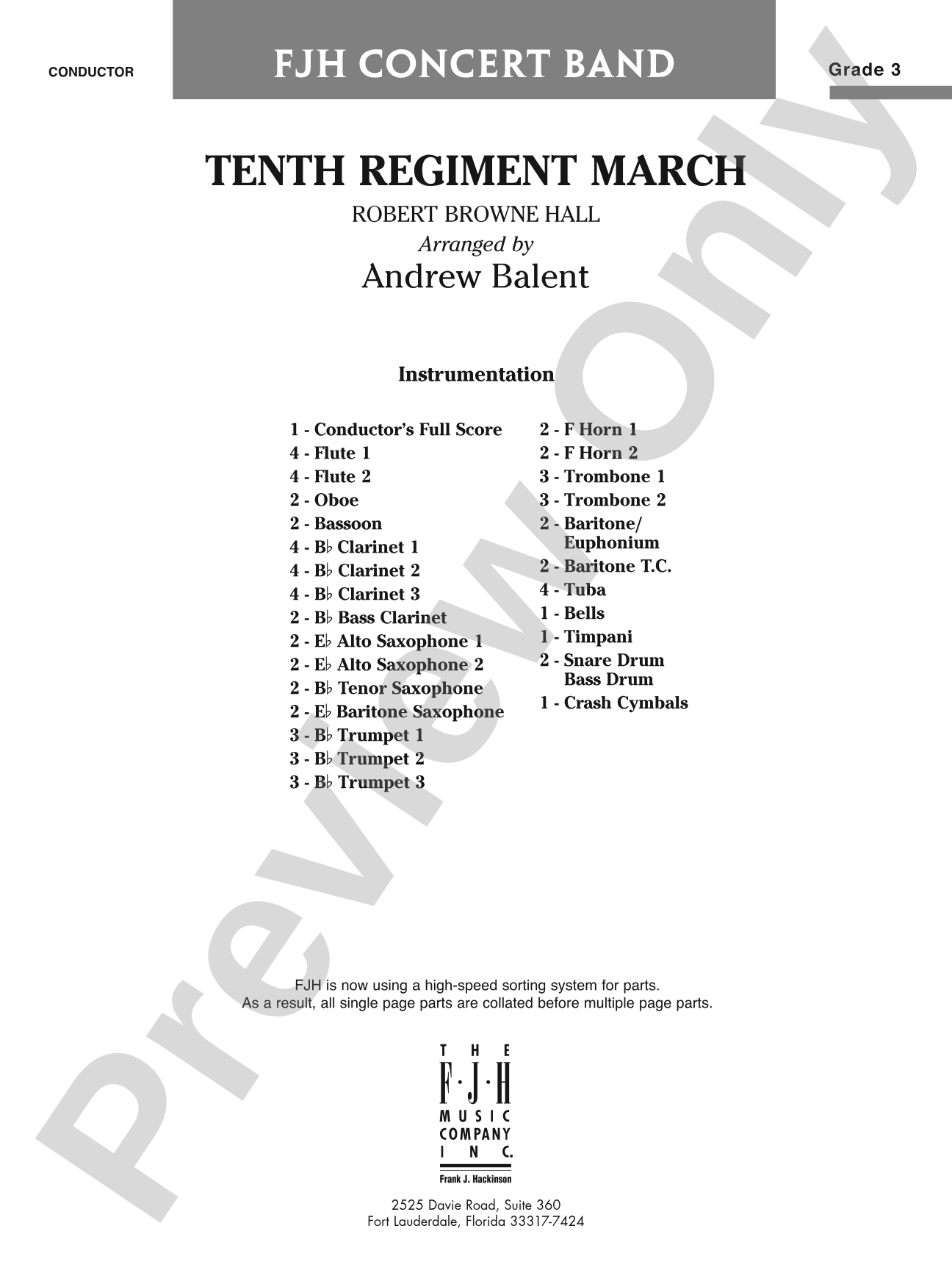
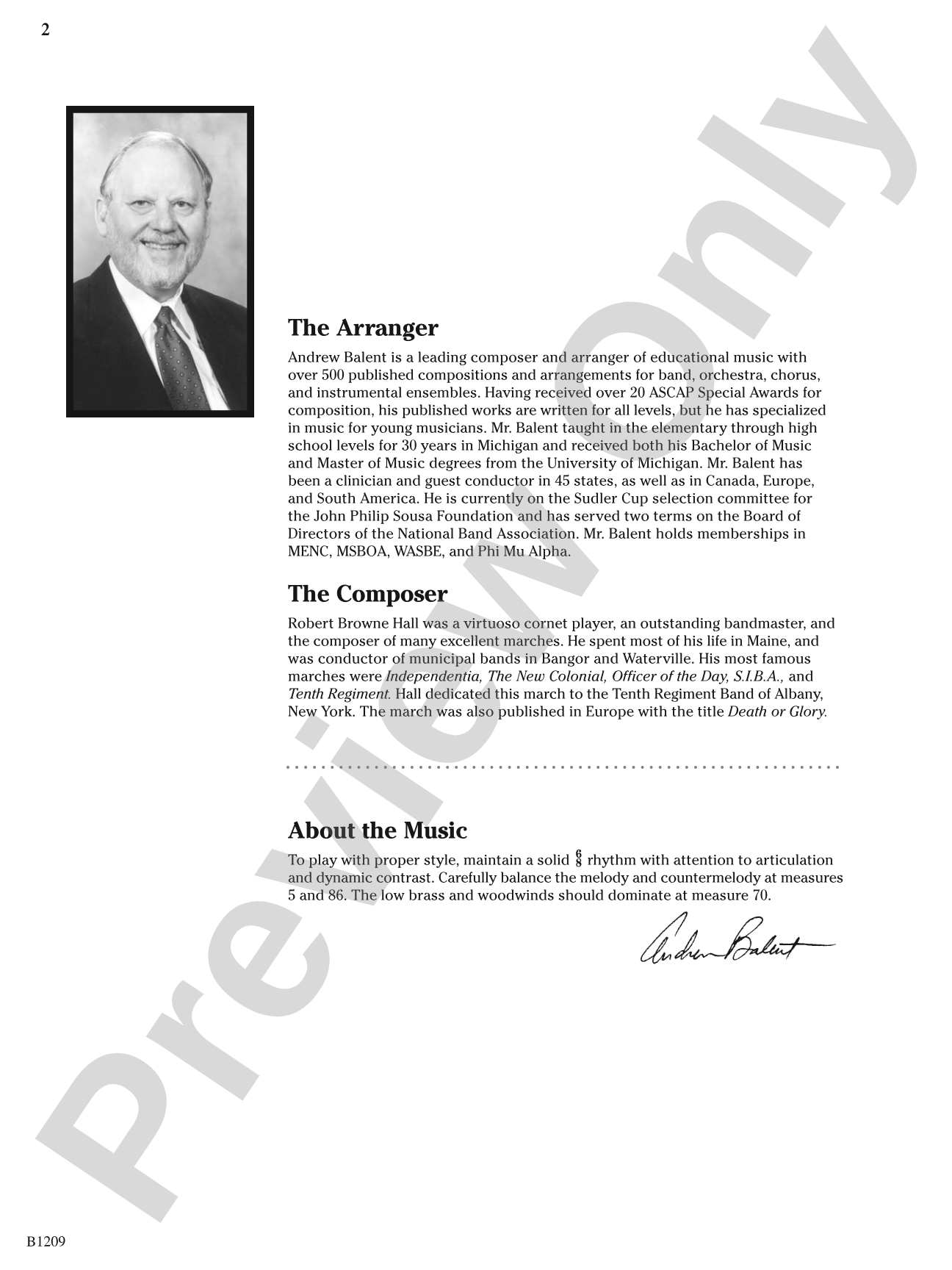
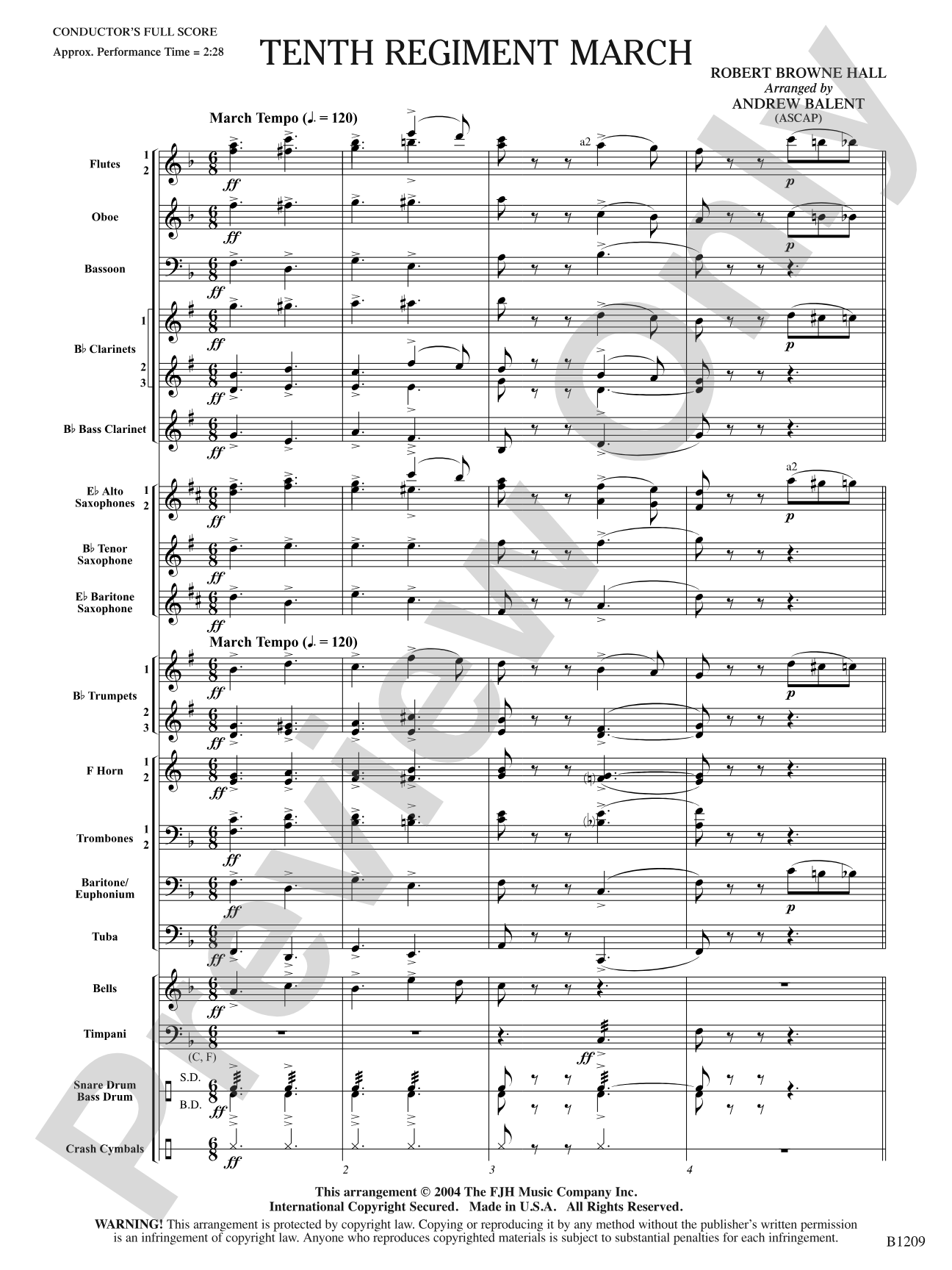
Robert Browne Hall was a virtuoso cornet player, an outstanding bandmaster, and the composer of many fine marches. This excellent arrangement by Andrew Balent captures all the flair of a traditional concert march and makes the perfect addition to your next performance. An excellent choice and a wonderful way to work on 6/8 with your ensemble.


Discover MakeMusic Cloud: thousands of interactive titles your students can play along with today.
Sample Audio
1
Audio File
--:--
0:00
0:00
Sample Video
No sample videos found.
Additional Details
Series:
FJH Concert Band
Publisher:
The FJH Music Company, Inc.
SKU:
98-DB1209S
More about this title
About the Composer: Robert Brown Hall
Robert Brown Hall was a celebrated cornet virtuoso and bandmaster whose compositions became staples of the American concert band repertoire. His marches and characteristic pieces showcased the technical brilliance of the cornet while remaining accessible to community and school ensembles, earning him recognition as a prolific voice in band literature during the late nineteenth and early twentieth centuries.
Why we love this
Andrew Balent's arrangement preserves Hall's march character while serving a specific pedagogical goal: giving your ensemble a chance to explore 6/8 meter through repertoire that sounds like a real concert march, not an exercise. The piece swings with genuine style, so students stay engaged while building their understanding of compound meter.
What to expect
A spirited march with old-school charm and energy. The 6/8 meter gives it a swinging, almost waltz-like character that feels lighter and more elegant than the typical cut-time march, while the cornet heritage of the original shines through in bright, confident writing.
Who it's for
Grade 3 concert bands ready to tackle compound meter through performance rather than drills. This arrangement works equally well for ensembles building their march repertoire or for programs that benefit from a crowd-pleasing traditional concert piece.
How to get the most out of it
- Keep the 6/8 pulse lilting and dance-like rather than plodding. Think of the measure as one beat with three subdivisions, not as a slow 3/4.
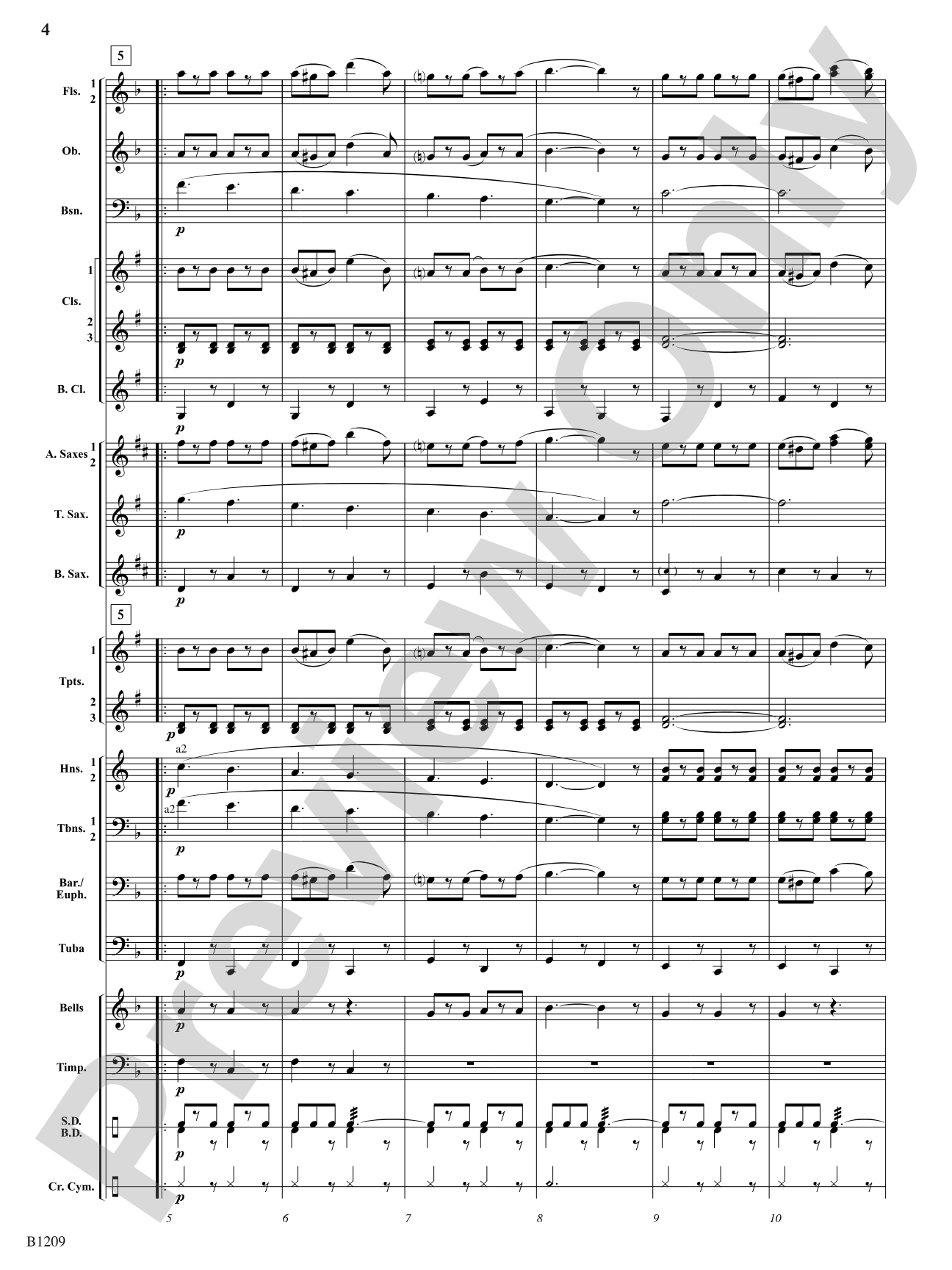
- Balance the melodic lines across sections so the march character stays clear. Avoid letting any one voice overwhelm the ensemble texture.
- Articulate march rhythms crisply and uniformly across the band. Consistency in the articulation of the characteristic rhythmic figures will highlight the piece's traditional charm.
How to use it
Pair this with other marches to create a thematic segment of your concert, or program it as a sharp contrast to a slower work. It also serves as an excellent closer to a pops or family concert, where the traditional march idiom and transparent orchestration will resonate with audiences.
Skills your students will build
- Reading and performing in 6/8 meter with proper compound meter feel
- Maintaining clarity and pulse in march articulations and rhythmic figures
- Balancing melodic content across multiple instrumental voices
- Developing tone and style appropriate to traditional concert march repertoire