
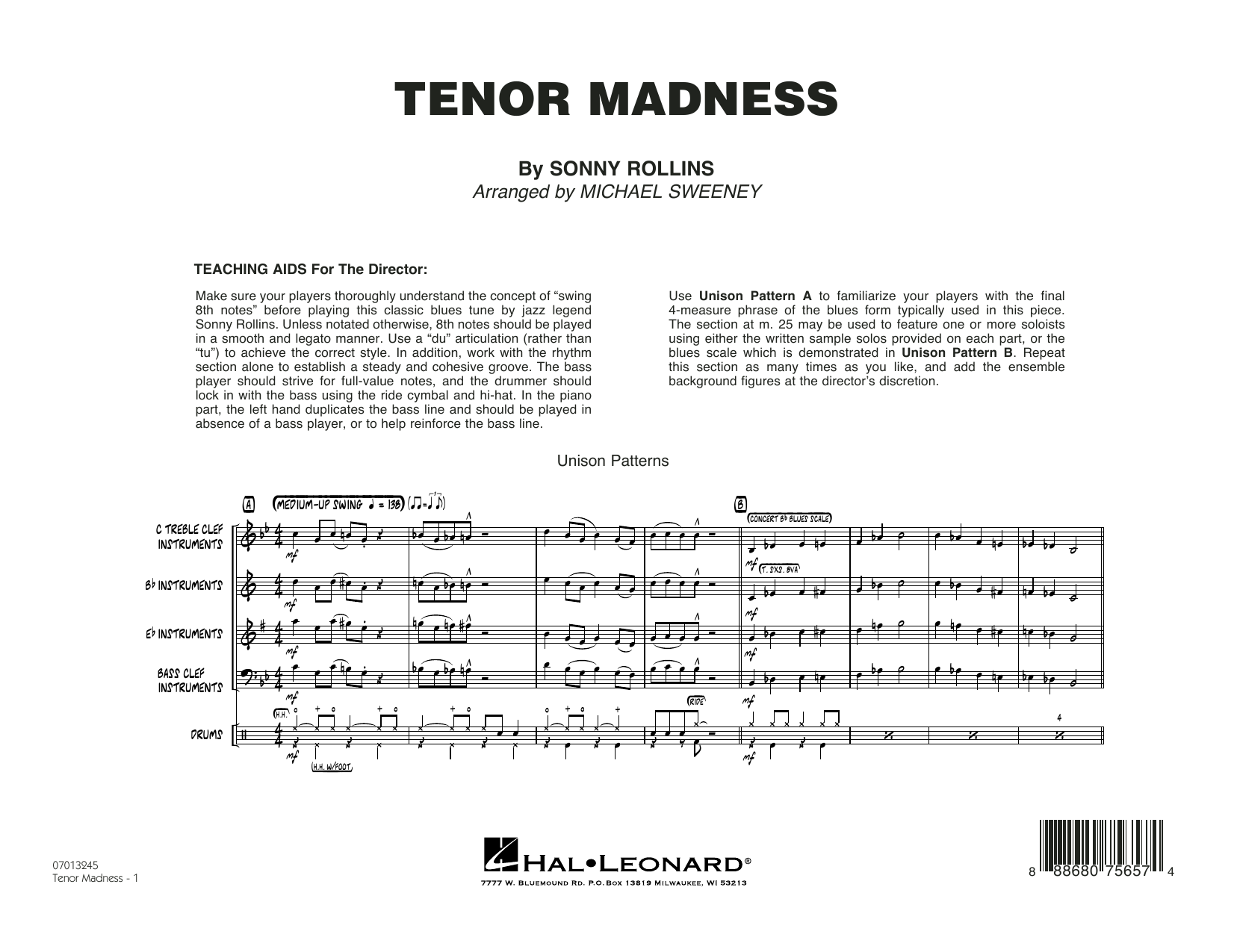

Tenor Madness (arr. Michael Sweeney): Jazz Ensemble Conductor Score & Parts
Grade: 1.5
Item: 35-PK00422803
$40.00
Pickup currently not available
Buy Extra Parts (Digital PDF Download)
Parts Added to Cart!
Description
In this riff-based jazz standard, Michael Sweeney simplifies the figures just a touch to make it more playable by beginning groups, but authentic enough that it still really swings! A great introduction to Sonny Rollins, and with flexible solo opportunities using the blues scale.


Tenor Madness (arr. Michael Sweeney): Jazz Ensemble Conductor Score & Parts isn't in MakeMusic Cloud just yet...but it could be. Let us know you'd like to see it, and you'll help shape what comes next. In the meantime, start a free trial and dive into thousands of interactive titles your students can play along with today.
Request This Title
Tell us you want it.
Start Your Free Trial
Explore everything that's ready to play right now.
Sample Audio
No sample audio found.
Sample Video
No sample videos found.
Additional Details
Publisher:
Hal Leonard
SKU:
35-PK00422803
More about this title
About the Creator: Michael Sweeney
Michael Sweeney has shaped jazz education for decades through his keen ear for what works in the classroom. His arrangements balance authenticity with accessibility, never talking down to young musicians while keeping the technical demands reasonable enough that they can focus on feel and phrasing rather than struggling through the mechanics.
Why we love this
Sweeney's touch here is surgical. He preserves the swagger of Rollins' original while trimming just enough complexity that Grade 1.5 players can nail the riffs and actually swing them. The flexible solo section transforms what could be a listening experience into genuine participation, letting your soloists cut loose over changes they can navigate.
What to expect
This swings with an easy confidence. The riffs sit in your head immediately, and the rhythm section groove builds momentum naturally, pulling the ensemble forward without requiring them to chase complicated figures or navigate tricky harmonic territory.
Who it's for
Ensembles tackling jazz for the first time benefit enormously from this arrangement because the riffs are memorable and the structure is transparent. Soloists at any level can take something from the blues scale over these changes, making it equally valuable for your first soloist and your most advanced player.
How to get the most out of it
- Anchor the ensemble sound on the rhythm section. Get your bass player locking the blues changes early in rehearsals; everything else locks in once that foundation is solid.
- Keep soloists grounded in the blues scale during practice sessions, then turn them loose. The frame is simple enough that they'll find their own voice naturally.
- Push for swing eighth notes from day one. This is less about technical instruction and more about listening to the sound you want and refusing to settle for straight eighths.
- Balance the horn hits tightly. These riffs define the piece, so unified articulation and dynamic control matter more than perfect intonation on individual notes.
How to use it
Slot this early in a jazz concert to establish energy and warm up your audience with something immediately recognizable. It also works beautifully as a quick rehearsal reset when a group needs to remember what swinging feels like before moving into more demanding repertoire.
Skills your students will build
- Swing eighth note feel and phrasing
- Blues scale vocabulary for improvisation
- Riff-based ensemble cohesion and articulation
- Listening to and locking with the rhythm section
- Solo confidence and blues form navigation