Temple Breezes Sheet Music Preview

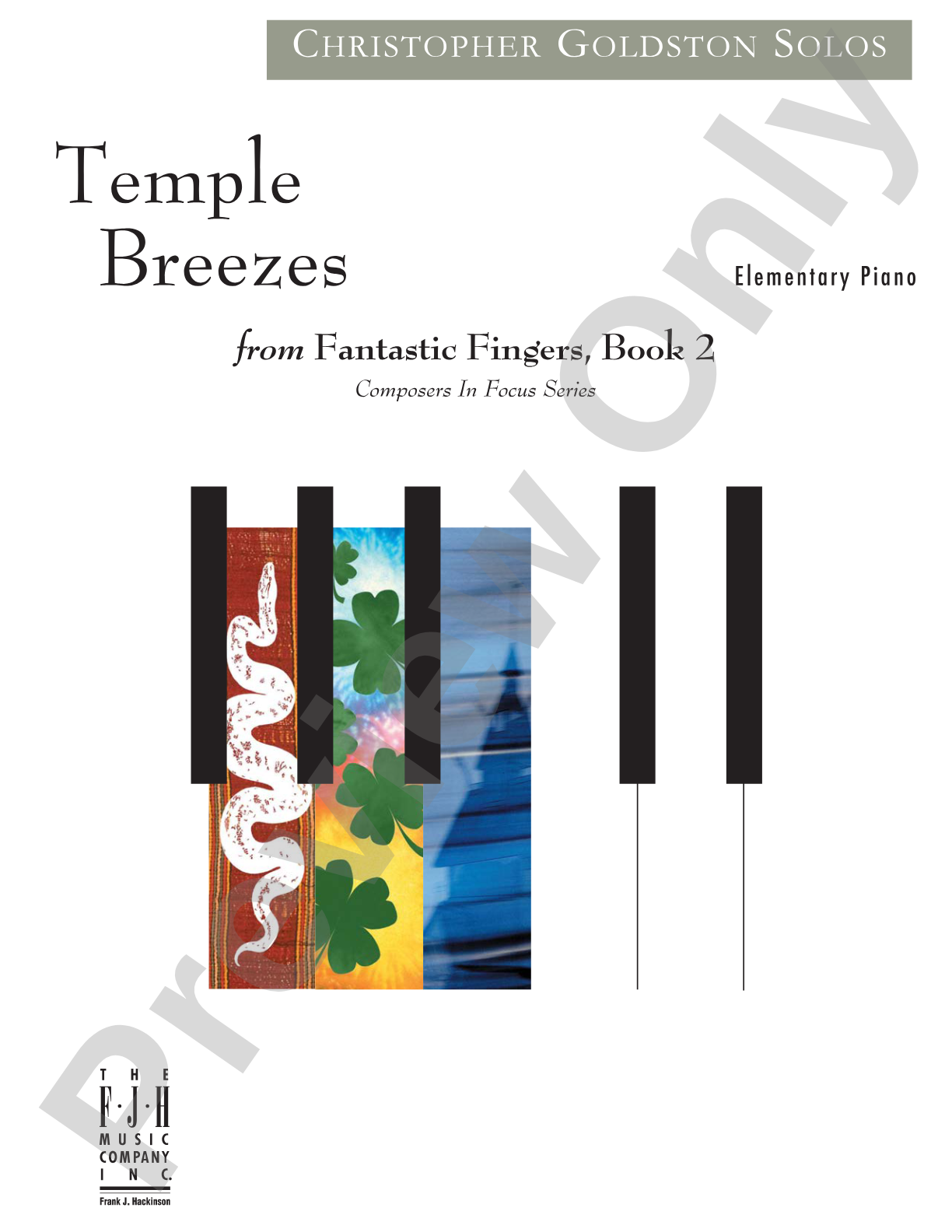
Temple Breezes: Piano

By Christopher Goldston

Item: 98-DW9202

Digital Download
$2.50
Description
Originally part of Fantastic Fingers, Book 2, Temple Breezes is now available as a stand-alone solo sheet. Parallel fifth whole notes in the left hand deliver an ancient sound to start, while quarter notes outline the breeze in the right hand above. A lovely, ongoing pedal effect is later introduced, turning the piece into a kind of wind chime that's fun to play and hear! Great for teaching students how to sustain a long, melodic line.

Temple Breezes: Piano isn't in MakeMusic Cloud just yet...but it could be. Let us know you'd like to see it, and you'll help shape what comes next. In the meantime, start a free trial and dive into thousands of interactive titles your students can play along with today.

Sample Audio
No sample audio found.
Sample Video
Additional Details
Series: Written For You
Publisher: The FJH Music Company, Inc.
SKU: 98-DW9202

More about this title

About the Composer: Christopher Goldston

Christopher Goldston

Christopher Goldston earned his Master of Music in piano performance and pedagogy from Northwestern University and his Bachelor of Music from the University of North Carolina-Greensboro. He has held faculty positions at Columbia College Chicago, Roosevelt University, and Sherwood Conservatory of Music, while also maintaining a private teaching studio in Chicago and offering virtual instruction.

Goldston's compositional work earned him the National Federation of Music Clubs Lynn Freeman Olson Composition Award in 1991 for his piece Night Train. Since 2010, he has served as national coordinator for the MTNA Composition Competition. He held leadership roles in both the Illinois State Music Teachers Association and the Chicago Area Music Teachers Association, and in 2020 was named an MTNA Foundation Fellow. His commissioned work Four Virtues for oboe, violin, and piano premiered at the 2022 MTNA National Conference.

Why we love this

Goldston crafts an elegant pedagogical moment here: the parallel fifths in the left hand create an ancient, moorish quality that grounds the piece, while the right-hand quarter-note melody floats above with genuine lyricism. The introduction of the pedal effect midway transforms the texture into something shimmering and impressionistic, giving students a tangible reason to care about sustaining tone and controlling the damper pedal.

What to expect

Cool, sustained, contemplative. The ancient parallel fifths evoke something timeless and meditative, while the quarter-note melody drifts above like a gentle current. Once the pedal enters, the entire piece shimmers and resonates, creating a sonic landscape that feels both delicate and full.

Who it's for

Elementary-level pianists ready to balance two independent ideas between the hands and explore the expressive possibilities of the sustain pedal. The piece works equally well for students developing their ability to maintain a lyrical line over a static harmonic foundation.

How to get the most out of it

  • Shape the right-hand melody with gentle dynamic variation rather than playing mechanically through quarter notes; even at the elementary level, this teaches the difference between accompaniment texture and vocal line.
  • Introduce the pedal gradually and listen carefully for clarity; even a half-pedal or quarter-pedal can achieve the wind-chime effect without muddying the sonority.
  • Let the parallel fifths breathe in the opening section by allowing slight separation between the hand shifts, emphasizing the ancient, timeless quality Goldston intends.

How to use it

Pair this with other nature-inspired elementary solos to create a short recital set, or program it alongside student compositions exploring similar ambient or meditative textures. The piece works beautifully as a standalone recital closer, where its quiet intensity and visual pedal effect leave a contemplative impression on the audience.

Skills your students will build

  • Sustaining melodic lines over a static harmonic foundation
  • Independent hand coordination with differing rhythmic textures
  • Expressive pedal control and listening for clarity
  • Understanding parallel interval harmony and its sonic character
  • Phrasing and dynamic shaping within a lyrical elementary context

You May Also Like