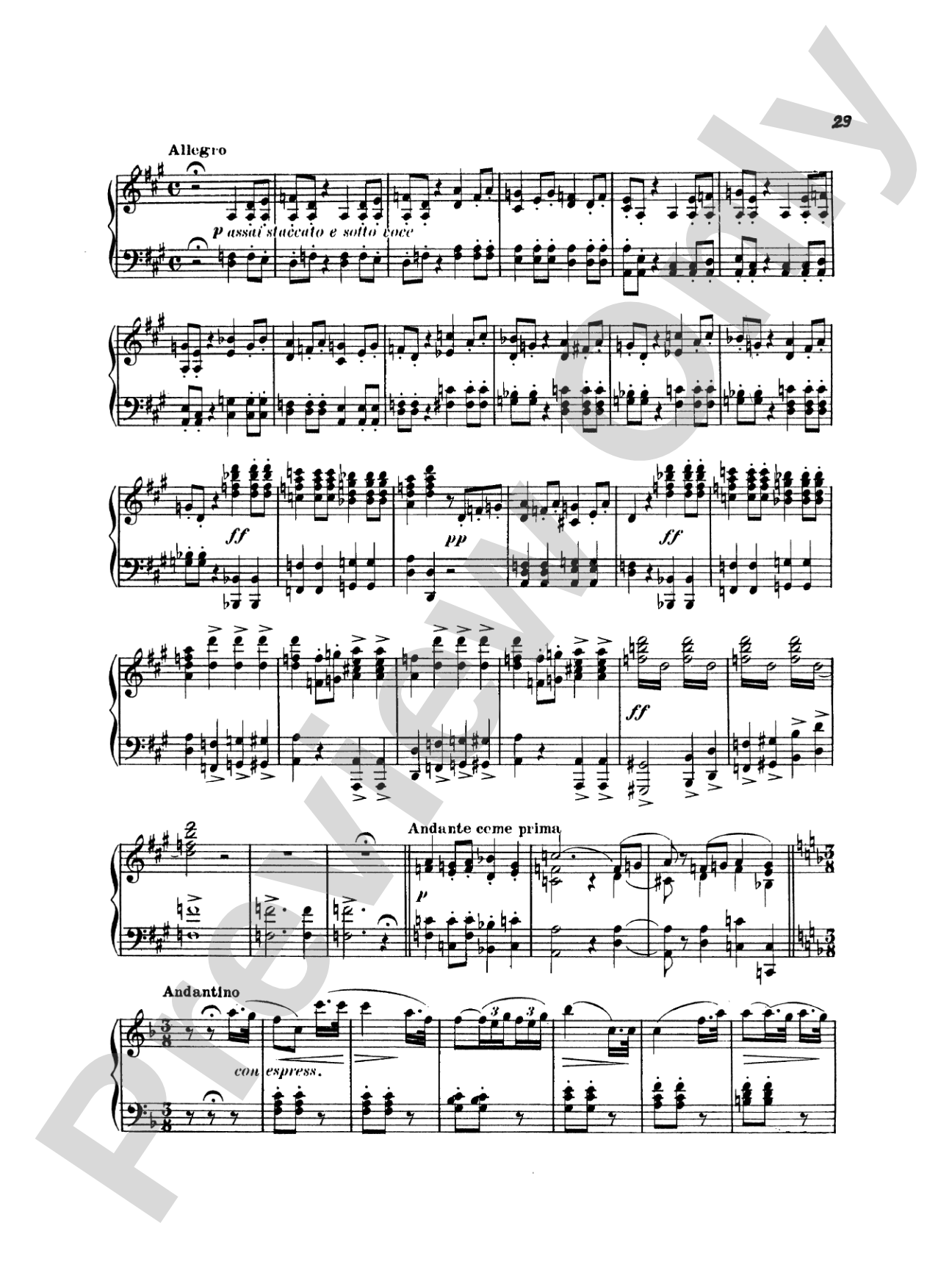
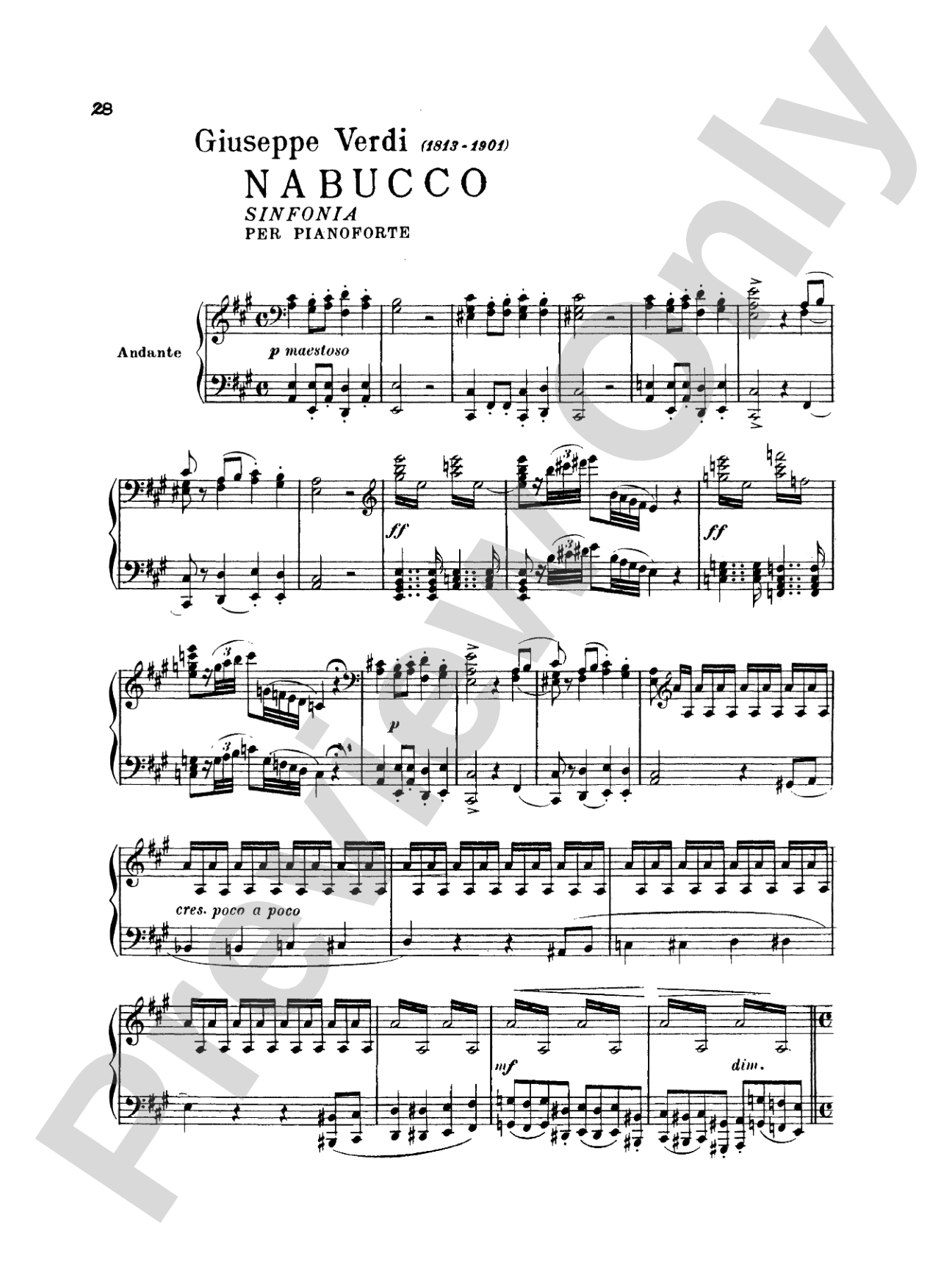
Telemann: Verdi Album of Three Overtures Sheet Music Preview

Telemann: Verdi Album of Three Overtures

By Giuseppe Verdi

Item: 00-PC-0012676

Digital Download
$2.99
Description
La Traviata, Vespri Siciliani, Nabucco

Don't just read it, hear it, play along with it, and watch your students grow with it. In MakeMusic Cloud, Telemann: Verdi Album of Three Overtures comes alive with professional accompaniment, adjustable tempo, and built-in practice tools that turn solo practice into real progress.

Sample Audio
No sample audio found.
Sample Video
Additional Details
Series: Kalmus Edition
Publisher: Alfred Music
Page Count: 40
SKU: 00-PC-0012676

More about this title

About the Composer: Georg Philipp Telemann

Georg Philipp Telemann (1681-1767) stands as one of the most prolific composers in Western music history. During his long career, he held major positions across German musical centers, including Hamburg and Frankfurt, and wrote more than 3,600 works spanning nearly every genre of his era.

Telemann's output was remarkable for its accessibility and craft. He understood what performers and audiences wanted, and he wrote music that satisfied both without sacrificing sophistication. His instrumental works circulated widely during his lifetime and influenced the next generation of composers, including his younger contemporary J.S. Bach.

Why we love this

This collection offers pianists a chance to play through three of opera's greatest overtures in a single, focused volume. The Kalmus Edition text is clean and readable, and the arrangements capture the dramatic momentum and orchestral color of these beloved works without demanding virtuosic leaps beyond an intermediate player's reach. You get repertoire with genuine musical substance and historical resonance at a manageable difficulty level.

What to expect

These overtures pulse with the energy and swagger of the opera house. You'll encounter bold orchestral gestures translated into keyboard idiom, sweeping melodic lines, and sections built on rhythmic drive and harmonic momentum. The music moves forward with purpose and conviction, requiring focused attention and assured playing.

Who it's for

Intermediate pianists who want to expand their repertoire beyond sonatas and single-movement etudes will find substantial material here. This collection also serves pianists preparing for recitals who need period-appropriate concert pieces with real dramatic weight and recognizable themes.

How to get the most out of it

  • Approach the dramatic gestures in these overtures with the architectural clarity they deserve. Telemann's overtures rely on strong sectional contrasts, so shape your phrasing to highlight transitions between sections rather than smoothing over them.
  • Let the left hand establish a steady harmonic foundation while the right hand carries the melody. These arrangements are often transparent enough that the supporting voice needs rhythmic precision to stay grounded.
  • Pay close attention to the tempo markings and stylistic indications. Telemann wrote with specific character in mind for each overture, and respecting those designations will reveal the music's dramatic intent.
  • Practice the passage work at a slower tempo first to ensure articulation is clear. Once the notes are secure, bring the tempo up gradually to maintain control and clarity in the faster sections.

How to use it

Use this collection to program operatic excitement in a recital without requiring an orchestra or ensemble. Each overture stands alone effectively, so you might choose one to anchor a Romantic-era program, or pair two of them if your recital allows for varied single-movement pieces. The collection works equally well as supplementary material for students studying operatic history or melodic writing.

Skills your students will build

  • Rapid note reading across both staves in dense keyboard textures
  • Maintaining rhythmic integrity through repeated accompanying patterns
  • Shaping long melodic lines while managing harmonic support underneath
  • Navigating stylistic contrasts between fast and slow sections within a single work
  • Voicing orchestral parts idiomatically for the piano

You May Also Like