Telemann: Twenty Little Fugues Sheet Music Preview

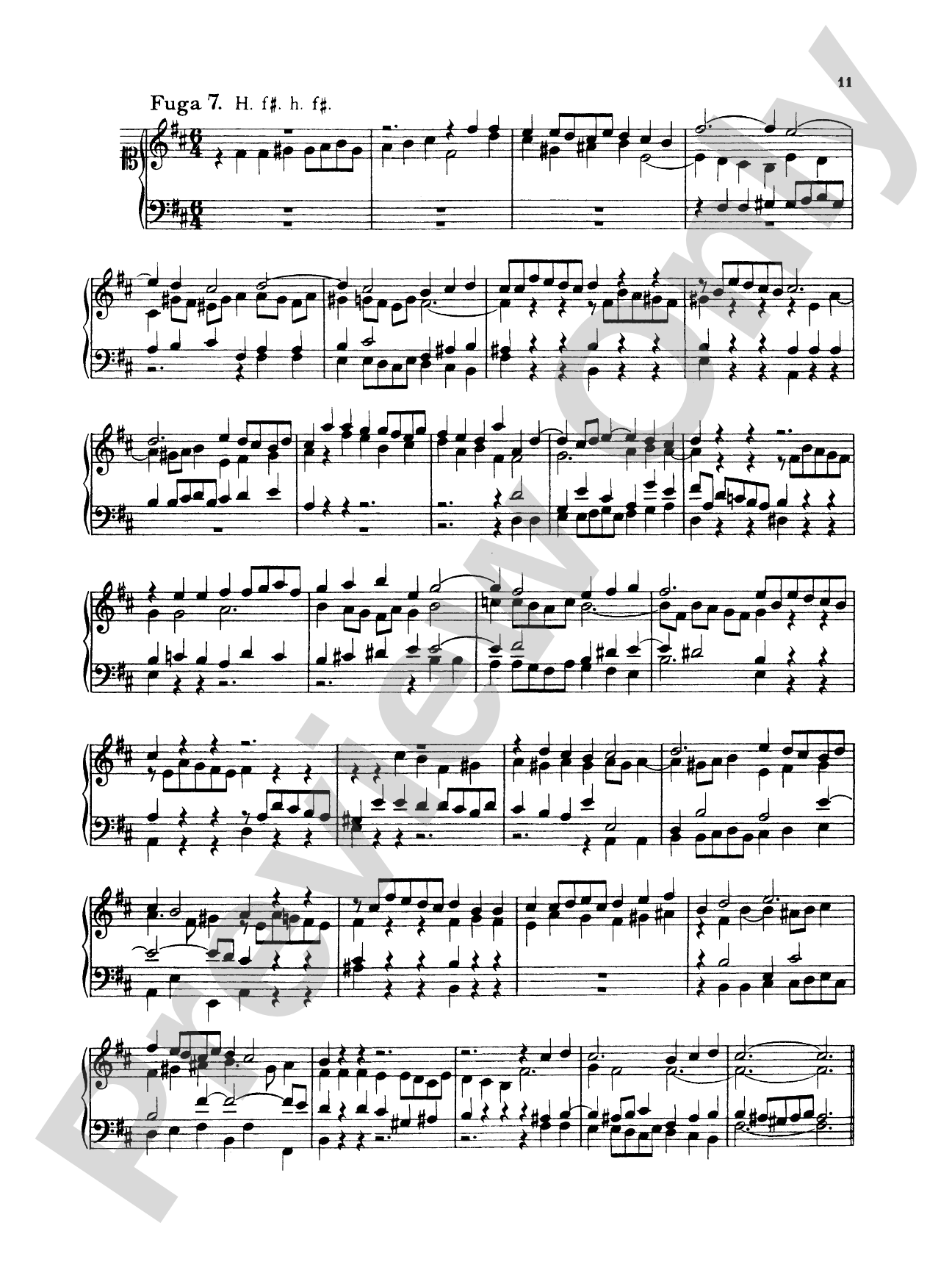
Telemann: Twenty Little Fugues

By Georg Philipp Telemann

Item: 00-PC-0009522

Digital Download
$0.99
Description
(for Organ or Piano)

Don't just read it, hear it, play along with it, and watch your students grow with it. In MakeMusic Cloud, Telemann: Twenty Little Fugues comes alive with professional accompaniment, adjustable tempo, and built-in practice tools that turn solo practice into real progress.

Sample Audio
No sample audio found.
Sample Video
Additional Details
Series: Kalmus Edition
Publisher: Alfred Music
Page Count: 24
SKU: 00-PC-0009522

More about this title

About the Composer: Georg Philipp Telemann

Georg Philipp Telemann (1681-1767) was one of the most prolific and celebrated composers of the Baroque era, rivaling Bach in output and often surpassing him in public popularity during their lifetimes. A master of counterpoint and melody, Telemann composed across every major genre of his time: orchestral works, concertos, chamber music, operas, and sacred music. His writing style combined German, French, and Italian influences into a distinctive voice that was both intellectually rigorous and immediately appealing.

For organists and keyboard players, Telemann's output offers an exceptional resource. His keyboard works balance technical development with musical substance, making them ideal for students building facility at the console while studying the craft of fugal writing. These twenty little fugues exemplify his gift for clarity and logic, presenting contrapuntal ideas that are neither overly austere nor artificially simplified.

Why we love this

Telemann's little fugues occupy a sweet spot that Bach's Art of Fugue does not: they are genuinely playable by intermediate organists while maintaining complete intellectual integrity. Each piece teaches something distinct about voice leading, harmonic progression, and fugal design without requiring heroic technical facility. Organists appreciate that these works showcase the instrument's capabilities across different registrations while remaining equally valid on piano.

What to expect

These fugues sparkle with clarity and purpose. Each one unfolds logically, revealing Telemann's geometric mind at work: a subject stated, developed, expanded through key areas, and resolved with satisfying inevitability. The writing favors melodic grace over technical display, so the experience of playing them is one of intellectual satisfaction rather than struggle. The emotional temperature remains cool and observational, a characteristic feature of Baroque keyboard counterpoint at its most refined.

Who it's for

Intermediate to advanced organists preparing for recitals or service playing who need substantial keyboard literature that develops contrapuntal literacy without demanding virtuosity. Piano students studying Baroque counterpoint and fugal form will find these pieces more accessible than Bach's WTC while learning the same principles. Teachers seeking pedagogical material for demonstrating voice leading and subject development within a manageable timeframe.

How to get the most out of it

  • Establish a single tempo per fugue before adding pedal work; the harmonic rhythm often clarifies the optimal speed once you hear the voices enter.
  • Avoid over-registering; Telemann's counterpoint is clear enough on principals and diapasons alone, allowing room for subtle color changes at the return of subject material.
  • Separate the exposition strictly from the development sections; slight breathing space between major structural divisions helps listeners follow the voices.
  • Practice each voice independently before combining; Telemann's independence of line means weak individual voice control will muddy the texture immediately.

How to use it

Telemann's fugues work beautifully in recital programs as standalone pieces or as a thematic group, offering variety within the Baroque repertoire without requiring a full opus-scale work. For church musicians, individual fugues function as elegant organ preludes or postludes and provide material for service improvisation study. Curricularly, assign these pieces to students transitioning from chorale harmonization studies into independent fugal composition and performance.

Skills your students will build

  • Voice independence in two, three, and four-part counterpoint
  • Subject recognition and tracking across key areas
  • Harmonic progression within fugal form (exposition, development, recapitulation)
  • Pedal coordination for organists (voices distributed between hands and feet)
  • Tempo control and phrasing in abstract contrapuntal music
  • Registration choices that enhance rather than obscure contrapuntal clarity

You May Also Like