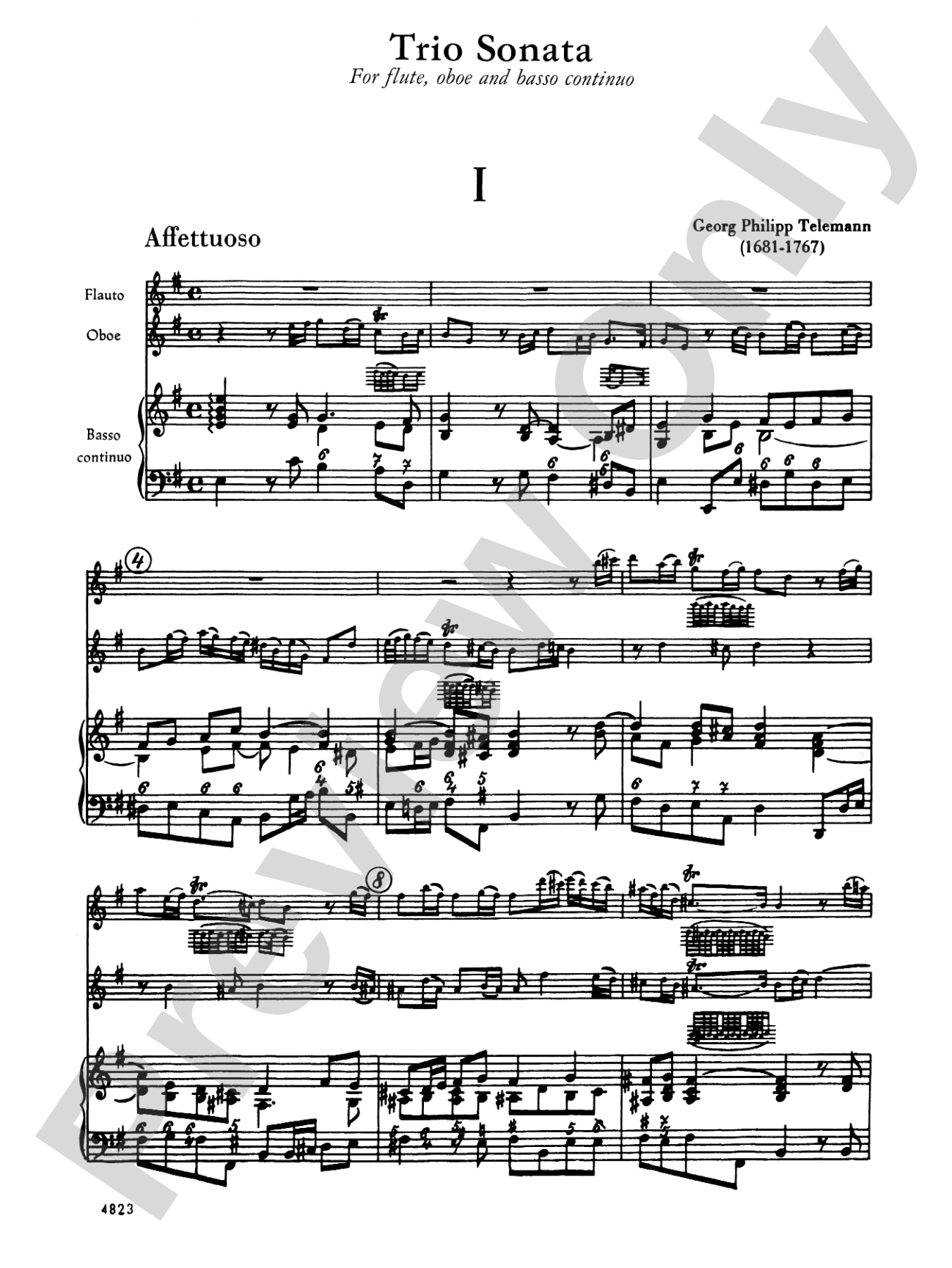
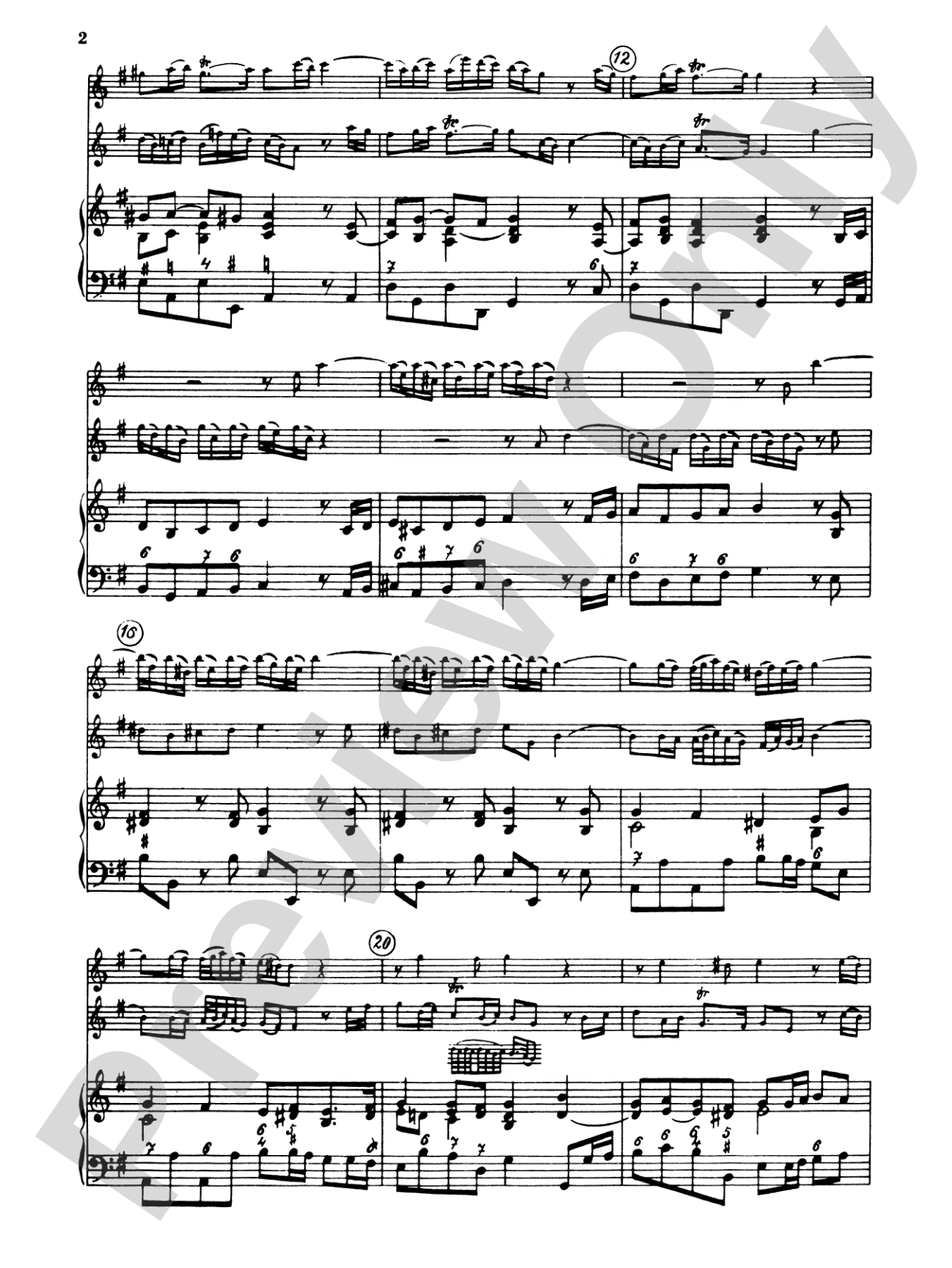
Telemann: Trio Sonata in E Minor Sheet Music Preview

Telemann: Trio Sonata in E Minor

By Georg Philipp Telemann

Item: 00-PC-0011129

Digital Download
$8.99
Description

Don't just read it, hear it, play along with it, and watch your students grow with it. In MakeMusic Cloud, Telemann: Trio Sonata in E Minor comes alive with professional accompaniment, adjustable tempo, and built-in practice tools that turn solo practice into real progress.

Sample Audio
No sample audio found.
Sample Video
Additional Details
Series: Kalmus Edition
Publisher: Alfred Music
Page Count: 28
SKU: 00-PC-0011129
Instrumentation: Flute, Oboe, & Basso Continuo (with Piano)

More about this title

About the Composer: Georg Philipp Telemann

Georg Philipp Telemann (1681–1767) was one of the most prolific and widely performed composers of the Baroque era. Over his long career, he produced an enormous catalog of orchestral works, concertos, chamber music, and vocal compositions that circulated throughout Europe and influenced generations of musicians. His writing balanced accessibility with sophistication, making his music equally valuable in the concert hall and the music room.

Telemann's chamber works represent some of the finest examples of Baroque trio sonata literature. He composed hundreds of pieces for small ensembles, and his flute and oboe trios are particularly prized for their elegant melodic writing, clear harmonic language, and practical instrumentation. Teachers and performers continue to choose his music for its musical substance and its ability to develop ensemble skills at intermediate and advanced levels.

Why we love this

Telemann writes trio sonatas with real melodic distinction and harmonic warmth that feel both civilized and genuinely engaging to play. The two-treble texture never shortchanges either the flute or oboe; each voice gets material worth learning, and the interplay between them develops naturally across the movements. This is substantive repertoire that respects the capabilities of intermediate players while sounding sophisticated in performance.

What to expect

The E minor tonality gives this trio an introspective character without darkness; there is elegance and refinement throughout. Telemann's melodies unfold naturally across each movement, inviting the ear to follow the gentle conversation between flute and oboe as they trade phrases and weave together over the steady support of the continuo.

Who it's for

This trio works well for intermediate to advanced chamber musicians who read confidently in treble and bass clefs and have solid rhythmic independence. It suits flute and oboe players preparing for auditions, recitals, or student chamber concerts, and it offers chamber ensembles a proven work that showcases Baroque style without requiring specialized historical performance training.

How to get the most out of it

  • Balance the flute and oboe as equal partners. Telemann's writing invites dialogue between the two voices, so resist the temptation to let either one dominate. Adjust dynamic levels in rehearsal to hear both lines clearly.
  • Shape the continuo realization to support rather than spotlight the bass line. The piano should provide harmonic foundation and rhythmic stability without overwhelming the melodic content above.
  • Observe the implied phrasing from Telemann's melodic contours rather than relying on printed slurs alone. Baroque wind music often benefits from gentle articulation that supports phrase shape and harmonic rhythm.
  • Approach ornaments with restraint and clarity. Telemann's figures are typically modest; execute them crisply without adding extra elaboration.

How to use it

Program this as part of a Baroque chamber concert alongside other trio sonatas or as a bridge piece between more virtuosic or dramatic works. It also serves well as a teaching piece in upper-level chamber ensembles, where it develops collaborative listening and balanced ensemble playing. The modest page count makes it feasible to cover thoroughly in a rehearsal season.

Skills your students will build

  • Baroque ornamentation and articulation conventions
  • Balanced ensemble voicing in three-part texture
  • Harmonic awareness through continuo accompaniment
  • Phrasing and shaping in Baroque melodic style
  • Sight-reading and rhythmic independence in chamber settings

You May Also Like