
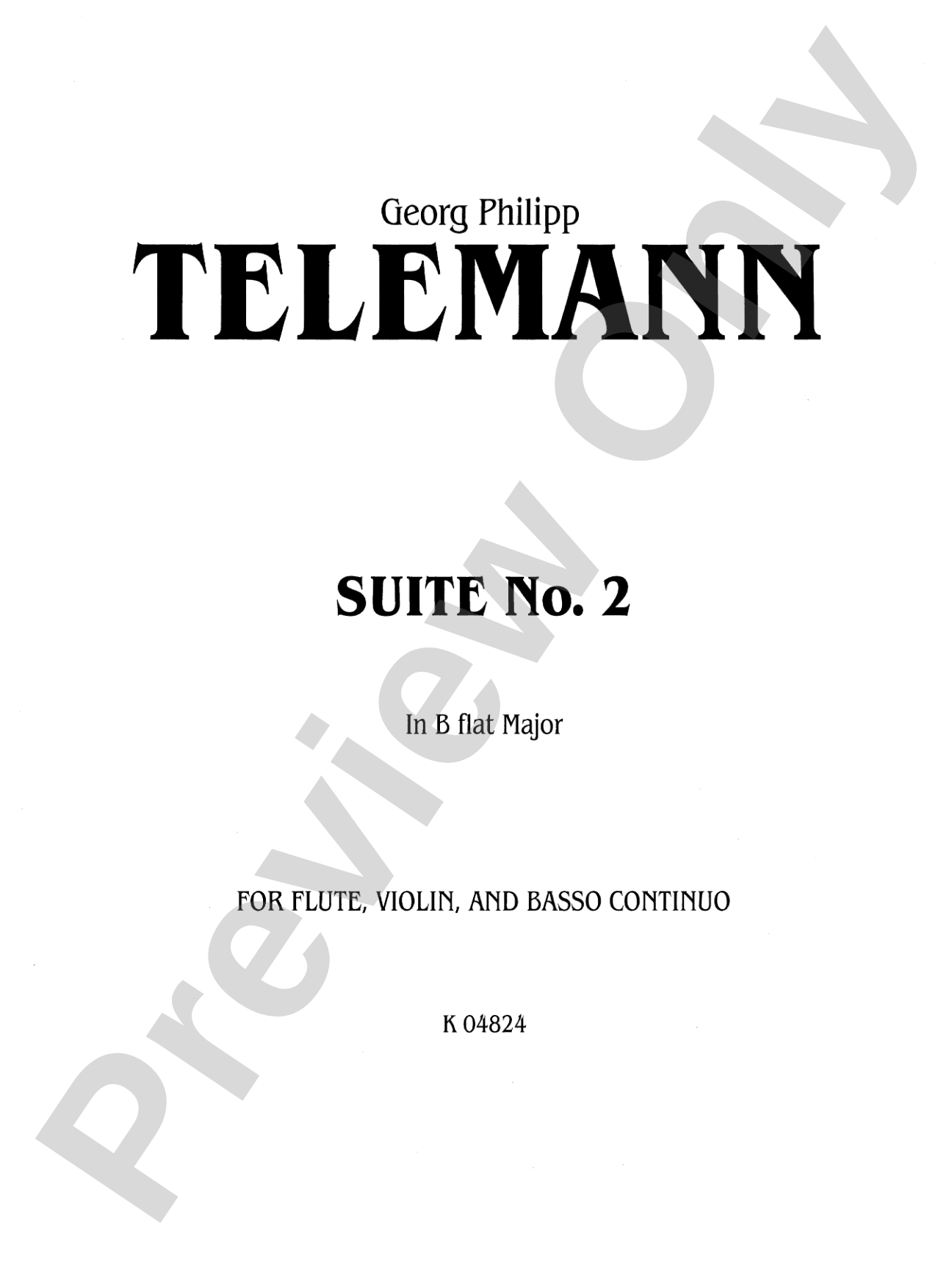

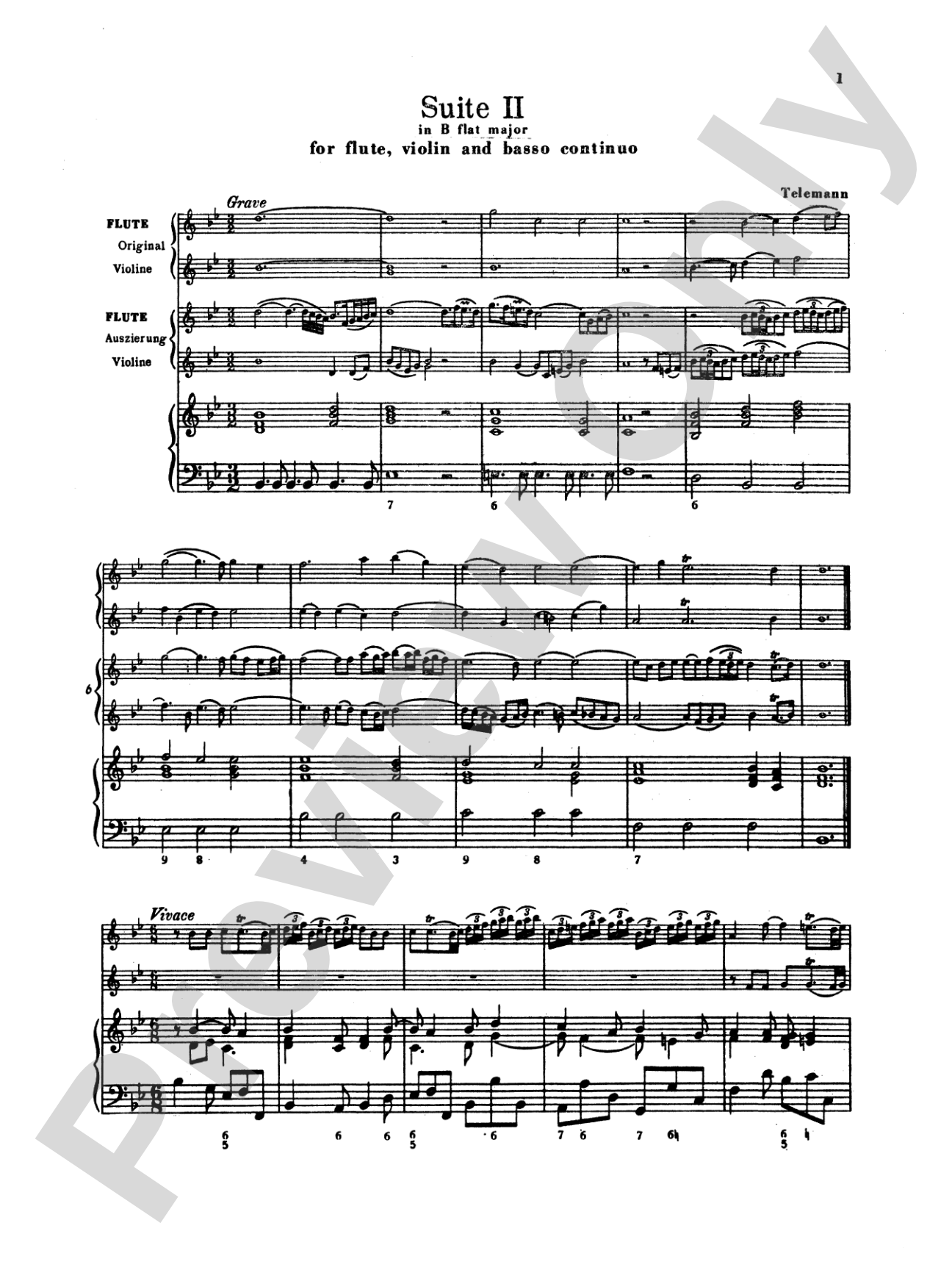
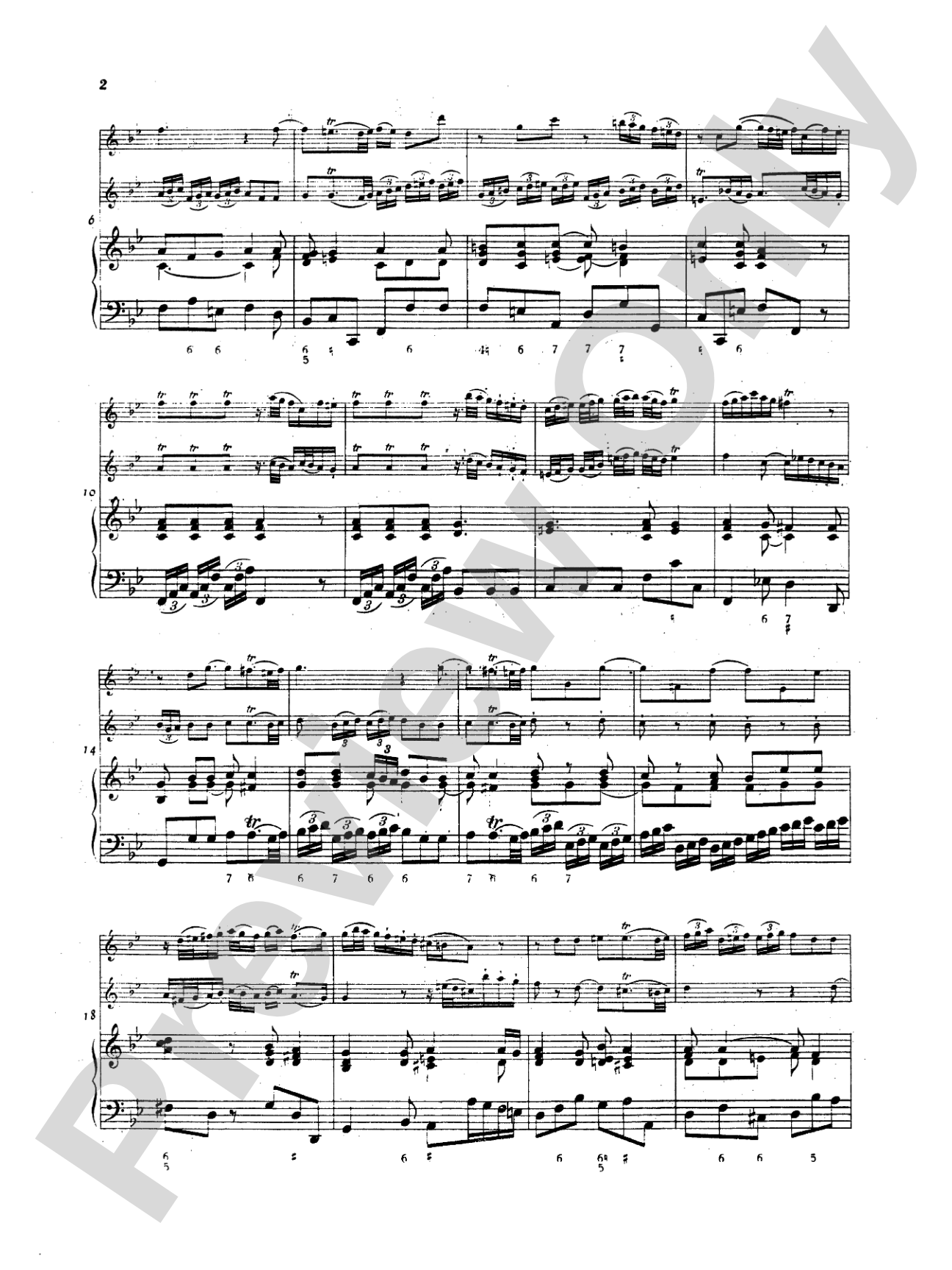
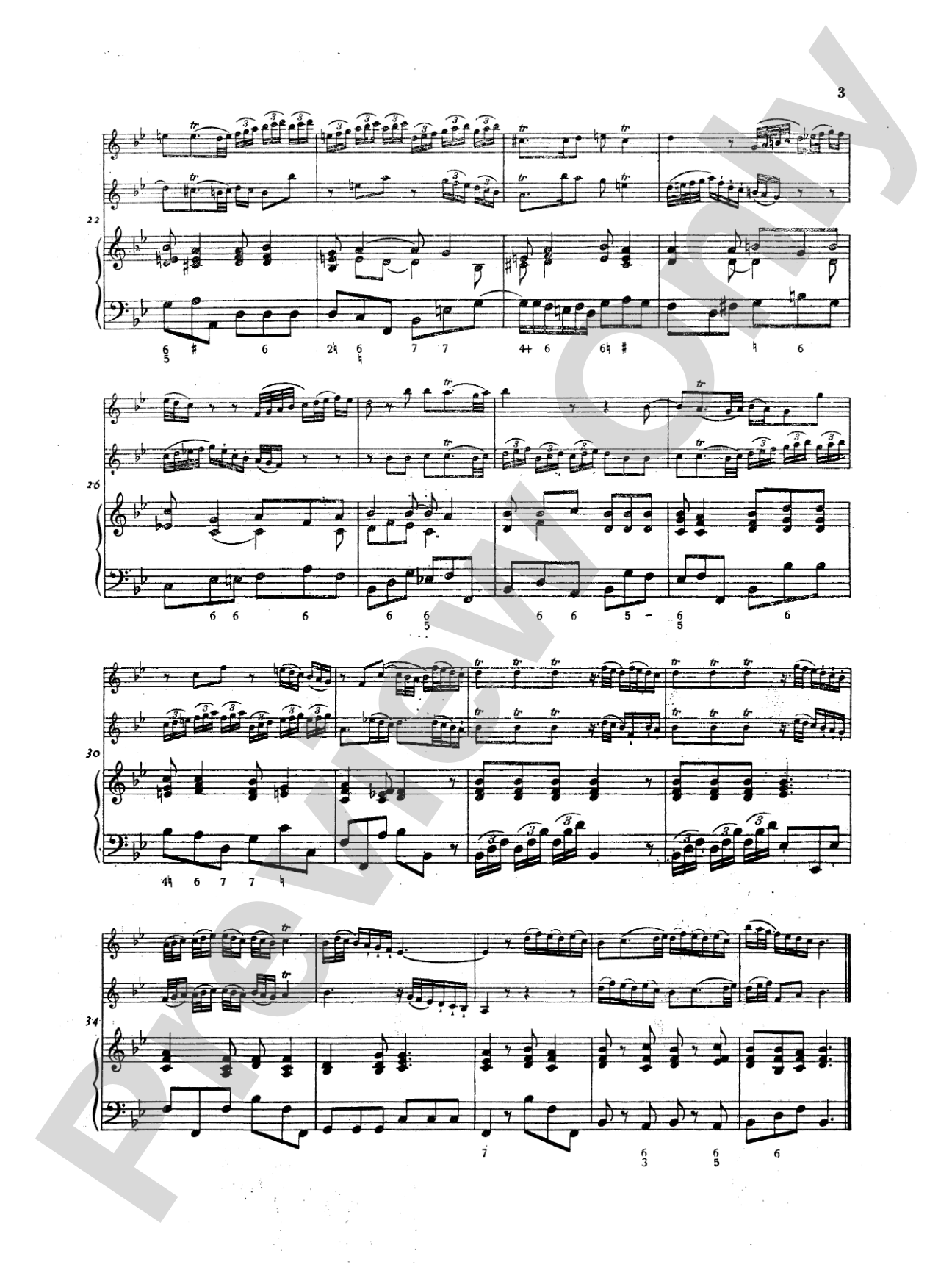
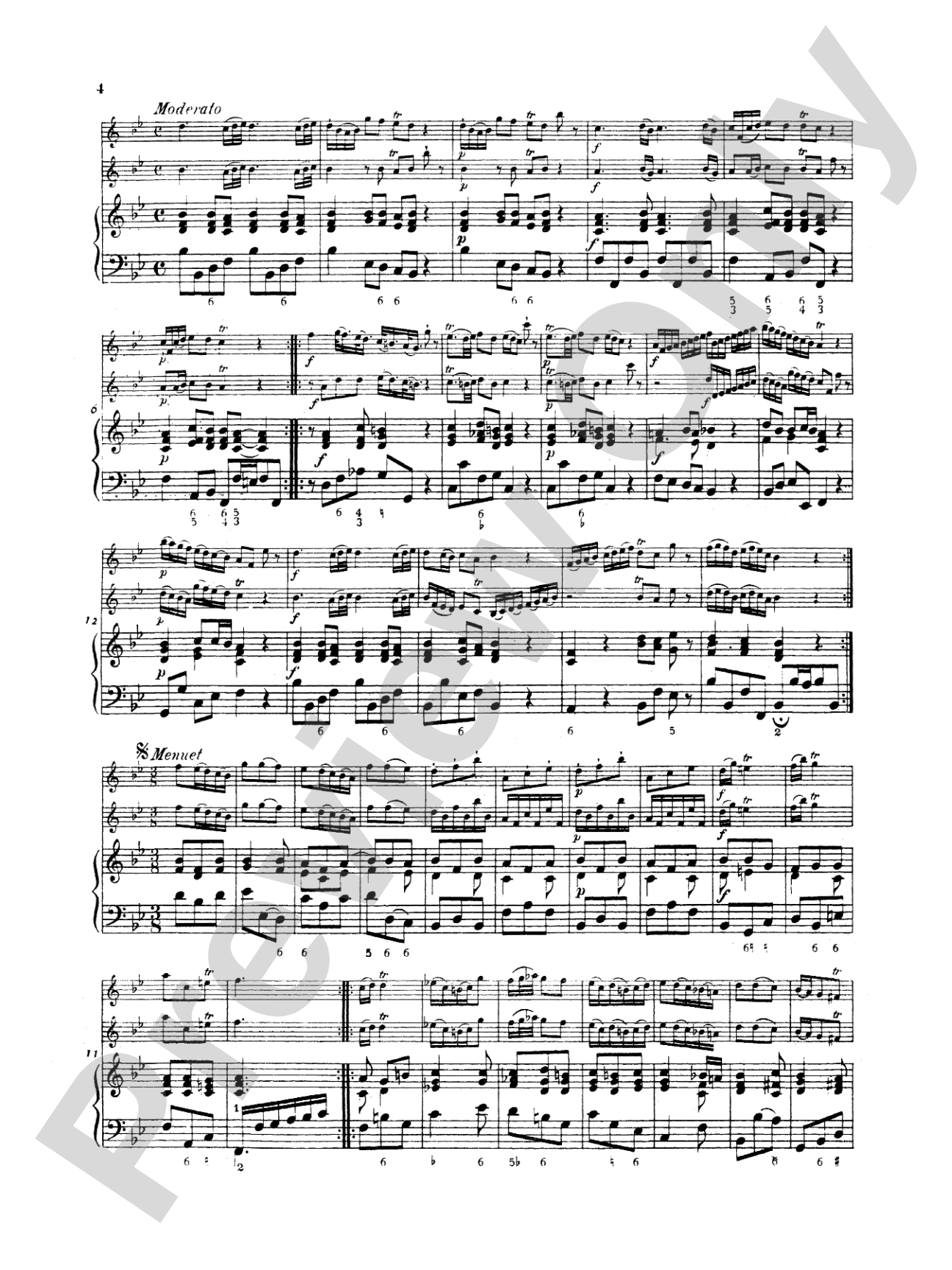
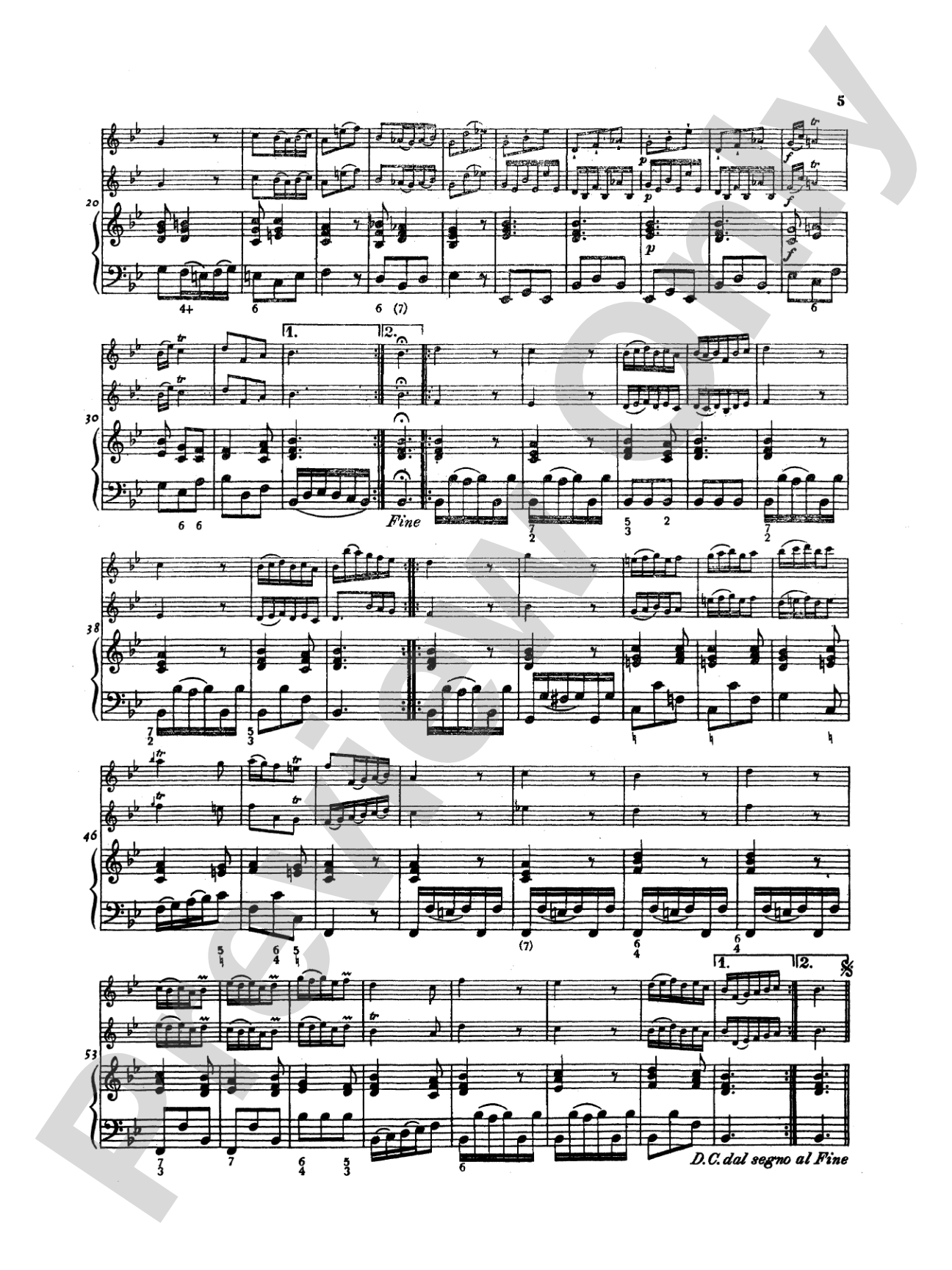
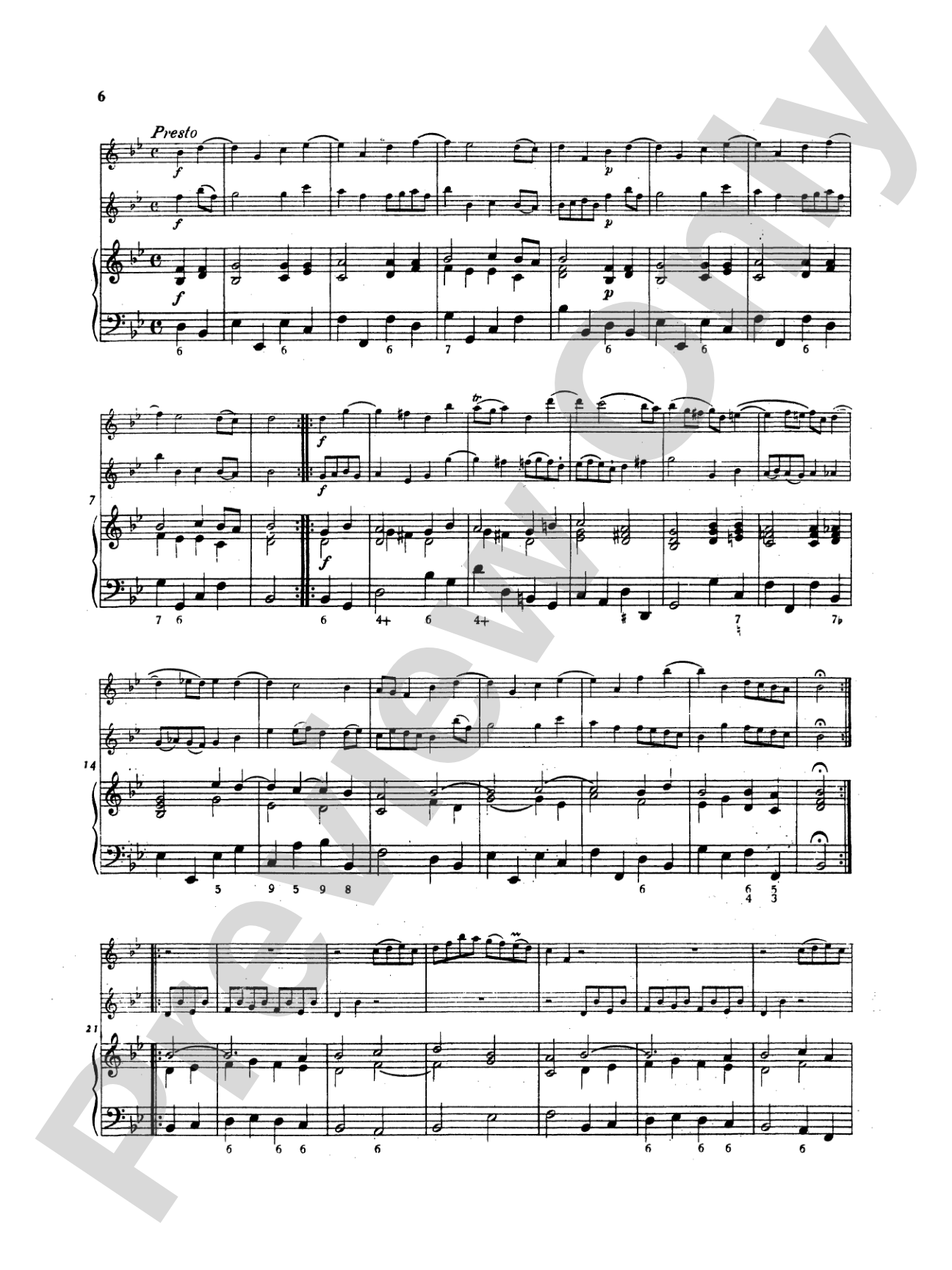
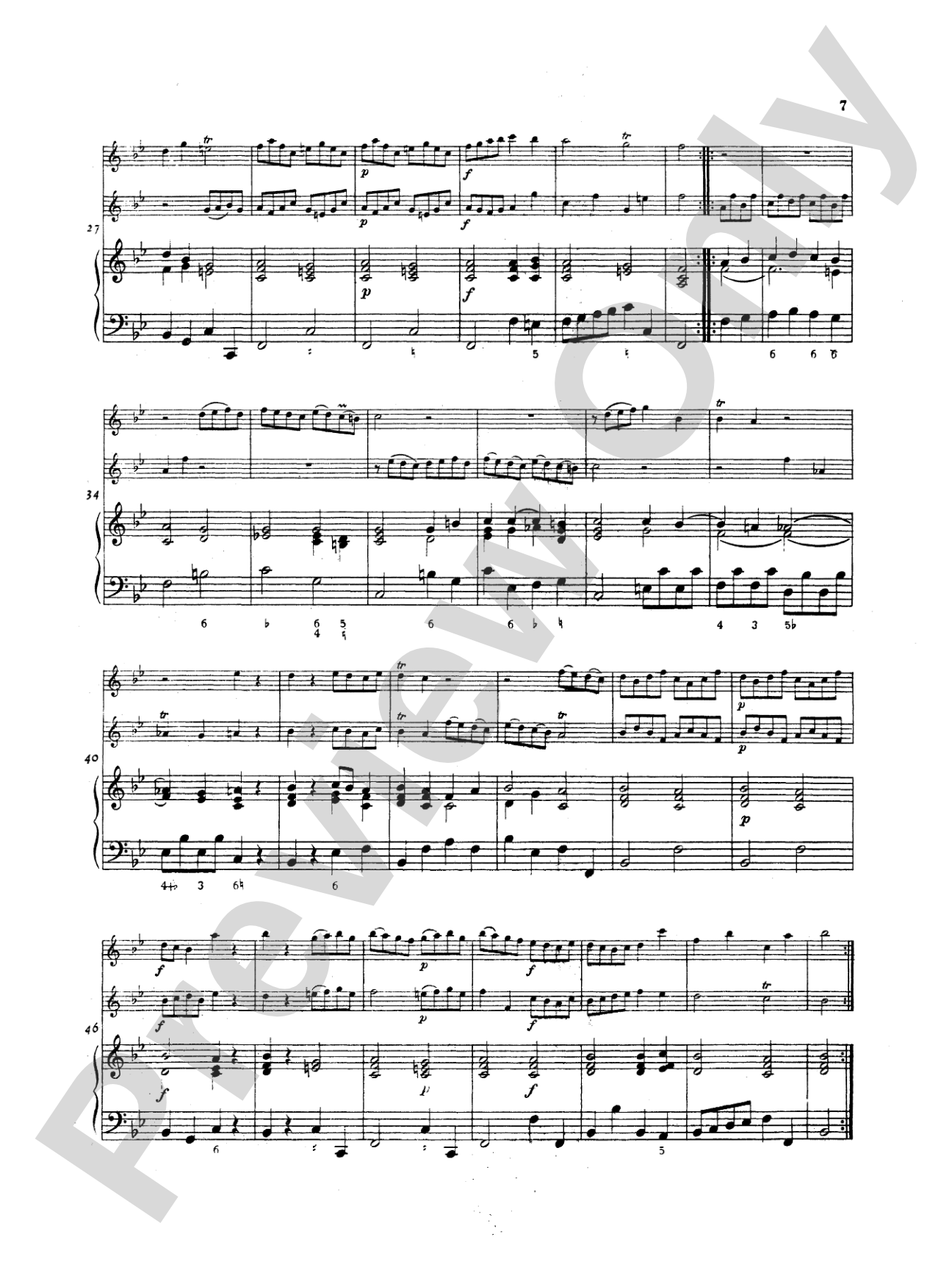
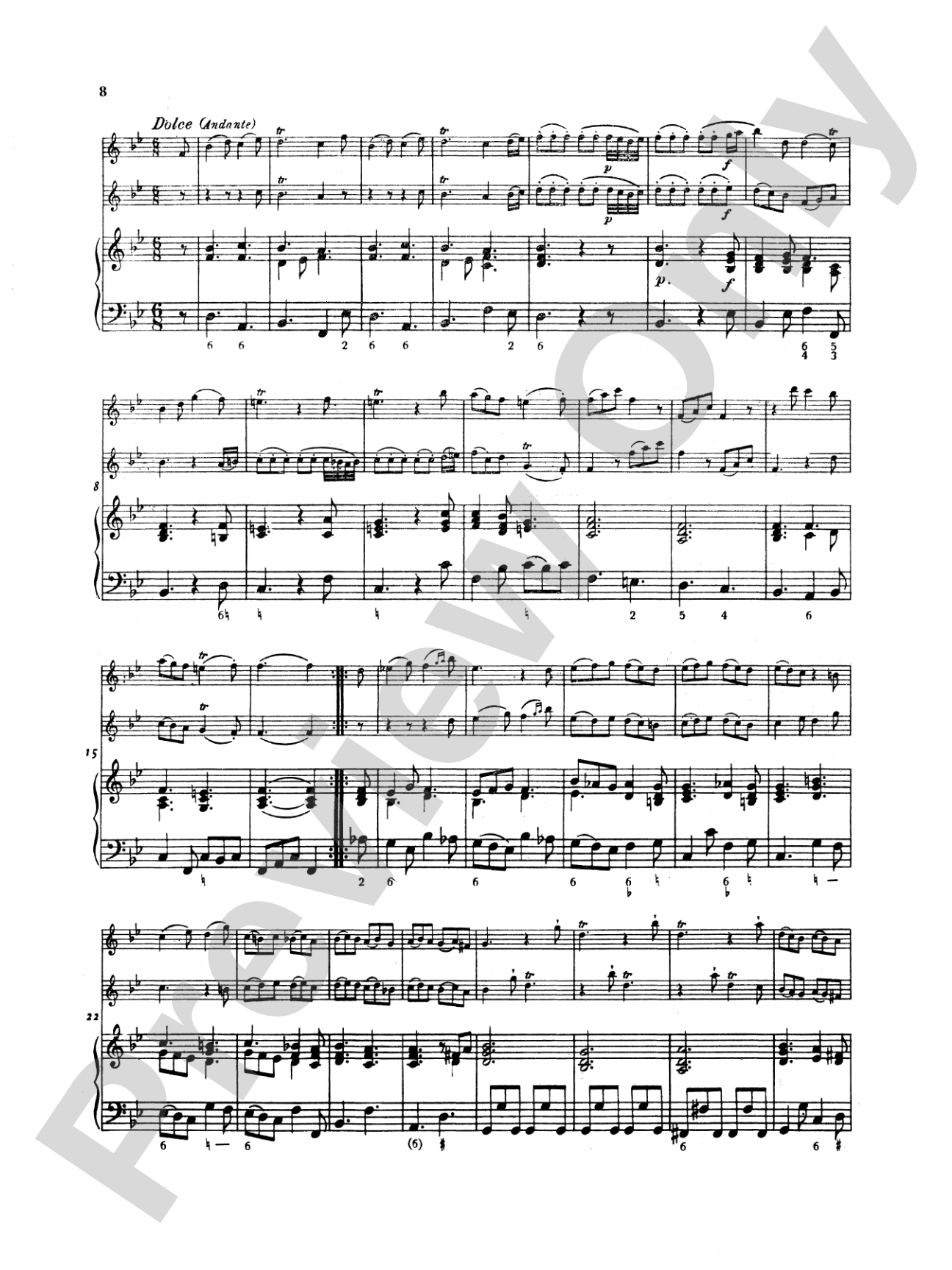
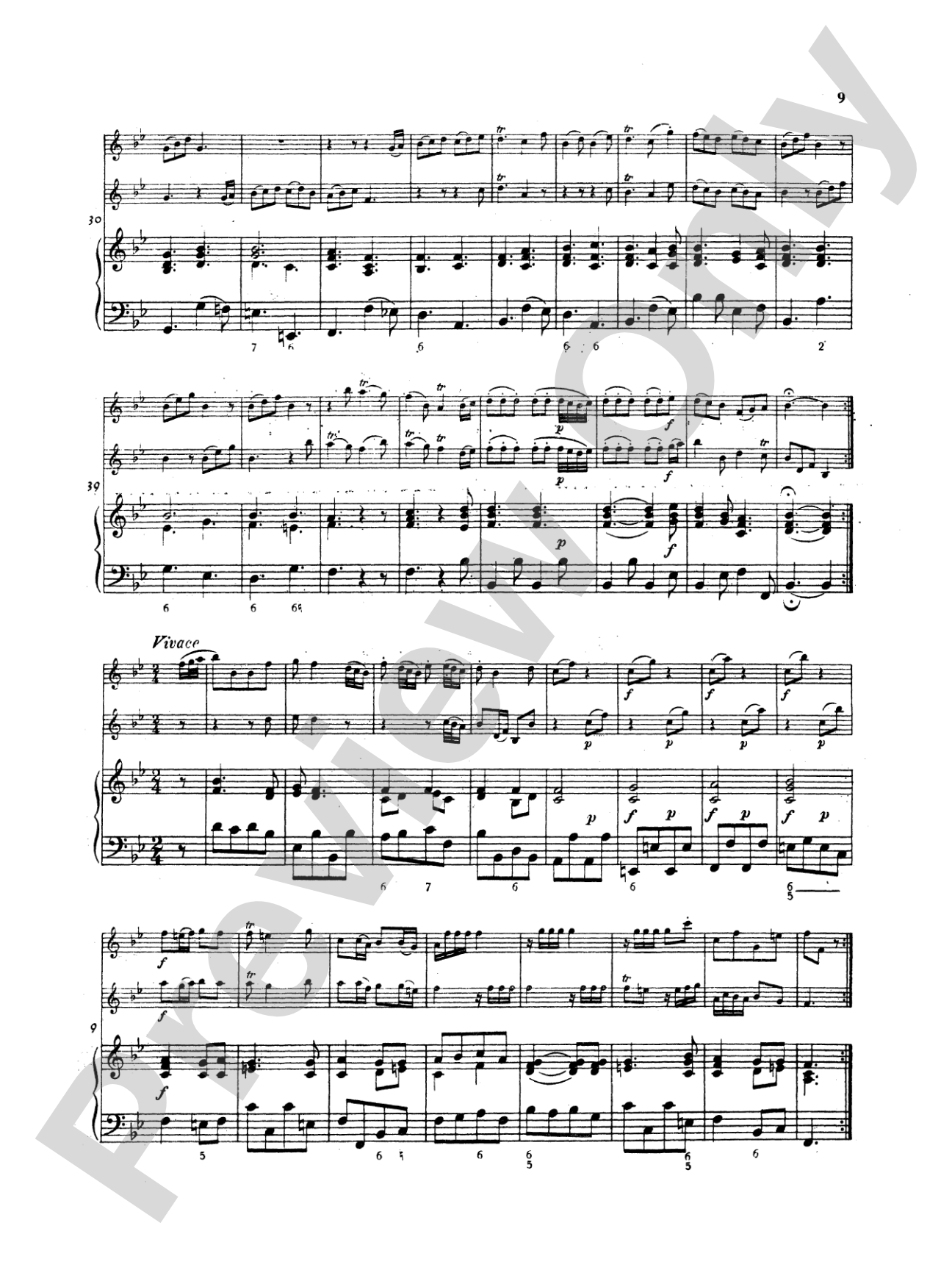
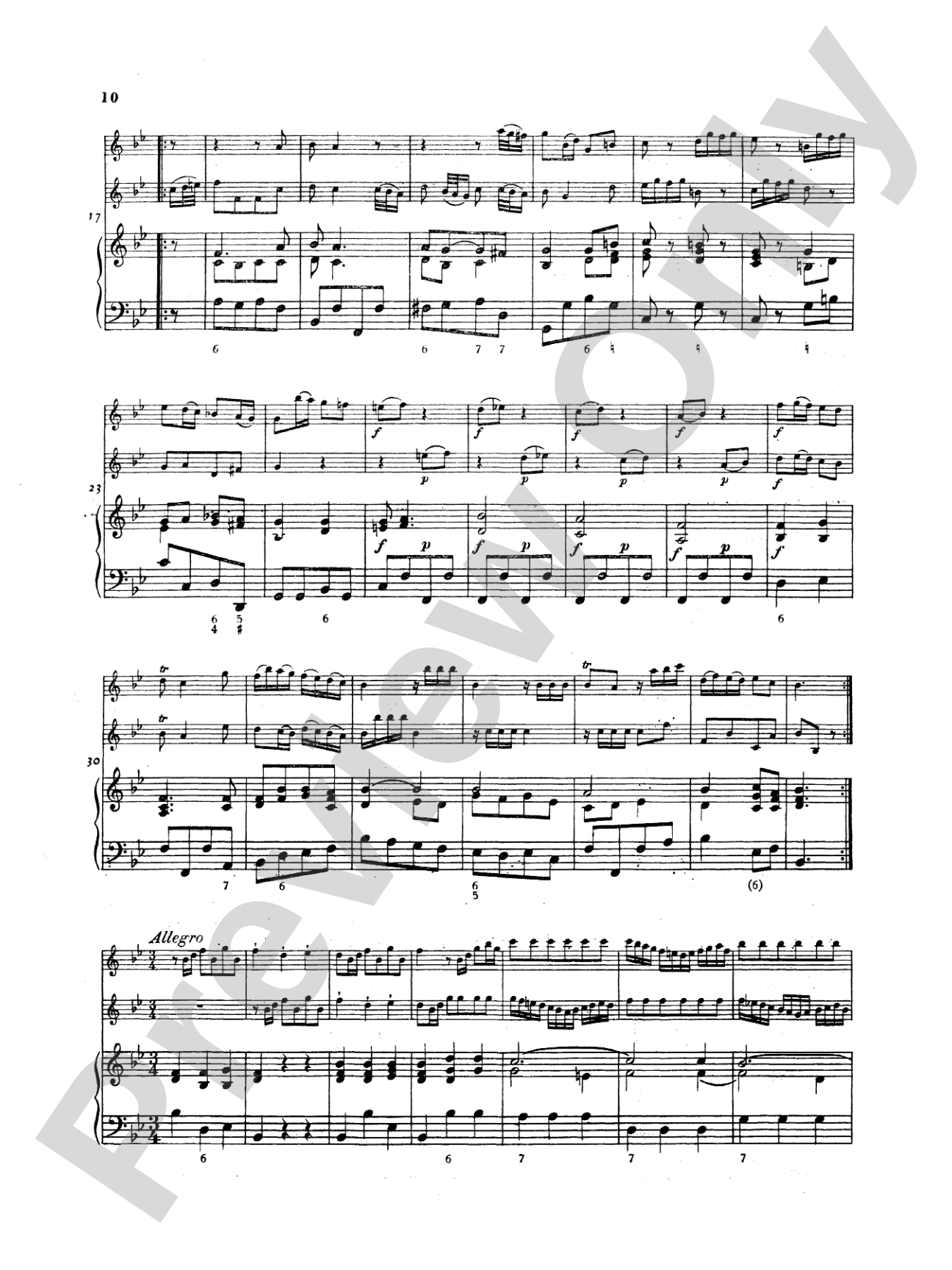
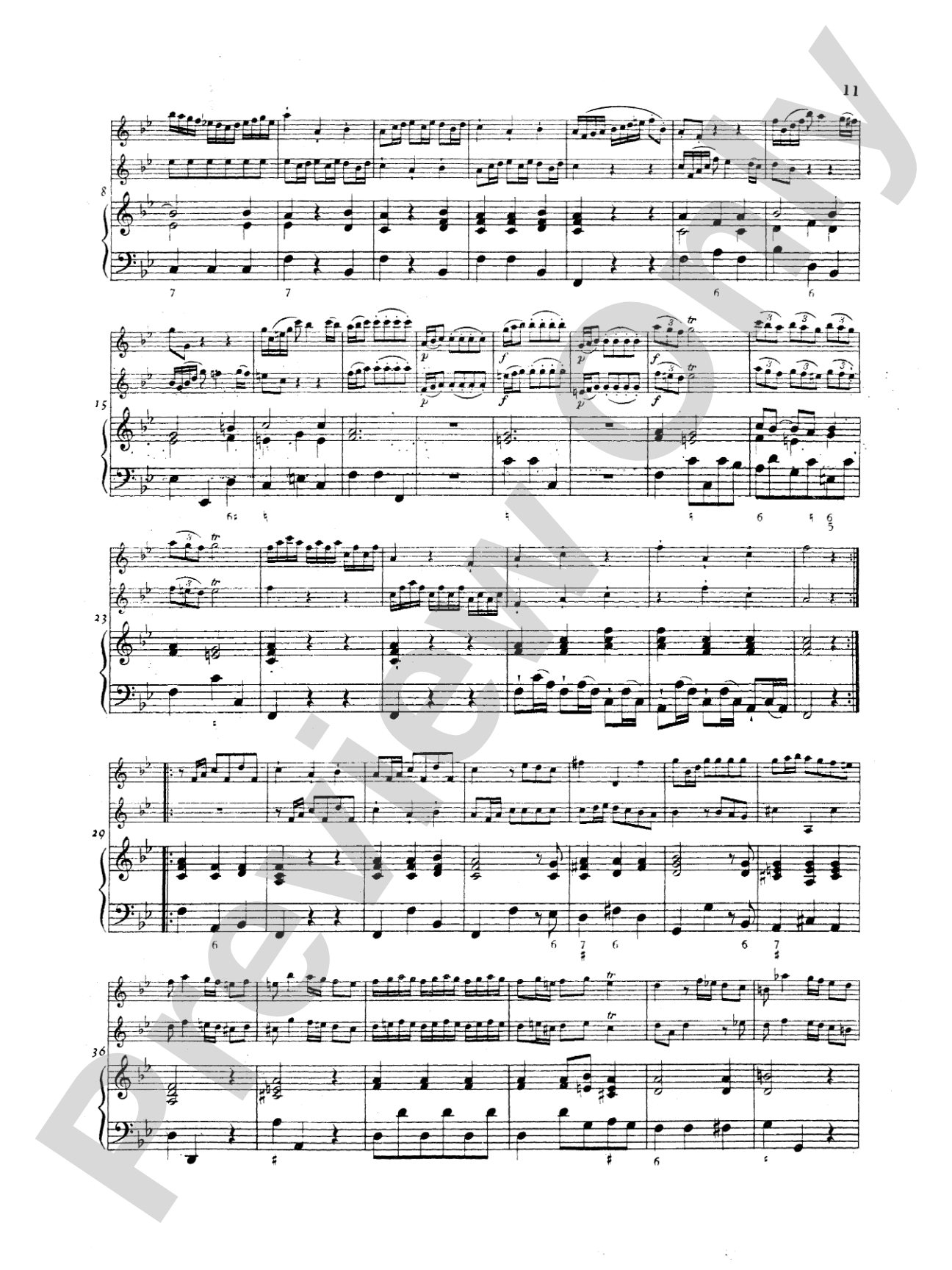
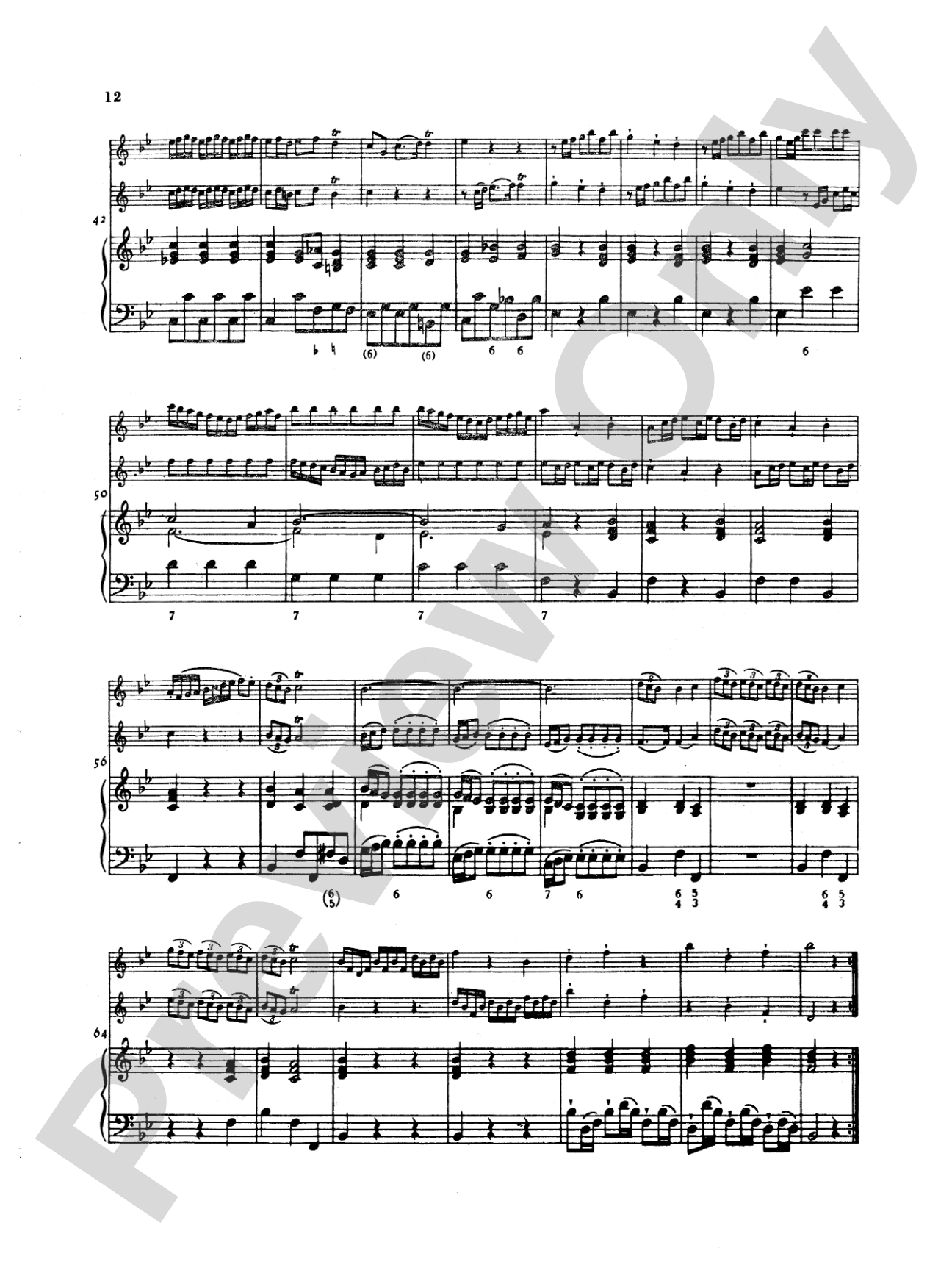



Telemann: Suite No. 2 in B flat Major: Chamber Trio Book
For Flute, Violin and Basso Continuo
By Georg Philipp Telemann
Item: 00-PK-0003622

$9.99
Pickup currently not available
Buy Extra Parts (Digital PDF Download)
| Product | Price | Quantity |
|---|---|---|
| Telemann: Suite No. 2 in B flat Major | $8.99 |
Parts Added to Cart!
Description
A trio, for Flute, Violin and Basso Continuo, composed by Georg Philipp Telemann.


Don't just read it, hear it, play along with it, and watch your students grow with it. In MakeMusic Cloud, Telemann: Suite No. 2 in B flat Major: Chamber Trio Book comes alive with professional accompaniment, adjustable tempo, and built-in practice tools that turn solo practice into real progress.
Open in the Player
Jump straight in and assign it today.
Start Your Free Trial
Open this title and explore the full library in minutes.
Sample Audio
No sample audio found.
Sample Video
No sample videos found.
Additional Details
Series:
Kalmus Edition
Publisher:
Alfred Music
Page Count:
32
SKU:
00-PK-0003622
More about this title
About the Composer: Georg Philipp Telemann
Georg Philipp Telemann (1681–1767) was one of the most prolific composers of the Baroque era, producing over 3,000 works across every major genre. A master of instrumental writing, he spent much of his career in Frankfurt, Paris, and Hamburg, where he held prestigious positions as court musician and church director. His chamber music is marked by elegant melodies, clear harmonic language, and genuine understanding of instrumental capabilities, making his works immediately accessible to performers and audiences alike.
Telemann's output was staggering even by Baroque standards. He composed hundreds of sonatas, suites, and concertos for various combinations of instruments, all crafted with the same care and craftsmanship that characterizes his most famous works. His willingness to experiment with instrumentation and form, combined with his gift for memorable melody, secured his reputation as one of the most performed composers of his time. For music educators, Telemann represents a gateway into the Baroque repertoire: his music is historically significant without being forbiddingly complex.
Why we love this
Telemann wrote trios with genuine understanding of what each instrument could do, and this suite showcases that clarity without sacrificing musical substance. The flute and violin dialogue maintains the elegance expected of chamber music from this period while remaining entirely playable by musicians at the intermediate-advanced level. It's the kind of repertoire that teaches performers how Baroque style actually works rather than asking them to approximate it.
What to expect
The music breathes with the refined courtesy of the German Baroque salon. Melodies unfold with natural grace, and the interplay between flute and violin suggests conversation between friends rather than virtuosic display. There is structural sophistication beneath the elegant surface; Telemann's harmonic language supports surprising moments of expressive depth even when the texture remains light and transparent.
Who it's for
Chamber ensembles mixing flute, violin, and continuo can draw on this suite for standard concert repertoire or recital programming. Intermediate-advanced student ensembles and semi-professional groups will find the writing both musically rewarding and technically approachable. Directors seeking genuine Baroque trio literature for teaching purposes will appreciate how clearly Telemann's voice leading demonstrates period style.
How to get the most out of it
- Balance the continuo line carefully; the basso continuo should provide harmonic foundation and gentle forward momentum without overwhelming the upper voices. Discuss registration and dynamic approach with your continuo player before rehearsals begin.
- Shape phrases according to Baroque conventions: begin gently, build gradually to a peak near the middle of the phrase, then release. Avoid the modern tendency to maintain consistent volume throughout.
- Coordinate the flute and violin articulation. If one player uses slightly detached articulation, the other should follow suit so the duet maintains textural cohesion.
- Approach ornamentation authentically but reasonably. Telemann's writing is less ornate than some of his contemporaries; use embellishments to clarify phrasing rather than to display technique.
How to use it
This suite works beautifully as a standalone chamber work on a mixed recital or student chamber concert. It can also anchor a Baroque program alongside works by Vivaldi or Bach, showing how Telemann's approach to chamber writing differs from his contemporaries while maintaining period coherence. Consider programming it where you want elegant craftsmanship to shine without demanding the rehearsal intensity of a larger ensemble piece.
Skills your students will build
- Baroque phrasing and articulation conventions
- Independent voice leading in trio texture
- Continuo accompaniment and harmonic awareness
- Stylistic balance between flute and violin as equal partners
- Reading figured bass notation (for continuo players)