
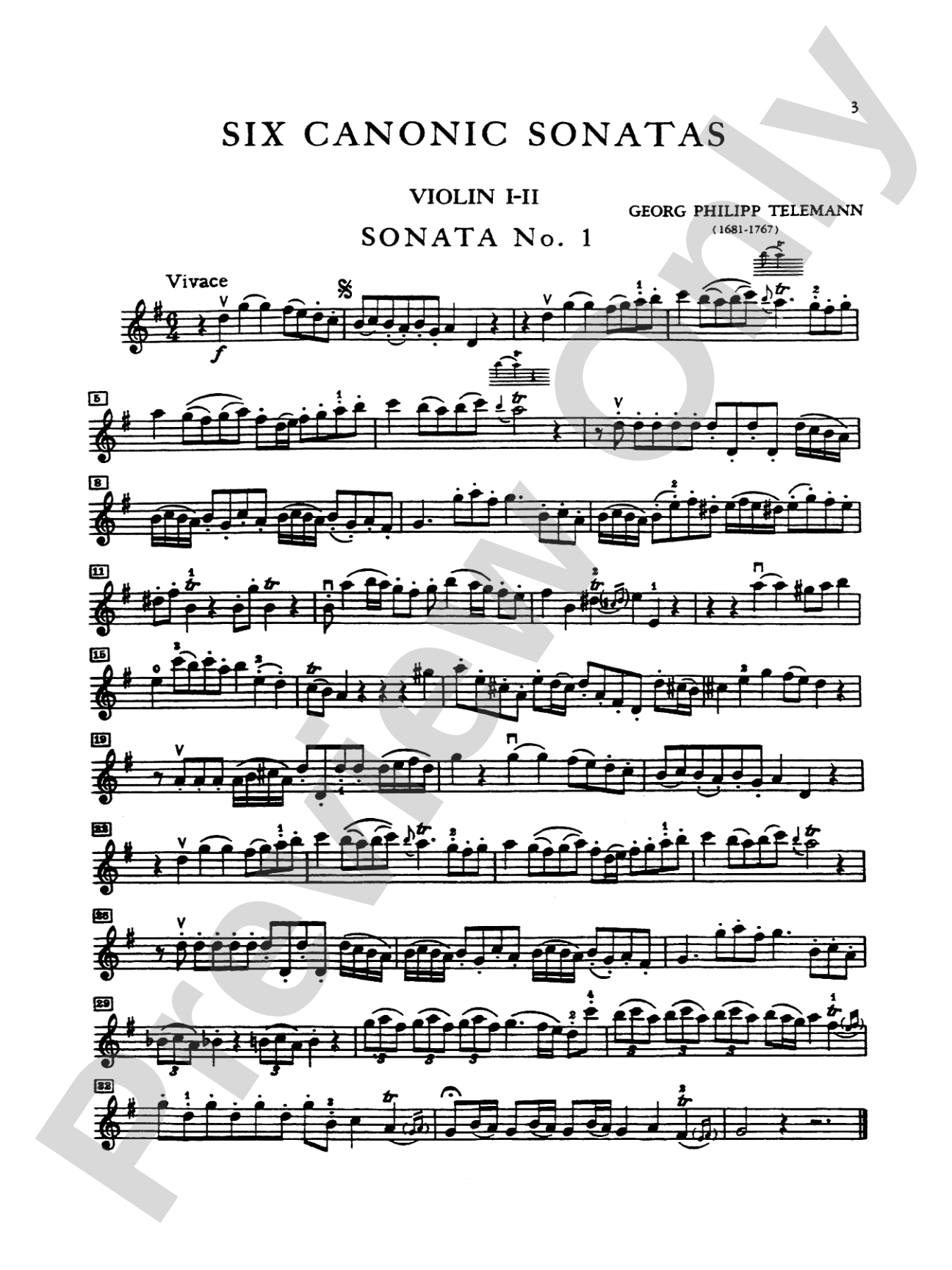
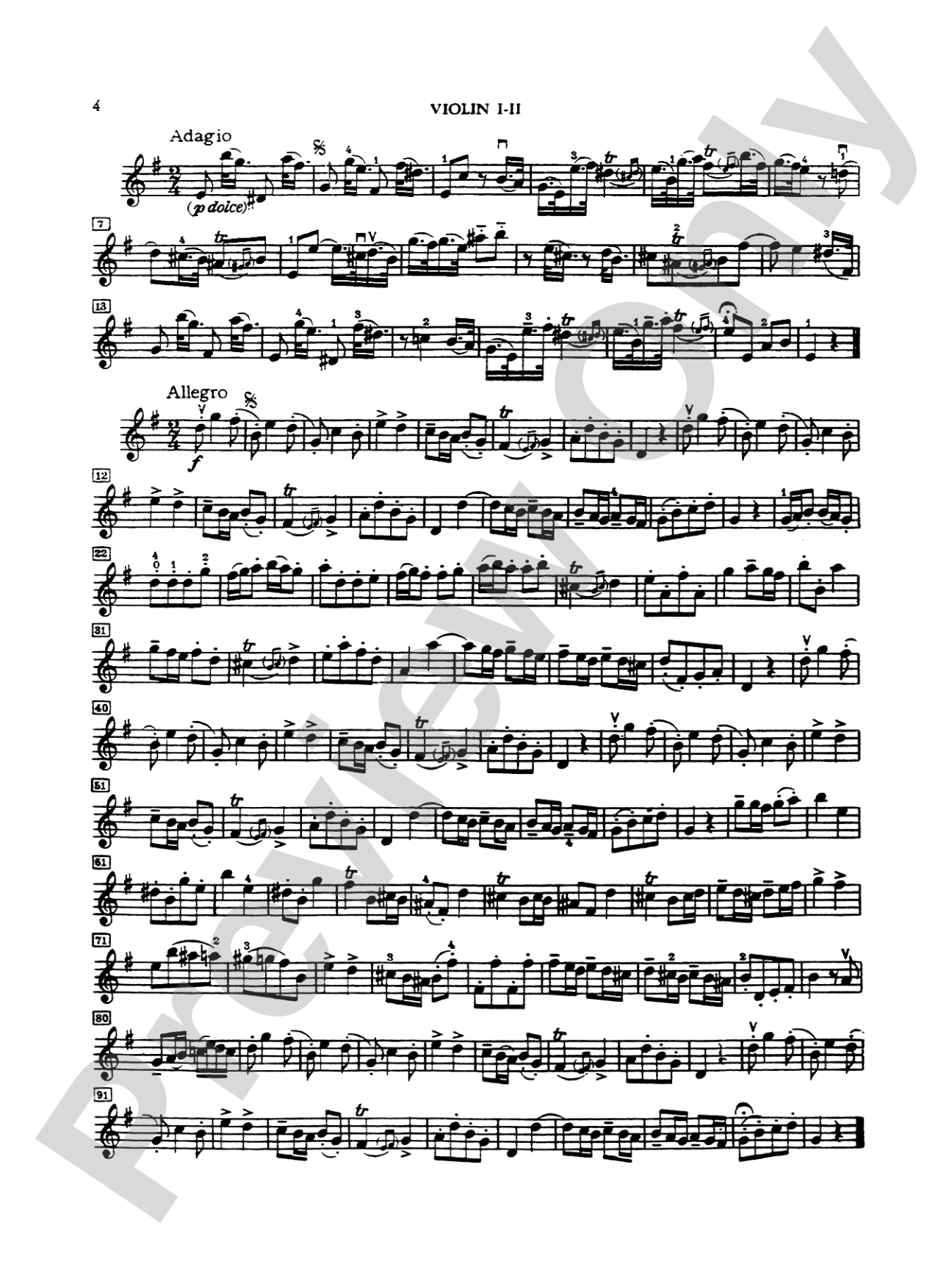

Telemann: Six Canonic Sonatas: Violin Book
By Georg Philipp Telemann
Item: 00-PK-0003576

$9.99
Pickup currently not available
Buy Extra Parts (Digital PDF Download)
| Product | Price | Quantity |
|---|---|---|
| Telemann: Six Canonic Sonatas | $0.99 | |
| Telemann: Six Canonic Sonatas | $0.99 | |
| Telemann: Six Canonic Sonatas | $0.99 | |
| Telemann: Six Canonic Sonatas | $0.99 | |
| Telemann: Six Canonic Sonatas | $0.99 | |
| Telemann: Six Canonic Sonatas | $0.99 |
Parts Added to Cart!
Related Items
Six Canonic Sonatas: Violin Book |
$9.95
|
View |
Description
Expertly arranged Violin Duets by Georg Philipp Telemann from the Kalmus Edition series. This is from the Baroque era.


Don't just read it, hear it, play along with it, and watch your students grow with it. In MakeMusic Cloud, Telemann: Six Canonic Sonatas: Violin Book comes alive with professional accompaniment, adjustable tempo, and built-in practice tools that turn solo practice into real progress.
Open in the Player
Jump straight in and assign it today.
Start Your Free Trial
Open this title and explore the full library in minutes.
Sample Audio
No sample audio found.
Sample Video
No sample videos found.
Additional Details
Series:
Kalmus Edition
Publisher:
Alfred Music
Page Count:
20
SKU:
00-PK-0003576
More about this title
About the Composer: Georg Philipp Telemann
Georg Philipp Telemann (1681-1767) was one of the most prolific composers of the Baroque era, rivaling Bach in output and surpassing him in popularity during his lifetime. A master of multiple genres and instruments, Telemann held prestigious positions across Germany, most notably as Cantor at the Johanneum in Hamburg, where he directed the city's church music for over 46 years. His gift for clear, elegant melodic writing and his practical approach to composition made his works essential to music education and domestic performance in the eighteenth century.
Telemann's output includes over 3,000 known compositions spanning operas, cantatas, concertos, and chamber works. His ability to craft music that was both musically sophisticated and accessible to amateur musicians established him as a model for composition pedagogy. String duets were among his favorite genres for teaching and ensemble building, and they remain invaluable for developing musicianship.
Why we love this
These six canonic sonatas showcase Telemann's gift for elegant counterpoint without pretension. The canonic writing teaches violin partners how to listen and lock together while staying engaged with genuinely musical material, not mechanical exercises. They are substantial enough for festival competition yet approachable for intermediate players working to strengthen intonation and independence.
What to expect
Graceful and conversational. The canonic texture creates a friendly dialogue between equal partners, with charming melodic figures that interweave without strain. There is an air of refined playfulness throughout, as if two skilled musicians are enjoying a witty exchange in a private chamber.
Who it's for
Intermediate to early advanced violinists seeking duet repertoire that combines genuine artistry with pedagogical value. These sonatas work well for students preparing for festival competition, private studio partnerships, and string programs building ensemble skills without requiring a full group.
How to get the most out of it
- Balance the two violin lines so that neither overwhelms the other; the canonic structure demands equal presence from both players. Adjust your position and bow angle to project both parts evenly into the room.
- Practice separately at first, then gradually bring the parts together at a slow tempo where you can hear and match intonation without rushing. Canonic writing amplifies tuning issues, so precision here pays dividends.
- Shape the phrases musically rather than treating the canon as a technical demonstration. Telemann's melodies are lyrical; find the natural breath points and let the line breathe even as you maintain strict rhythmic alignment.
- Record yourselves and listen back. Hearing both parts simultaneously reveals balance and timing issues that disappear when you are playing one of them.
How to use it
Offer these at a chamber concert or young artist recital where the focus is on violin duet literature. They pair beautifully with other Baroque duets or could anchor a program exploring Telemann's chamber music. The compact size and moderate difficulty also make them realistic choices for festival season prep.
Skills your students will build
- Listening and intonation adjustment in ensemble contexts
- Canonic writing and imitative counterpoint
- Rhythmic independence and coordination between parts
- Phrase shaping and stylistic clarity in Baroque music
- Balance and projection when both voices are equally important