Telemann: Easy Fugues and Little Pieces Sheet Music Preview

Telemann: Easy Fugues and Little Pieces

By Georg Philipp Telemann

Item: 00-PC-0009493

Digital Download
$0.99
Description
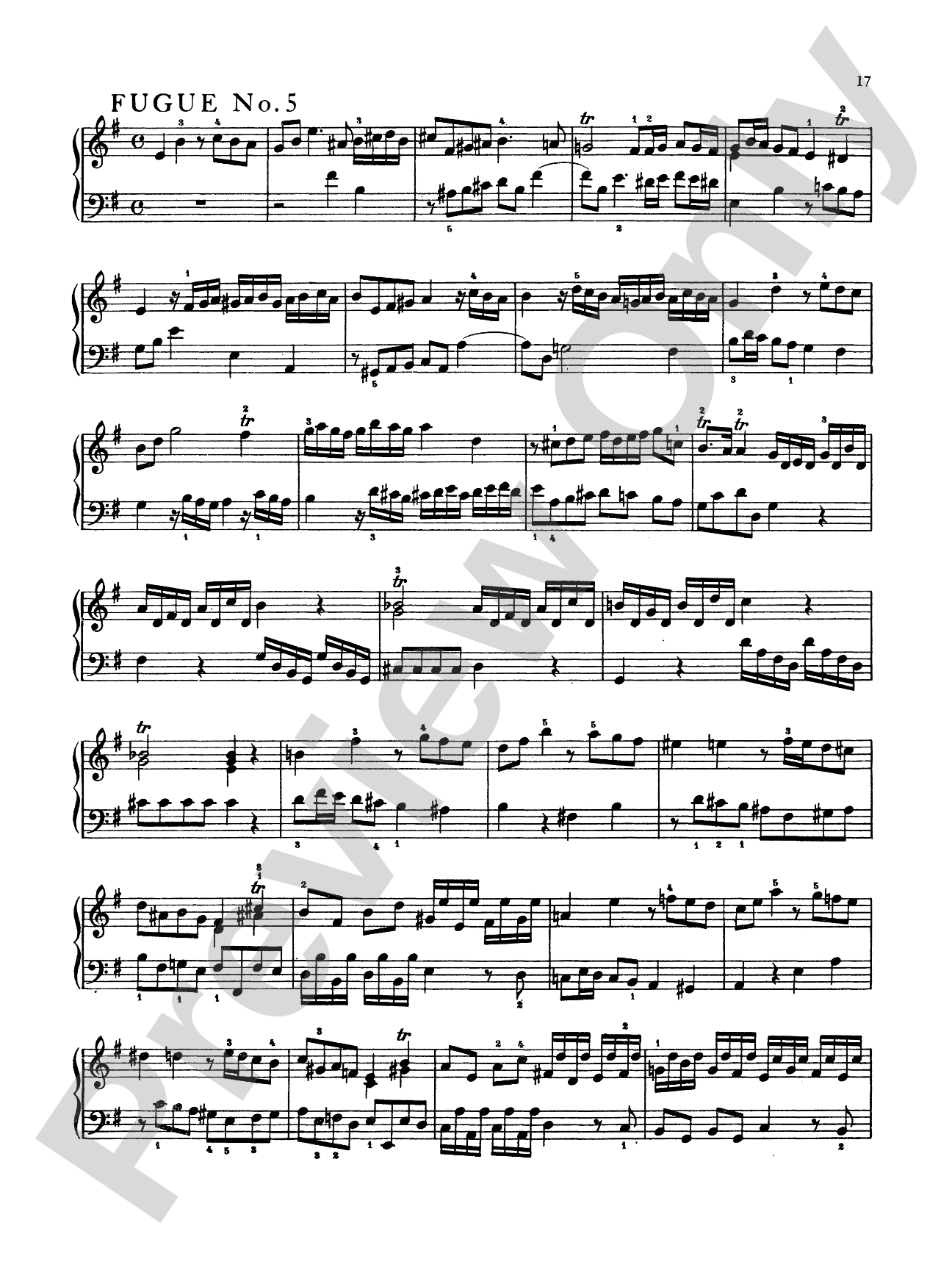
A collection of piano solos composed by Georg Philipp Telemann.

Don't just read it, hear it, play along with it, and watch your students grow with it. In MakeMusic Cloud, Telemann: Easy Fugues and Little Pieces comes alive with professional accompaniment, adjustable tempo, and built-in practice tools that turn solo practice into real progress.

Sample Audio
No sample audio found.
Sample Video
Additional Details
Series: Kalmus Edition
Publisher: Alfred Music
Page Count: 24
SKU: 00-PC-0009493

More about this title

About the Composer: Georg Philipp Telemann

Georg Philipp Telemann (1681-1767) was one of the most prolific composers of the Baroque era, with a catalog exceeding 3,000 works across every genre. A master of melodic invention and orchestration, he served as Kapellmeister in Eisenach, Köthen, and Frankfurt before settling in Hamburg, where he directed music for the city's five main churches. His output was staggering not because he was careless, but because he understood how to write music that was both musically substantive and genuinely playable by musicians of varying abilities.

Telemann's keyboard works occupy a distinctive space in Baroque literature. Unlike some of his contemporaries who wrote primarily for virtuosos, Telemann created substantial pieces for students and amateur musicians without sacrificing harmonic interest or structural clarity. His fugues and character pieces demonstrate that accessibility and musical sophistication are not opposites. This collection reflects his gift for making counterpoint instructive rather than forbidding.

Why we love this

Telemann's gift for melody and his straightforward approach to voice-leading make these pieces ideal for pianists building command of Baroque keyboard writing without drowning in technical demands. The fugues are genuine compositional statements, not pedagogical scaffolding, which means students understand they're studying real music, not exercises. Twenty-four pages of Baroque repertoire at an accessible level is genuinely rare.

What to expect

These pieces balance elegance with directness. The fugues unfold with logical clarity, each voice entering as expected and developing its material without excessive display. The Little Pieces shimmer with the graceful charm characteristic of Telemann's style. Across the collection, there's a sense of orderliness and proportion that feels almost like conversation.

Who it's for

This collection serves intermediate pianists ready to engage with Baroque counterpoint but who benefit from approachable textures and reasonable hand positions. Teachers will find it valuable for students making the transition from Baroque fundamentals to independent repertoire study, and as a source of recital material that doesn't demand virtuosity.

How to get the most out of it

  • Attend to the independence of voices in the fugues even when the texture is spare. Each line has character; let it speak.
  • Shape phrases by the harmonic rhythm rather than trying to impose Romantic-era rubato. Telemann's phrasing is built into the voice-leading.
  • Distinguish between the Little Pieces by their character. Even modest works in this collection have distinct affective worlds; commit to each one.
  • Avoid excessive pedal, especially in pieces with active sixteenth-note figuration. The clarity of the writing depends on articulation.

How to use it

Program a Telemann fugue or character piece alongside Bach or Handel to illustrate regional and stylistic variety within the Baroque keyboard repertoire. The smaller pieces work well as recital openers or contrasting movements between weightier works. In a curriculum, these pieces bridge the gap between published beginner collections and the demands of unaccompanied Bach.

Skills your students will build

  • Reading multiple independent voices simultaneously
  • Understanding fugal entry and voice-leading conventions
  • Baroque ornamentation and articulation
  • Balance and transparency in counterpoint
  • Keyboard voice independence and hand coordination

You May Also Like