Tectonic Plates: Mallet Percussion 2 Sheet Music Preview

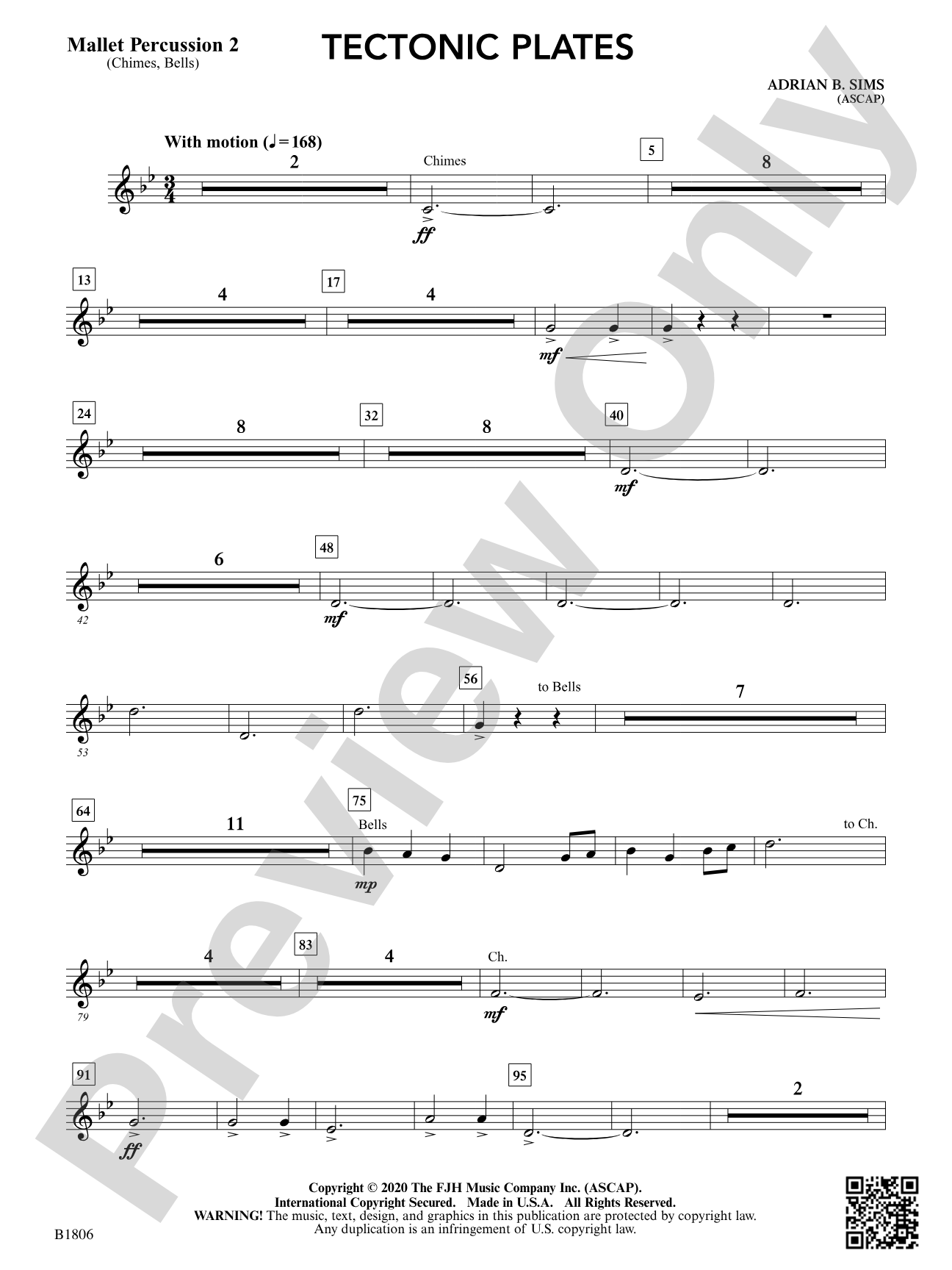
Tectonic Plates: Mallet Percussion 2

By Adrian B. Sims

Grade: 3.5

Item: 98-PC-DB1806_M2

Digital Download
$7.00
Description
Filled with excitement and unpredictability, this work takes listeners on a journey through the inner workings of the planet. From musical depictions of seismic activity (characterized by swells in the brass and percussion) to the sounds of an earthquake, the piece reflects not only destruction, but also the resulting beautiful landscapes, mountains, and oceans. A powerful work!

Tectonic Plates: Mallet Percussion 2 isn't in MakeMusic Cloud just yet...but it could be. Let us know you'd like to see it, and you'll help shape what comes next. In the meantime, start a free trial and dive into thousands of interactive titles your students can play along with today.

Sample Audio
0:00
0:00
Sample Video
Additional Details
Series: FJH Concert Band
Publisher: The FJH Music Company, Inc.
SKU: 98-PC-DB1806_M2

More about this title

About the Composer: Adrian B. Sims

Adrian B. Sims

Adrian B. Sims was born in Seattle in 2000 and has already established himself as a distinctive voice in band composition. His work has appeared on the Bandworld Top 100 List and performed at The Midwest Band and Orchestra Clinic, and he has won recognition in multiple composition competitions including the Maryland Music Educators Association Young Composers Project and the Make Music Young Composers Contest.

A trombonist and conductor as well as composer, Sims draws on performance experience across pit orchestras, symphony orchestras, jazz ensembles, and concert bands. He studied composition with Dr. Robert Gibson at the University of Maryland and credits world-renowned composer Brian Balmages for his artistic development. Currently pursuing a dual degree in Music Education and Composition at the University of Maryland, Sims regularly rehearses and conducts his own works in performances across Maryland schools.

Why we love this

Tectonic Plates succeeds because it balances geological storytelling with accessible musicality. The dramatic arc from seismic turbulence to serene natural beauty gives your band something genuinely engaging to build around, and at Grade 3.5, the writing challenges without overwhelming developing ensembles.

What to expect

Tectonic Plates immerses listeners in the raw power of geological forces. Brass and percussion collide in waves of sound that conjure seismic upheaval, then the texture transforms into something transcendent, capturing the beauty that emerges from the planet's reshaping.

Who it's for

This score and parts work for Grade 3.5 concert bands ready to tackle thematic development and dynamic storytelling without extreme technical demands. Directors seeking program material that excites audiences while building musicianship in growing ensembles will find a substantial piece here.

How to get the most out of it

  • Shape the brass swells deliberately; they drive the seismic energy. Have brass players practice the crescendos as a unified gesture, imagining pressure building beneath the earth's crust.
  • Coordinate the percussion and brass closely during earthquake passages. These moments rely on rhythmic precision and dynamic coordination to create the unsettling effect the composer intends.
  • Contrast the turbulent opening sections with the quieter landscape sections. Use articulation and dynamic control to make the shift from destruction to beauty tangible for your audience.
  • Balance the melodic content across sections so no single line gets buried. The piece's emotional arc depends on hearing both the violent energy and the resulting beauty clearly.

How to use it

Consider programming this as a centerpiece for a concert exploring nature, science, or environmental themes. Its dramatic arc and moderate difficulty make it ideal for a spring concert where you want to showcase your band's growth while delivering an entertainment experience that resonates beyond traditional audiences.

Skills your students will build

  • Dynamic control and shaping across extended passages
  • Ensemble balance in multi-sectional textures
  • Thematic development and narrative interpretation
  • Coordinating rhythmic gestures between brass and percussion sections
  • Stylistic contrast (agitation versus tranquility)

You May Also Like