Technical Growth for the Bassoonist Cover Image

Technical Growth for the Bassoonist: Bassoon, Methods, Book

$9.95 USD
Sale price  $9.95 USD Regular price 
Skip to product information
Technical Growth for the Bassoonist Cover Image

Technical Growth for the Bassoonist: Bassoon, Methods, Book

By Edmund J. Siennicki

Item: 36-10300170

$9.95
Shipped

One moment…

Description
This book is intended for serious bassoon students, instrumental music teachers, and conductors of orchestras and bands. Basic principles of fingering and basic facts regarding the mechanical peculiarities of the bassoon are presented in a form which hastens the technical progress of the student or is a convenient reference source for the conductor and teacher. Included: a basic fingering chart; special fingerings to make 'impossible' passages more playable; a trill chart; eleven etudes to address technical problems confronted in the standard literature, various rhythms, articulations, keys styles, scales, arpeggios, phrasings, meters, and tenor clef.

Technical Growth for the Bassoonist: Bassoon, Methods, Book isn't in MakeMusic Cloud just yet...but it could be. Let us know you'd like to see it, and you'll help shape what comes next. In the meantime, start a free trial and dive into thousands of interactive titles your students can play along with today.

Sample Pages

No sample pages found.

Sample Audio
No sample audio found.
Sample Video
Additional Details
Series: LudwigMasters Woodwind Series
Publisher: Keiser Productions, Inc.
ISBN10: 8-88-852806-7
ISBN13: 979-8-88-852806-8
UPC: 659359753510
SKU: 36-10300170
Instrumentation: Bassoon

More about this title

About the Composer: Edmund J. Siennicki
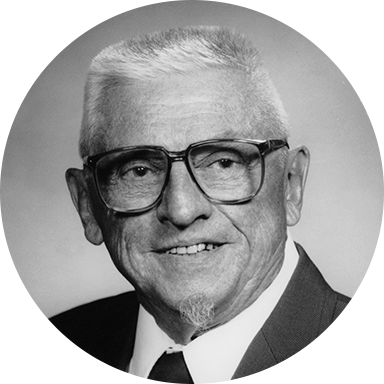
Edmund J. Siennicki

Edmund J. Siennicki grew up in Cleveland, Ohio, where a formative conversation with pianist Ignacy Jan Paderewski at age 12 shaped his artistic direction. He earned his Bachelor's degree from Kent State University, where he composed the school's fight song, still performed at football games today. His graduate studies at Teachers College, Columbia University, included composition with Herbert Elwell, electronic music with Sergio Barroso, and consultation with Vincent Persichetti.

Siennicki built a dual career as both performer and composer, with particular expertise on bassoon and piano. His teaching spanned Cleveland's junior high schools as well as faculty positions at Michigan and Kent State University. Over two decades, his work has earned recognition through National School Orchestra composition contests, two composer residencies at the MacDowell Colony, and consistent ASCAP awards. With approximately 200 compositions in print, he continues to compose and conduct clinics in schools.

Why we love this

Siennicki writes from a teacher's and performer's understanding of what actually stops a bassoonist's progress. Rather than generic exercises, the eleven etudes target specific technical obstacles found in standard orchestral and band literature, making every page directly applicable to the repertoire students encounter. The inclusion of special fingerings for difficult passages transforms frustration into solutions.

What to expect

This is a working musician's toolkit. The etudes move purposefully through real technical territory without indulgence, addressing the friction points between hand and reed, between intention and execution. You emerge with both clarity and confidence.

Who it's for

Serious bassoon students working toward technical independence and teachers seeking a reference source grounded in the instrument's mechanical realities rather than wishful thinking. Conductors and directors will find this book equally useful for understanding why certain passages present problems and how to guide students toward solutions.

How to get the most out of it

  • Study the fingering chart and trill chart thoroughly before tackling the etudes; knowing your options prevents you from defaulting to uncomfortable hand positions under pressure.
  • Work through the etudes systematically by technical problem rather than skipping ahead; each one isolates a distinct challenge you'll meet in real music.
  • Use the varied articulations, keys, and meter changes within the etudes as laboratories for consistency; the rhythmic and stylistic variety ensures your technique works across different musical contexts, not just in one comfort zone.

How to use it

Assign etudes individually as students encounter corresponding passages in orchestra or band repertoire; when a student struggles with a trill, a passage in an unusual key, or a rhythmic figure, you have a targeted study ready. The book also serves as a studio reference for private teachers and a quick reference for conductors planning rehearsal strategies.

Skills your students will build

  • Executing unconventional fingerings for technically challenging passages
  • Performing trills across the full range of the instrument
  • Reading and playing in tenor clef with facility
  • Articulation control across varied styles and rhythmic patterns
  • Technical consistency across multiple keys and meters
  • Scale and arpeggio fluency as applied to real compositional situations

You May Also Like