


Technic Tricks, Book 2: Piano
By John W. Schaum
Item: 00-PB-0001078
$8.99
Pickup currently not available
Related Items
Technic Tricks, Book 2: Piano Book |
$8.99
|
View |
Description
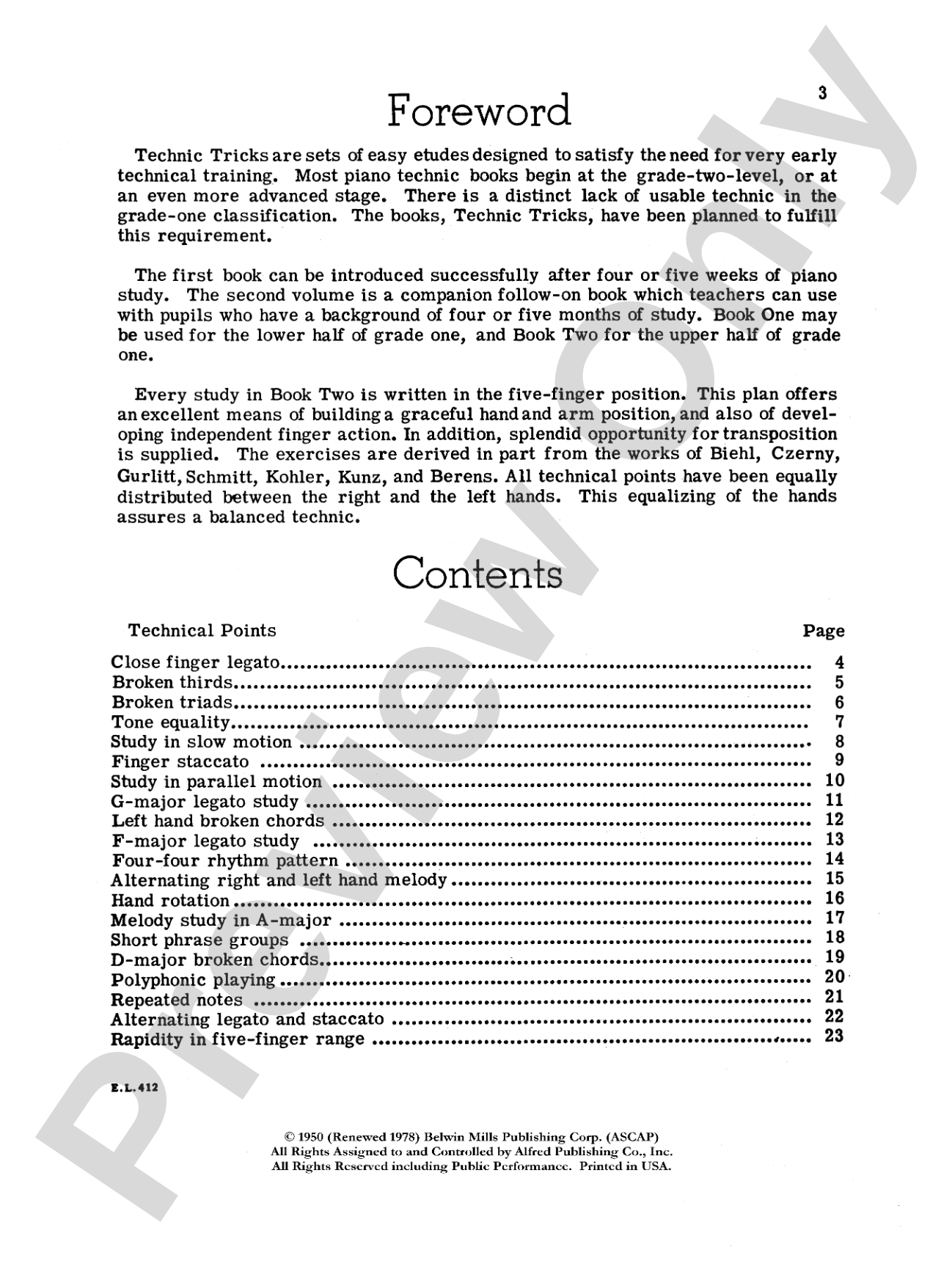
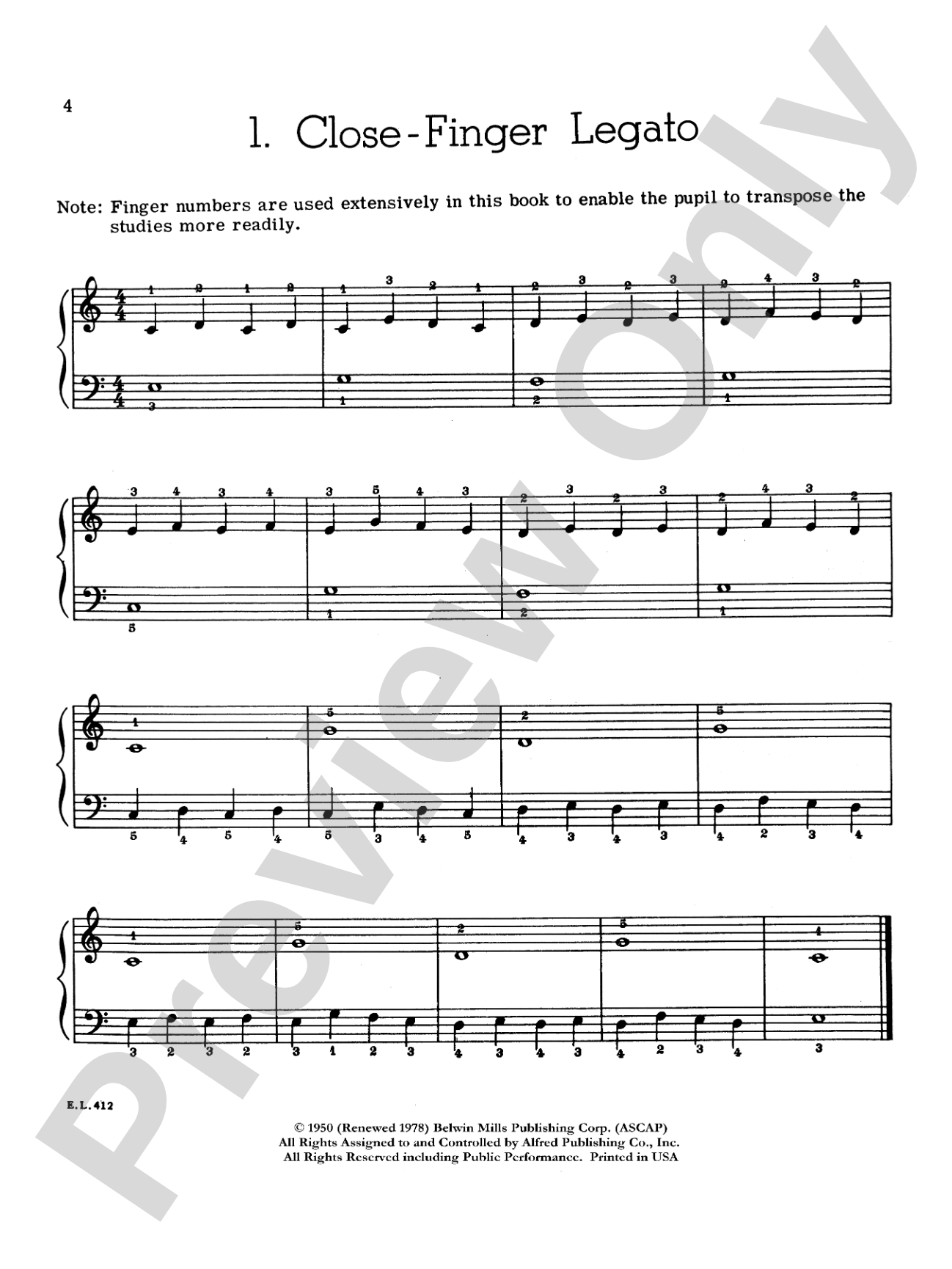
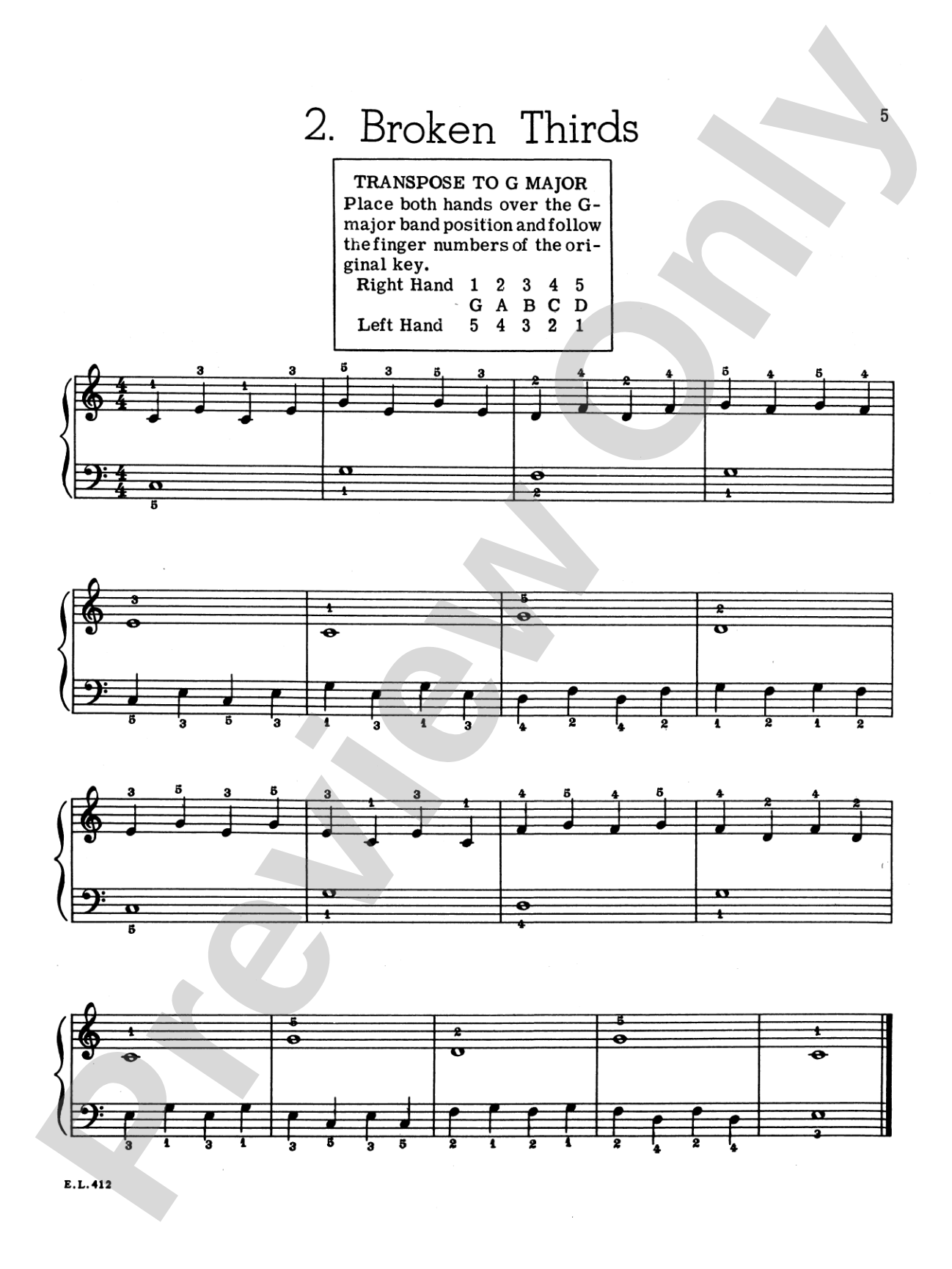
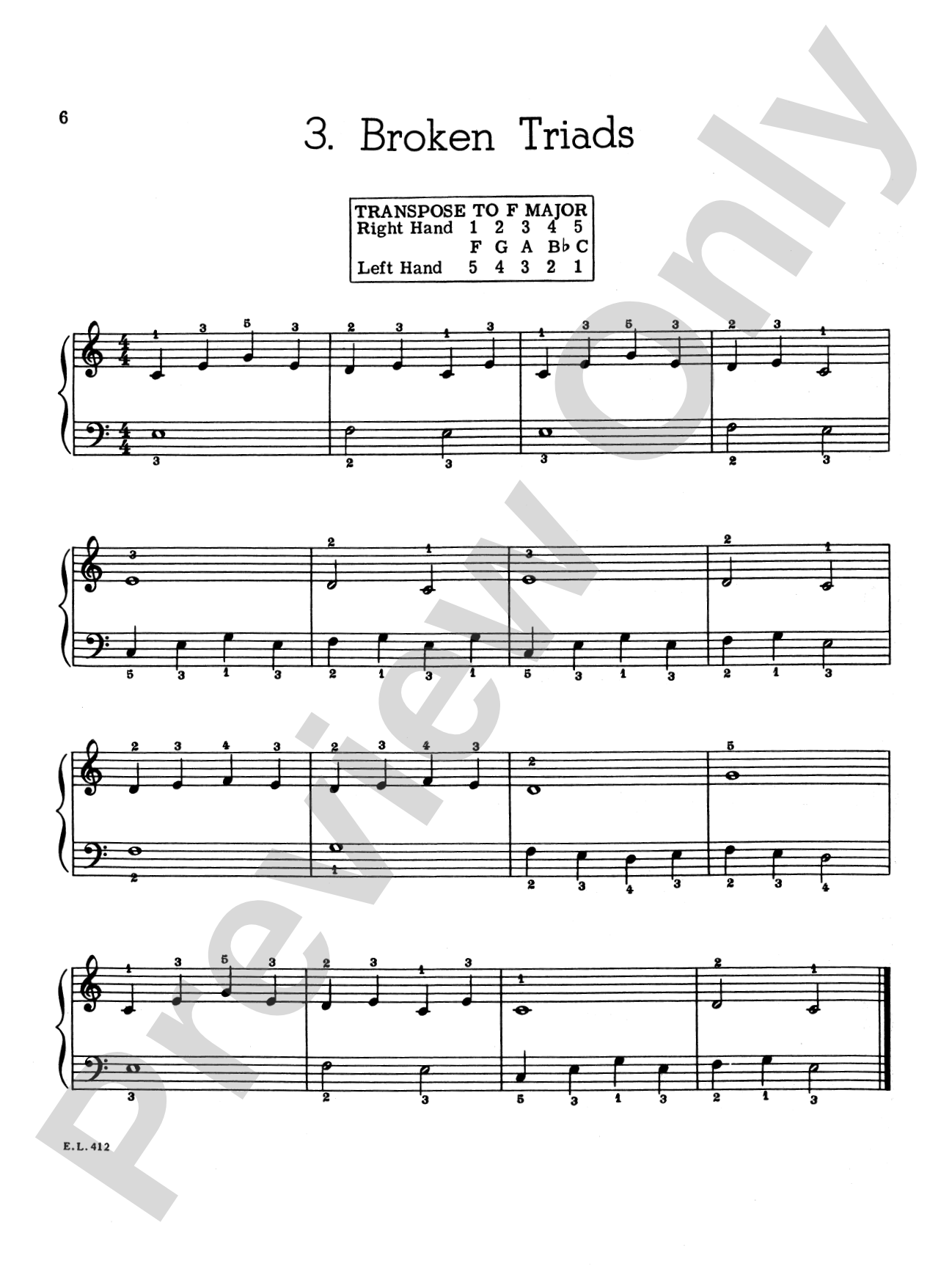
TECHNIC TRICKS are sets of easy etudes designed to satisfy the need for very early technical training. Most piano technic books begin at the grade-two level, or at an even more advanced stage. There is a distinct lack of usable technic in the grade-one classification. The books, TECHNIC TRICKS, have been planned to fulfill this requirement. Every study in Book 2 is written in the five-finger position. This plan offers an excellent means of building a graceful hand and arm position, and also of developing independent finger action. In addition, splendid opportunity for transposition is supplied. The exercises are derived in part from the works of Biehl, Czerny, Gurlitt, Schmitt, Kohler, Kunz, and Berens. All technical points have been equally distributed between the right and the left hands. This equalizing of the hands assures a balanced technic.


Technic Tricks, Book 2: Piano isn't in MakeMusic Cloud just yet...but it could be. Let us know you'd like to see it, and you'll help shape what comes next. In the meantime, start a free trial and dive into thousands of interactive titles your students can play along with today.
Request This Title
Tell us you want it.
Start Your Free Trial
Explore everything that's ready to play right now.
Sample Audio
No sample audio found.
Sample Video
No sample videos found.
Additional Details
Series:
Schaum Method Supplement
Publisher:
Alfred Music
Page Count:
24
SKU:
00-PB-0001078
More about this title
About the Composer: John W. Schaum
John W. Schaum (1905-1988) was an American composer and pedagogue who fundamentally shaped early piano instruction through his systematic method books. His work emphasized accessible, musical examples that built technique naturally alongside repertoire, making him one of the most widely adopted piano pedagogues of the twentieth century.
Schaum's teaching philosophy prioritized balance between hands, logical progression, and the integration of technical study with enjoyable music. His method materials remain standard in studios and schools because they solve real problems in early instruction: students stay engaged, hands develop evenly, and foundation skills transfer directly to standard repertoire.
Why we love this
Technic Tricks Book 2 fills the genuine gap between primer work and grade-two etude collections by offering carefully sequenced five-finger studies that don't feel like drills. The balanced hand distribution ensures neither hand lags behind, which is where so many young pianists develop asymmetrical technique early on. These are short, musical enough to hold a student's attention while accomplishing real technical work.
What to expect
Straightforward and musical. These studies feel less like mechanical exercises and more like actual short pieces, keeping young hands engaged while developing the kind of finger independence that becomes foundational for all later technique. The five-finger limitation creates focus rather than frustration.
Who it's for
Grade 1 and early grade 2 students who need technical work beyond basic primer repertoire but aren't ready for standard etude collections. Teachers seeking supplementary material that builds independent finger action without introducing hand position shifts or complex rhythmic patterns.
How to get the most out of it
- Transpose each study into the five closely related keys before moving to the next exercise. This builds security in hand position while strengthening knowledge of key signatures.
- Play hands separately first, then combine only when both hands move confidently at tempo. Five-finger positions feel solid when students know exactly where each finger lands without looking.
- Focus on consistent finger height and arch throughout each study rather than speed. Graceful hand shape, Schaum's stated goal, develops only through patient repetition of the correct position.
How to use it
Assign one or two studies per week as part of regular lesson work alongside method book material. The transposition possibilities make them useful throughout the year as students cycle through different keys, deepening their understanding of tonality while reinforcing five-finger patterns.
Skills your students will build
- Five-finger position security and hand shape consistency
- Independent finger action and control within a fixed position
- Balanced technical development in both hands
- Transposition in closely related keys
- Reading in various key signatures at grade 1-2 level