
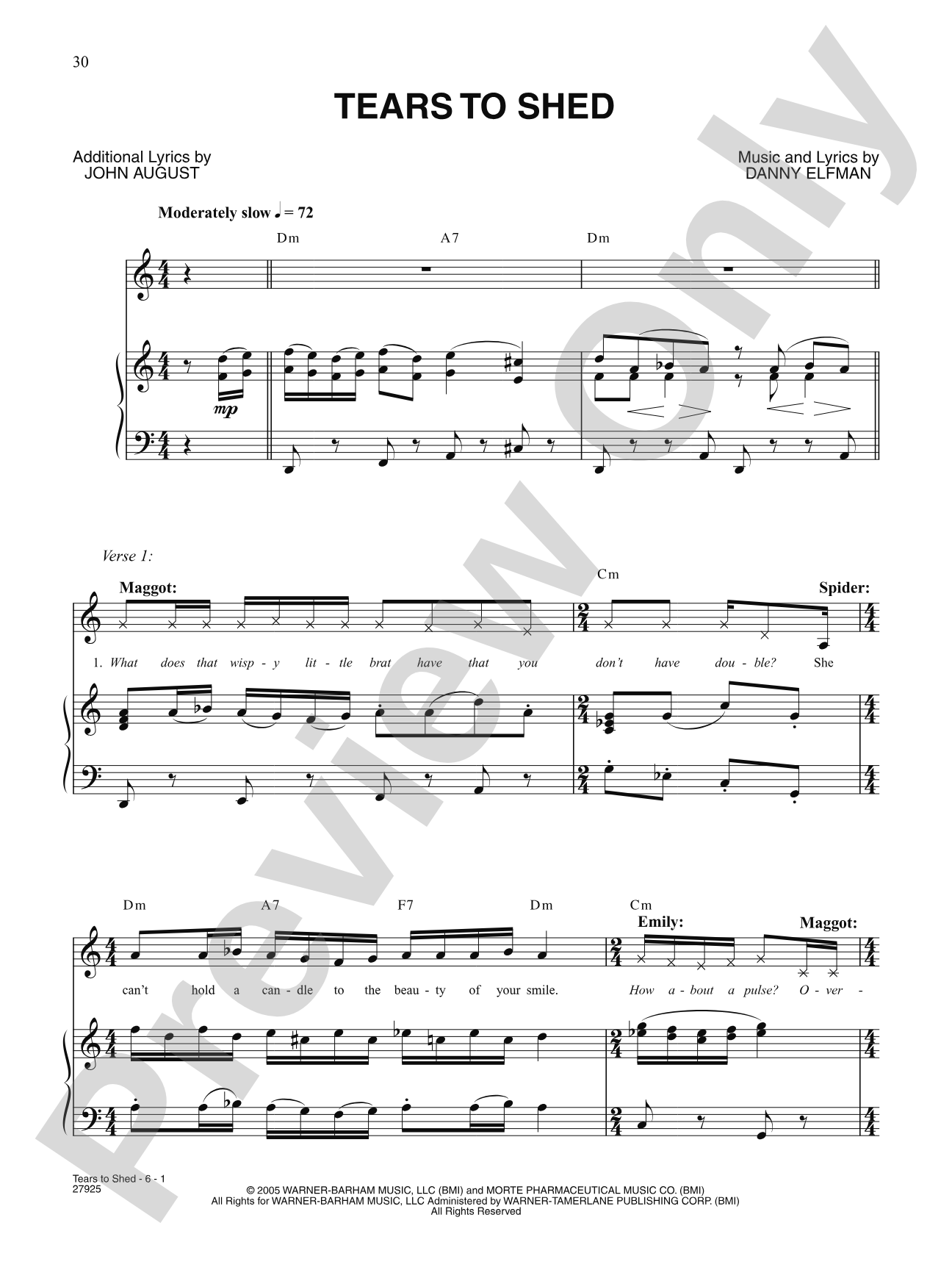
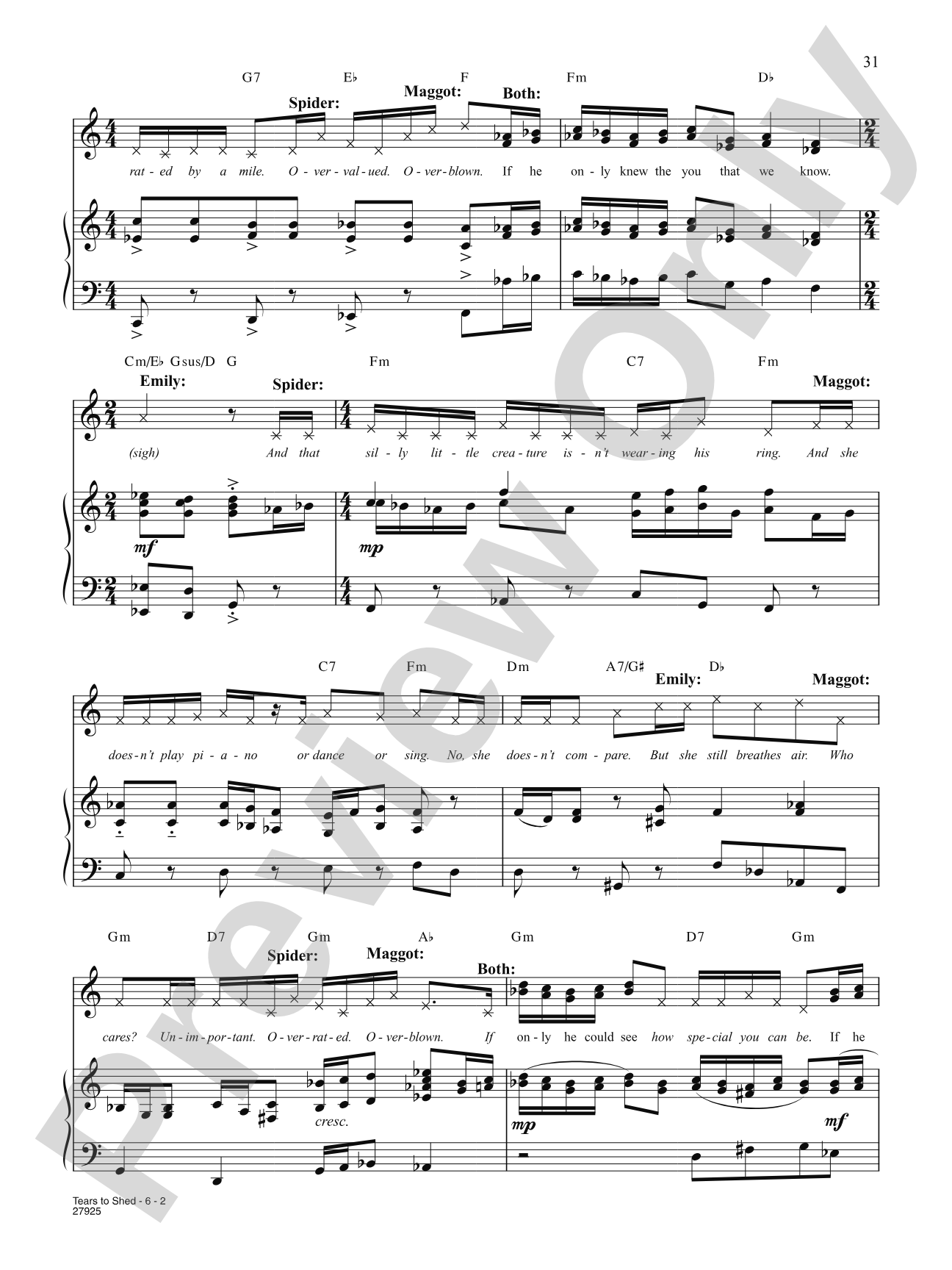

Tears To Shed (from "Corpse Bride"): Piano/Vocal/Chords
Music by Danny Elfman
Item: 00-PSP-000239
$5.99
Pickup currently not available
Related Items
According To Plan (from "Corpse Bride"): Piano/Vocal/Chords |
$9.99
|
View | |
Ball & Socket Lounge Music #1 (from "Corpse Bride"): Piano/Vocal/Chords |
$4.99
|
View | |
Ball & Socket Lounge Music #2 (from "Corpse Bride"): Piano/Vocal/Chords |
$4.99
|
View | |
Remains Of The Day (from "Corpse Bride"): Piano/Vocal/Chords |
$5.99
|
View | |
Remains Of The Day (Combo Lounge Version) (from "Corpse Bride"): Piano/Vocal/Chords |
$4.99
|
View | |
The Wedding Song (from "Corpse Bride"): Piano/Vocal/Chords |
$9.99
|
View | |
Victor's Piano Solo (from "Corpse Bride"): Piano/Vocal/Chords |
$4.99
|
View | |
Corpse Bride: Selections from the Motion Picture: Piano/Vocal/Chords Book |
$21.99
|
View |
Description
Alfred is pleased to present selections from the Academy Award-nominated film Tim Burton's Corpse Bride.
With music written by Danny Elfman, this songbook provides lyrics, melody lines, and chord changes, with professionally arranged piano accompaniments for many of the songs in the film.
Titles: Victor's Piano Solo * Corpse Bride (Main Title) * Remains of the Day * According to Plan * Tears to Shed * The Piano Duet * The Wedding Song * Ball & Socket Lounge Music No. 1 (band version) * Ball & Socket Lounge Music No. 2 * Remains of the Day (combo lounge version -- piano solo excerpt).


With music written by Danny Elfman, this songbook provides lyrics, melody lines, and chord changes, with professionally arranged piano accompaniments for many of the songs in the film.
Titles: Victor's Piano Solo * Corpse Bride (Main Title) * Remains of the Day * According to Plan * Tears to Shed * The Piano Duet * The Wedding Song * Ball & Socket Lounge Music No. 1 (band version) * Ball & Socket Lounge Music No. 2 * Remains of the Day (combo lounge version -- piano solo excerpt).
Tears To Shed (from "Corpse Bride"): Piano/Vocal/Chords isn't in MakeMusic Cloud just yet...but it could be. Let us know you'd like to see it, and you'll help shape what comes next. In the meantime, start a free trial and dive into thousands of interactive titles your students can play along with today.
Request This Title
Tell us you want it.
Start Your Free Trial
Explore everything that's ready to play right now.
Sample Audio
No sample audio found.
Sample Video
No sample videos found.
Additional Details
Publisher:
Alfred Music
Page Count:
64
SKU:
00-PSP-000239
More about this title
About the Artist: Danny Elfman
Danny Elfman is a composer whose film scores have defined the sound of contemporary cinema. His work spans drama, comedy, and animation, with a distinctive ability to blend orchestral sophistication with melodic accessibility. His collaborations with director Tim Burton have produced some of his most inventive and recognizable music, earning multiple Academy Award nominations and Grammy Awards throughout his career.
Why we love this
This collection captures Elfman's gift for melodic storytelling in a singable, pianist-friendly format. The range of pieces (from solo piano to vocal numbers with full accompaniment) gives singers and pianists real flexibility in how they approach the material, whether performing a showstopping song or exploring the film's instrumental character.
What to expect
The music breathes with gothic romanticism and dark whimsy. Elfman's orchestral textures, translated here into piano writing, create an intimate yet cinematic world, balancing melancholy with moments of genuine beauty and humor. There's a theatrical quality throughout that invites expressive, characterful playing.
Who it's for
Singers preparing songs for auditions, recitals, or themed concerts will find direct access to Elfman's orchestrations adapted for piano. Pianists interested in contemporary film music or those seeking accessible yet sophisticated accompanimental material will find diverse performance opportunities here.
How to get the most out of it
- Study the film scene alongside each piece to understand the emotional arc; Elfman's accompaniments are designed to support specific dramatic moments, and that context informs phrasing and tempo choices.
- Balance the vocal line against the piano part rather than drowning it out; these arrangements are voiced to let the melody breathe while the accompaniment creates atmosphere.
- Pay attention to chord voicings in the piano part, particularly in the lounge music selections; Elfman's harmonic language here is jazzy and contemporary, requiring clear articulation to maintain definition.
- Tempo flexibility works in your favor, especially in the more lyrical numbers; allow the melody to guide your timing rather than locking into a metronomic pulse.
How to use it
These pieces work beautifully in recitals built around film music or contemporary songwriting, offering a cohesive emotional arc if you select multiple songs. A singer performing "Tears to Shed" paired with a pianist playing "Victor's Piano Solo" creates a compelling dramatic sequence. The instrumental selections also function as elegant interludes in mixed-genre concerts.
Skills your students will build
- Reading and interpreting jazz-influenced chord symbols and harmonic progressions
- Balancing vocal line with pianist accompanist in contemporary song arrangements
- Dramatic phrasing in lyrical melody lines
- Translating filmic context into performance choices
- Sight-reading ensemble music between vocalist and pianist