Teach Us Wisdom Sheet Music Preview

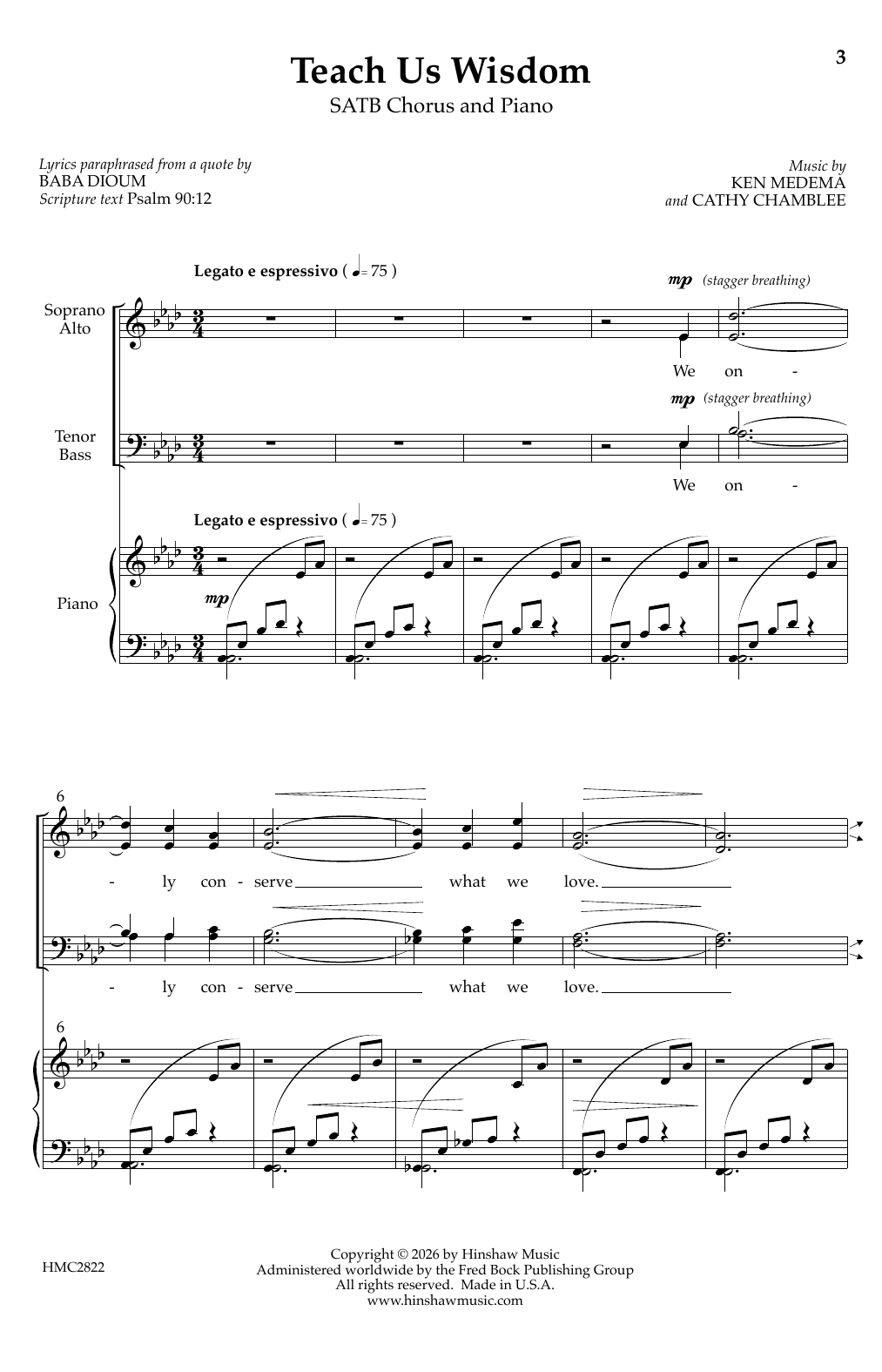
Teach Us Wisdom: SATB Choral Octavo

By Ken Medema and Cathy Chamblee / By Ken Medema / By Cathy Chamblee

Item: 35-DS01912698

Digital Download
$3.35
Description

Teach Us Wisdom: SATB Choral Octavo isn't in MakeMusic Cloud just yet...but it could be. Let us know you'd like to see it, and you'll help shape what comes next. In the meantime, start a free trial and dive into thousands of interactive titles your students can play along with today.

Sample Audio
No sample audio found.
Sample Video
Additional Details
Publisher: Hal Leonard
Page Count: 11
SKU: 35-DS01912698

More about this title

About the Composer: Ken Medema and Cathy Chamblee

Ken Medema is a composer and pianist known for sacred and educational music that speaks directly to spiritual themes. His work emphasizes accessibility without sacrificing musical substance, making his pieces natural fits for church choirs and school ensembles seeking meaningful repertoire. Cathy Chamblee brings collaborative expertise to sacred choral writing, contributing to texts and melodies that resonate with performers and listeners alike.

Why we love this

The text cuts straight to what congregations and students actually need to hear: a prayer for wisdom that feels urgent and personal rather than abstract. Medema and Chamblee set this request to music that sits comfortably in the SATB range while maintaining harmonic richness that keeps singers engaged throughout the piece.

What to expect

The music carries a quiet dignity, never overwrought but never plain. There is an earnestness in how the harmonic language unfolds, inviting singers to inhabit the prayer rather than merely perform it.

Who it's for

This octavo works for church choirs at all levels and youth choirs seeking sacred repertoire with musical substance. Directors building a concert program around texts of wisdom and spiritual reflection will find this piece both substantive enough to anchor a set and accessible enough not to require excessive rehearsal time.

How to get the most out of it

  • Balance the homophonic and imitative sections carefully; the homophonic passages need clarity, while the imitative writing benefits from each voice entering with equal prominence.
  • Pay attention to text underlay in longer note values, as slight variations in how singers sustain vowels can blur or clarify the message.
  • Shape phrases toward moments of harmonic resolution rather than holding everything at the same dynamic level; this architecture rewards careful pacing.

How to use it

Pair this with other wisdom texts or spiritual reflections for a thematic concert set, or use it as a choral anchor in a service focused on seeking guidance. Its 11 pages suggest a piece substantial enough to headline a short program but quick enough to fit within a larger concert without excessive trimming.

Skills your students will build

  • Balancing homophonic and imitative textures within a single piece
  • Maintaining clear diction during sustained harmonic progressions
  • Phrase shaping in sacred music contexts
  • Part independence in four-part harmony

You May Also Like