
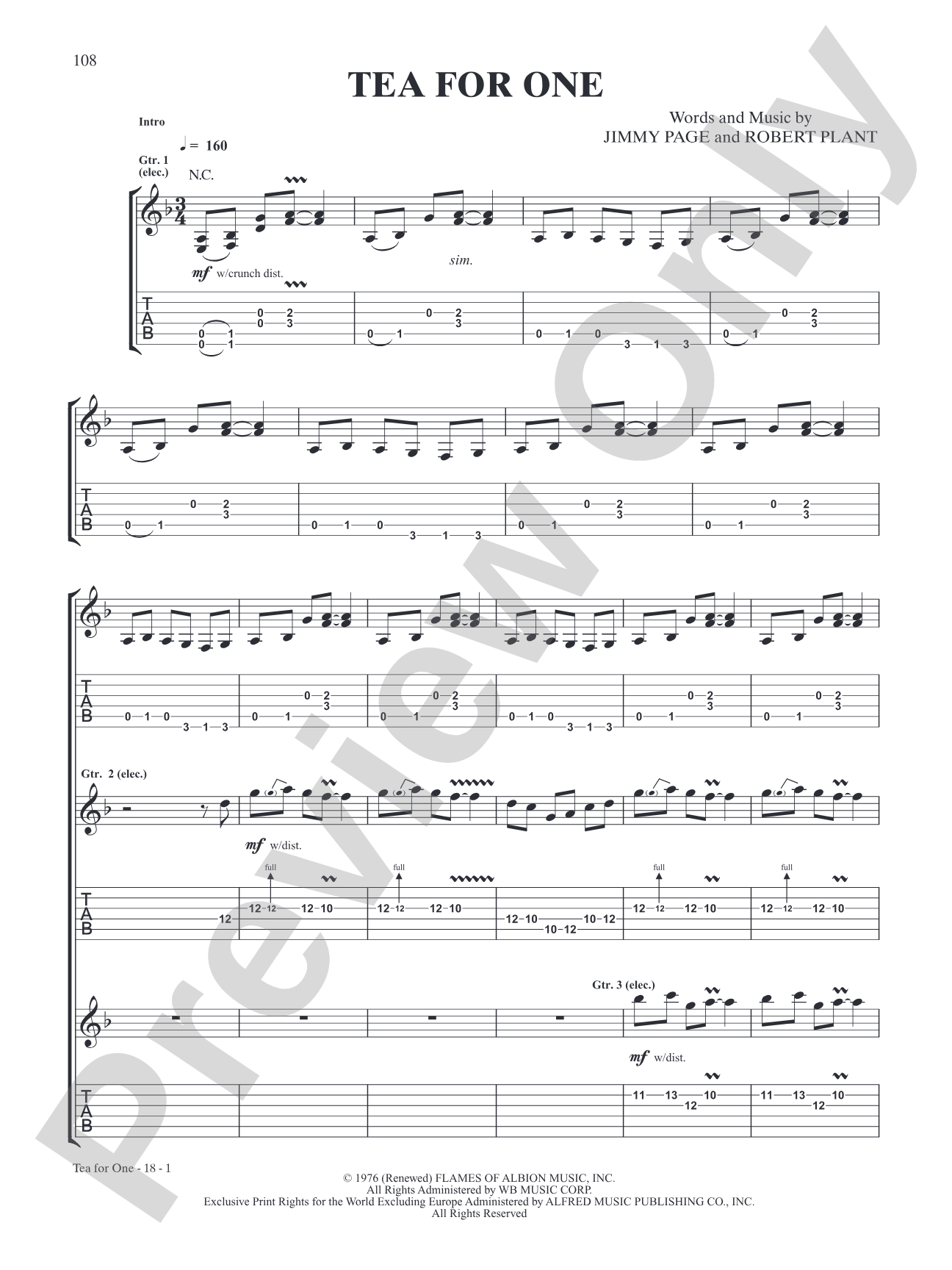
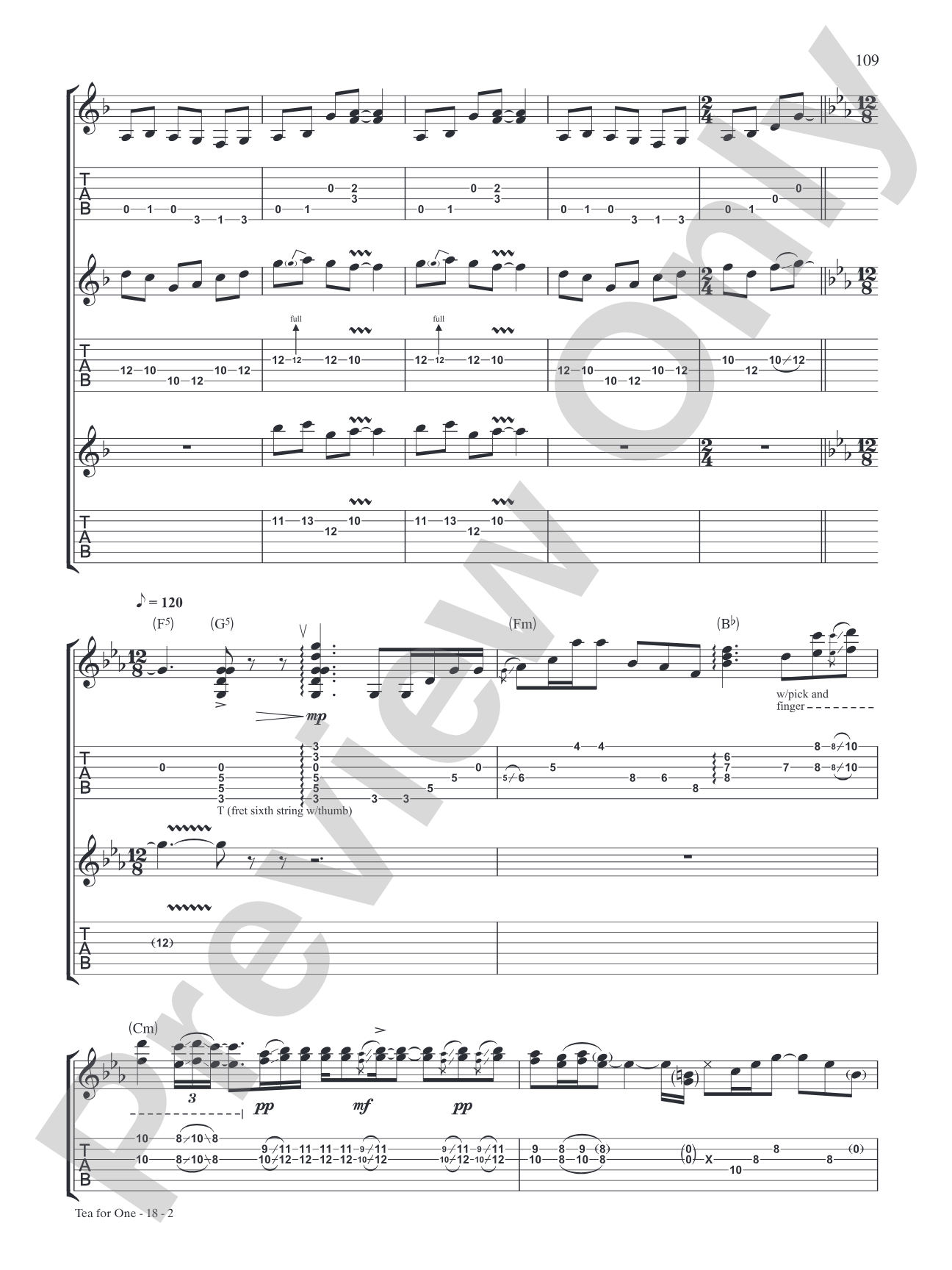
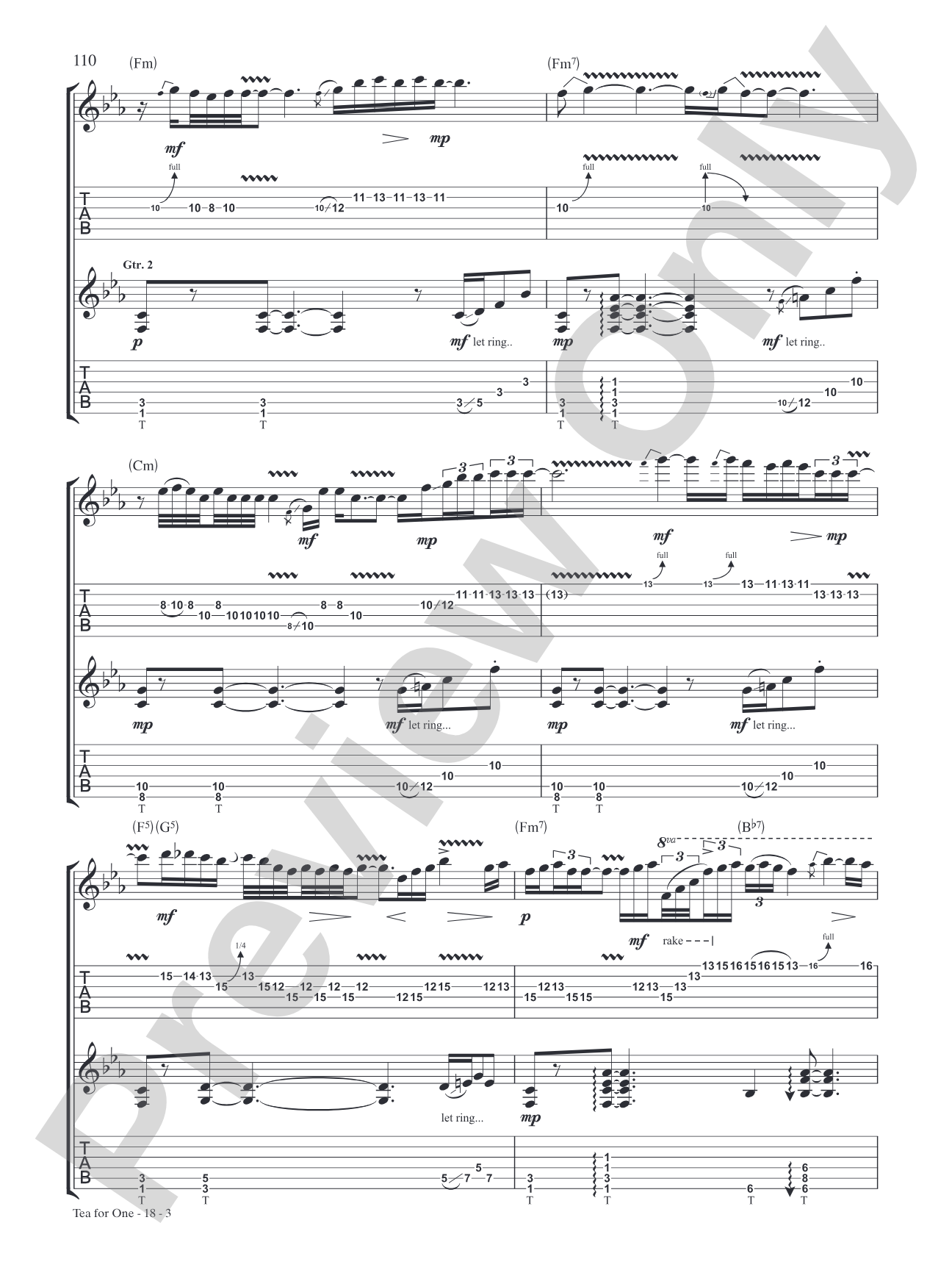
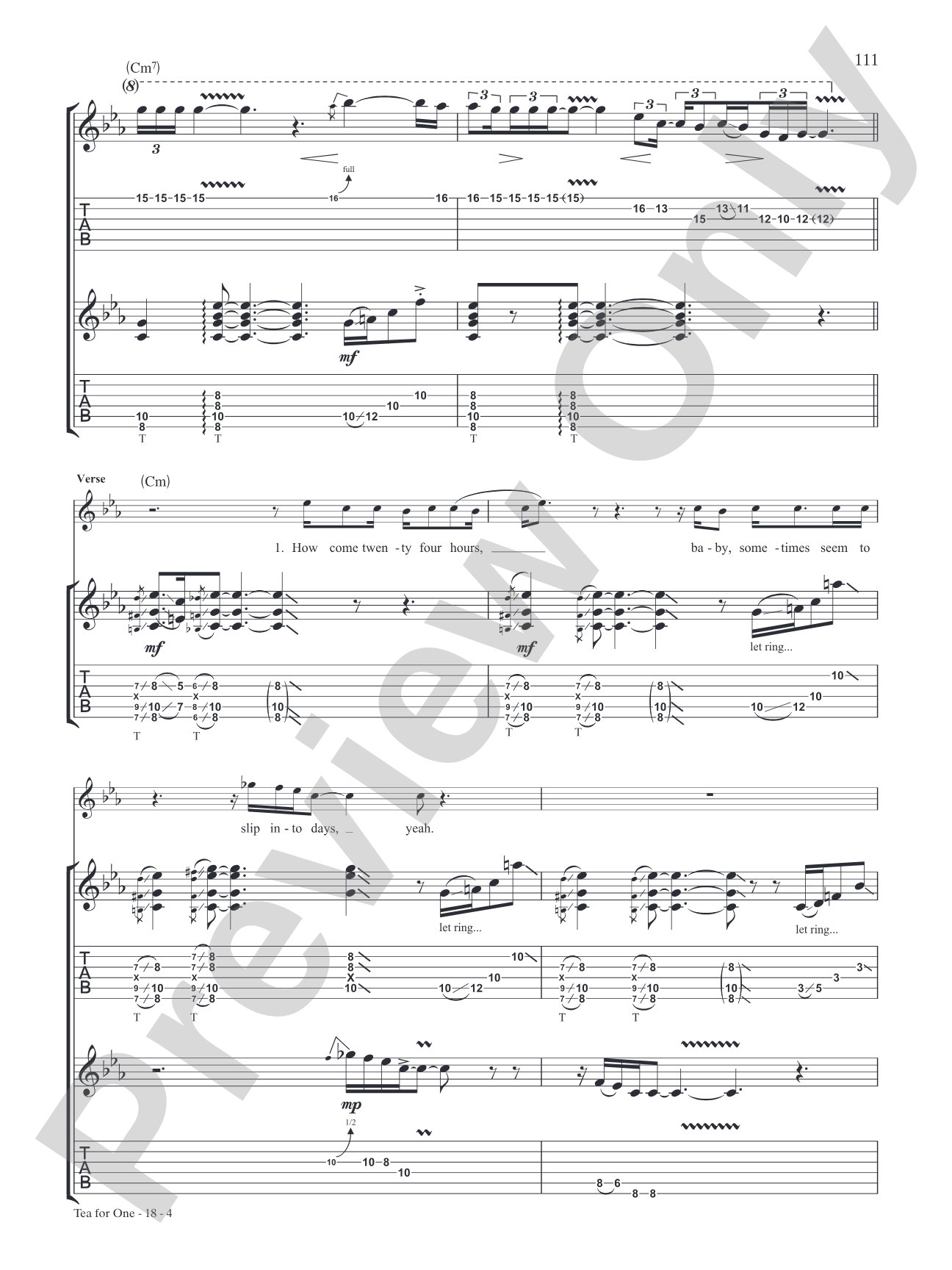

Tea for One: Authentic Guitar TAB
Led Zeppelin
Item: 00-PS-0013739
$9.99
Pickup currently not available
Related Items
Achilles Last Stand: Authentic Guitar TAB |
$9.99
|
View | |
For Your Life: Authentic Guitar TAB |
$9.99
|
View | |
Nobody's Fault but Mine: Authentic Guitar TAB |
$9.99
|
View | |
Candy Store Rock: Authentic Guitar TAB |
$9.99
|
View | |
Hots On for Nowhere: Authentic Guitar TAB |
$9.99
|
View | |
Royal Orleans: Authentic Guitar TAB |
$9.99
|
View | |
Led Zeppelin: Presence Platinum Album Edition: Drum Transcriptions Book |
$19.99
|
View | |
Led Zeppelin: Presence Platinum Album Edition: Authentic Guitar TAB Book |
$24.99
|
View | |
Led Zeppelin: Presence Platinum Album Edition: Authentic Bass TAB Book |
$16.99
|
View |
Description
Alfred Music, in association with Led Zeppelin, is proud to present this new Platinum Album Edition book. Drawn from more than 30 years of documentation, interviews, and recorded footage, these all-new transcriptions feature unprecedented accuracy and insight into the guitar style of Jimmy Page. With vintage Zeppelin photographs and a historical foreword by Guitar World magazine's editor-in-chief, Brad Tolinski, this book is a true collectible every fan must own. Titles: Achilles Last Stand * For Your Life * Royal Orleans * Nobody's Fault but Mine * Candy Store Rock * Hots on for Nowhere * Tea for One.


Tea for One: Authentic Guitar TAB isn't in MakeMusic Cloud just yet...but it could be. Let us know you'd like to see it, and you'll help shape what comes next. In the meantime, start a free trial and dive into thousands of interactive titles your students can play along with today.
Request This Title
Tell us you want it.
Start Your Free Trial
Explore everything that's ready to play right now.
Sample Audio
No sample audio found.
Sample Video
No sample videos found.
Additional Details
Series:
Alfred's Platinum Album Editions
Publisher:
Alfred Music
Page Count:
128
SKU:
00-PS-0013739
More about this title
About the Composer: Jimmy Page
Jimmy Page stands as one of rock's most influential and technically innovative guitarists. His work with The Yardbirds and Led Zeppelin fundamentally shaped how electric guitar could function as a compositional instrument, blending blues vocabulary with studio experimentation, Eastern influences, and dynamic arrangement. Page's approach to the instrument—from fingerstyle and alternate tunings to layered overdubbing and unconventional song structures—established techniques that remain central to rock and metal guitar playing today.
Why we love this
These transcriptions represent decades of meticulous documentation and represent the rare combination of historical accuracy with deep musical insight. The accompanying photographs and foreword contextualize Page's innovations within rock history, making this resource as valuable for understanding guitar composition and arrangement as it is for learning specific songs.
What to expect
These arrangements capture the raw power and compositional sophistication that defined Led Zeppelin's sound. The transcriptions span blues-rooted riffs, intricate fingerstyle passages, and orchestral layering that showcase Page's ability to build expansive soundscapes from guitar-driven foundations.
Who it's for
Intermediate to advanced guitarists seeking authentic transcriptions of Led Zeppelin's studio recordings will find these arrangements essential reference material. Students interested in rock composition, arranging, and guitar history will benefit from the detailed transcriptions and contextual documentation.
How to get the most out of it
- Study the alternate tunings and open string voicings carefully; they create the harmonic foundation of many arrangements and shifting between them requires intentional finger placement and time to lock in.
- Use the historical notes and photographs as reference points for tone and dynamics; understanding the era and context of each recording informs how you approach phrasing and intensity.
- Work through passages at half-speed or slower before pushing tempo; the syncopation and rhythmic displacement in these pieces demand precision in timing and articulation.
- Compare your interpretation against recorded versions to catch subtle bends, sustain lengths, and dynamic shaping that notation alone cannot convey.
How to use it
Guitarists preparing for advanced recitals can select individual pieces to study page's compositional strategies and recording techniques. Study groups and ensemble classes can use these transcriptions to examine how iconic rock arrangements were constructed, building analytical skills alongside performance ability.
Skills your students will build
- Reading and executing alternate tunings (drop D, open G, DADGAD, and others)
- Fingerstyle picking techniques and hybrid picking approaches
- Transcription and notation of bends, slides, and vibrato
- Dynamic layering and overdub coordination across multiple guitar parts
- Blues-based soloing within rock song contexts
- Rhythmic displacement and syncopation in rock arrangements