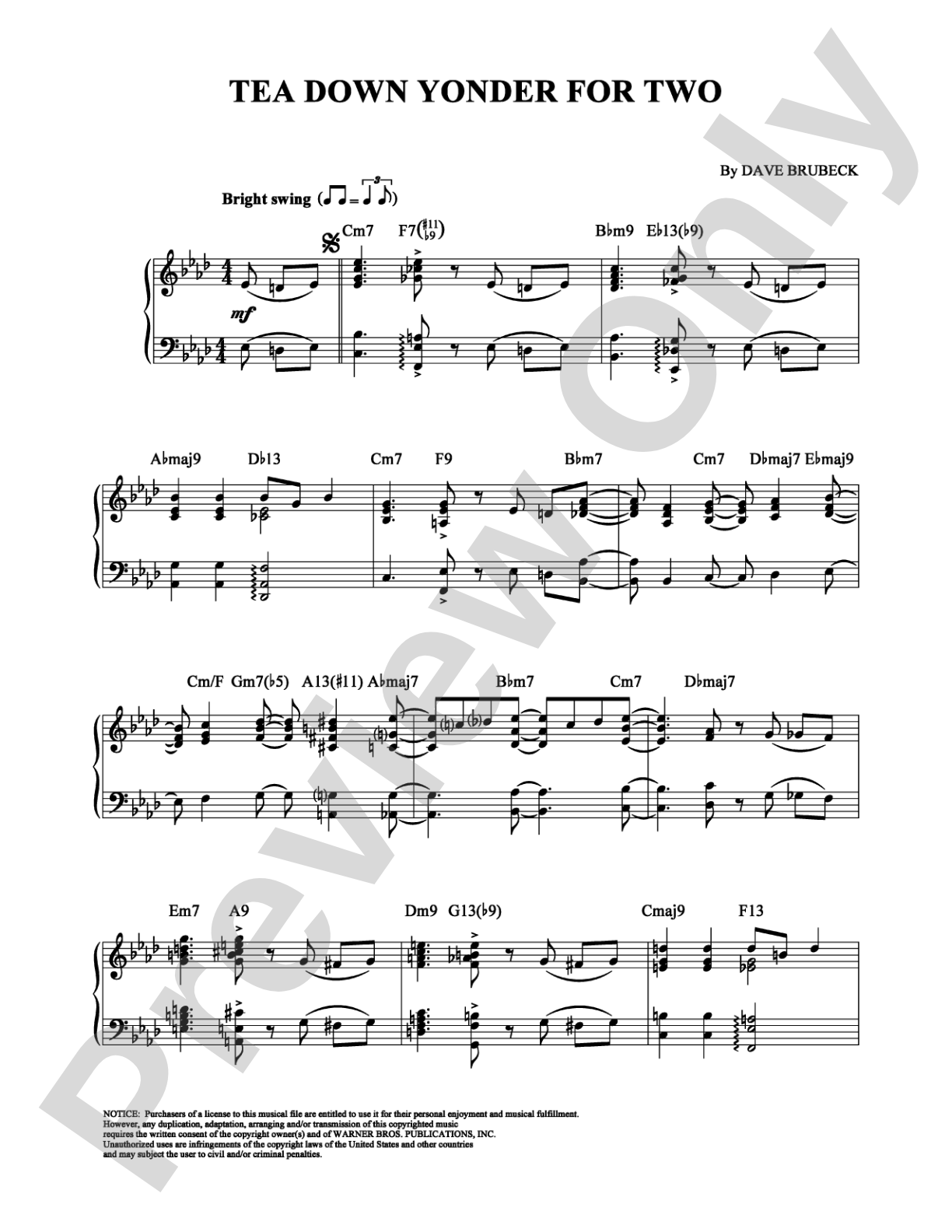
Tea Down Yonder For Two: Piano Digital Sheet Music

Tea Down Yonder For Two: Piano Digital Sheet Music

Dave Brubeck

Item: 00-PS-0000800

Digital Download
$3.99
Description

Tea Down Yonder For Two: Piano Digital Sheet Music isn't in MakeMusic Cloud just yet...but it could be. Let us know you'd like to see it, and you'll help shape what comes next. In the meantime, start a free trial and dive into thousands of interactive titles your students can play along with today.

Sample Audio
No sample audio found.
Sample Video
Additional Details
SKU: 00-PS-0000800

More about this title

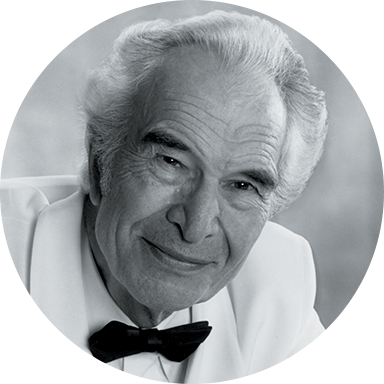
About the Artist: Dave Brubeck

Dave Brubeck

Dave Brubeck was a pianist and composer whose improvisational command shaped modern jazz. Trained classically at the College of the Pacific and later under Darius Milhaud at Mills College, he developed a distinctive voice that wove together jazz vernacular with classical forms. His album Time Out became the first jazz recording to achieve over a million sales, and his composition "Take Five" remains iconic in the genre.

Beyond his recordings and performances, Brubeck composed extensively across multiple forms: choral works, orchestral pieces, chamber music, ballet suites, and large-scale works for chorus and orchestra. His mass To Hope! has been performed internationally, and works like Pange Lingua Variations and the oratorios The Voice of the Holy Spirit and Beloved Son were recorded by the London Symphony Orchestra. Brubeck also played a significant role in breaking racial barriers in mid-twentieth-century music. His contributions earned him a Grammy Lifetime Achievement Award, a Presidential Medal of the Arts from President Clinton, and election to the American Classical Music Hall of Fame in 2003.

Why we love this

Brubeck's written jazz pieces carry the sophistication of his best recordings without demanding the ensemble coordination of a full quartet. This piano solo captures his lyrical, sophisticated approach to melody and harmony, making it rewarding for pianists who want to explore jazz language with strong harmonic underpinnings rather than pure heads-and-solos formats.

What to expect

Warm and conversational, with the gentle sophistication that defined Brubeck's best melodies. The piece settles into its groove with elegant harmonic turns and a sense of ease, as if Brubeck is inviting you into a relaxed yet intelligent musical dialogue.

Who it's for

Pianists comfortable with jazz harmony and swing rhythms who want to explore fully notated jazz compositions outside the standard improvisation-based approach. This works well for intermediate to advanced players seeking accessible yet musically substantial jazz literature for recitals or practice.

How to get the most out of it

  • Balance the melodic line against the harmonic foundation; Brubeck's pieces often weave together flowing lines with rich chord changes, so voice the accompaniment clearly without overshadowing the tune.
  • Approach swing rhythms with precision rather than overplaying them; his compositions call for clarity in the time feel, not excessive swing manipulation.
  • Let the harmonic movement breathe naturally through tempo; resist the urge to rush through chord changes that may feel unfamiliar from a classical training perspective.

How to use it

Feature this in a jazz piano recital or as part of a concert exploring American composers of the twentieth century. It pairs naturally with other notated jazz standards or contemporary jazz compositions, offering a bridge between classical recital traditions and jazz performance.

Skills your students will build

  • Swing rhythm articulation and time feel
  • Reading jazz chord symbols and harmonic notation
  • Balancing melodic phrasing with jazz accompaniment patterns
  • Navigating chromatic harmonic movement characteristic of modern jazz

You May Also Like