

Tchaikovsky: The Sleeping Beauty, Op. 66
A Ballet in a Prologue and Three Acts
By Peter Ilyich Tchaikovsky
Item: 00-PC-0009751
$0.99
Pickup currently not available
Description
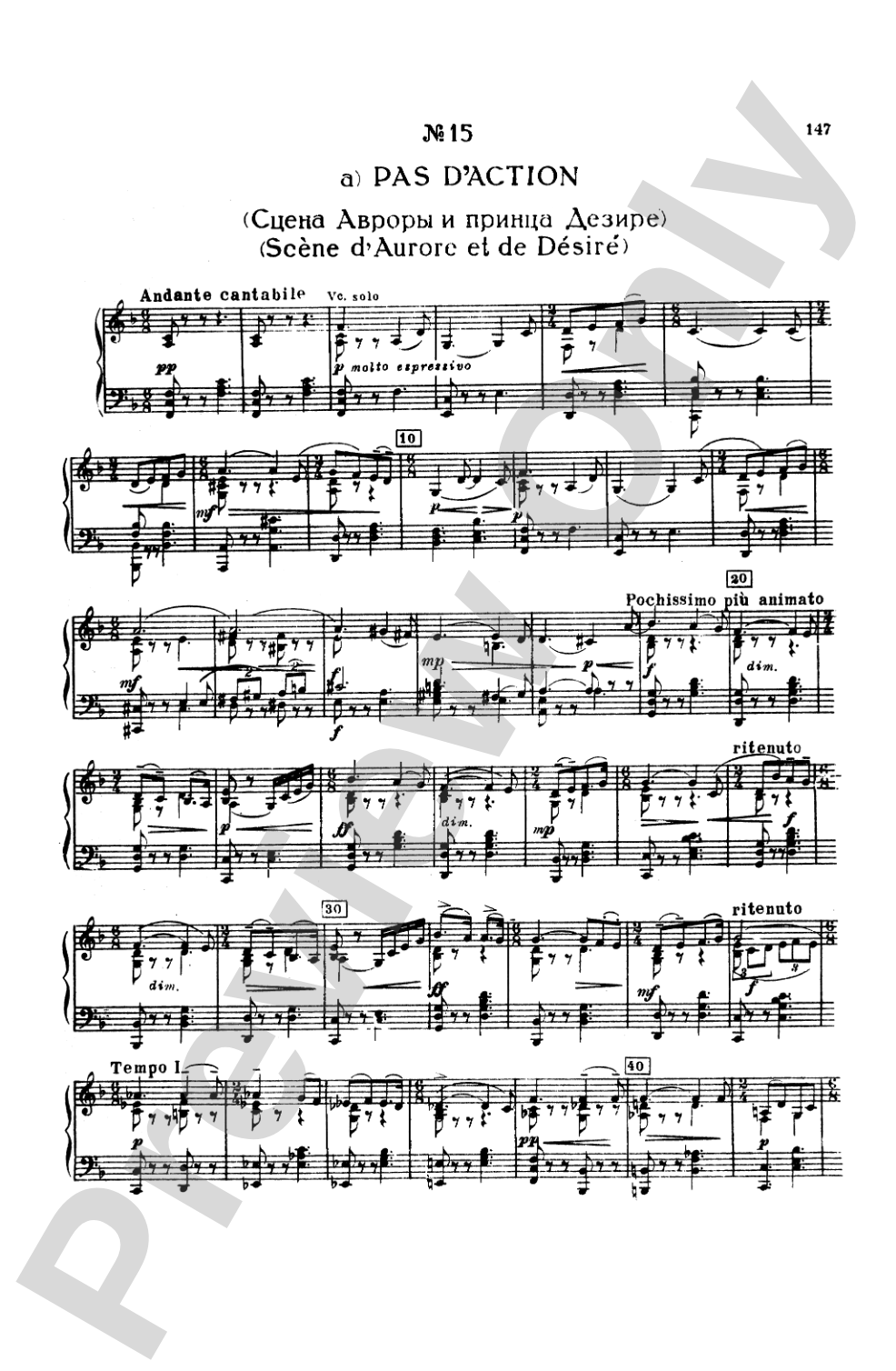
Ballet arranged for piano. Titles: Introduction * No. 1, March * No. 2, Scene Dansante * No. 3, Pas de six * No. 4, Final * No. 5, Scene * No. 6, Waltz * No. 7, Scene * No. 8, Pas d'action * No. 9, Finale. (Miniature score not in Russian edition)


Don't just read it, hear it, play along with it, and watch your students grow with it. In MakeMusic Cloud, Tchaikovsky: The Sleeping Beauty, Op. 66 comes alive with professional accompaniment, adjustable tempo, and built-in practice tools that turn solo practice into real progress.
Open in the Player
Jump straight in and assign it today.
Start Your Free Trial
Open this title and explore the full library in minutes.
Sample Audio
No sample audio found.
Sample Video
No sample videos found.
Additional Details
Series:
Kalmus Edition
Publisher:
Alfred Music
Page Count:
272
SKU:
00-PC-0009751
More about this title
About the Composer: Peter Ilyich Tchaikovsky
Peter Ilyich Tchaikovsky (1840-1893) was a Russian composer whose orchestral and ballet works remain central to the concert and dance repertoires. His ballets, especially Swan Lake, The Sleeping Beauty, and The Nutcracker, established him as a master of large-scale narrative music that balances technical brilliance with emotional depth. Tchaikovsky's gift for melody, harmonic richness, and orchestral color made his music immediately appealing to audiences across Europe and America.
For pianists, Tchaikovsky's arrangements and transcriptions of his own orchestral works offer direct access to the sweep and grandeur of the original scores. The Sleeping Beauty piano version allows soloists to explore the ballet's full narrative arc, from intimate character dances to grand ceremonial moments, all within a single instrument.
Why we love this
This complete piano arrangement captures the structural ambition and melodic generosity that made The Sleeping Beauty a cornerstone of classical ballet, and it gives pianists a manageable way to experience one of the 19th century's most substantial dramatic works. The Kalmus edition provides clean, accessible engraving across 272 pages of genuine substance, so students and professionals can tackle movements at various difficulty levels without needing the full orchestra score. Programming selections from this score works beautifully alongside other Romantic-era repertoire, or performers can work toward mastering complete movements as a recital goal.
What to expect
Stately ceremonial grandeur mingles with courtly elegance throughout these movements, punctuated by moments of delicate charm in the character dances and building to climactic ensemble sections that demand full pianistic engagement. The progression from introduction through multiple scenes and dances creates the arc of a complete theatrical experience at the piano, moving from mystery and anticipation through celebration and resolution.
Who it's for
Advanced pianists preparing recital programs that include substantial 19th-century works, and students ready to engage with full-length classical ballet scores at the keyboard. This edition also serves piano teachers seeking Romantic-era repertoire that combines technical interest with genuine musical substance and historical importance.
How to get the most out of it
- Approach the March and Waltz as character pieces that demand clarity of articulation and distinct voicing; the melody often needs to sing above flowing accompaniment figures that can blur if pedal work is imprecise.
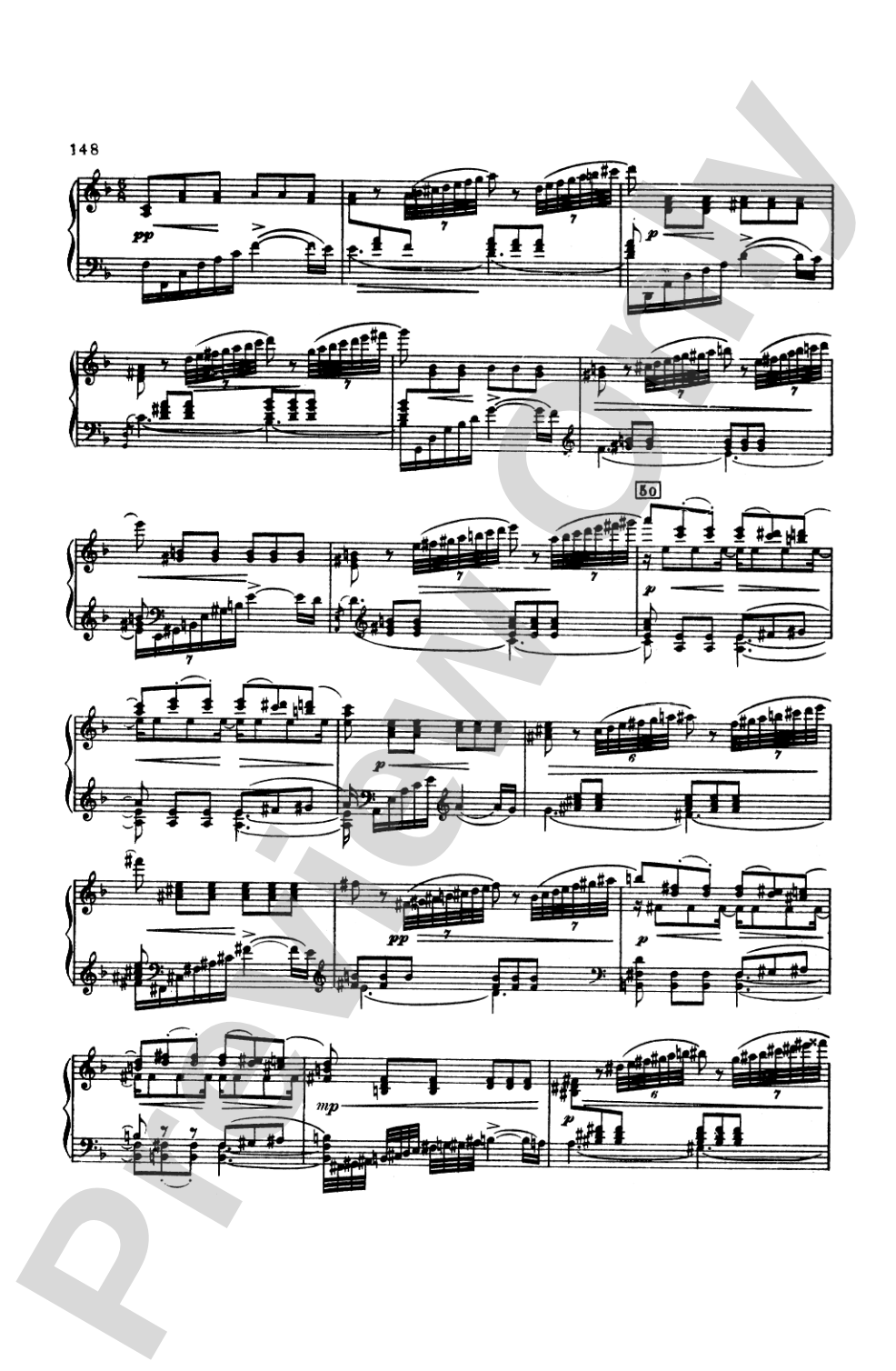
- The Pas de six and Pas d'action contain frequent key changes and modulations typical of Tchaikovsky's harmonic language; mark these shifts mentally so harmonic direction remains clear to the listener.
- Pay attention to the ballet's narrative pacing in how you shape phrases; each movement serves a dramatic function, and respecting that choreographic logic strengthens the musical storytelling.
- Balance technical passages with long-line singing; passages that sparkle orchestrally need voice and character when translated to solo piano, not just velocity.
How to use it
Feature individual movements or suites of related scenes in recital programs exploring 19th-century ballet music, or build a full evening around selections from Tchaikovsky's three major ballets. For ambitious students or concert pianists, the complete score becomes a long-term project that deepens understanding of both Romantic composition and the relationship between orchestral and keyboard textures.
Skills your students will build
- Executing Romantic-era harmonic progressions and modulation patterns at speed and with clarity
- Managing the dialogue between melody and accompaniment across both hands in multi-voice textures
- Sustaining musical narrative and character across extended multi-movement works
- Navigating rapid key changes and maintaining harmonic orientation in complex tonal progressions
- Balancing pedal technique with articulation in pieces requiring both atmospheric color and rhythmic precision