Tchaikovsky: The Seasons, Op. 37 Sheet Music Preview

Tchaikovsky: The Seasons, Op. 37

By Peter Ilyich Tchaikovsky

Item: 00-PC-0009682

Digital Download
$0.99
Description
A collection of piano solos composed by Peter Ilyich Tchaikovsky.

Don't just read it, hear it, play along with it, and watch your students grow with it. In MakeMusic Cloud, Tchaikovsky: The Seasons, Op. 37 comes alive with professional accompaniment, adjustable tempo, and built-in practice tools that turn solo practice into real progress.

Sample Audio
No sample audio found.
Sample Video
Additional Details
Series: Kalmus Edition
Publisher: Alfred Music
Page Count: 76
SKU: 00-PC-0009682

More about this title

About the Composer: Peter Ilyich Tchaikovsky

Peter Ilyich Tchaikovsky (1840-1893) stands as one of the most performed composers in the Romantic era, and his ability to blend Russian musical idioms with Western European forms shaped the trajectory of 19th-century music. His facility for melody, harmonic richness, and orchestral color translate with particular warmth to the piano, an instrument he understood intimately through both composition and performance.

Tchaikovsky's catalog spans symphonies, ballets, concertos, and vocal music, but his smaller instrumental works reveal a composer equally attentive to intimate expression. The Seasons occupies a unique place in his output: twelve character pieces, each tied to a month of the year, that balance accessibility with genuine compositional ambition. These works remain staples of piano repertoire because they demand both technical facility and interpretive maturity from their performers.

Why we love this

The Seasons works as a flexible programming tool: you can perform the collection in full over a season of recitals, program individual movements alongside other Romantic works, or use select pieces to demonstrate character, key relationships, and harmonic language to students. Each month presents distinct musical challenges and emotional terrain, ensuring that players at intermediate-advanced levels find substance to explore without confronting the technical extremes of Tchaikovsky's concertos.

What to expect

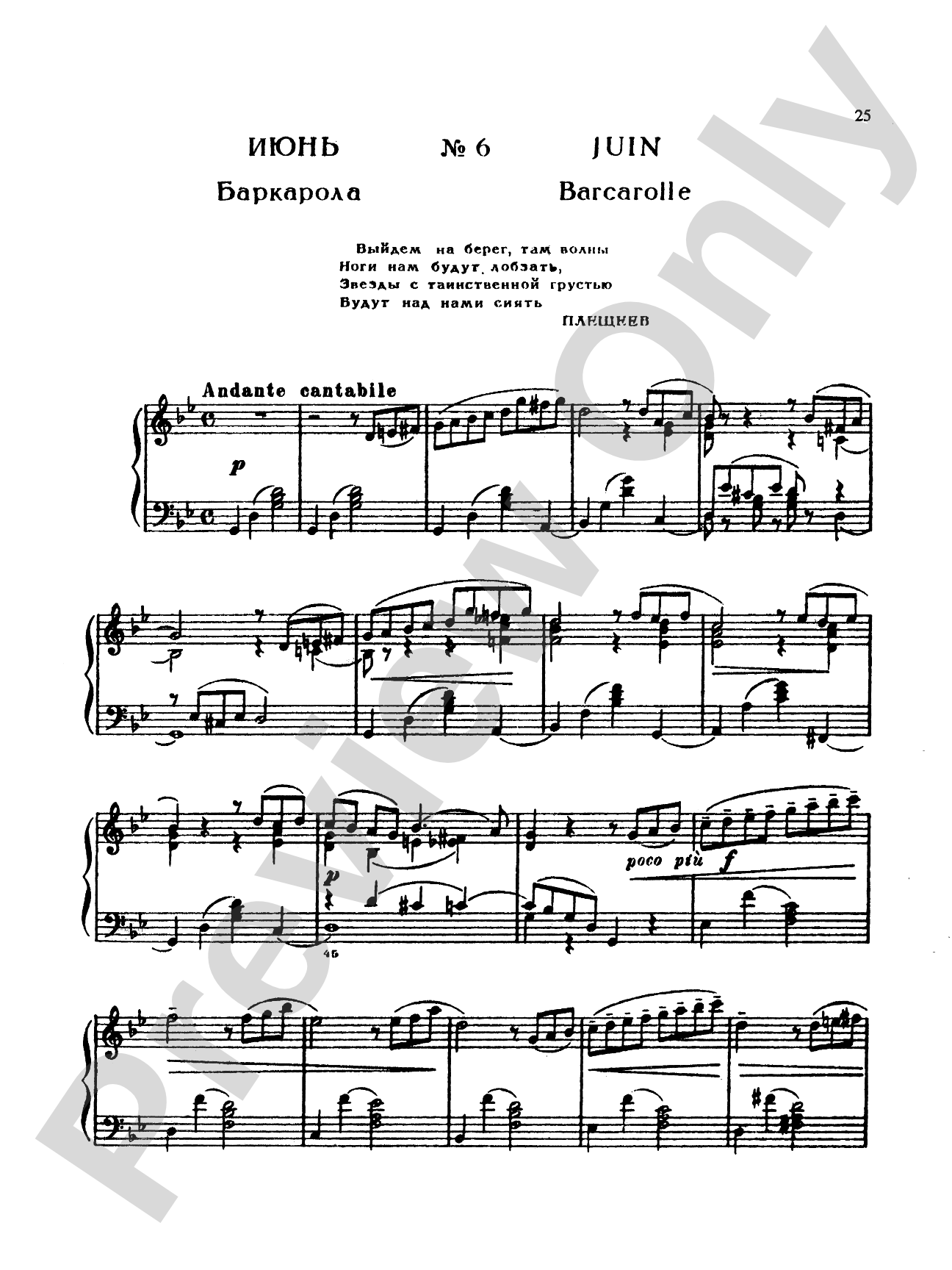
Each month arrives with its own mood: January's February introspection and snow imagery create a minor-key intimacy, while June's barcarolle sways with lyrical warmth. Seasons cycle through familiar emotional territory (winter's stillness, spring's awakening, summer's brightness, autumn's melancholy) but filtered through a Romantic sensibility that deepens what could have been simple pastoral observation into genuine musical substance.

Who it's for

Intermediate to advanced pianists seeking a cohesive cycle of character pieces that combine appealing melody with genuine compositional craft. Teachers will find The Seasons invaluable for students ready to move beyond studies into repertoire that rewards both technical development and musical interpretation.

How to get the most out of it

  • Attend to the structural clarity within each piece; Tchaikovsky often uses familiar formal patterns (rondo, ABA, march form) as a foundation. This architecture should emerge through your voicing and phrasing choices, not be buried under rubato.
  • Honor the Russian character embedded in the melodies and harmonic language; avoid imposing a Germanic rigor onto pieces that ask for a more singing, flexible approach to line.
  • Balance the decorative elements (trills, runs, arpeggios) with the underlying harmonic motion. These ornaments enhance rather than obscure the harmony.
  • Use pedal with specificity, changing it to reflect harmonic rhythm rather than holding it through sustained passages. Clarity serves the melodic voice.

How to use it

Weave individual pieces throughout the year to match the calendar, or select four to six contrasting movements as a mini-cycle within a broader recital. The collection also serves as a pedagogical anchor: pairing a single month with studies or variations by other composers illuminates how Romantic character pieces balance form and mood.

Skills your students will build

  • Reading and interpreting character piece form (rondo, ternary, march structures)
  • Executing ornaments (trills, turns, runs) with accuracy and musical purpose
  • Managing rubato and tempo flexibility while preserving harmonic direction
  • Voicing chords to support melody and inner lines
  • Navigating key relationships and functional harmony across the entire collection
  • Sustaining long melodic lines with appropriate phrasing and breath points

You May Also Like