
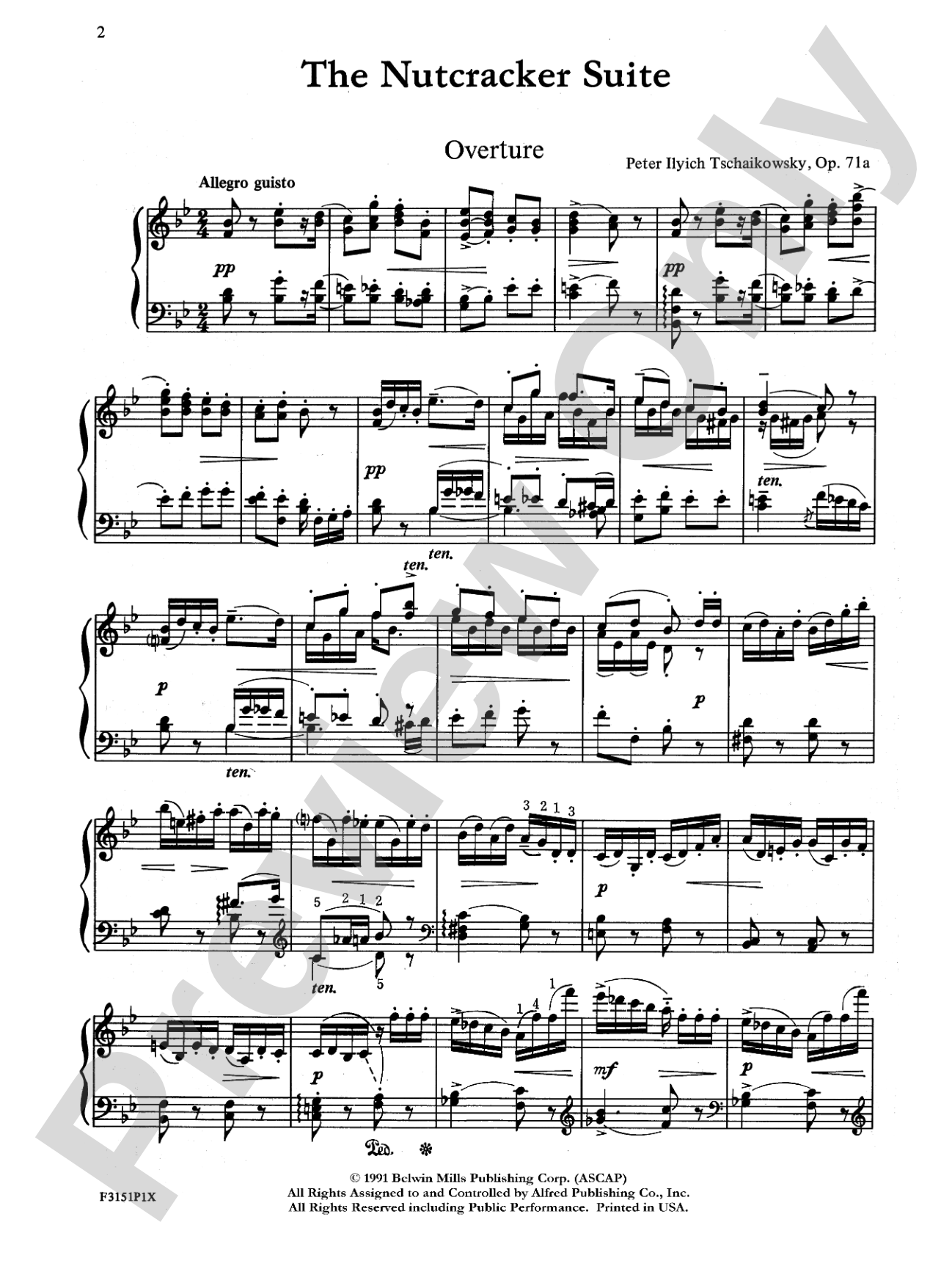
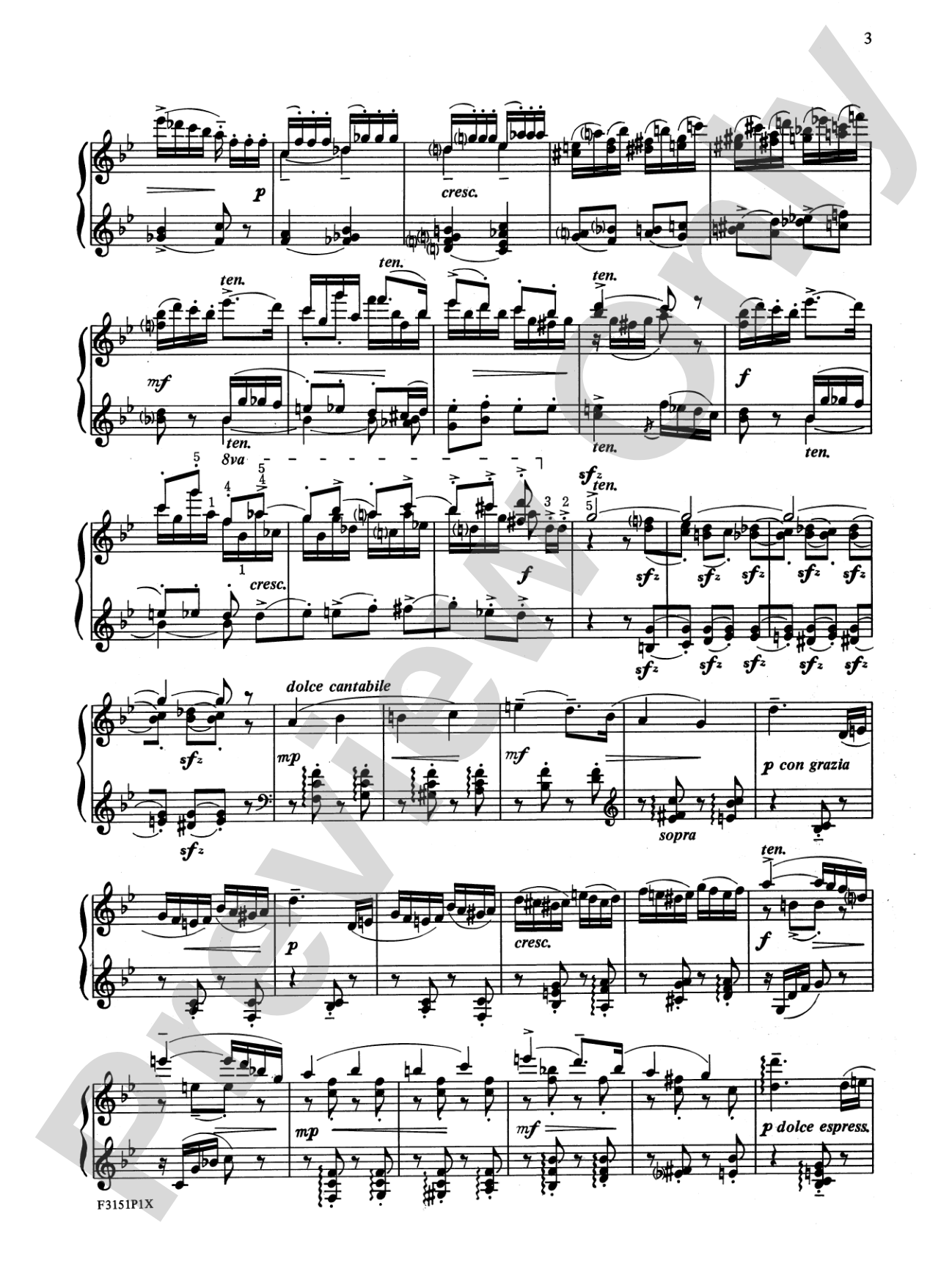
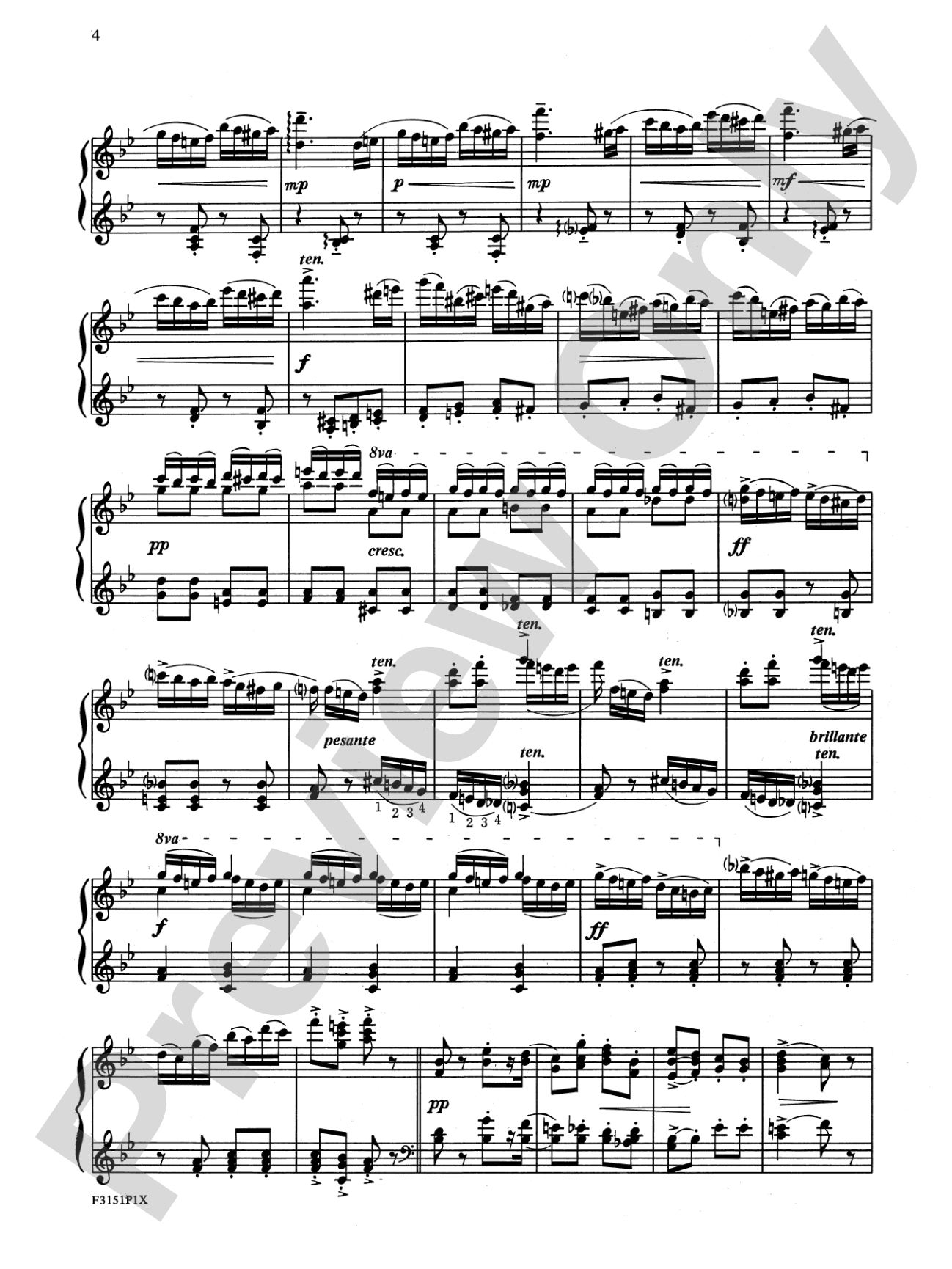
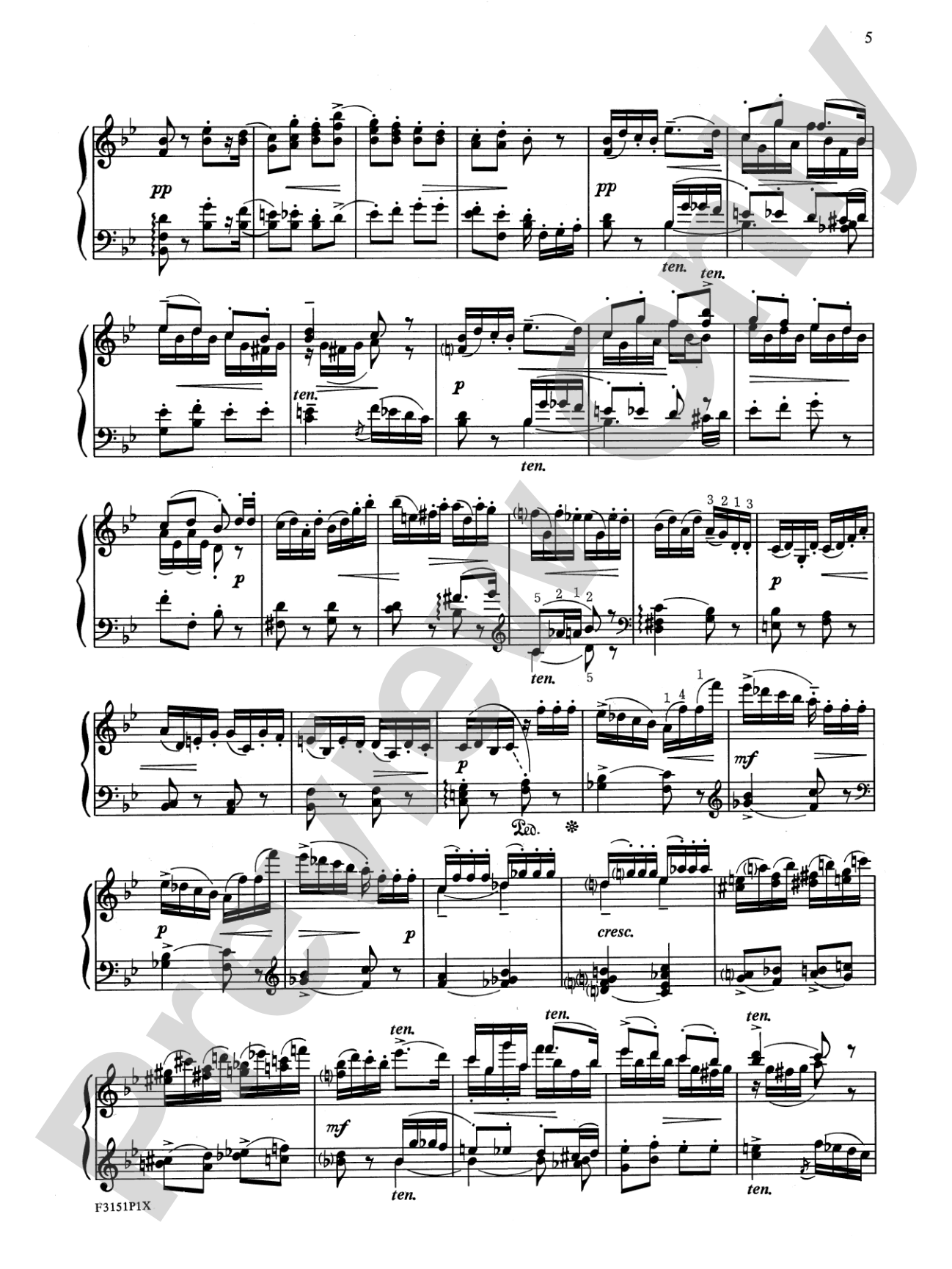

Tchaikovsky: The Nutcracker Suite, Op. 71A: Piano
For Piano
By Peter Ilyich Tchaikovsky
Item: 00-PK-0003370

$10.99
Pickup currently not available
Buy Extra Parts (Digital PDF Download)
Parts Added to Cart!
Related Items
The Nutcracker Suite: Piano |
$10.95
|
View |
Description
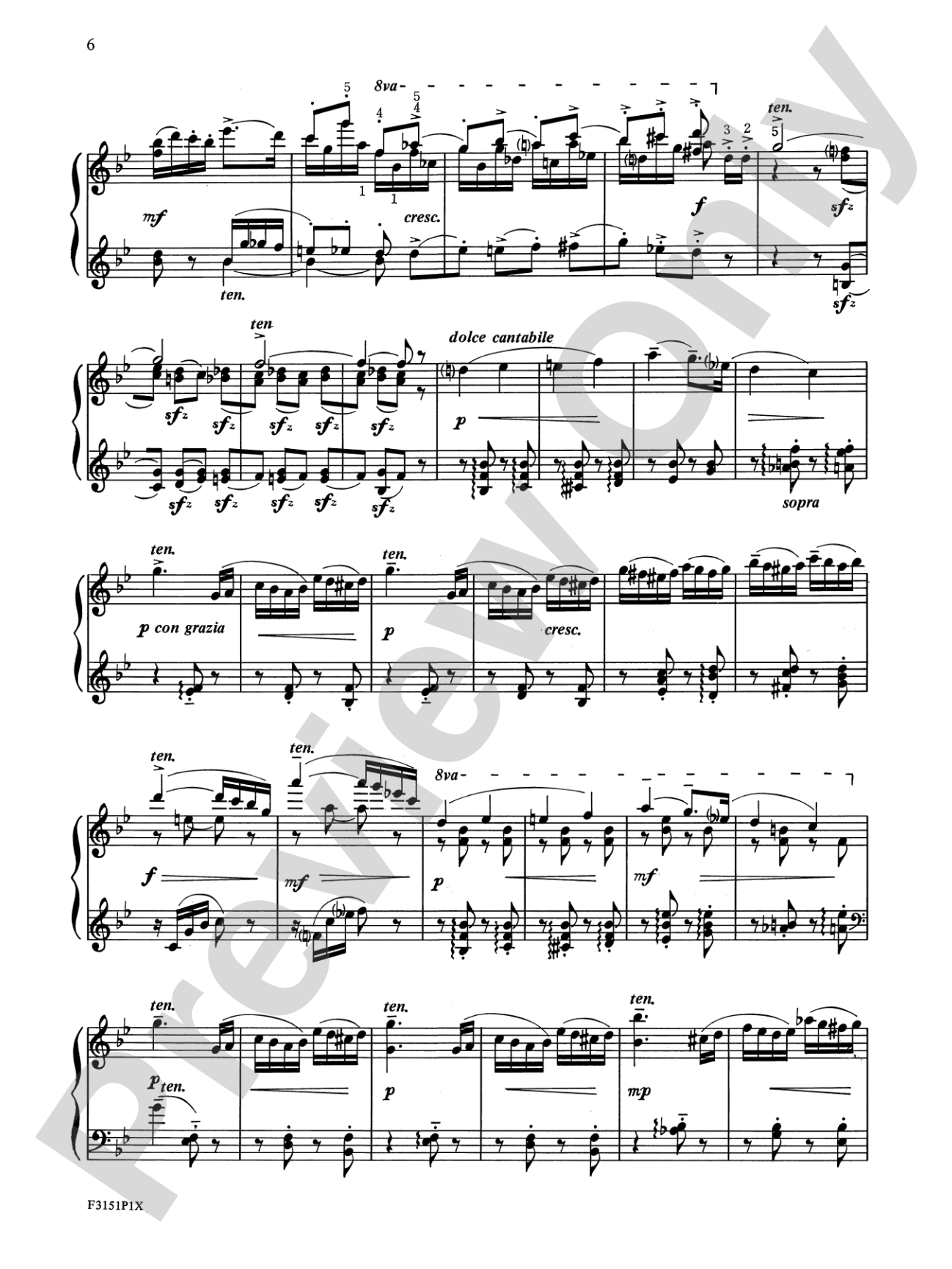
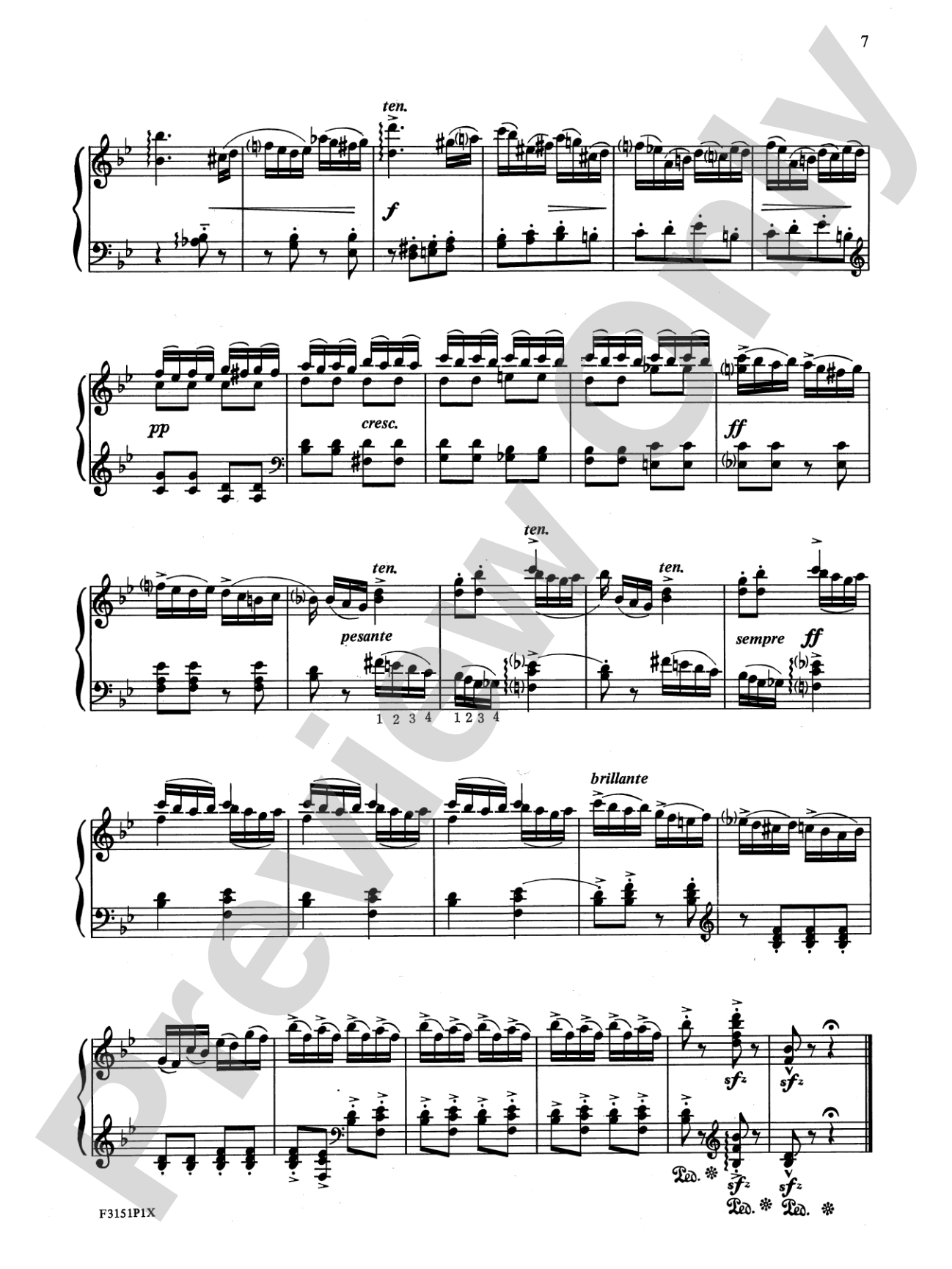
Titles: Overture * Marche * Danse de la Fée-Dragée * Danse Russe (Trepak) * Danse Arage * Danse Chinoise * Danse des Mirlitons * Valse des Fleurs.


Don't just read it, hear it, play along with it, and watch your students grow with it. In MakeMusic Cloud, Tchaikovsky: The Nutcracker Suite, Op. 71A: Piano comes alive with professional accompaniment, adjustable tempo, and built-in practice tools that turn solo practice into real progress.
Open in the Player
Jump straight in and assign it today.
Start Your Free Trial
Open this title and explore the full library in minutes.
Sample Audio
No sample audio found.
Sample Video
No sample videos found.
Additional Details
Series:
Kalmus Edition
Publisher:
Alfred Music
Page Count:
40
SKU:
00-PK-0003370
More about this title
About the Composer: Peter Ilyich Tchaikovsky
Peter Ilyich Tchaikovsky (1840-1893) stands as one of the most performed composers in the concert repertoire, and for good reason. His gift for melody, harmonic sophistication, and orchestral color made him a master of the Romantic era, and his works span opera, ballet, symphonies, and chamber music with equal distinction. The Nutcracker, composed in 1891-1892, remains one of his most beloved creations and has secured a permanent place in the holiday season since its premiere.
For pianists and music students, Tchaikovsky's piano reduction of the ballet suite offers a direct path into the composer's dramatic storytelling and lyrical gift. The suite distills the ballet's most memorable numbers into a manageable yet substantive work that rewards close attention to harmonic detail, orchestral texture, and the sustained singing line that defines Tchaikovsky's compositional voice.
Why we love this
These eight movements give pianists access to one of the most beloved orchestral suites ever written, adapted for solo piano in a way that preserves the original's harmonic richness and melodic clarity. The scope is substantial enough to challenge intermediate-to-advanced players, yet the music's immediate appeal and structural coherence make it deeply rewarding to learn and perform. Programming selections from this suite fills both holiday concerts and recitals with music that audiences recognize and cherish.
What to expect
These eight movements sweep through contrasting moods with Tchaikovsky's characteristic melodic generosity. You move from the mysterious elegance of the Overture through marching soldiers, shimmering fairy magic, spirited national dances, and finally the lush, soaring Waltz of the Flowers. The music balances technical sparkle with genuine lyrical depth, moments of delicate refinement alongside earthy, rhythmically propulsive character.
Who it's for
This arrangement serves intermediate-to-advanced pianists who want to perform major concert works without the demands of a full concerto. It is equally valuable for students studying Tchaikovsky's orchestration and harmonic language, since the piano reduction reveals the inner voices and counterpoint that define the original. Teachers and students preparing for recitals, competitions, or holiday programs will find substantial and genuinely musical material here.
How to get the most out of it
- Approach the Marche with military precision in its articulation, letting the march rhythm propel the forward motion without rushing; the contrasting middle section should sing with warmth and slight give in tempo before returning to the measured stride.
- In the Danse de la Fée-Dragée, allow the delicate, crystalline figurations to float rather than press; clarity of voicing and control of pedal are more important than volume.
- Shape the Valse des Fleurs with genuine rubato in the melody line while maintaining a steady dance pulse in the accompaniment; this movement rewards a conductor's sensibility even from the keyboard.
- The character dances (Trepak, Arabe, Chinoise, Mirlitons) each demand distinct color and personality; use tempo, articulation, and dynamic contrast to make each one vivid and recognizable.
How to use it
Program these movements as a complete suite for a mid-length recital centerpiece, or select individual numbers to anchor a thematic concert (a winter or holiday program benefits immediately from their seasonal character). The suite also works beautifully as part of a Tchaikovsky retrospective or a recital exploring the Romantic era's approach to dance and narrative.
Skills your students will build
- Pedal control and clarity in dense harmonic textures
- Voicing independence across registers in orchestral reduction
- Rhythmic precision in character dances and march forms
- Rubato and expressive phrasing in cantabile passages
- Sustaining lyrical melody while maintaining accompaniment pulse
- Understanding harmonic progression in Romantic-era harmonic language