
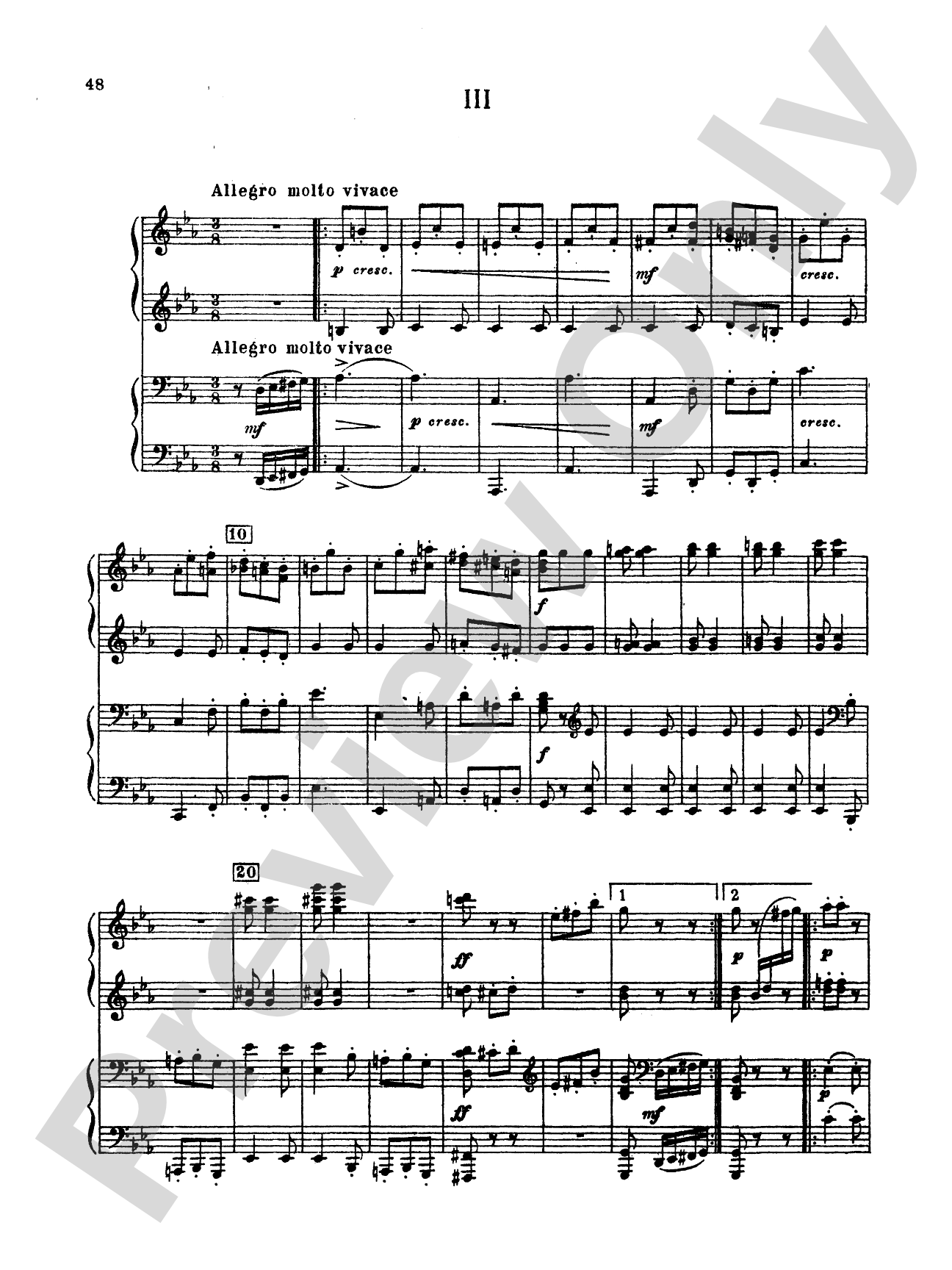
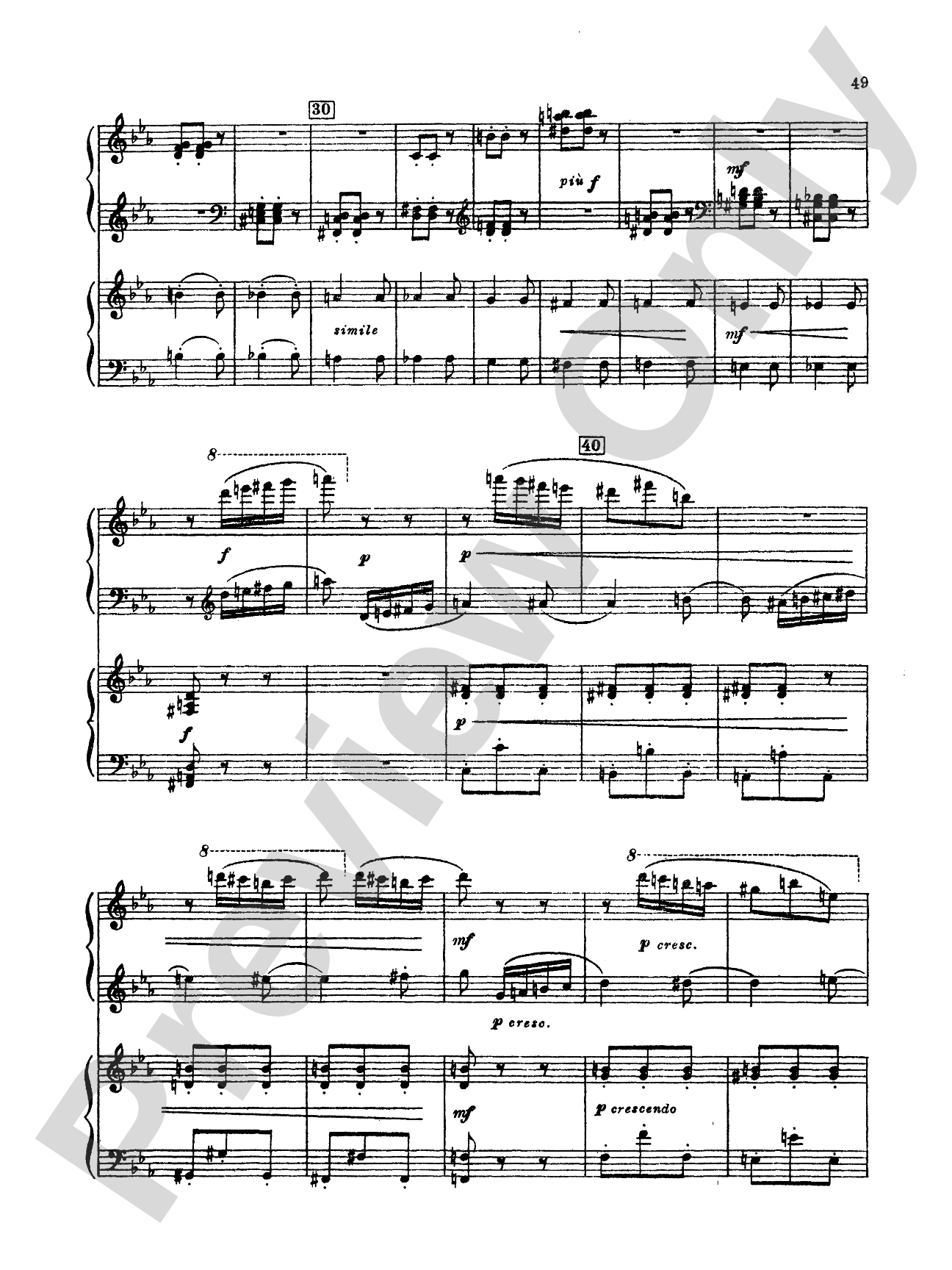
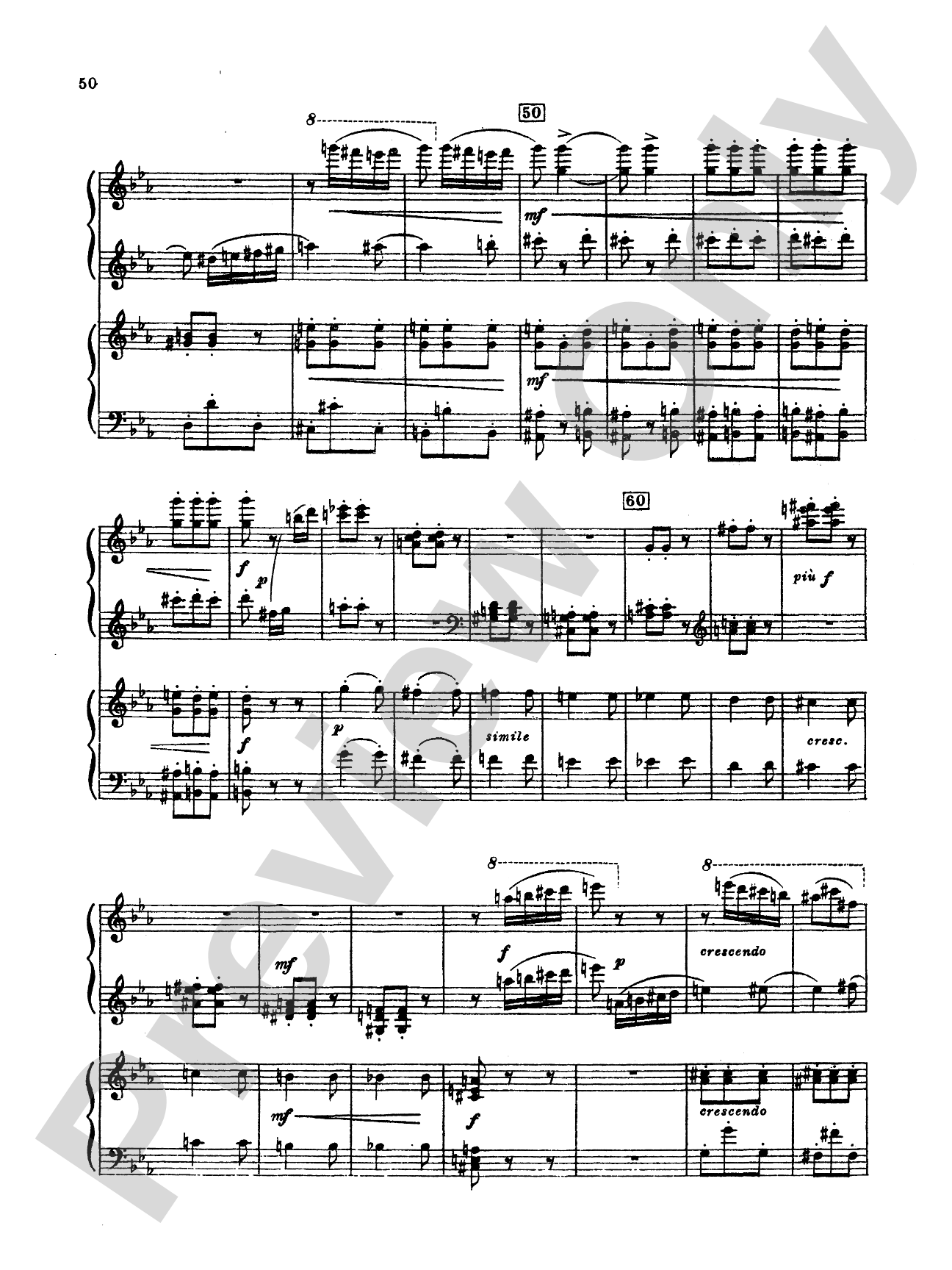

Tchaikovsky: Symphony No. 2 in C Minor, Op. 17 "Little Russian"
By Peter Ilyich Tchaikovsky
Item: 00-PC-0009640
$3.99
Pickup currently not available
Description
A Piano Duet for 2 pianos, 4 hands, composed by Peter Ilyich Tchaikovsky.


Don't just read it, hear it, play along with it, and watch your students grow with it. In MakeMusic Cloud, Tchaikovsky: Symphony No. 2 in C Minor, Op. 17 "Little Russian" comes alive with professional accompaniment, adjustable tempo, and built-in practice tools that turn solo practice into real progress.
Open in the Player
Jump straight in and assign it today.
Start Your Free Trial
Open this title and explore the full library in minutes.
Sample Audio
No sample audio found.
Sample Video
No sample videos found.
Additional Details
Series:
Kalmus Edition
Publisher:
Alfred Music
Page Count:
156
SKU:
00-PC-0009640
More about this title
About the Composer: Peter Ilyich Tchaikovsky
Peter Ilyich Tchaikovsky (1840-1893) stands as one of the most performed composers in the concert repertoire, celebrated for his gift for sweeping melody and sophisticated orchestration. Born in Russia, he studied at the St. Petersburg Conservatory and went on to compose ballets, operas, symphonies, and concertos that remain staples of both professional and educational programming. His ability to blend Russian nationalism with European Romantic tradition made his work immediately accessible to audiences while maintaining considerable artistic depth.
Tchaikovsky's symphonic output reveals a master orchestrator grappling with form, thematic development, and emotional expression. For pianists, his symphonic transcriptions offer the rare opportunity to experience his orchestral thinking at the keyboard, where every voice and color becomes tactilely apparent. His music rewards careful listening and technical precision in equal measure.
Why we love this
This transcription unlocks one of the Romantic era's most thrilling symphonies for the two-piano medium, giving advanced pianists access to Tchaikovsky's sophisticated harmonic language and orchestral textures without requiring a full ensemble. The "Little Russian" subtitle reflects Tchaikovsky's incorporation of Ukrainian folk melodies, which sing beautifully across the four hands and create natural dialogue between the two instruments. At 156 pages, it offers substantial musical and technical challenge worthy of serious duo partnerships.
What to expect
Grand yet intimate, this transcription captures the sweep and passion of Tchaikovsky's orchestration while revealing the intricate inner workings of his harmony. Ukrainian folk melodies emerge with genuine warmth across both pianos, alternating with moments of Romantic urgency and lyricism. The work balances virtuosic display with genuine emotional expression throughout its 156 pages.
Who it's for
This work suits advanced pianists with strong duet experience and the technical facility to navigate Romantic-era harmony and rapid passagework. Piano duo partnerships preparing for recitals or competitions will find substantial material worthy of serious study, while serious students looking to deepen their understanding of Tchaikovsky's symphonic voice through keyboard transcription will find this immensely rewarding.
How to get the most out of it
- Balance the orchestral voices carefully between the two pianos; the primo and secondo parts contain both melodic material and inner voices that deserve clarity rather than reduction to simple accompaniment roles.
- Establish a strong harmonic foundation in the lower registers of the secondo part while allowing the primo to shape the prominent themes; this transparency serves Tchaikovsky's contrapuntal writing.
- Practice separately before combining; the two piano parts move with considerable independence across movements, and isolated study prevents coordination problems later.
- Pay attention to dynamic contrast and phrase direction across the full span of material, since the piano duo medium can flatten the sense of orchestral sweep if both players treat their parts as equivalent in weight.
How to use it
Program this as a major concert work for a piano duo recital, where its substantial length and symphonic scope provide weight and substance alongside lighter four-hand repertoire. It works equally well as part of a Tchaikovsky-themed concert exploring how his orchestral music translates to other media, or as a performance project for advanced students studying orchestral arrangement and transcription techniques.
Skills your students will build
- Reading complex Romantic-era harmonic progressions across two independent staves
- Balancing orchestral texture and voice independence in the four-hand medium
- Coordinating with a partner across rapid passagework and syncopated rhythms
- Shaping long melodic lines that span across both instruments
- Interpreting Russian folk themes within a sophisticated symphonic context