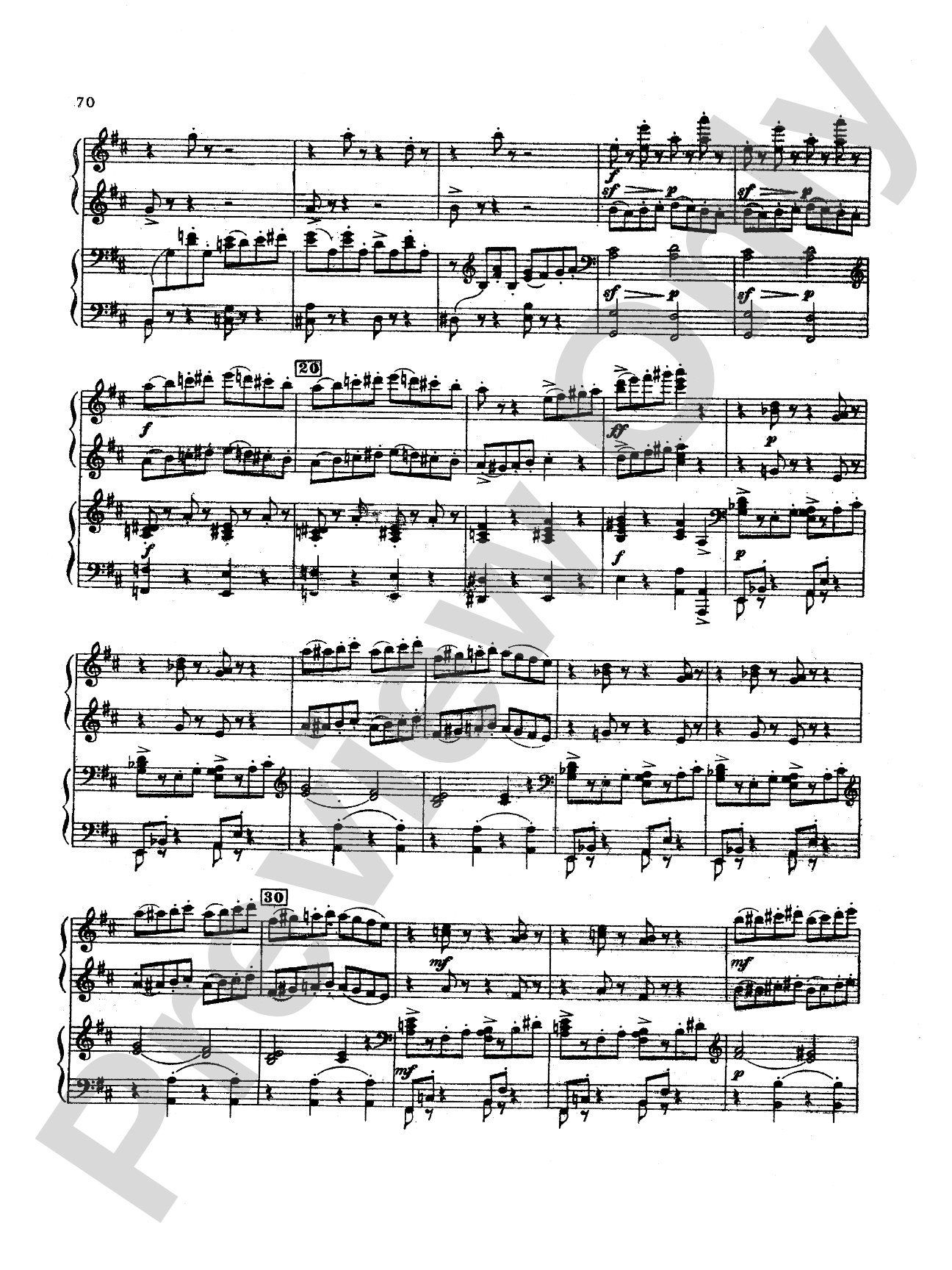
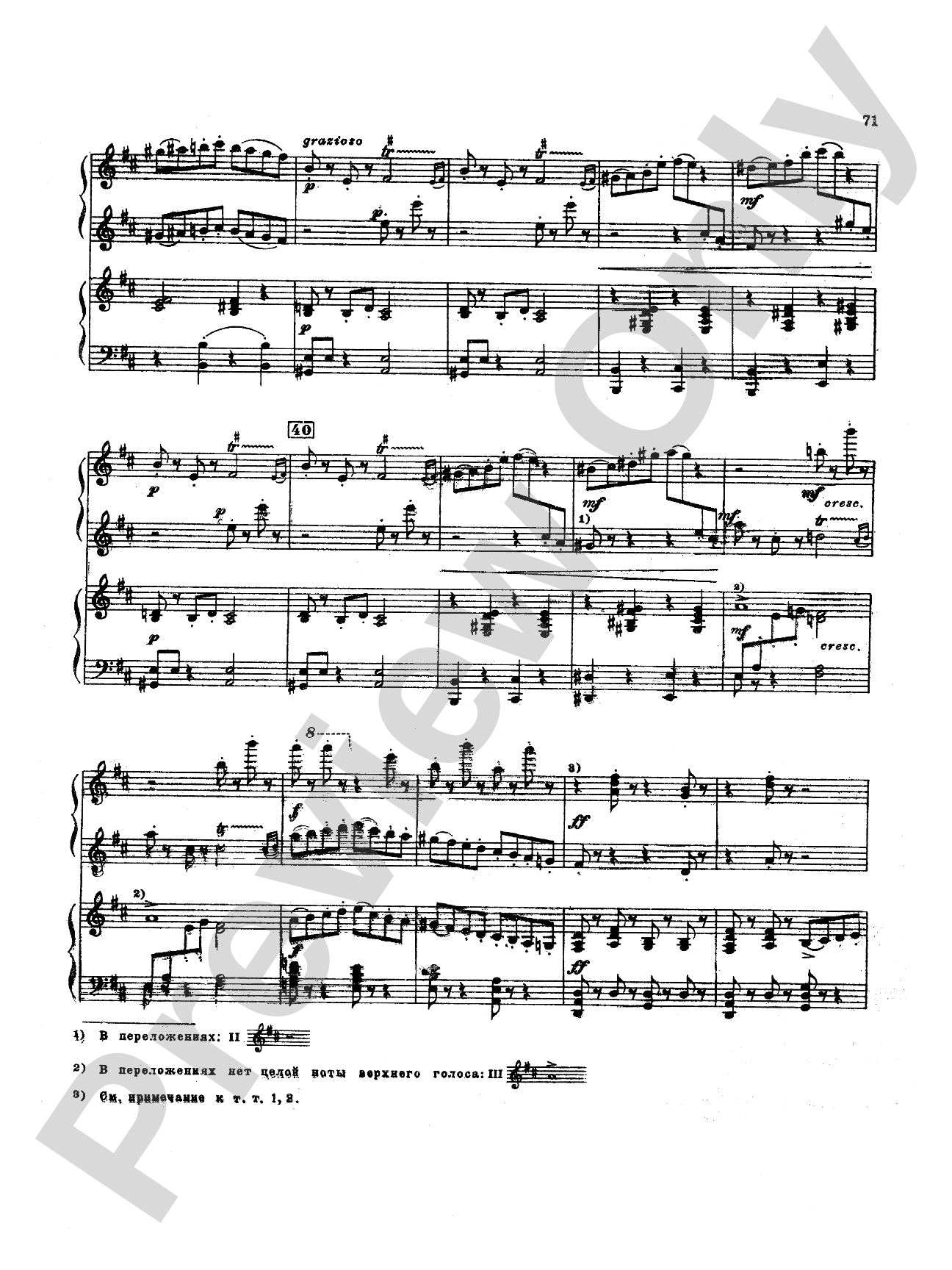
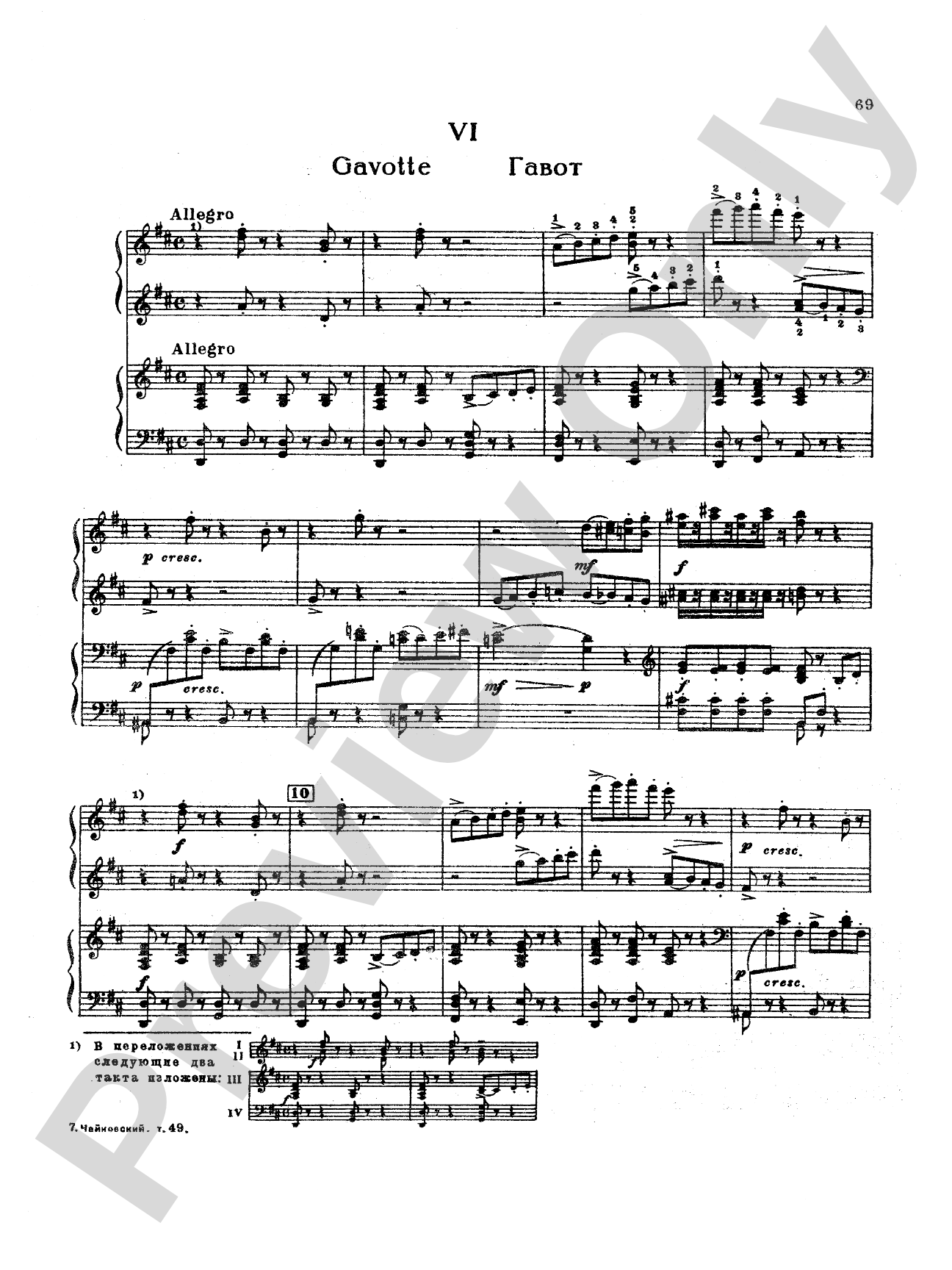
Tchaikovsky: Suite No. 1 in D Major, Op. 43 Sheet Music Preview

Tchaikovsky: Suite No. 1 in D Major, Op. 43

By Peter Ilyich Tchaikovsky

Item: 00-PC-0009655

Digital Download
$1.99
Description
A new full-size printing of the original Russian miniature score.

Don't just read it, hear it, play along with it, and watch your students grow with it. In MakeMusic Cloud, Tchaikovsky: Suite No. 1 in D Major, Op. 43 comes alive with professional accompaniment, adjustable tempo, and built-in practice tools that turn solo practice into real progress.

Sample Audio
No sample audio found.
Sample Video
Additional Details
Series: Kalmus Edition
Publisher: Alfred Music
Page Count: 80
SKU: 00-PC-0009655

More about this title

About the Composer: Peter Ilyich Tchaikovsky

Peter Ilyich Tchaikovsky (1840-1893) stands as one of the most performed composers in the concert hall, yet his music education legacy runs equally deep. His gift for melody and orchestration shaped decades of music students, and his piano works remain cornerstones of duet repertoire. Tchaikovsky's ability to write idiomatically for the piano while maintaining symphonic scope makes his works invaluable for pianists seeking to bridge technical skill with expressive maturity.

As a conservatory professor and prolific composer, Tchaikovsky understood the pedagogical value of carefully crafted repertoire. His suites and smaller forms served not only concert audiences but also advancing musicians who needed access to sophisticated material written with their development in mind.

Why we love this

The Suite No. 1 offers a rare combination of Romantic grandeur and practical four-hand writing. Each movement stands as a complete musical statement without overwhelming intermediate-advanced pianists, making it an ideal choice for students who are ready to play substantial repertoire together but still developing their collaborative skills.

What to expect

The Suite unfolds with Romantic warmth and courtly elegance. Tchaikovsky moves between intimate, songlike passages and moments of grand gesturing, creating a sense of musical storytelling that keeps both players engaged across the full 80-page score. The writing balances lyricism with architectural clarity, allowing performers to feel both the emotional arc and the formal structure.

Who it's for

Advanced intermediate to advanced piano duet teams preparing concert repertoire or seeking four-hand pieces beyond the teaching-focused duet literature. This work rewards pianists with solid collaborating experience who want to tackle a recognized masterwork together without requiring virtuosic technical display.

How to get the most out of it

  • Balance the primo and secondo parts deliberately rather than assuming one voice dominates throughout. The secondo line frequently carries thematic material that requires projection, particularly in the Marche miniature and Intermezzo movements.
  • Establish rhythmic flexibility during rehearsals before locking tempos, especially where Tchaikovsky shifts between duple and triple feels. Record yourselves to identify ensemble inconsistencies that sound undetectable in the moment.
  • Pay attention to the harmonic foundation the secondo provides. This is not an accompaniment role; use pedal strategically to sustain harmonic color while keeping the texture transparent for the primo's melodic line.

How to use it

Position this as a full-length duet feature on a recital or concert, or split movements across multiple programs in a season. The work's varied character and accessible grandeur also makes it effective for showcasing duet playing at competitions or community concert series where audiences expect polished, recognizable repertoire.

Skills your students will build

  • Balancing independent melodic lines while maintaining ensemble cohesion
  • Reading complex harmonic textures from a score not written on standard grand staff layout
  • Interpreting Romantic-era rubato and phrasing within a two-person collaboration
  • Managing pedal coordination between two players across a full-size work
  • Developing interpretive maturity through engagement with canonical repertoire

You May Also Like