
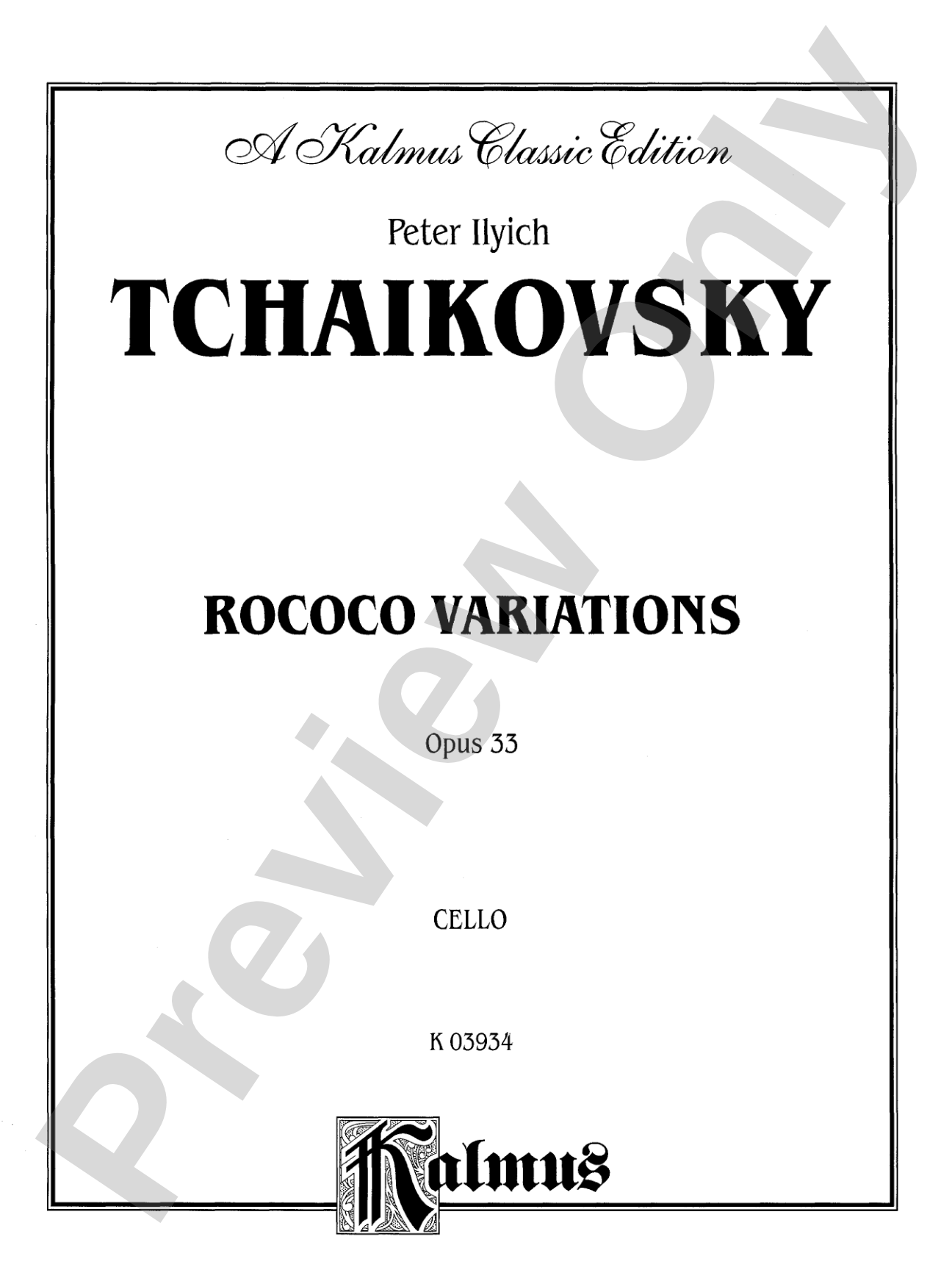

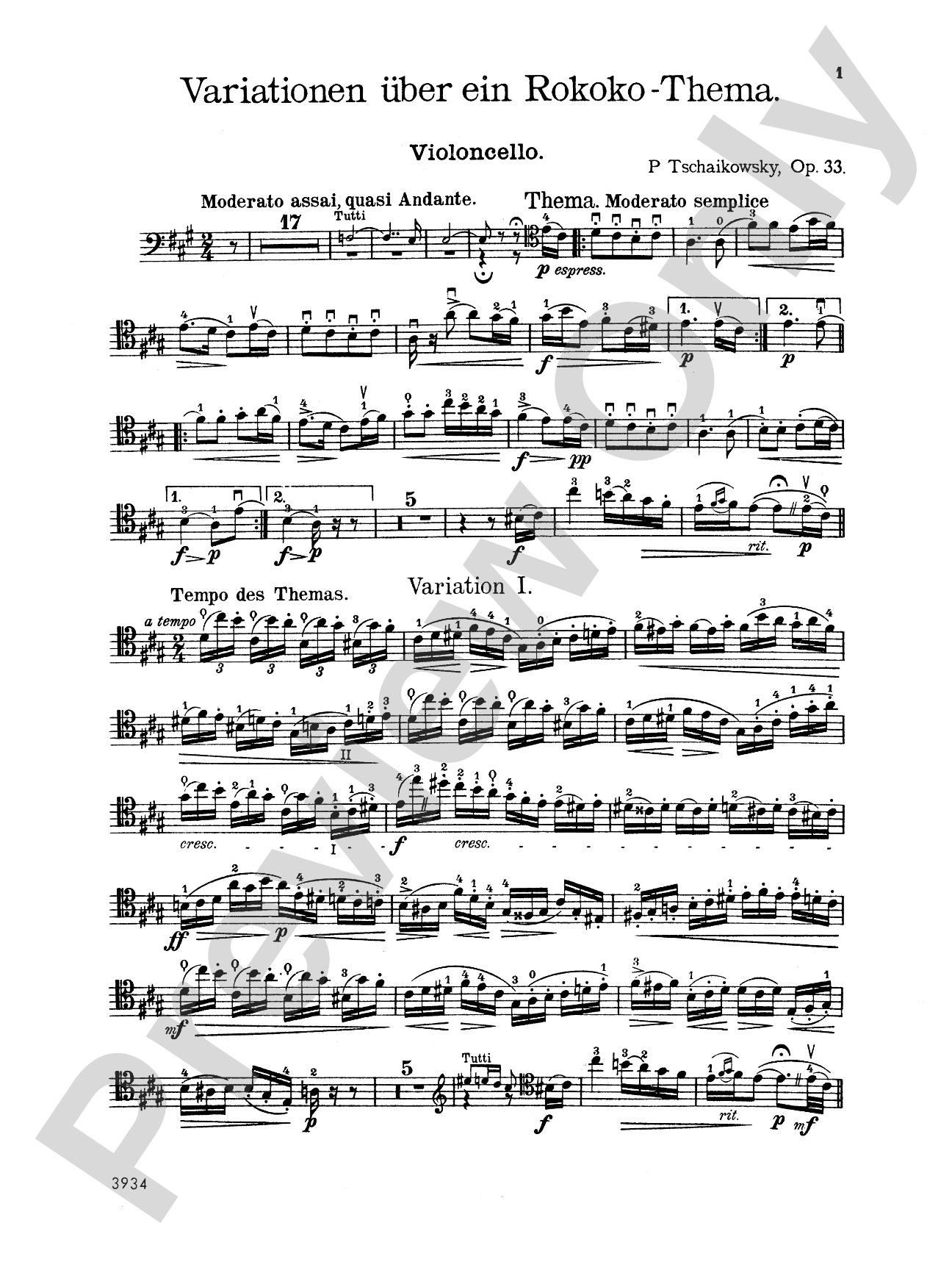
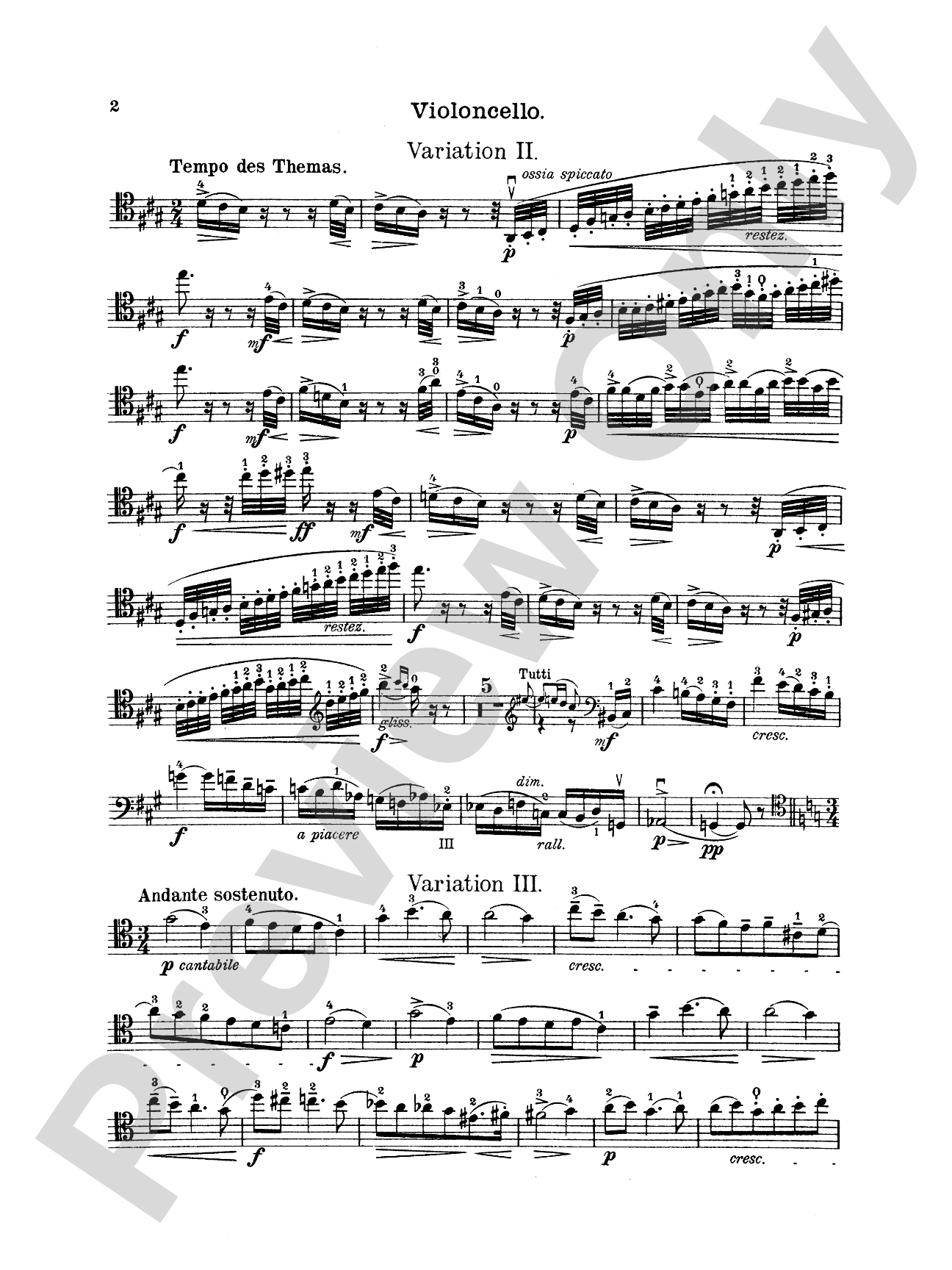
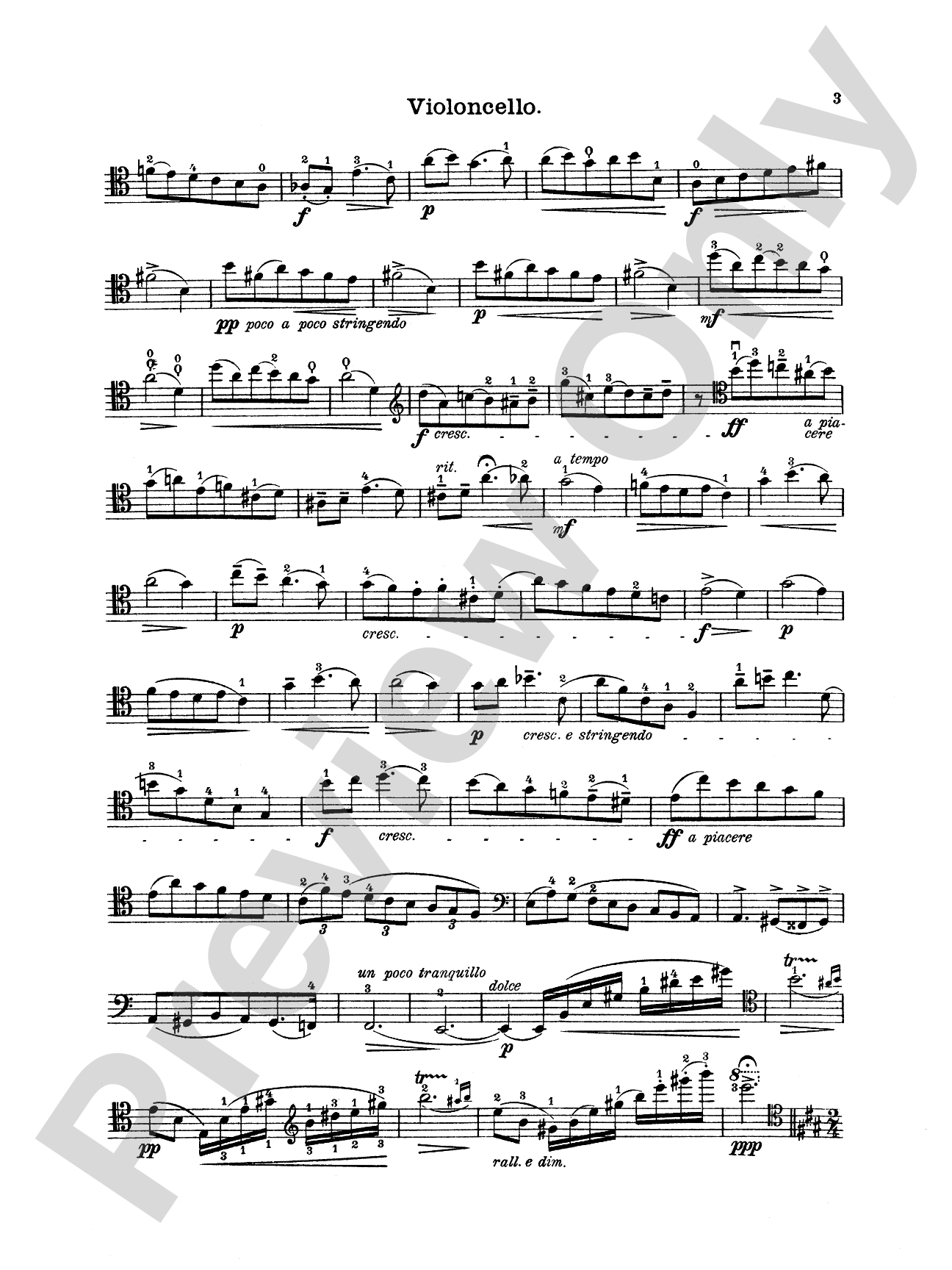
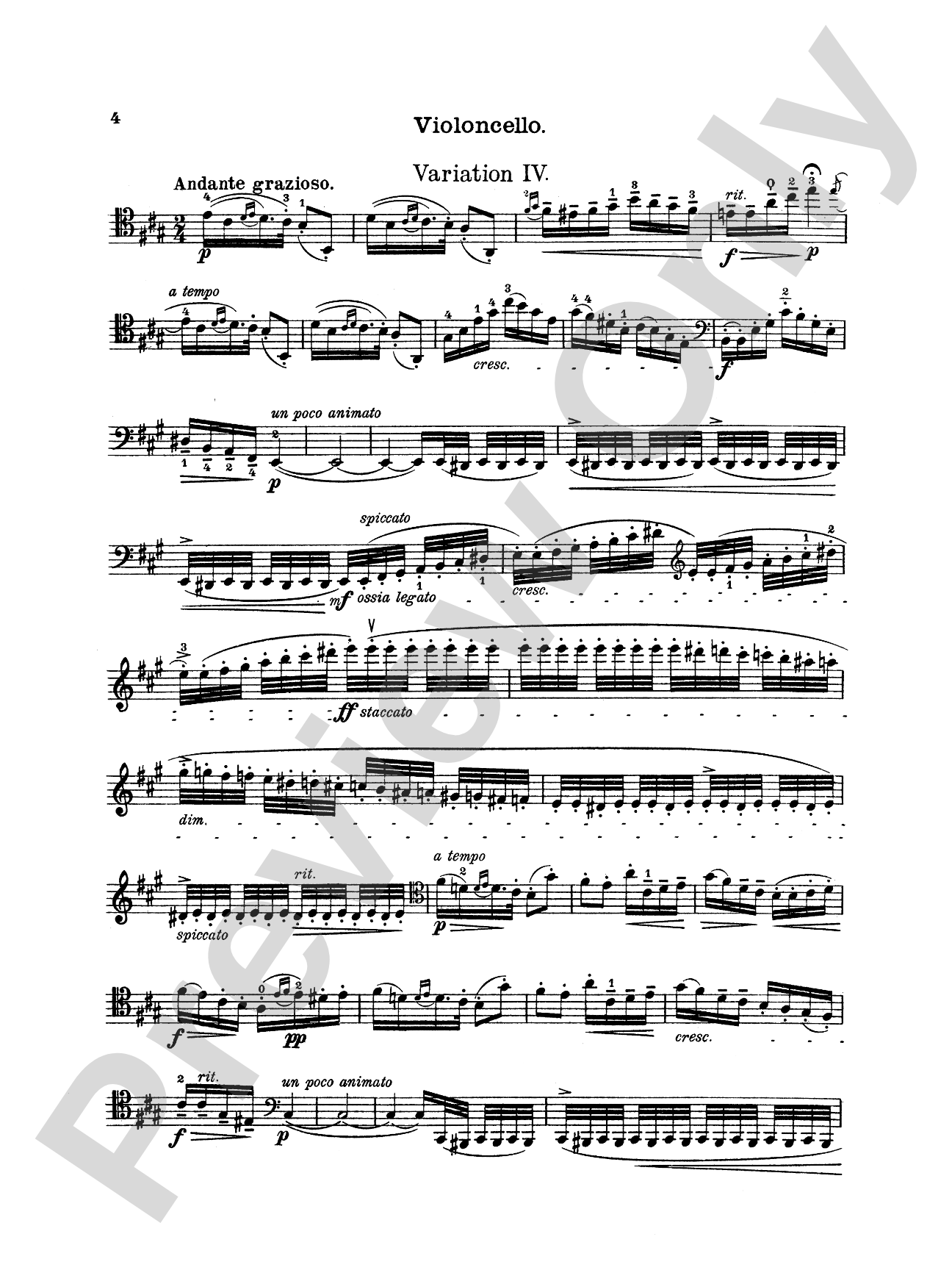
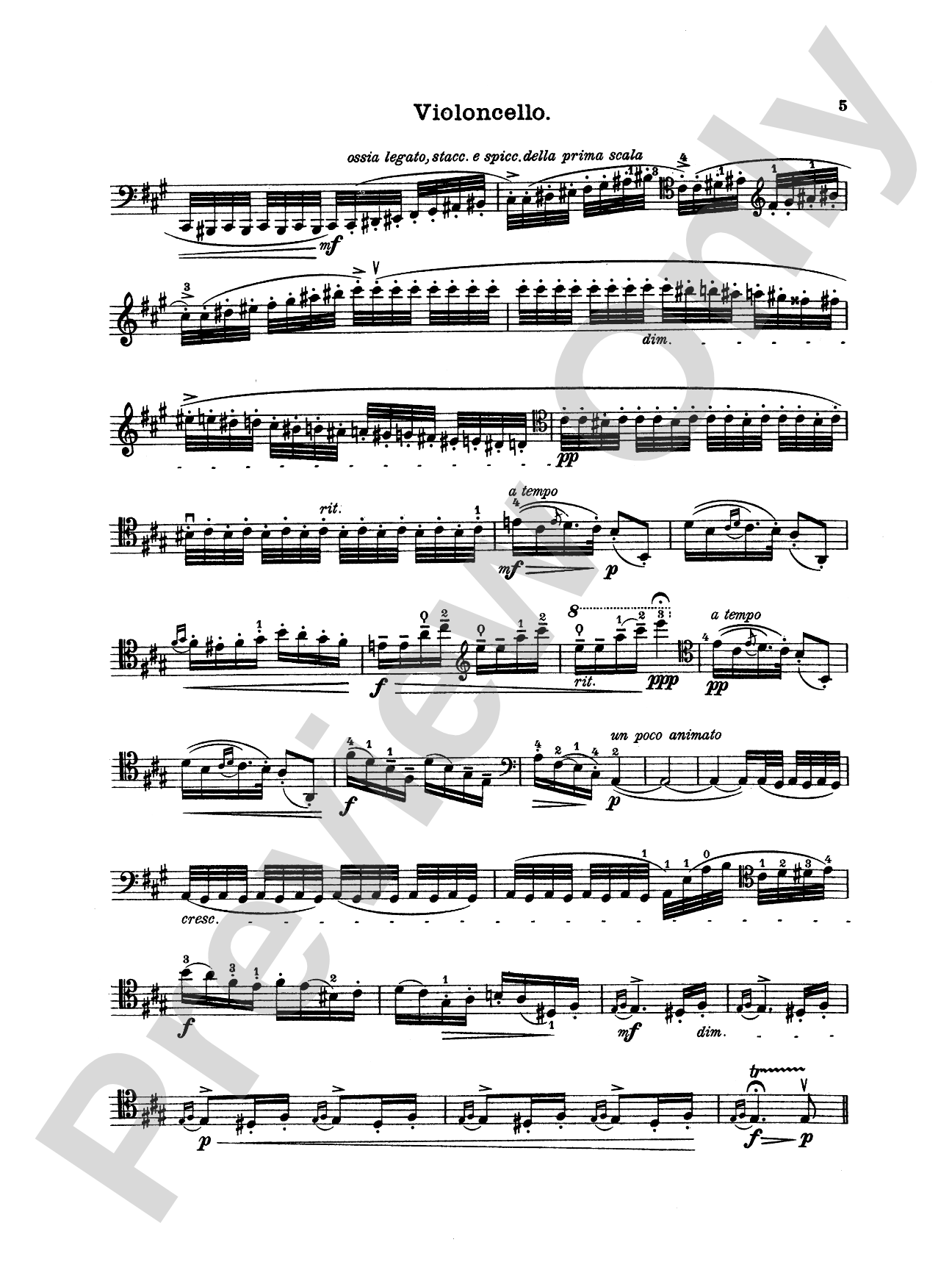
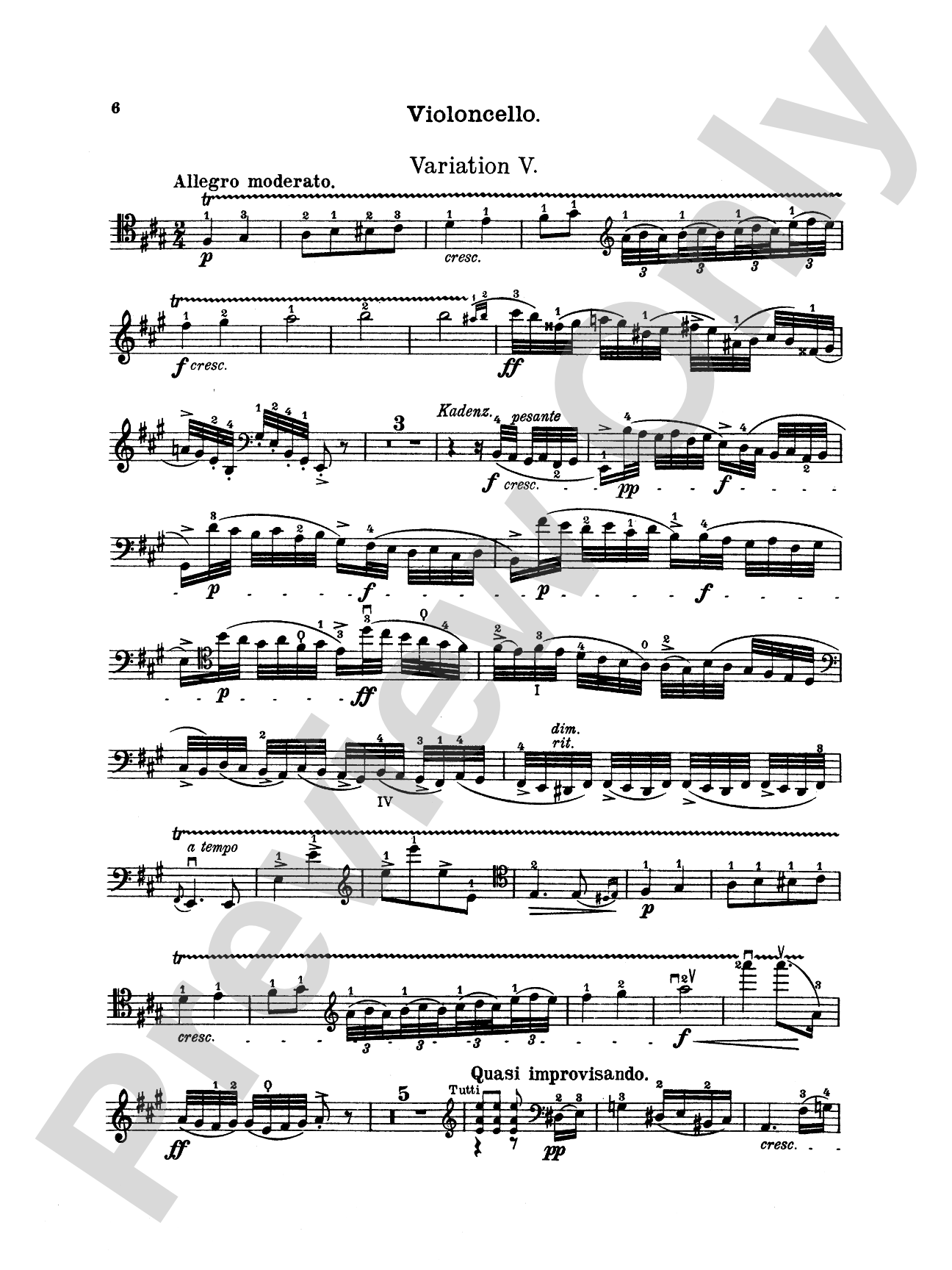
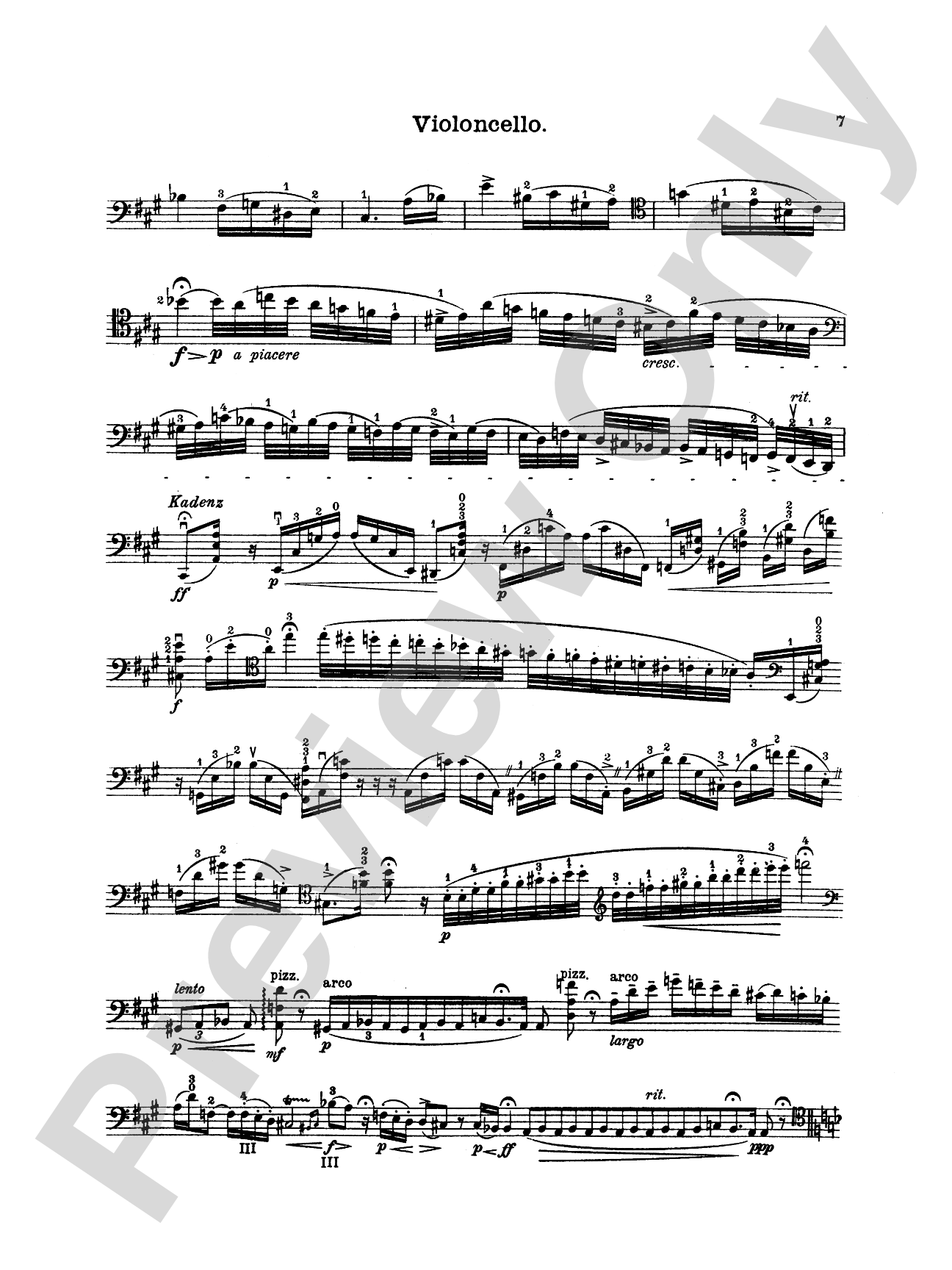
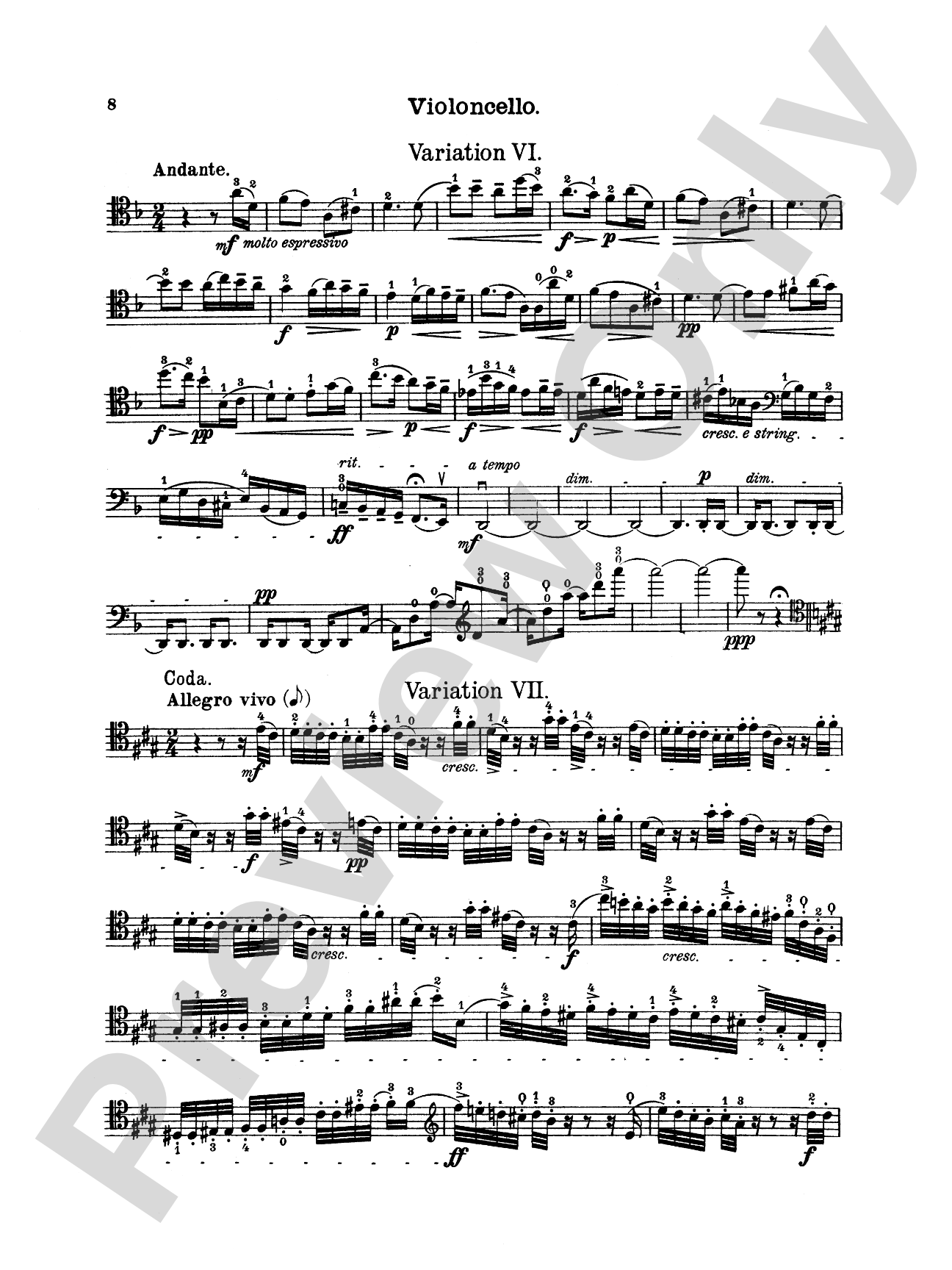
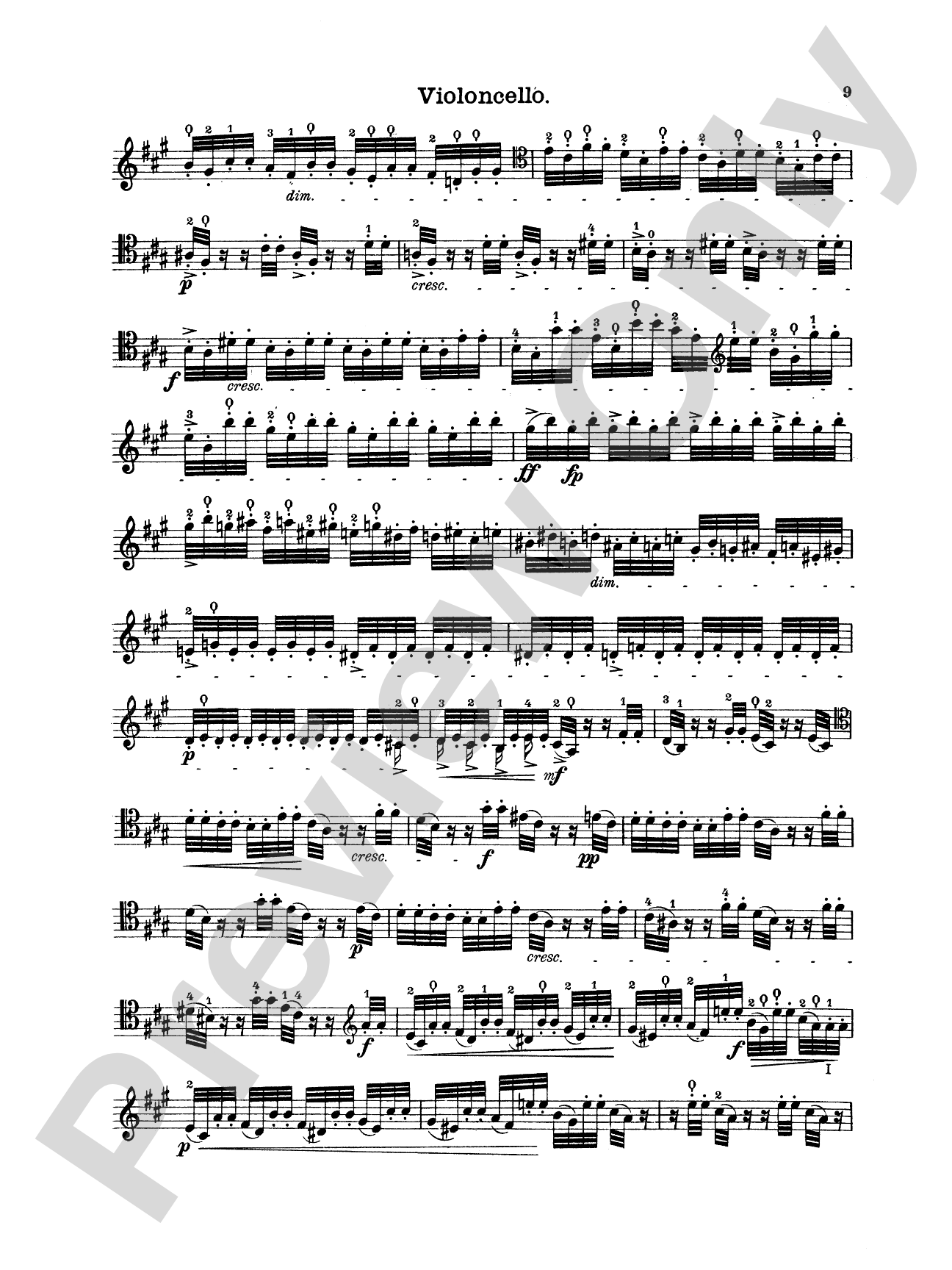
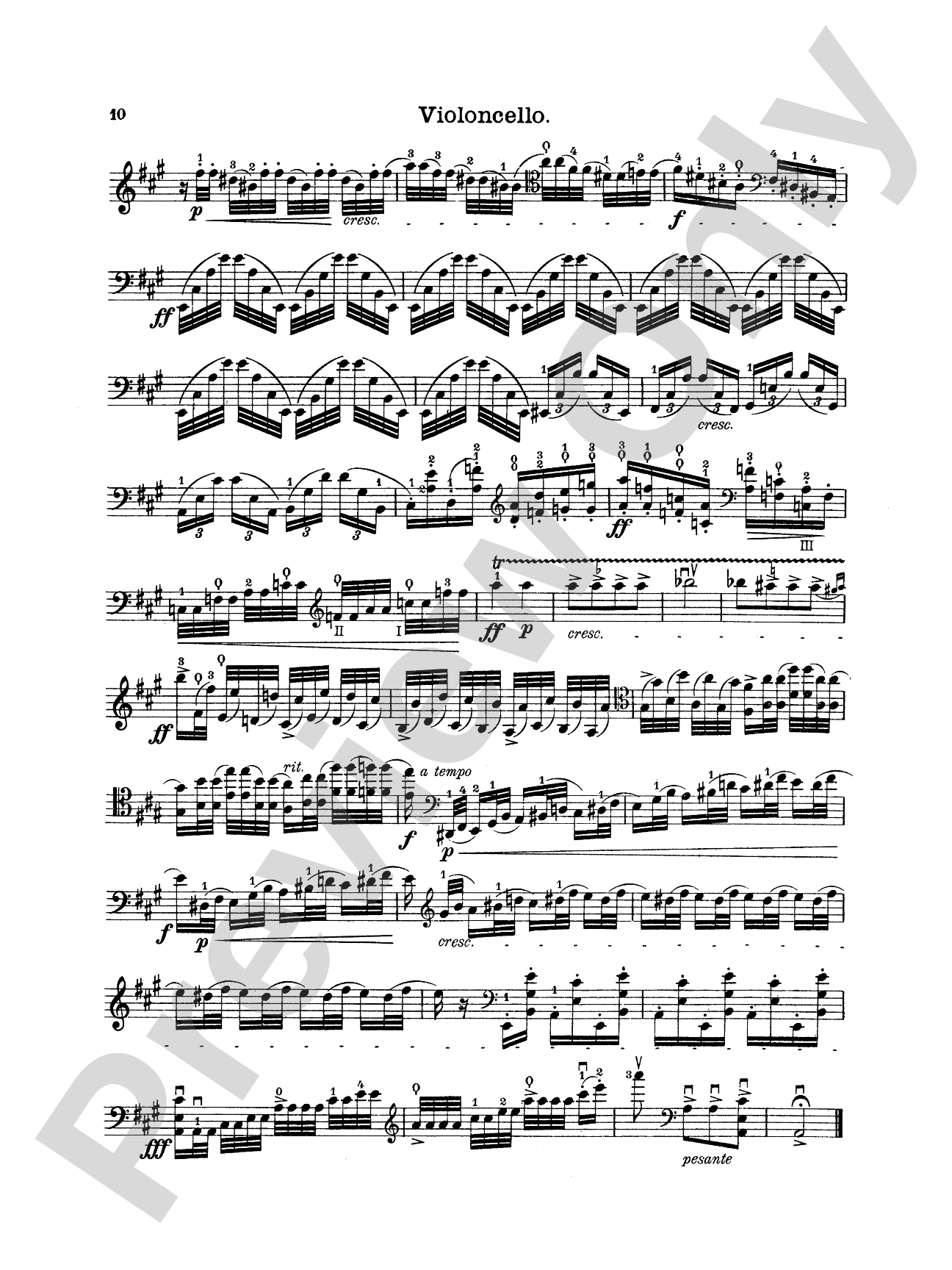

Tchaikovsky: Rococo Variations, Op. 33: Cello Book
By Peter Ilyich Tchaikovsky
Item: 00-PK-0003337

$9.99
Pickup currently not available
Buy Extra Parts (Digital PDF Download)
| Product | Price | Quantity |
|---|---|---|
| Tchaikovsky: Rococo Variations, Op. 33 | $3.99 | |
| Tchaikovsky: Rococo Variations, Op. 33 | $3.99 |
Parts Added to Cart!
Related Items
Rococo Variations, Opus 33: Cello Book |
$9.99
|
View |
Description
A Cello solo with Piano Accompaniment composed by Peter Ilyich Tchaikovsky.


Don't just read it, hear it, play along with it, and watch your students grow with it. In MakeMusic Cloud, Tchaikovsky: Rococo Variations, Op. 33: Cello Book comes alive with professional accompaniment, adjustable tempo, and built-in practice tools that turn solo practice into real progress.
Open in the Player
Jump straight in and assign it today.
Start Your Free Trial
Open this title and explore the full library in minutes.
Sample Audio
No sample audio found.
Sample Video
No sample videos found.
Additional Details
Series:
Kalmus Edition
Publisher:
Alfred Music
Page Count:
32
SKU:
00-PK-0003337
More about this title
About the Composer: Peter Ilyich Tchaikovsky
Peter Ilyich Tchaikovsky (1840-1893) stands among the most performed composers in the concert repertoire. A Russian Romantic master, he brought orchestral color, emotional directness, and structural sophistication to every genre he touched, from symphonies and ballets to chamber works and vocal music.
Tchaikovsky's instrumental writing reveals his gifts as a melodist and orchestrator. Even in works composed for solo instrument with piano, his voice remains unmistakable: sweeping themes, harmonic richness, and the ability to sustain emotional momentum across large formal structures. The Rococo Variations exemplify his gift for writing idiomatic, brilliant music for solo strings.
Why we love this
The Rococo Variations demand serious technical facility while remaining deeply musical and performable at the high school and early college level. Tchaikovsky's approach honors the Rococo style with courtly elegance while maintaining his own Romantic sensibility, making this piece both a stylistic study and a showcase for expressive playing.
What to expect
The piece opens with aristocratic poise, evoking the courtly charm of the Rococo period through a graceful, ornamental melody. As the variations unfold, Tchaikovsky moves between moments of bravura display and passages of lyrical warmth, creating a sense of both virtuosity and intimacy that keeps listeners engaged across the work's span.
Who it's for
Cellists pursuing contest and festival repertoire at the intermediate-advanced level will find this an excellent choice for developing both technical breadth and Romantic-era musical sensibility. Teachers seeking a substantial, stylistically sophisticated solo that remains accessible to accomplished students will appreciate Tchaikovsky's balance of demand and musicality.
How to get the most out of it
- Establish the tempo of the theme early and maintain it consistently through variations. The character shifts with each variation, but the underlying pulse gives the listener orientation through Tchaikovsky's harmonic developments.
- Shape each variation distinctly through changes in articulation, vibrato, and dynamic control rather than radical tempo shifts. Variation V, for example, calls for a different technical approach than Variation I without requiring a different speed.
- Coordinate carefully with the pianist on the ornamental figures that underpin many variations. These accompaniment figures are not mere filler; they anchor the harmonic movement and require precision to lock the ensemble.
- Pay close attention to the written dynamics and accents. Tchaikovsky's markings guide the architecture of each variation and prevent the piece from becoming undirected display work.
How to use it
This substantial solo works well as a competition selection or featured work on a chamber concert where you want to showcase a cellist's technical range and musical maturity. It also pairs naturally on a recital program with works from the same era, either as a standalone item or alongside other Romantic-era chamber works.
Skills your students will build
- Rococo stylistic awareness and ornamentation in a Romantic context
- Variation form and the ability to track harmonic development across formal sections
- Sustained legit playing with frequent position changes across the instrument's full range
- Dynamic control and expressive shaping within a technically demanding framework
- Ensemble coordination with piano at varying tempos and textures