
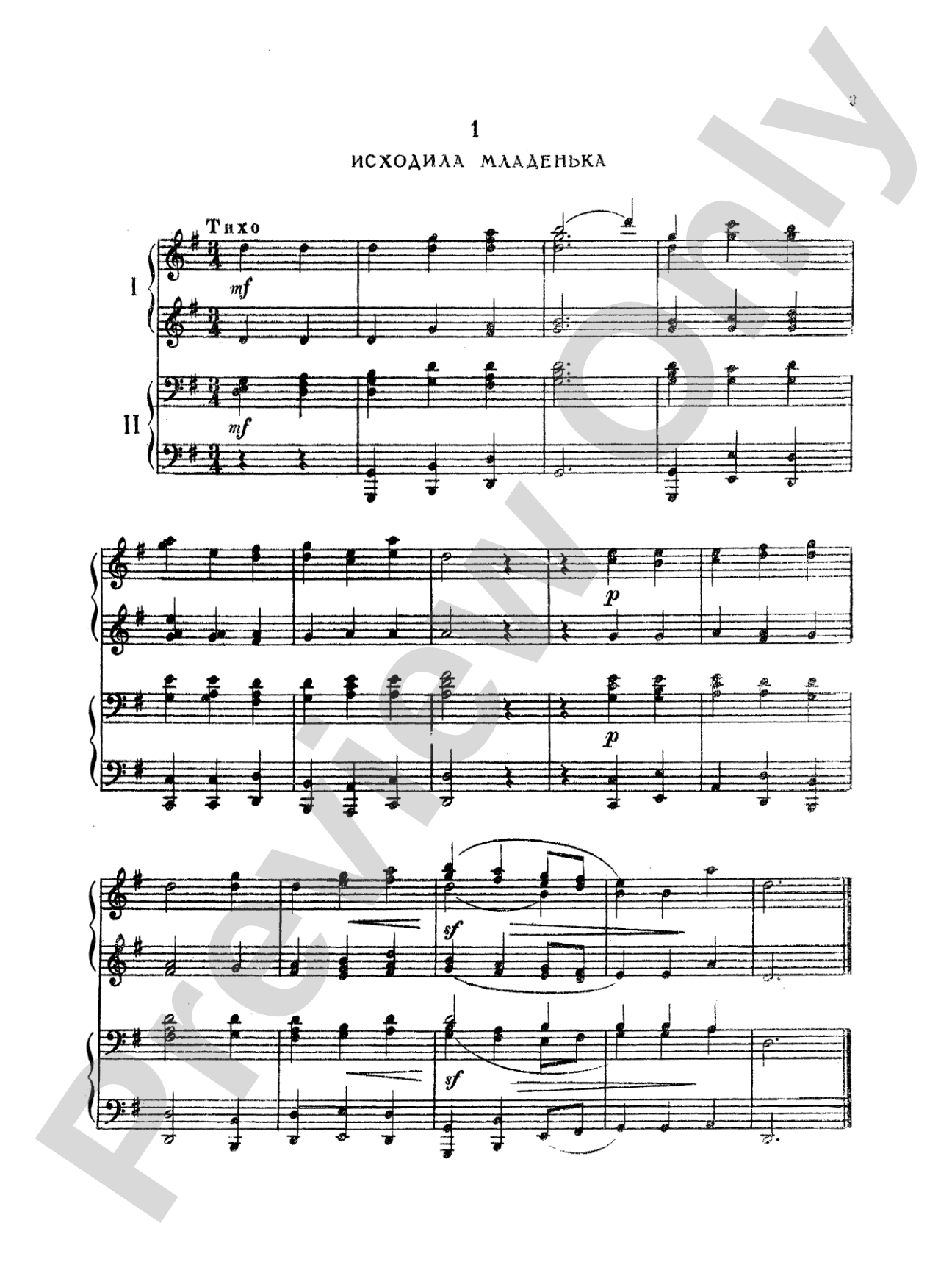

Tchaikovsky: Fifty Russian Folk Songs: Piano Duet (1 Piano, 4 Hands) Book
By Peter Ilyich Tchaikovsky
Item: 00-PK-0003405

$10.99
Pickup currently not available
Buy Extra Parts (Digital PDF Download)
Parts Added to Cart!
Related Items
Fifty Russian Folk Songs: Piano Duet (1 Piano, 4 Hands) Book |
$10.95
|
View |
Description
From the Complete Works, Russian Edition, Octavo Size:


Don't just read it, hear it, play along with it, and watch your students grow with it. In MakeMusic Cloud, Tchaikovsky: Fifty Russian Folk Songs: Piano Duet (1 Piano, 4 Hands) Book comes alive with professional accompaniment, adjustable tempo, and built-in practice tools that turn solo practice into real progress.
Open in the Player
Jump straight in and assign it today.
Start Your Free Trial
Open this title and explore the full library in minutes.
Sample Audio
No sample audio found.
Sample Video
No sample videos found.
Additional Details
Series:
Kalmus Edition
Publisher:
Alfred Music
Page Count:
60
SKU:
00-PK-0003405
More about this title
About the Composer: Peter Ilyich Tchaikovsky
Peter Ilyich Tchaikovsky (1840-1893) stands as one of the most performed composers in the concert hall, yet his relationship with Russian folk music reveals a deeper, more intimate side of his creativity. While he is celebrated for grand symphonies and ballets, Tchaikovsky spent considerable energy collecting, studying, and arranging traditional Russian melodies, seeing in them the voice of his nation's soul.
This collection represents Tchaikovsky's scholarly and artistic engagement with folk song as both preservation and transformation. Rather than treating these melodies as mere raw material, he crafted arrangements that honor their simplicity while introducing his characteristic harmonic sophistication and pianistic invention. For music educators, these fifty songs offer direct access to how a master composer approached the relationship between folk tradition and formal musical art.
Why we love this
This collection gives pianists genuine Russian music in an intimate, workable format. The duet setting invites collaboration and removes the pressure of solo performance, making these songs accessible to students while still offering Tchaikovsky's distinctive voice and harmonic language. Fifty pieces means you can select repertoire for specific needs, moods, or technical levels throughout the year without retreading the same material.
What to expect
Stepping into a salon where tradition and artistry meet. These melodies carry the warmth of Russian village life, yet Tchaikovsky's harmonies move them through emotional landscapes ranging from playful to deeply tender. The duet format creates an intimate conversation between two pianists, each contributing voice and personality while serving the larger musical idea.
Who it's for
Intermediate to advanced piano duet players who want substantial, artful repertoire beyond simplified arrangements. Studio teachers seeking material that deepens musicianship through folk song while introducing students to one of music history's greatest composers. Duet partnerships looking for sixty pages of material that spans moods, keys, and technical demands without requiring endless score searching.
How to get the most out of it
- Treat the primo and secondo parts as equal voices, not melody-and-accompaniment. Many arrangements hide substantial musical content in the left hand part, and balance matters.
- Let the folk melodies breathe with a singing tone. These are songs first; ornament them through phrasing rather than technical display.
- Listen closely to voice-leading between the two players, especially in transitions and harmonic changes. Synchronized pedaling will deepen the textural blend without muddying the part-writing.
- Vary your approach across the collection. Not all fifty songs require the same tempo or character; move between them with fresh ears rather than establishing a single performance manner.
How to use it
Create a recital set titled "Russian Songs" by selecting eight to twelve pieces that form a cohesive arc, rather than programming Tchaikovsky's larger works. Include this collection in a studio event or school concert to offer something distinctly personal and less commonly heard than his ballets or symphonies. Use individual pieces as functional music for school events or as supplementary repertoire during technique-building phases.
Skills your students will build
- Balanced ensemble playing between primo and secondo voices
- Harmonic awareness through Romantic-era reharmonization of folk melodies
- Voice-leading and independence across two keyboard lines
- Stylistic flexibility across a wide range of folk idioms and emotional content
- Score reading fluency in duet format and ensemble score layout