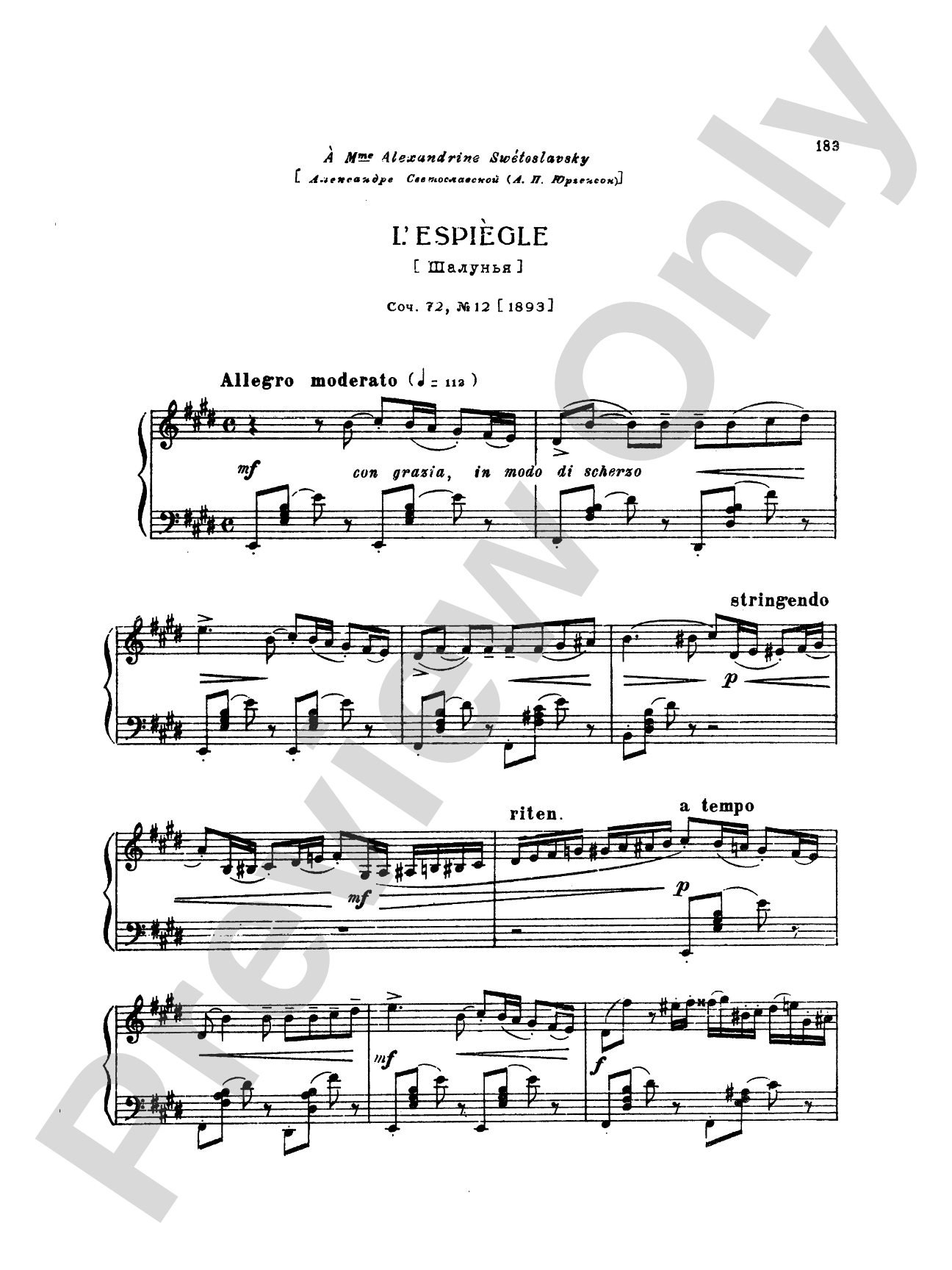
Tchaikovsky: Eighteen Piano Pieces, Op. 72; Aveu Passionne; Valse, Op. 40, No. 9, 1st Version Sheet Music Preview

Tchaikovsky: Eighteen Piano Pieces, Op. 72; Aveu Passionne; Valse, Op. 40, No. 9, 1st Version

By Peter Ilyich Tchaikovsky

Item: 00-PC-0009711

Digital Download
$0.99
Description
Expertly arranged Piano Collection by Peter Ilyich Tchaikovsky from the Kalmus Edition series. This Collection is from the Romantic era. Includes: Eighteen Piano Pieces, Op. 72 * Aveu Passionne * Valse, Op. 40, No. 9, 1st Version.

Don't just read it, hear it, play along with it, and watch your students grow with it. In MakeMusic Cloud, Tchaikovsky: Eighteen Piano Pieces, Op. 72; Aveu Passionne; Valse, Op. 40, No. 9, 1st Version comes alive with professional accompaniment, adjustable tempo, and built-in practice tools that turn solo practice into real progress.

Sample Audio
No sample audio found.
Sample Video
Additional Details
Series: Kalmus Edition
Publisher: Alfred Music
Page Count: 144
SKU: 00-PC-0009711

More about this title

About the Composer: Peter Ilyich Tchaikovsky

Peter Ilyich Tchaikovsky (1840-1893) stands as one of the Romantic era's most distinctive voices, known for his gift for melody and his unflinching emotional directness. A Russian composer trained in Western European traditions, he bridged cultural and stylistic worlds, creating works that moved audiences across the continent. His piano works span intimate character pieces to virtuosic display pieces, all marked by his signature harmonic language and psychological depth.

Why we love this

This collection gathers some of Tchaikovsky's most rewarding piano writing for students and recitalists seeking material beyond the concertos. The Op. 72 pieces offer genuine musical substance in manageable lengths, while the inclusion of both the famous Valse Op. 40 No. 9 and the passionate Aveu Passionne gives performers pieces with immediate appeal and teaching value. The Kalmus edition provides reliable, clean texts at a price point that makes adding substantial Romantic repertoire practical for studios and schools.

What to expect

These pieces inhabit the Romantic interior world: intimate confessions in the Op. 72 works, nostalgic elegance in the Valse, and ardent passion in Aveu Passionne. Tchaikovsky's gift for memorable melody and unexpected harmonic turns makes even brief pieces feel substantial and emotionally present.

Who it's for

Intermediate to advanced piano students seeking substantial Romantic literature that offers both musical growth and satisfying performance material. Teachers building comprehensive Tchaikovsky exposure in their studios and recitalists looking for shorter character pieces and familiar gems that round out concert programming.

How to get the most out of it

  • Honor Tchaikovsky's specific tempo markings and character indications; they define the emotional arc of each piece and shape interpretation more than stylistic convention alone.
  • Attend to the harmonic color in Op. 72 pieces by listening through to the inner voices; many contain surprising modulations and voice-leading that reward subtle pedal work.
  • In the Valse, maintain rhythmic clarity in the accompaniment pattern while allowing the melody room to breathe; the piece's charm depends on this balance rather than aggressive tempo.
  • Explore the range of touch required across the collection; some pieces demand percussive clarity while others need sustained, singing tone that rivals the human voice.

How to use it

Program individual Op. 72 pieces as standalone recital items or create thematic groupings around specific moods. The Valse Op. 40 No. 9 pairs naturally with other Romantic salon repertoire or serves as a familiar opening piece for a student recital. Aveu Passionne works as a show-stopping encore or as part of a program exploring Russian Romantic keyboard writing.

Skills your students will build

  • Rendering Romantic-era harmonic color through pedal technique and voice leading
  • Balancing accompaniment figuration with singing melodic line
  • Reading and executing Tchaikovsky's specific tempo and character markings
  • Developing interpretive choices within Classical-inherited formal structures
  • Building recital-ready repertoire of moderate length with immediate musical impact

You May Also Like