
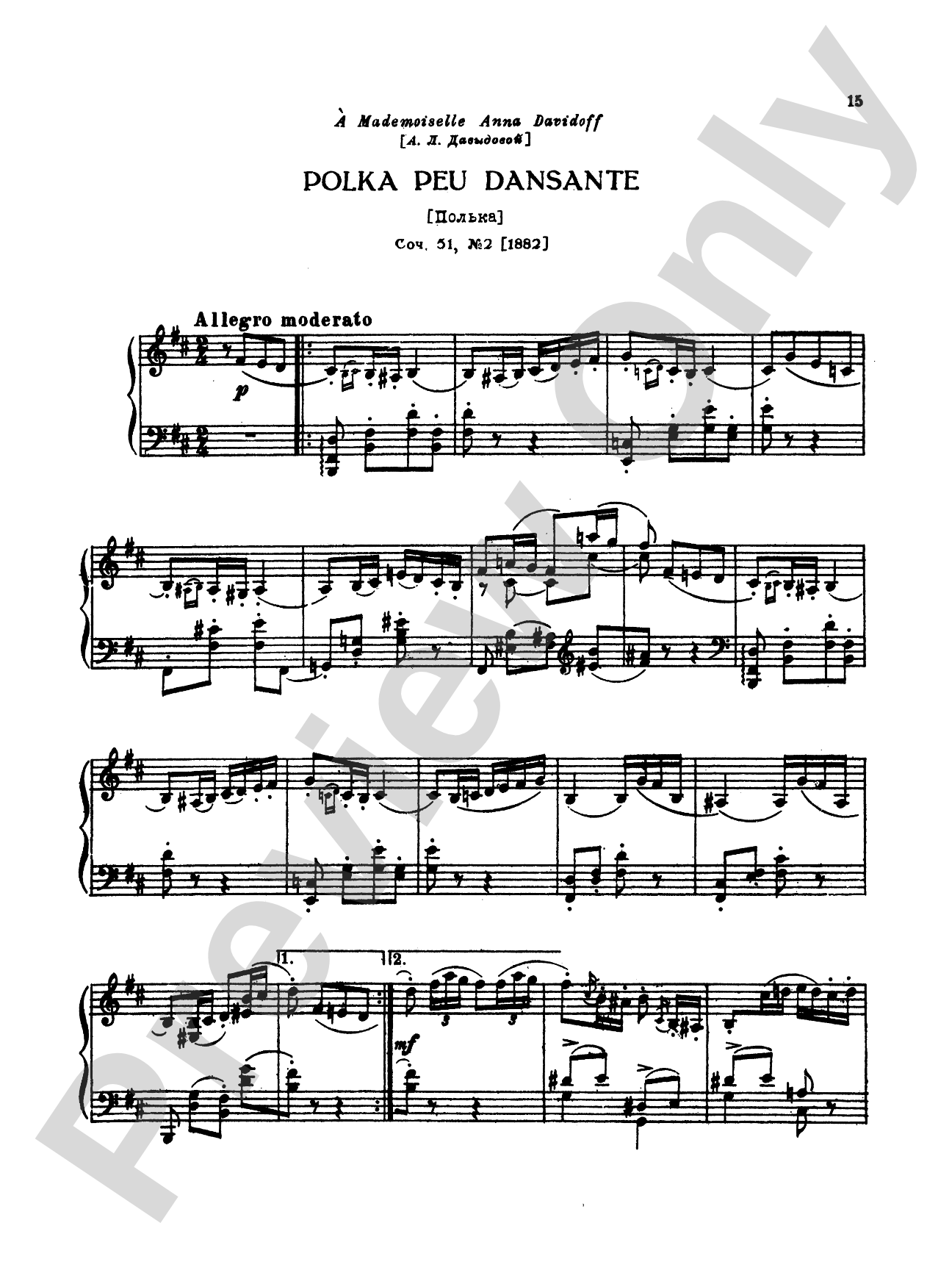
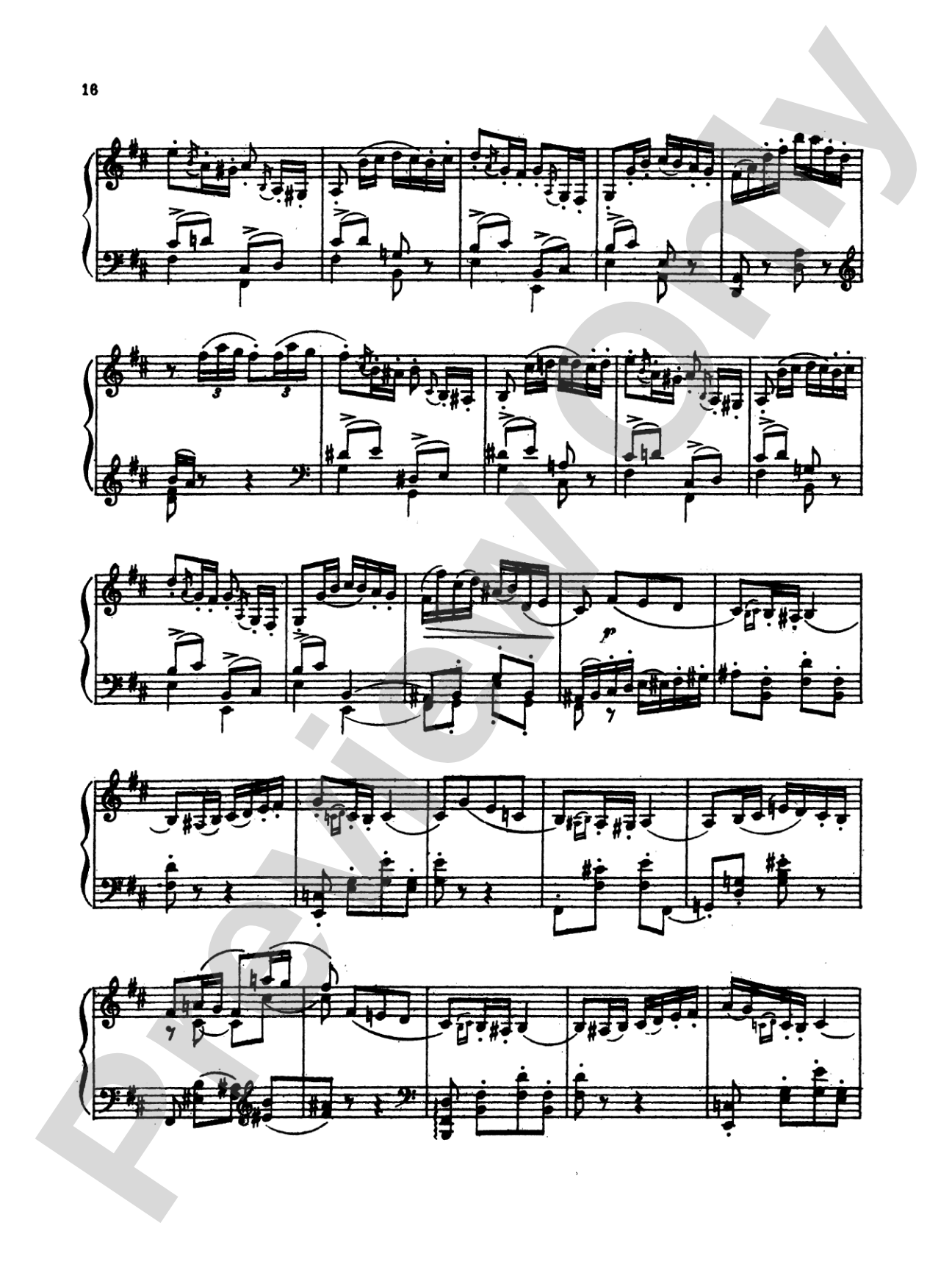

Tchaikovsky: Collection II (6 Piano Pieces)
By Peter Ilyich Tchaikovsky
Item: 00-PC-0009690
$0.99
Pickup currently not available
Description
Six Pieces, Op. 51 * Impromptu Caprice * Dumka, Op. 59 * Valse-Scherzo * Impromptu * Military March


Don't just read it, hear it, play along with it, and watch your students grow with it. In MakeMusic Cloud, Tchaikovsky: Collection II (6 Piano Pieces) comes alive with professional accompaniment, adjustable tempo, and built-in practice tools that turn solo practice into real progress.
Open in the Player
Jump straight in and assign it today.
Start Your Free Trial
Open this title and explore the full library in minutes.
Sample Audio
No sample audio found.
Sample Video
No sample videos found.
Additional Details
Series:
Kalmus Edition
Publisher:
Alfred Music
Page Count:
96
SKU:
00-PC-0009690
More about this title
About the Composer: Peter Ilyich Tchaikovsky
Peter Ilyich Tchaikovsky (1840-1893) stands among the most performed composers in concert halls worldwide, yet his piano works remain less familiar than his ballets and symphonies. His keyboard writing captures the full range of his genius: lyrical depth, rhythmic vitality, and orchestral color translated into pianistic language. These six pieces span his mature years, revealing a composer who understood the instrument's expressive possibilities as thoroughly as any virtuoso.
Tchaikovsky's piano works occupy a distinct space in Romantic repertoire. They are neither as technically demanding as Liszt nor as introspective as Brahms, but they demand genuine musical intelligence and emotional commitment. For pianists and teachers, these pieces offer direct access to one of music's most influential voices without requiring the virtuosic apparatus of the great concertos.
Why we love this
This collection delivers six works that sound far more substantial than their modest technical requirements suggest. The pieces balance accessibility with genuine artistic merit, making them invaluable for pianists seeking repertoire that deepens musicianship without overwhelming technique. Programming these works signals sophistication; audiences recognize Tchaikovsky's voice immediately, yet most listeners encounter these pieces fresh.
What to expect
These pieces capture a world of emotional specificity: the Dumka spirals between folk-like simplicity and urban sophistication, the waltzes pulse with aristocratic grace, and the Military March conveys patriotic ceremony alongside subtle irony. The Impromptu pieces feel like musical conversations, intimate and conversational yet layered with harmonic subtlety. Throughout, Tchaikovsky's gift for memorable melody combines with distinctly Russian harmonic language, creating music that feels both deeply personal and historically resonant.
Who it's for
Advanced intermediate through early advanced pianists will find this collection rewarding at multiple stages of development. Teachers seeking repertoire that builds interpretive skills alongside technical facility will appreciate works that demand maturity without requiring competition-level virtuosity. Students preparing for college auditions or recitals benefit from music that demonstrates genuine artistic engagement rather than showmanship.
How to get the most out of it
- Pay attention to the structural shifts within pieces like the Valse-Scherzo, where formal expectations dissolve into character changes. These transitions require clarity of touch and architectural thinking rather than mere technical display.
- The Military March rewards rhythmic precision and a sense of pageantry without heaviness. Avoid pressing the tempo; let the march stride naturally and allow the harmonic colors to emerge.
- In the Dumka and Impromptu movements, shape the lyrical passages with attention to voice leading rather than treating them as sustained melody over accompaniment. These are orchestral textures adapted for keyboard.
- Use pedal sparingly in the faster sections to maintain clarity, then allow it to warm the harmonic space in slower passages where Tchaikovsky's chromaticism becomes most expressive.
How to use it
These works function beautifully in recitals where you want to program a single composer across the evening, offering variety in character without stylistic rupture. The Military March can anchor a program or provide contrast between weightier works. Consider pairing these pieces with chamber music by Russian contemporaries or with the more familiar Tchaikovsky ballets to contextualize his complete artistic vision.
Skills your students will build
- Pedal control in chromatic harmonic progressions
- Interpretive phrasing in dance forms (waltz, scherzo, march)
- Voice leading across hand positions in contrapuntal passages
- Rhythmic precision in sectional transitions and tempo changes
- Dynamic shaping in lyrical passages without excessive rubato
- Tonal color and touch differentiation in orchestral textures