
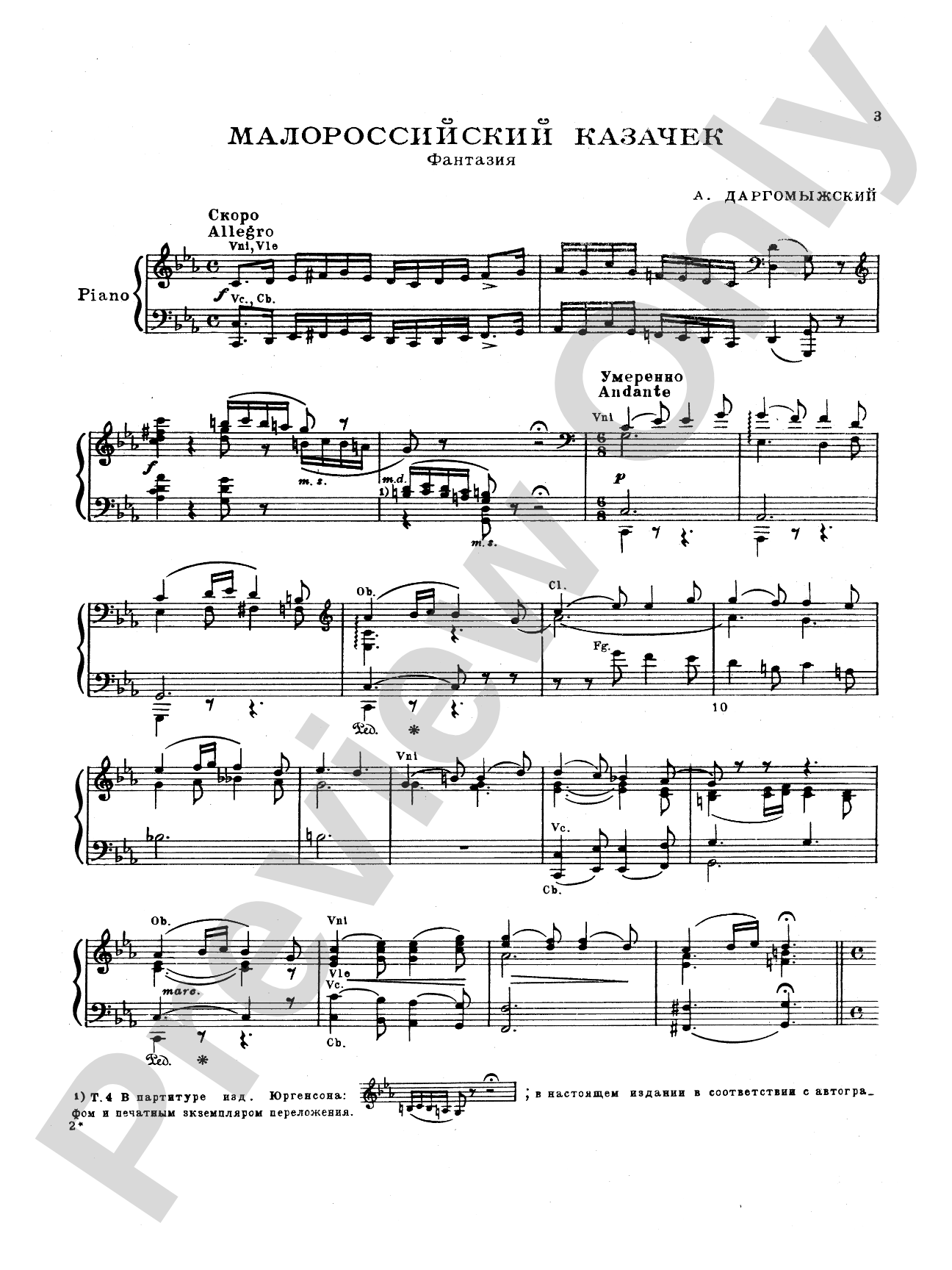
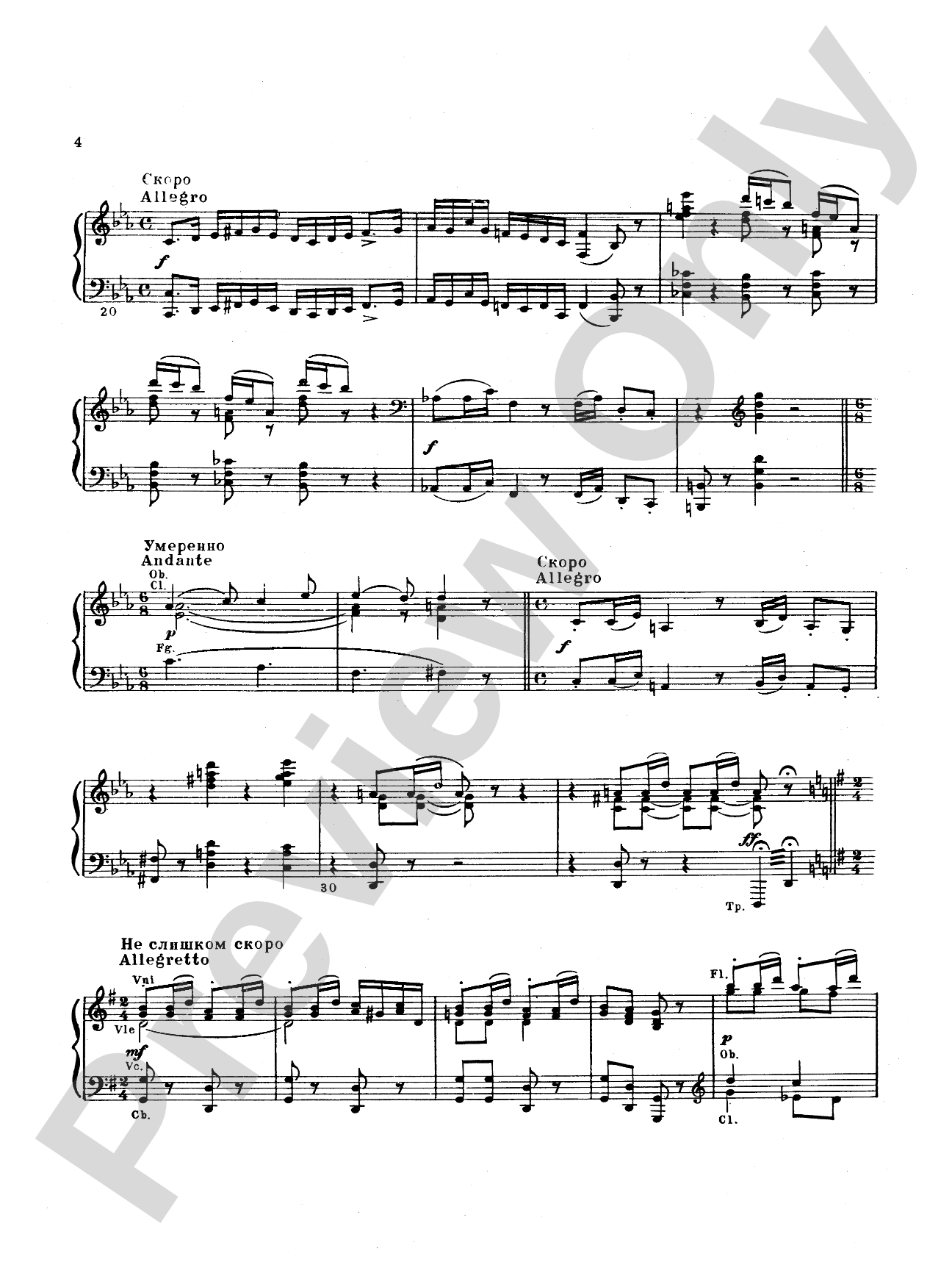
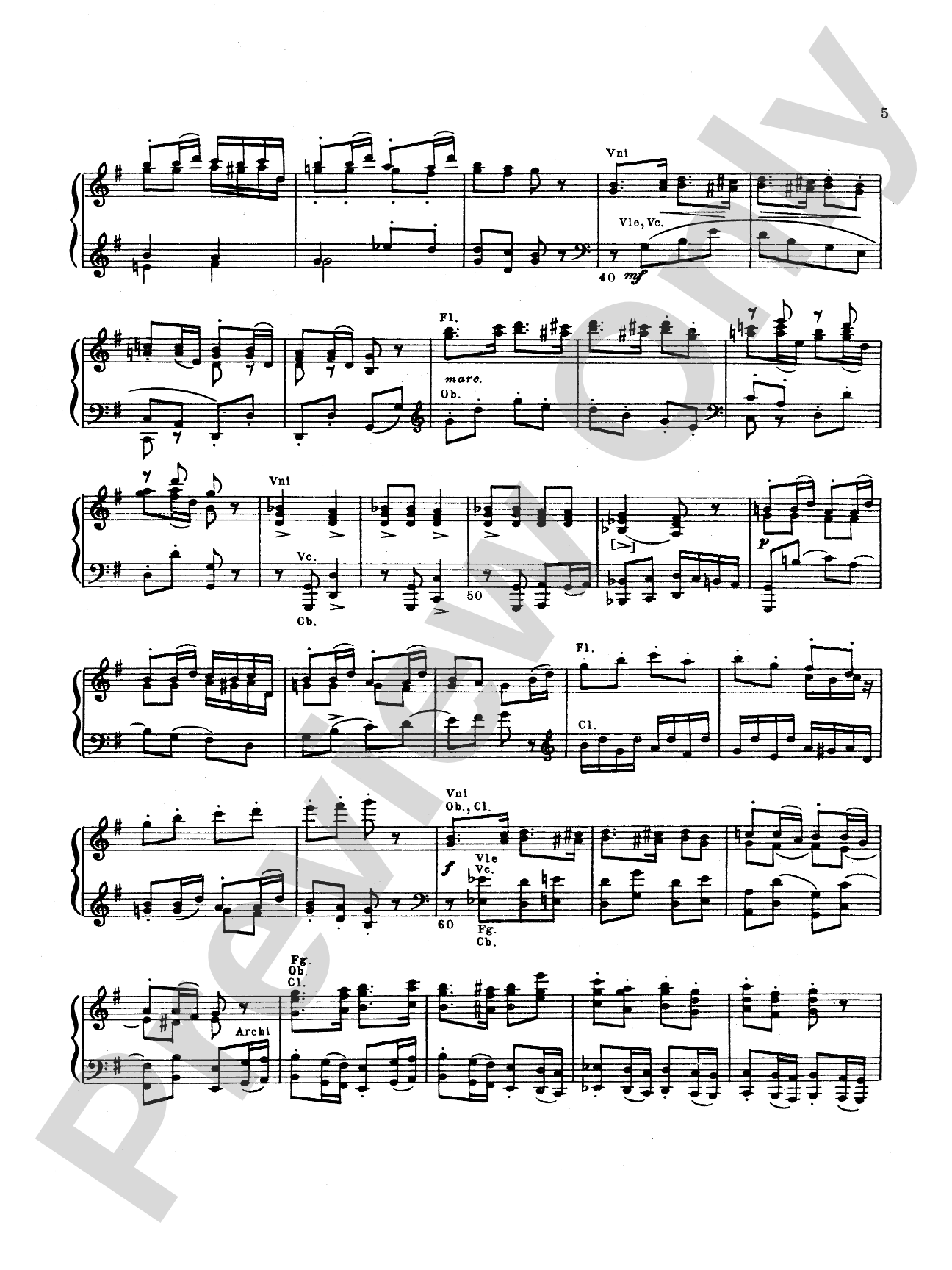

Tchaikovsky: Arrangements from Dargomyzhsky, won Weber, Rubinstein
For Piano Solo and One Piano, Four Hands
By Peter Ilyich Tchaikovsky
Item: 00-PC-0009767
$2.99
Pickup currently not available
Description
A Piano Duet for 1 Piano, 4 Hands, composed by Peter Ilyich Tchaikovsky.


Tchaikovsky: Arrangements from Dargomyzhsky, won Weber, Rubinstein isn't in MakeMusic Cloud just yet...but it could be. Let us know you'd like to see it, and you'll help shape what comes next. In the meantime, start a free trial and dive into thousands of interactive titles your students can play along with today.
Request This Title
Tell us you want it.
Start Your Free Trial
Explore everything that's ready to play right now.
Sample Audio
No sample audio found.
Sample Video
No sample videos found.
Additional Details
Series:
Kalmus Edition
Publisher:
Alfred Music
Page Count:
92
SKU:
00-PC-0009767
More about this title
About the Composer: Peter Ilyich Tchaikovsky
Peter Ilyich Tchaikovsky (1840-1893) stands as one of the most performed composers in concert halls worldwide, yet his genius extended far beyond his famous ballets and symphonies. His ability to transform the musical language of his contemporaries into something distinctly his own made him a bridge between Russian nationalism and European Romanticism. Tchaikovsky understood the piano intimately and wrote keyboard music that balances technical brilliance with emotional depth.
These arrangements reveal Tchaikovsky's skill at orchestration and voice leading applied to the duet medium. Working from the music of Dargomyzhsky, von Weber, and Rubinstein, he created pieces that honor the original composers while showcasing his own pianistic sensibility. For educators, his approach to four-hand writing demonstrates how to maintain independence between the two performers while building toward shared dramatic moments.
Why we love this
This collection gives serious young pianists access to carefully curated arrangements by a master orchestrator working within an intimate format. The variety of source material keeps rehearsals engaging while the Kalmus Edition provides a clean, readable text that respects both performers equally rather than privileging one part over the other.
What to expect
The writing ranges from intimate conversation between the two performers to passages of surprising brilliance where both parts lock into rhythmic or harmonic unison. At ninety-two pages, the collection spans moods from delicate and introspective to grand and theatrical, reflecting the diverse compositional voices Tchaikovsky drew from and his gift for shaping borrowed material into something that feels inevitable.
Who it's for
Advanced high school pianists and college-level students preparing for duet competitions, recitals, or ensemble chamber work will find repertoire that demands serious technique and musical maturity. Teachers seeking four-hand material that sits above standard duet collections but remains within reach of dedicated students will appreciate both the artistic merit and the pedagogical value of learning from Tchaikovsky's arrangements.
How to get the most out of it
- Balance the parts as you would balance two voices in a vocal score; neither hand pair dominates simply because one plays higher or louder. Listen for moments where Tchaikovsky shifts the thematic material between primo and secondo.
- Establish a shared breath between players before each section. Even though you're at the same keyboard, treat entrances and phrase endings as ensemble moments that require eye contact and agreement.
- Pay attention to the pedal markings in both parts. Tchaikovsky often layers independent harmonic activity, and unclear pedaling will muddy the texture across ninety-two pages of dense writing.
- Work the primo and secondo parts separately before combining them. This collection benefits from each player understanding their own line's architecture before managing the coordination challenge.
How to use it
Program these arrangements on a recital centered on Russian Romantic keyboard literature, pairing them with Tchaikovsky's solo piano works for a coherent evening. Alternatively, extract individual arrangements as concert openers or closers; the variety of source composers and moods allows you to bookend your program with works that already demonstrate artistic range.
Skills your students will build
- Reading and executing independent lines while maintaining ensemble coordination at the same keyboard
- Balancing two complete parts of equal musical importance rather than defaulting to melody-and-accompaniment roles
- Managing harmonic and pedal clarity across dense romantic-era voicing
- Stylistic interpretation of salon-era and nationalist Russian compositional voices
- Adaptive listening and response to a collaborative partner's tempo and phrasing choices