
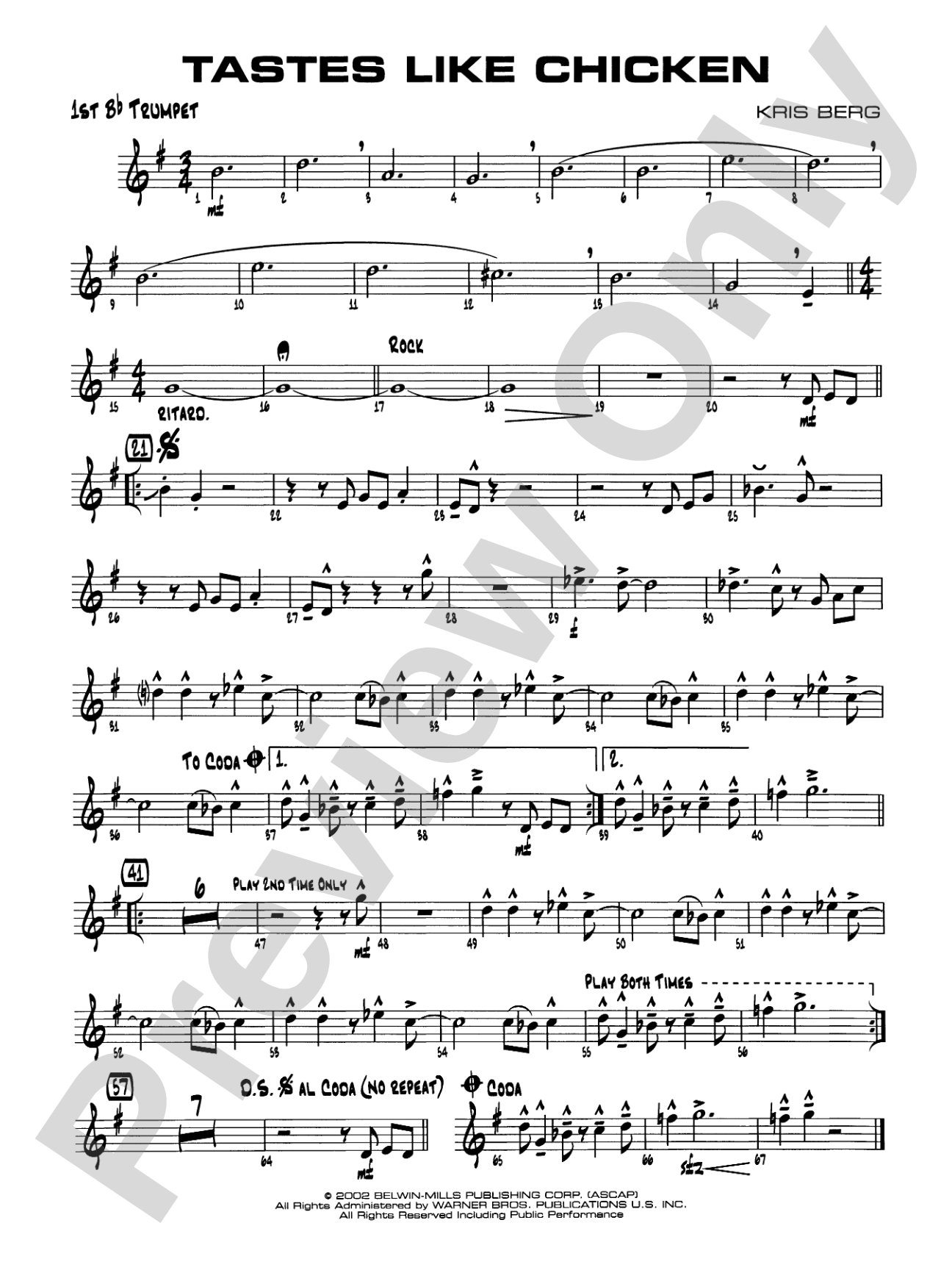

Tastes Like Chicken: 1st B-flat Trumpet
By Kris Berg
Grade: 2 (Medium Easy)
Item: 00-PC-0015243_T1
$3.00
Pickup currently not available
Description
It's true, it Tastes Like Chicken! A slow gospel-style introduction leads into an extra crispy groove that will have the band coming back again and again. The melody is catchy, the groove is funky, the rhythms are simple and solos (written or ad-lib) are for tenor and alto saxophones. Trumpet range to written G. This is a fun and exciting contemporary chart that is accessible for the young player. Guaranteed to deliver in four minutes! (3:44)


Don't just read it, hear it, play along with it, and watch your students grow with it. In MakeMusic Cloud, Tastes Like Chicken: 1st B-flat Trumpet comes alive with professional accompaniment, adjustable tempo, and built-in practice tools that turn solo practice into real progress.
Open in the Player
Jump straight in and assign it today.
Start Your Free Trial
Open this title and explore the full library in minutes.
Sample Audio
1
Audio File
--:--
0:00
0:00
Sample Video
No sample videos found.
Additional Details
Series:
Young Jazz Ensemble
Publisher:
Alfred Music
Page Count:
52
SKU:
00-PC-0015243_T1
More about this title
About the Composer: Kris Berg
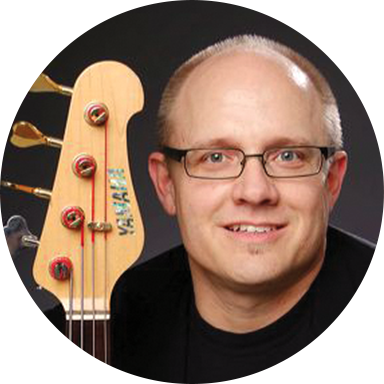
Kris Berg directs the Jazz Studies program at Collin County Community College in Texas, where he earned both his bachelor's and master's degrees in jazz studies from the University of North Texas. His work has shaped the region's jazz landscape: he founded the Collin Jazz Fest and the Texas All-Star Jazz Camp, and under his leadership, the college's ensembles have earned multiple invitations to perform at the Montreux Jazz Festival.
Berg is a prolific composer and arranger whose charts circulate globally and appear regularly on Belwin Jazz's catalog. He has clinicked and performed alongside some of jazz's most respected voices, including Kurt Elling, Randy Brecker, Peter Erskine, Bob Mintzer, and Clark Terry. He also authored the widely used Bass Lines in Minutes and maintains an active role as a Yamaha artist and clinician.
Why we love this
Berg writes with an ear for what young players actually want to play: a groove that feels authentic without requiring advanced reading skills or extreme ranges. The gospel-inflected opening and funky second section give your ensemble genuine style and infectious energy, and the straightforward solos (written or improvised) let your saxophones shine without overwhelming them.
What to expect
The opening unfolds like a spiritual moment—spare, reverent, and built on simplicity. Then the bottom drops out and a sleek, soulful funk takes over, complete enough to feel professional yet lean enough not to overwhelm a developing section. The overall effect is polished and modern without pretension.
Who it's for
Grade 2 jazz ensembles looking for repertoire with genuine groove and accessibility. Players new to funk and gospel styles will find the rhythms and ranges manageable, while directors appreciate material that doesn't sacrifice musicality for ease. This works equally well for school jazz bands, youth jazz programs, and community college ensembles aiming for a fun, audience-friendly set.
How to get the most out of it
- Let the rhythm section lock in during the slow gospel intro before bringing the full ensemble in; this sets up the contrast with the groove that follows.
- Balance the written melody against the funk groove rather than layering them equally; the groove should provide the pocket while horns sit on top.
- If your tenor and alto saxophonists are taking ad-lib solos, establish the form clearly in rehearsal and give them space to breathe over the groove.
- Keep the trumpet section relaxed in the upper register (written G); this part is written high but should sound effortless, not strained.
How to use it
Program this as a high-energy anchor in a jazz concert's second half, where it can lift an audience after ballads or more introspective tunes. At under four minutes, it fits neatly into a mixed setlist and makes a strong impression at festivals and competitions without demanding excessive rehearsal time.
Skills your students will build
- Reading and performing funk and gospel rhythmic vocabularies
- Ensemble balance and groove awareness in contemporary styles
- Solo navigation (both written and improvised) over repeated harmonic structures
- Trumpet range and endurance in the upper register (written to G)
- Section independence and dialogue between melody and rhythm section