
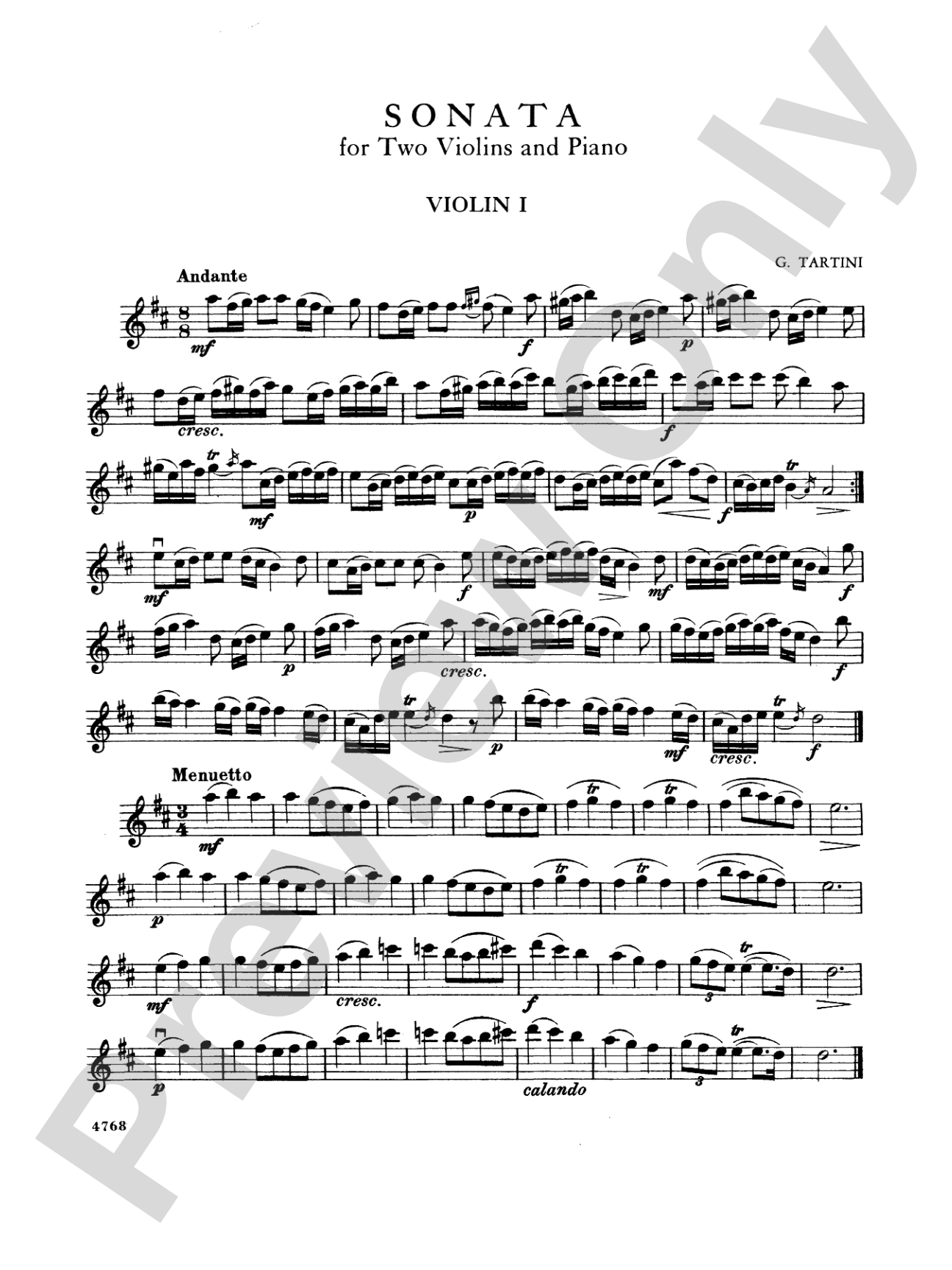
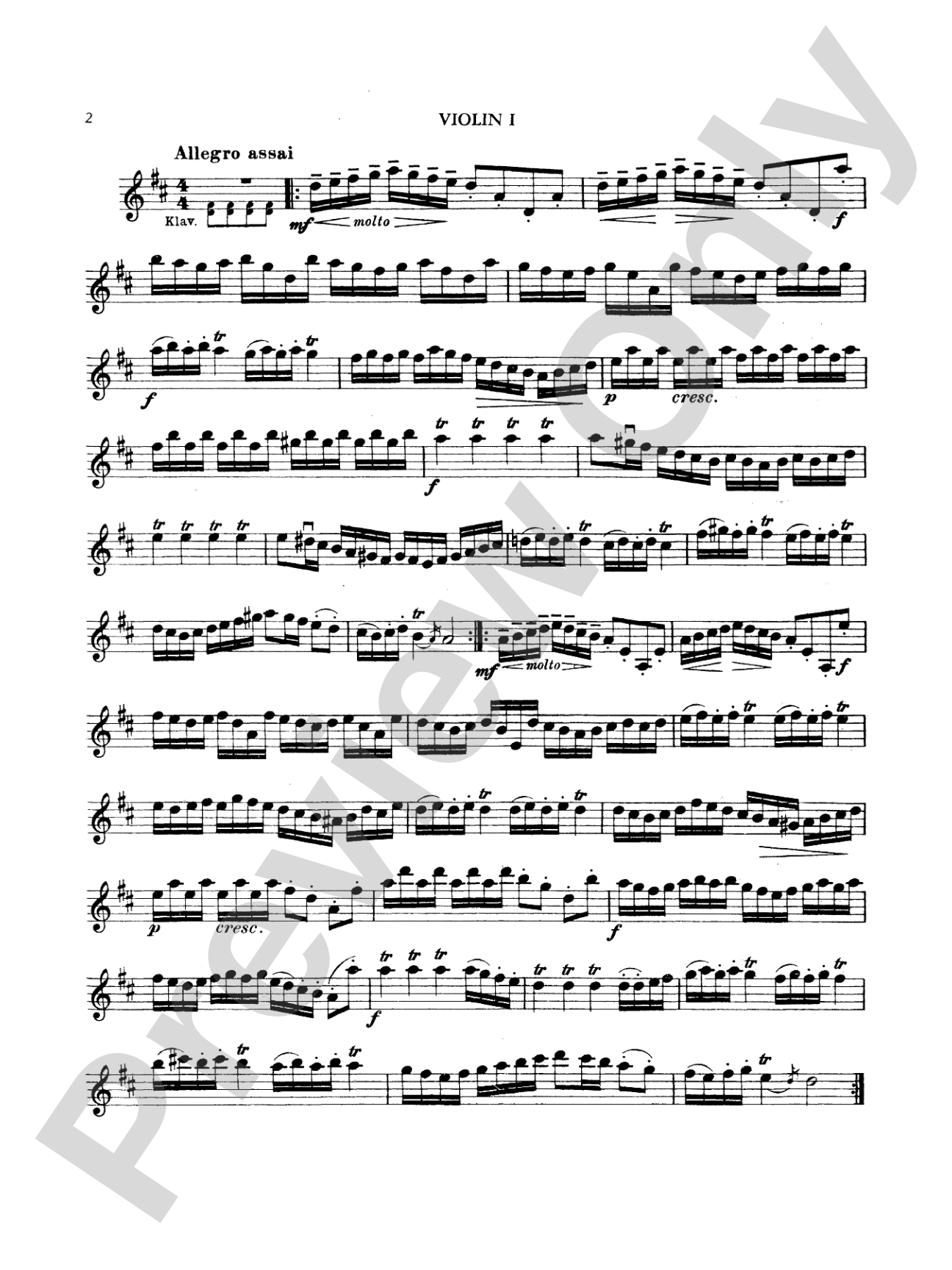

Tartini: Sonata in D Major: Violin Book
By Giuseppe Tartini
Item: 00-PK-0003611

$7.99
Pickup currently not available
Buy Extra Parts (Digital PDF Download)
| Product | Price | Quantity |
|---|---|---|
| Tartini: Sonata in D Major | $0.99 | |
| Tartini: Sonata in D Major | $0.99 | |
| Tartini: Sonata in D Major | $0.99 | |
| Tartini: Sonata in D Major | $0.99 |
Parts Added to Cart!
Related Items
Sonata in D Major: Violin Book |
$7.99
|
View |
Description
(cello ad lib)


Don't just read it, hear it, play along with it, and watch your students grow with it. In MakeMusic Cloud, Tartini: Sonata in D Major: Violin Book comes alive with professional accompaniment, adjustable tempo, and built-in practice tools that turn solo practice into real progress.
Open in the Player
Jump straight in and assign it today.
Start Your Free Trial
Open this title and explore the full library in minutes.
Sample Audio
No sample audio found.
Sample Video
No sample videos found.
Additional Details
Series:
Kalmus Edition
Publisher:
Alfred Music
Page Count:
20
SKU:
00-PK-0003611
More about this title
About the Composer: Giuseppe Tartini
Giuseppe Tartini (1692-1770) was an Italian Baroque violinist and composer whose technical innovations and expressive depth fundamentally shaped violin pedagogy. A virtuoso performer and influential teacher at the Padua Conservatory, Tartini developed pedagogical approaches to bowing and intonation that remain central to string instruction. His nearly 150 violin sonatas demonstrate his mastery of the galant style and his commitment to writing music that challenged performers while remaining musically coherent and singable.
Tartini's "Devil's Trill" Sonata remains his most famous work, but his complete sonata catalog offers rich material for advancing violinists. He valued clarity of line, harmonic sophistication, and the marriage of virtuosic display with genuine musical substance. His legacy extends beyond his own compositions into the pedagogical methods and performance practices he established through his students and written treatises.
Why we love this
This sonata sits at that crucial intersection where violinists first encounter genuinely challenging baroque repertoire that asks for musicianship beyond technical facility. The writing is idiomatic to the instrument yet demands secure intonation, elegant phrasing, and control across multiple registers. Programming it signals to audiences that your students have advanced into the classical violin canon.
What to expect
The Sonata in D Major unfolds with the crystalline elegance characteristic of galant writing, moving between moments of lyrical warmth and spirited, dancing passagework. The key of D Major sits comfortably under the hand, encouraging brilliant tone and clear articulation. Each movement breathes with architectural clarity while remaining conversational between the two violin lines.
Who it's for
This sonata serves advanced intermediate to early advanced violinists ready to navigate Baroque style and form with security. Violin students preparing for jury exams, all-state auditions, or competitive festivals will benefit from its combination of technical and musical demands. It works equally well for ensemble performers developing their ability to balance roles within a small string group.
How to get the most out of it
- Shape each phrase with awareness of the harmonic progression rather than treating passages as purely technical exercises; Tartini's voice-leading rewards singers' approach to phrasing.
- Balance the two violin parts carefully in ensemble passages so that thematic material remains clear while the accompanying violin supports without overwhelming.
- Use vibrato deliberately and sparingly in faster passagework; reserve fuller vibrato for sustained notes and structural arrivals to honor baroque aesthetic priorities.
- Coordinate bow distribution with your ensemble partner before rehearsal to ensure consistent articulation in parallel figures and scale passages.
How to use it
Include this on chamber or solo recitals where you want to represent Baroque string literature with substantial, engaging repertoire. It pairs naturally with other Tartini works or with contemporaries like Leclair, creating a coherent section of Italian Baroque violin sonatas. Spring recitals or festival performances benefit from its combination of approachability and genuine substance.
Skills your students will build
- Baroque phrasing and articulation conventions
- Secure intonation across multiple positions and registers
- Balance and blend in duet textures
- Harmonic awareness and voice-leading sensitivity
- Stylistically appropriate vibrato control
- Reading figured bass implications in continuo-based forms