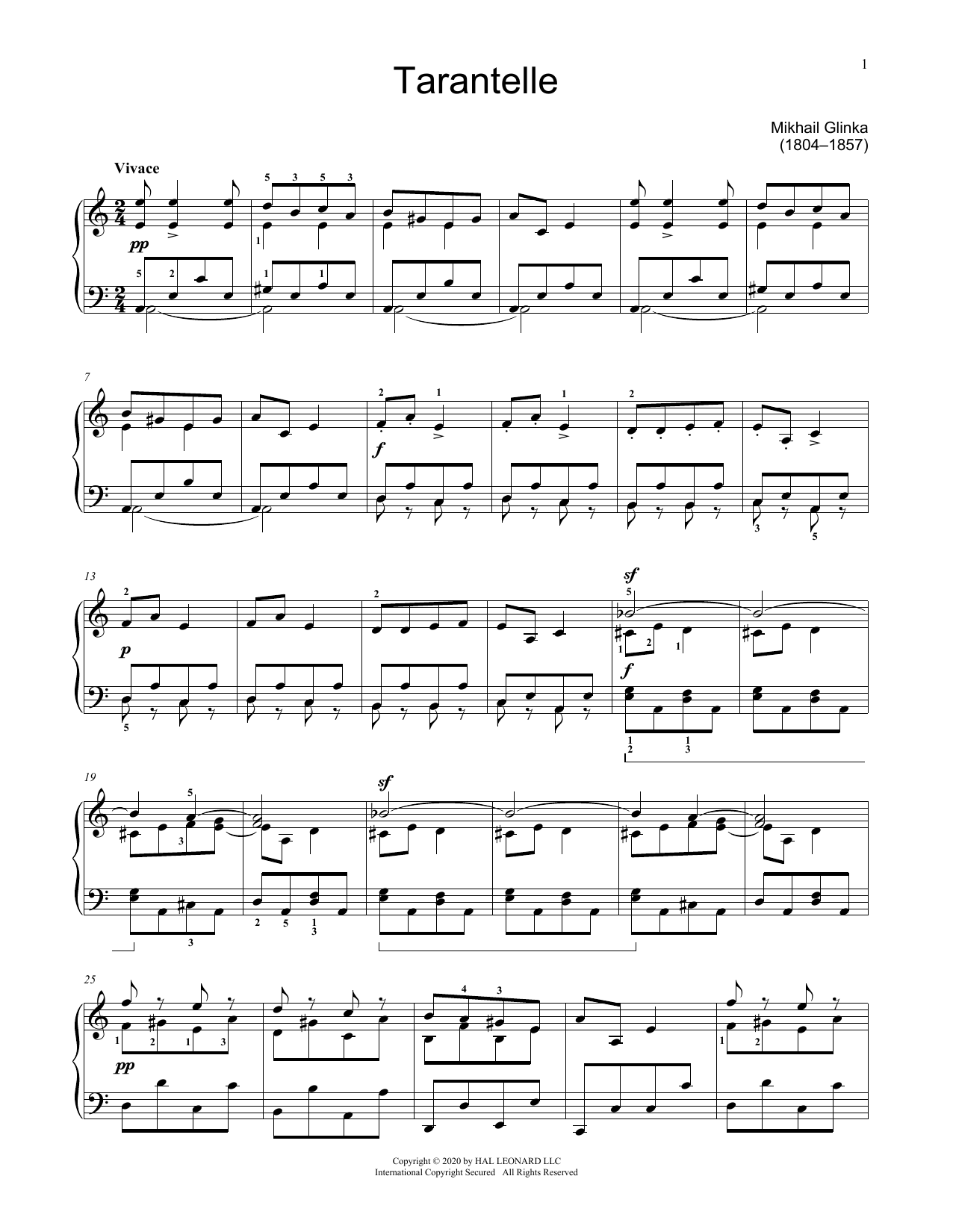
The tarantella form demands rhythmic precision and finger independence, making this a rewarding choice for intermediate pianists ready to move beyond simple technique exercises into actual musical storytelling. Three pages keeps the work substantial enough to teach real performance skills without becoming overwhelming, and the A minor tonality gives it a character that's both energetic and emotionally grounded.
What to expect
The tarantella pulses with infectious energy, propelled by the relentless rhythmic drive that defines the form. Yet the minor key keeps things from becoming purely buoyant; instead, there's a darker, more contemplative thread running beneath the surface excitement, creating music that feels both joyful and introspective.
Who it's for
Intermediate pianists working on technical fluency and rhythmic independence will find meaningful material here. This suits students around the late elementary to early intermediate level who are ready to explore a recognizable classical form with legitimate performance demands.
How to get the most out of it
Establish the rhythmic pulse early in your practice by clapping or tapping the characteristic tarantella rhythm before sitting at the keyboard. This prevents rushing, which is the most common pitfall at performance tempo.
Separate the hand parts during the opening phase so that each hand's independence is secure before combining them. The coordination required here is the core strength you're building.
Shape your phrase endings with slight dynamic release rather than abrupt stopping. This maintains the dance character even during moments that might otherwise feel mechanical.
How to use it
Fit this naturally into a recital program as a display piece that showcases technical clarity without requiring dramatic interpretation. It also serves well as a bridge between pure technique and more expressive Romantic repertoire, demonstrating how to sustain musical momentum through finger work.
Skills your students will build
Rhythmic precision in the characteristic tarantella figure
Hand independence and coordination
Tempo control and avoiding rhythmic hurrying
Pedal application for sustain without muddiness
Minor key tonality and harmonic function
You May Also Like
Scan to Complete Your Purchase
Use your phone's camera to scan the code below
You'll log in on your phone and the order will be added to your account