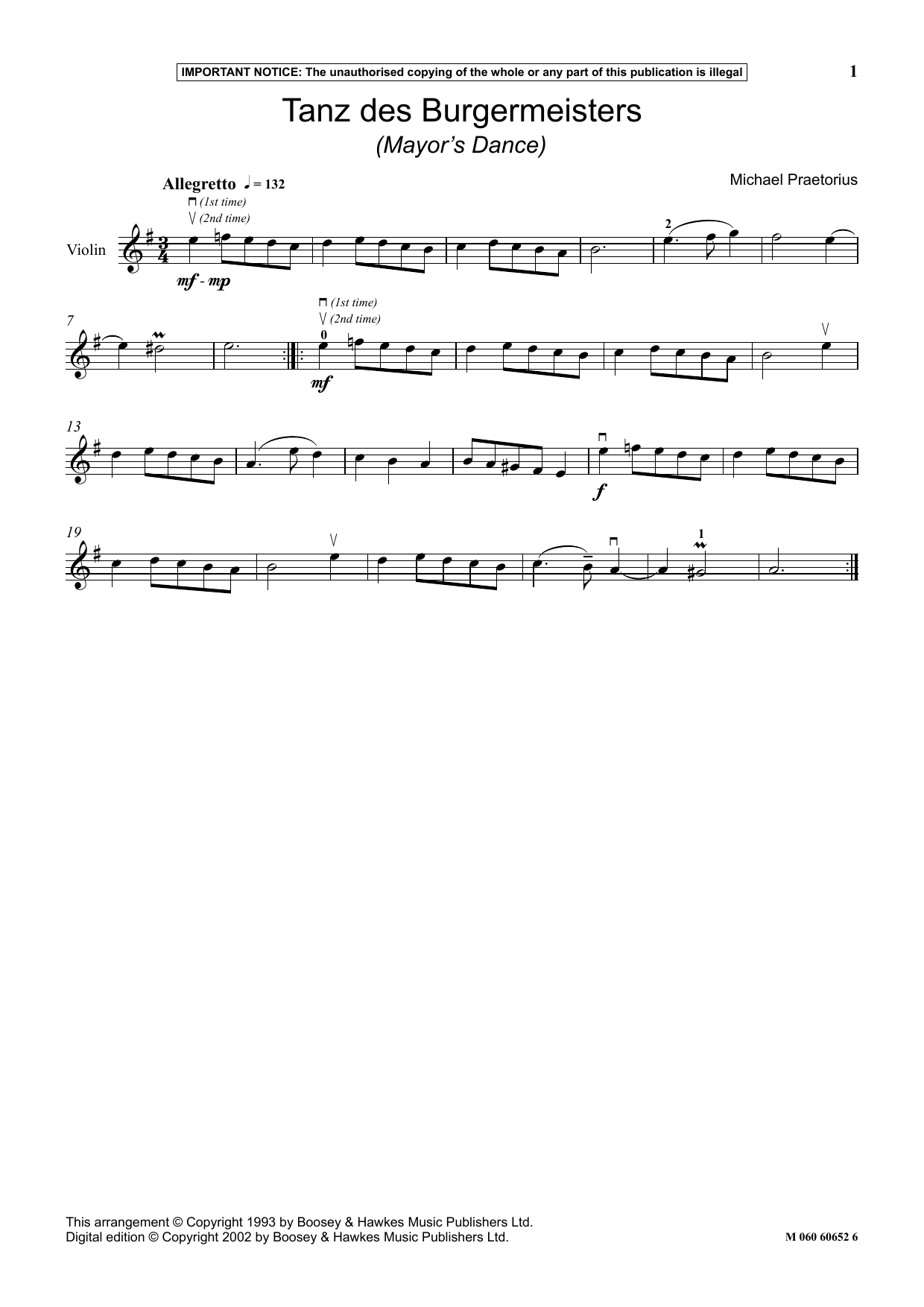
Tanz Des Burgermeisters (Mayor's Dance) Sheet Music Preview

Tanz Des Burgermeisters (Mayor's Dance): Instrumental Solo

As performed by Michael Praetorius

Item: 35-DS00239080

Digital Download
$3.99
One moment…
Description

Discover MakeMusic Cloud: thousands of interactive titles your students can play along with today.

Sample Audio
No sample audio found.
Sample Video
Additional Details
Publisher: Hal Leonard
Page Count: 2
SKU: 35-DS00239080

More about this title

About the Artist: Michael Praetorius

Michael Praetorius (1571–1621) was a towering figure in early Baroque music, equally accomplished as a composer, theorist, and music director in the German courts. His vast output spans sacred and secular works, but his dance suites and instrumental pieces reveal a composer deeply attuned to the rhythmic vitality and melodic clarity that defined Renaissance and early Baroque style. Praetorius documented the musical practices of his era with scholarly precision in his three-volume treatise Syntagma Musicum, making him invaluable to anyone seeking to understand period performance.

Why we love this

This sprightly dance sits at the intersection of utility and charm. It's short enough to fit anywhere on a concert but substantial enough that your ensemble will feel the satisfaction of nailing period style and articulation. The Mayor's Dance has that irresistible quality of Renaissance instrumental music: straightforward melodic writing that nonetheless demands precision and lift from performers.

What to expect

A courtly procession captured in sound; stately and dignified yet full of forward motion. The melody sits comfortably in the upper voices, inviting bright, articulate playing that feels almost dance-like in its rhythmic buoyancy.

Who it's for

This works beautifully for intermediate concert bands, small wind ensembles, or recorder consorts seeking repertoire that sounds polished without excessive rehearsal time. It also serves younger players learning to handle Renaissance style and articulation with confidence.

How to get the most out of it

  • Keep articulation crisp and light; this is a Mayor stepping into a hall, not marching into battle. Double-tongue or use separate bow strokes to maintain clarity and energy without weight.
  • Shape the melodic line in natural two-bar and four-bar gestures rather than pushing straight through. Let the phrasing breathe.
  • Pay attention to any slur or staccato markings in your edition as guides to period style. Praetorius's dances often rely on contrasting articulation to define form.

How to use it

Pair this with other Renaissance dances or instrumental works to anchor a period-music segment, or use it as a concert opener to set a lively tone. At two pages, it's also ideal for filling a specific slot in a mixed-era program without dominating rehearsal time.

Skills your students will build

  • Clarity and precision in articulation at moderate to fast tempos
  • Phrasing in regular four- and eight-bar structures
  • Renaissance ornamentation and style conventions
  • Part independence within a small ensemble texture

You May Also Like