Tannhäuser March: 1st Violin Sheet Music Preview

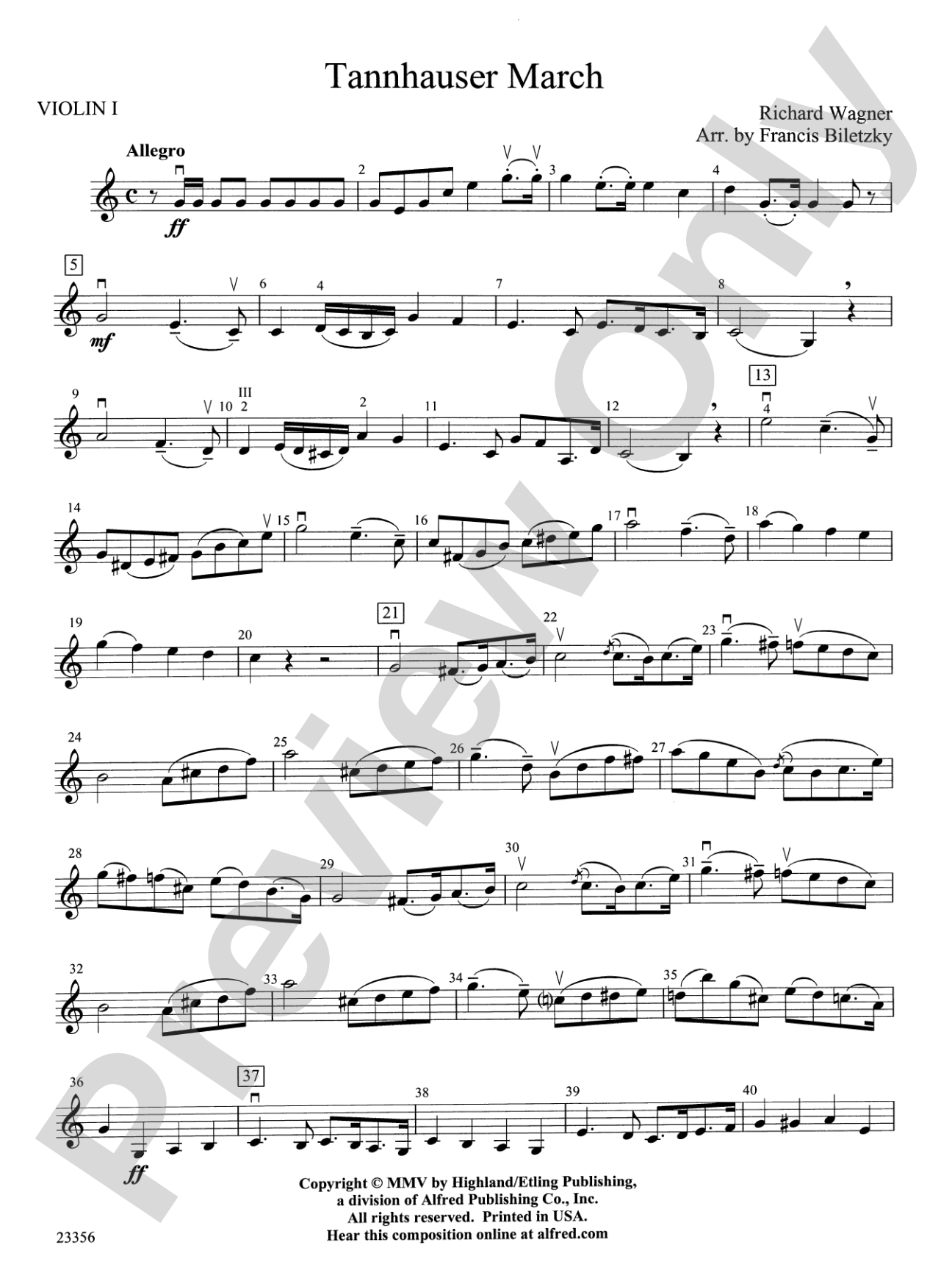
Tannhäuser March: 1st Violin

By Richard Wagner / arr. Francis Biletzky

Grade: 3

Item: 00-PC-0000701_VN1

Digital Download
$5.99
Description
Wagner's famous Tannhäuser March can be used as a standard concert performance piece, or as a procession at special ceremonies. This arrangement embodies the rich harmonic and melodic textures for which Wagner is known. A classic!

Don't just read it, hear it, play along with it, and watch your students grow with it. In MakeMusic Cloud, Tannhäuser March: 1st Violin comes alive with professional accompaniment, adjustable tempo, and built-in practice tools that turn solo practice into real progress.

Sample Audio
0:00
0:00
Sample Video
Additional Details
Series: Highland/Etling String Orchestra
Publisher: Alfred Music
Page Count: 124
SKU: 00-PC-0000701_VN1

More about this title

About the Composer: Richard Wagner

Richard Wagner (1813-1883) transformed opera and orchestral music through his innovations in harmony, leitmotif, and dramatic orchestration. His works demand rich, complex textures from orchestras, and his marches remain among the most recognizable pieces in the concert repertoire. The Tannhäuser March, drawn from his 1845 opera, showcases the grandeur and ceremonial power that made Wagner a defining figure of the Romantic era.

Why we love this

This arrangement captures Wagner's architectural approach to melody and harmony in a form that string orchestras can execute with real impact at Grade 3. The piece works equally well as a concert opener or a ceremonial procession, giving you programming flexibility without sacrificing musical substance. Francis Biletzky's adaptation preserves the sweep and dignity of the original while keeping the technical demands reasonable for developing ensembles.

What to expect

Stately and processional, with the ceremonial confidence of a royal court. Wagner's harmonic language unfolds in rich layers, moving from bold unison passages to moments of lush, four-part harmony that reward ensemble blend and listening. The piece projects dignity without heaviness, making it feel both grand and approachable.

Who it's for

String orchestras at the intermediate level who want to perform a work with genuine musical substance and historical weight without requiring advanced technical skills. Concert bands and festival planners can also use this as an opening or processional number for ceremonies, graduations, and special events.

How to get the most out of it

  • Establish a steady, processional tempo from the outset; this piece lives in forward momentum rather than rushing. Let the harmonic changes speak without accelerating through phrase endings.
  • Balance the multiple melodic lines across your sections. The march often carries melody in both upper and lower voices simultaneously, so rehearse awareness of what's happening across the full orchestra, not just in the first violins.
  • Shape the dynamic crescendos deliberately. Wagner built this piece for ceremonial grandeur, so treat swells as architectural moments rather than expressive whims.
  • Secure rhythmic precision in the accompaniment figures, particularly in the inner voices. Clean articulation in violas and cellos will make the primary melody float more naturally above them.

How to use it

Open a concert or festival with this march to establish an elegant tone for the entire event. It pairs naturally with other Romantic-era orchestral works or can stand alone as a feature piece. For ceremonies, rehearse it as a processional that allows your orchestra to accompany movement onstage with confidence.

Skills your students will build

  • Balancing multiple simultaneous melodic lines in a complex harmonic texture
  • Maintaining steady tempo and ensemble pulse in a ceremonial context
  • Reading and executing dynamic crescendos across the full score
  • Blending and intonation in four-part harmonic writing
  • Secure articulation in accompaniment figures underneath primary melodies

You May Also Like