
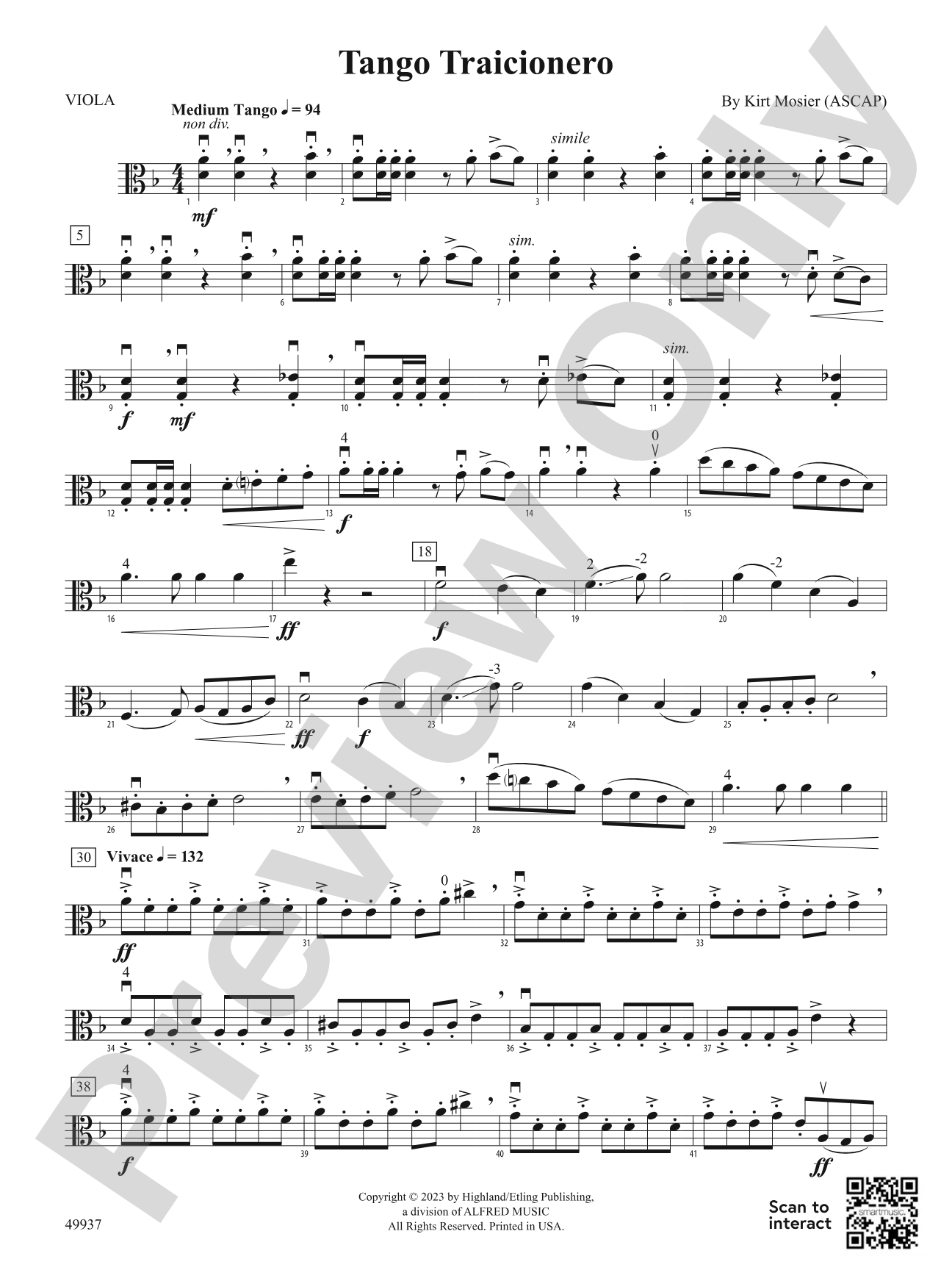

Tango Traicionero: Viola
By Kirt Mosier
Grade: 3
Item: 00-PC-0018964_VA1
$3.00
Pickup currently not available
Description
Tango Traicionero, by Kirt Mosier, means "treacherous tango." The tango is a Latin dance that first developed in Buenos Aires, Argentina, in the mid-19th century. Imagine a gathering of bohemian nomads and workers having a dance party in the streets. There is a natural tension in this tango which mirrors the intoxicating nighttime atmosphere. All orchestra sections work together to perform slides and shifts between notes of the melodic figures to add intrigue to the sound. A lively middle section builds to a key change and recapitulation. The work culminates with tense chords to an exciting finish. (3:40)


Don't just read it, hear it, play along with it, and watch your students grow with it. In MakeMusic Cloud, Tango Traicionero: Viola comes alive with professional accompaniment, adjustable tempo, and built-in practice tools that turn solo practice into real progress.
Open in the Player
Jump straight in and assign it today.
Start Your Free Trial
Open this title and explore the full library in minutes.
Sample Audio
1
Audio File
--:--
0:00
0:00
Sample Video
Additional Details
Series:
Highland/Etling String Orchestra
Publisher:
Alfred Music
SKU:
00-PC-0018964_VA1
More about this title
About the Composer: Kirt Mosier

Kirt Mosier conducts and composes with equal distinction, bringing both technical mastery and infectious enthusiasm to every project. His work has taken him to stages across the globe, from Carnegie Hall to the Sydney Opera House, and he has earned national recognition twice over, with his compositions "Baltic Dance" (1993) and "American Reel" (2004) winning major awards. In 2010, the Portland Ballet Company commissioned him to create an original score for "The Legend of Sleepy Hollow."
Mosier served as Director of Orchestras in the Raytown and Lee's Summit school districts and taught orchestration at the University of Missouri Kansas City Conservatory. He founded the Digital Media Technology program at Summit Technology Academy, where his students have earned national awards and moved into professional careers. Currently, he leads the Youth Symphony of Kansas City as artistic director and serves as associate conductor of the Lee's Summit Symphony. His work as a keynote speaker and clinician at the Midwest International Clinic in Chicago reflects his commitment to advancing music education across the country.
Why we love this
Mosier captures the pulse and drama of authentic tango while keeping the idiom completely accessible to Grade 3 orchestras. The piece builds genuine tension through its harmonic language and sectional writing rather than technical pyrotechnics, so your students get to inhabit a sophisticated musical character without wrestling with extreme difficulty. It's a strong festival choice that sounds far more advanced than its grade level suggests.
What to expect
Tango Traicionero pulses with the electric tension of a nighttime street gathering, where movement and danger coexist. The sliding phrases and shifting harmonies create an intoxicating urgency that never feels rushed, building toward moments of real dramatic weight.
Who it's for
String orchestras at the intermediate level seeking repertoire that combines style, storytelling, and accessibility. This works equally well for competitive festivals, concert programs, and student ensembles looking to explore Latin music with serious artistic intent.
How to get the most out of it
- Shape the slides and shifts between melodic notes as ensemble events. Mark these moments in rehearsal so all sections understand they're creating texture together, not executing individual technique.
- Emphasize the contrast between the restless opening and the lively middle section. Slight tempo flexibility here serves the narrative arc better than metronomic consistency.
- Balance the lower strings carefully as they anchor the tango rhythm. They need enough presence to feel the dance without overpowering the melodic material.
- Build momentum through the key change leading to recapitulation. This section should feel like a wave gathering force, so resist the urge to slow down.
How to use it
Program this as a concert opener to establish energy and draw the audience in immediately, or place it mid-program to energize after a slower work. Its three-minute-forty-second length and festival-ready appeal make it ideal for competitions and pops-style concerts alike.
Skills your students will build
- Playing with stylistic phrasing characteristic of Latin dance music
- Executing smooth slides and position shifts in ensemble passages
- Reading and performing key changes
- Balancing melodic and rhythmic roles within a tango idiom