
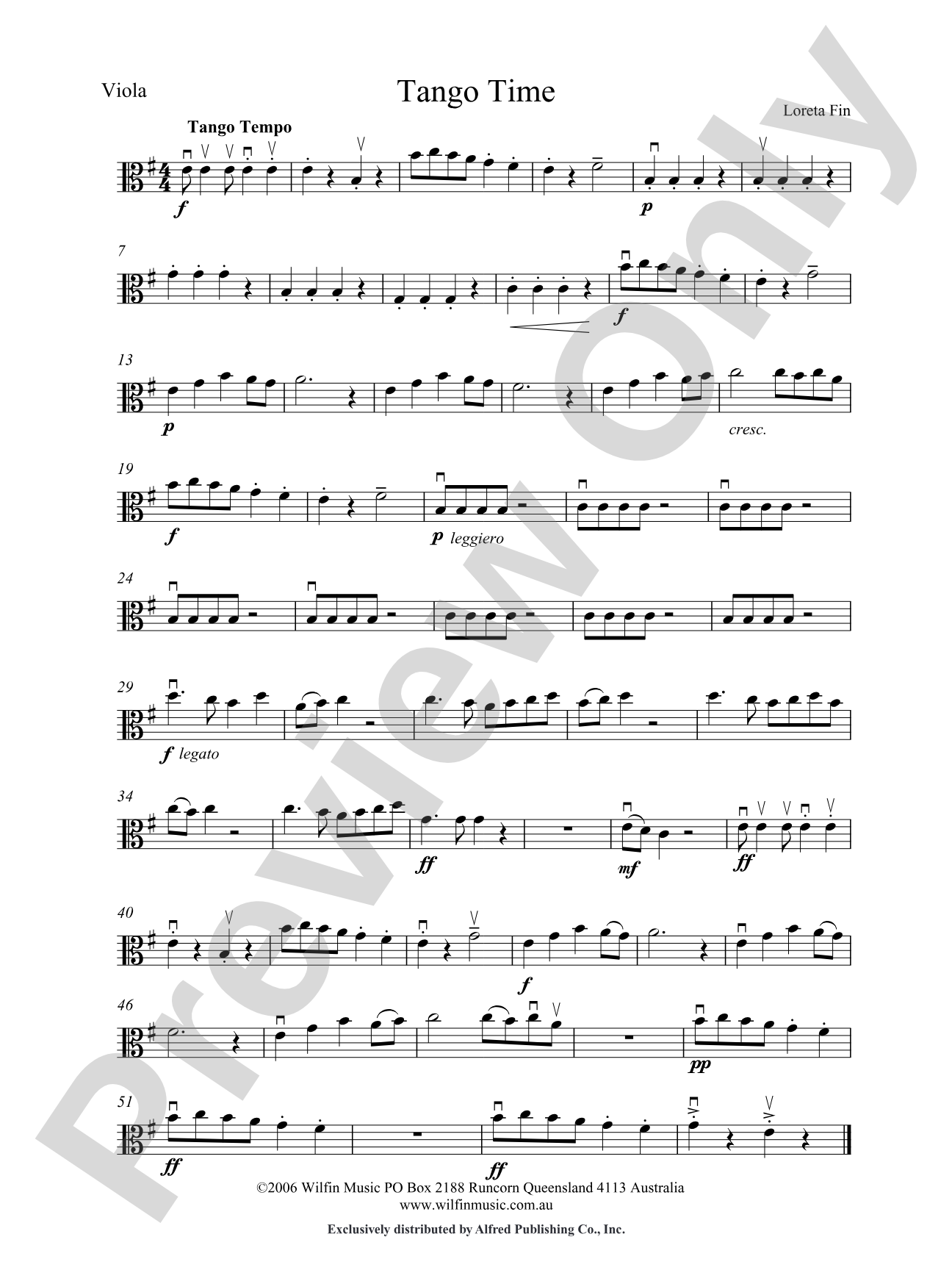

Tango Time: Viola
By Loreta Fin
Grade: 2
Item: 76-PC-0000036_VA1
$5.99
Pickup currently not available
Description
Everybody loves a good tango! This very playable piece gives everyone the chance to play a melody or a counter melody. It teaches the importance of feeling a steady beat, especially when playing syncopated rhythms and when the entries come after rests. Dynamics need to be carefully followed to gain the full effect. Lots of fun for players and audience!


Tango Time: Viola isn't in MakeMusic Cloud just yet...but it could be. Let us know you'd like to see it, and you'll help shape what comes next. In the meantime, start a free trial and dive into thousands of interactive titles your students can play along with today.
Request This Title
Tell us you want it.
Start Your Free Trial
Explore everything that's ready to play right now.
Sample Audio
No sample audio found.
Sample Video
No sample videos found.
Additional Details
Series:
Wilfin String Orchestra: Young String Ensemble Series
Publisher:
Wilfin Music
Page Count:
68
SKU:
76-PC-0000036_VA1
More about this title
About the Composer: Loreta Fin
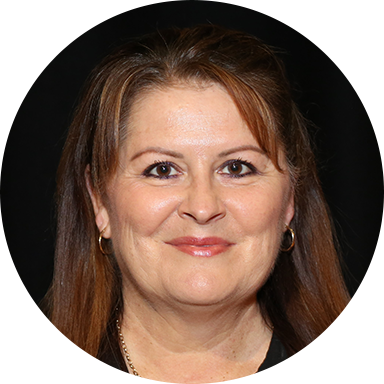
Loreta Fin AM is an accomplished violist, conductor, and string educator based in Brisbane, Australia. A graduate of the Sydney Conservatorium of Music, she spent decades performing as principal viola with the Queensland Pops Orchestra and as a chamber musician on concert stages across Australia. Since 1993, she has directed the string program at Somerville House School, where she has shaped generations of young players. Her leadership extends throughout the Australian music community: she served as State and National President of the Australian Strings Association, adjudicated at major competitions nationwide, and conducted the State and National Honours Ensembles Programs. In 2009, she received a Queensland State Award for her service to music education.
Loreta has composed over 100 works for string orchestra, all published internationally by Alfred Music, with a particular focus on accessible repertoire for young ensembles. She has presented at Australian National Music Conferences and twice at American National String Teachers' Conferences, sharing her expertise in pedagogy and ensemble development. Her 2017 Beginner String Ensemble Series introduced young players to multiple string instruments, while her continued work as an Australian Music Examinations Board examiner and State Advisor for Strings demonstrates her commitment to maintaining high standards in string education. In recognition of her lifetime contribution, Loreta received the National Award for Services to Music and String Teaching in Australia.
Why we love this
Loreta Fin understands exactly what young string players need to succeed, and it shows in every phrase of this score. The piece distributes melodies and counter-melodies across your ensemble so every player feels essential, while the syncopated rhythms and strategic rests create natural teaching moments for ensemble discipline and rhythmic independence. It's the kind of tango that actually sounds impressive on stage while remaining genuinely playable at Grade 2.
What to expect
Tango Time captures the pulse and sophistication of the tango idiom while remaining rooted in the technical comfort zone of developing players. The syncopated rhythms and layered melodies create rhythmic vitality and textural interest without veering into complexity, resulting in a piece that feels genuinely musical and energetic rather than simply utilitarian.
Who it's for
String orchestras in Grades 1-3 looking for engaging, culturally rich repertoire that honors young players' growing abilities. Directors seeking pieces where every section has melodic responsibility will find this especially valuable, as will ensembles preparing for concerts or festivals that call for multicultural programming.
How to get the most out of it
- Establish the tango's underlying pulse in early rehearsals before layering syncopated rhythms on top of it. Use a metronome and have all players tap the main beat while reading their parts.
- Balance dynamics carefully when multiple melodic lines overlap. Mark the score with relative volumes (melody slightly forward, counter-melody or accompaniment slightly back) to clarify texture without excessive balancing adjustments.
- Prepare entries following rests by having players count silently through the rest beats in the measure before. This builds confidence and locks the ensemble together at crucial moment.
- Shape the tango character through rhythmic vitality rather than excessive tempo changes. Let the syncopations breathe naturally within a steady tempo.
How to use it
This score works beautifully as a concert opener or as part of a themed program exploring world music traditions. Its accessibility and strong audience appeal also make it an excellent choice for school assemblies, pops concerts, or festivals emphasizing diverse musical cultures. The playable-for-all approach means it can anchor a mixed-level rehearsal block without leaving any string player on the sidelines.
Skills your students will build
- Maintaining steady pulse while playing syncopated rhythms
- Accurate note entry after rests and silence
- Dynamic control and listening to ensemble texture
- Balancing melody and accompaniment within layered string writing
- Reading and performing tango rhythmic idioms