
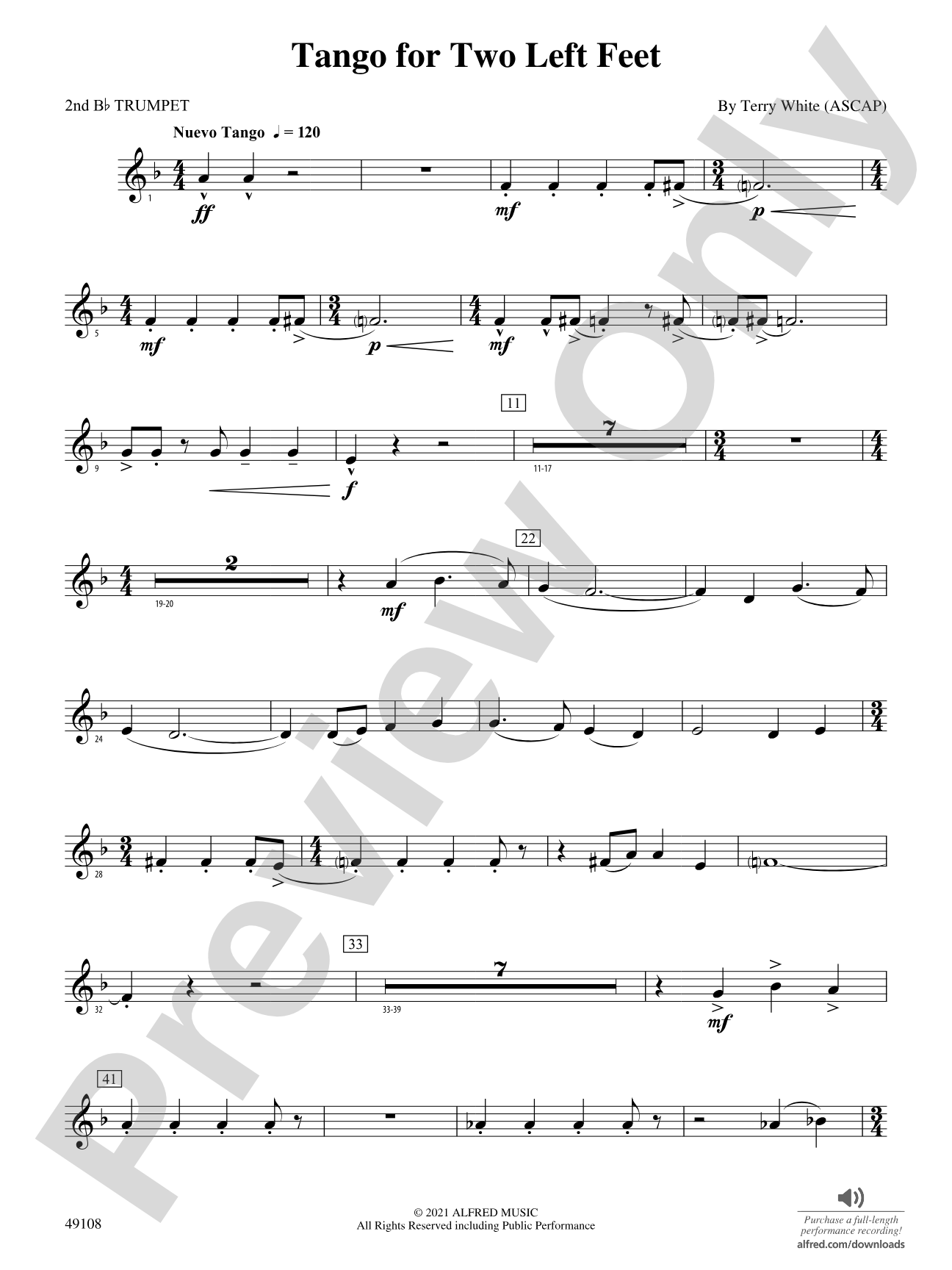

Tango for Two Left Feet: 2nd B-flat Trumpet
By Terry White
Grade: 2 (Easy)
Item: 00-PC-0018682_T2
$3.00
Pickup currently not available
Description
The tango is a very graceful and precise style of Latin dance where the couple performing needs to be totally in sync with each other, as well as the music. Tango for Two Left Feet by Terry White depicts what happens when an inexperienced couple is not in sync, drops a beat or step, and are not in time with the music. In this case, the music drops the beat for them! This composition, in addition to providing rhythmic uniqueness, will allow young musicians the opportunity to learn and be familiar with the most common rhythms associated with the tango style. It also contains some unexpected harmonic twists at times, as well as contemporary harmonies that will provide additional interest to the composition. (2:40) This title is available in MakeMusic Cloud.


Don't just read it, hear it, play along with it, and watch your students grow with it. In MakeMusic Cloud, Tango for Two Left Feet: 2nd B-flat Trumpet comes alive with professional accompaniment, adjustable tempo, and built-in practice tools that turn solo practice into real progress.
Open in the Player
Jump straight in and assign it today.
Start Your Free Trial
Open this title and explore the full library in minutes.
Sample Audio
1
Audio File
--:--
0:00
0:00
Sample Video
Additional Details
Series:
Young Symphonic
Publisher:
Alfred Music
Page Count:
146
SKU:
00-PC-0018682_T2
More about this title
About the Composer: Terry White

Terry White brings three decades of Maine music education into every composition he writes. A Berklee College of Music graduate in composition with additional study in music education at the University of New Hampshire, White has developed a keen ear for what young musicians need to engage with repertoire that challenges and delights them in equal measure.
His work has been commissioned and performed by the Portland Symphony Orchestra and ensembles across high school and college levels. Beyond the classroom, White leads his own big band in the Portland area, keeping him connected to the rhythmic precision and ensemble interplay that define his teaching and compositional voice.
Why we love this
White uses humor and musical storytelling to teach genuine tango vocabulary without lecturing. Grade 2 bands rarely encounter Latin rhythm with this level of playful sophistication, and the intentional beat-dropping makes the learning stick because students are always listening for what comes next.
What to expect
The band performs the tango with growing confidence until suddenly the music stumbles, recovers, and continues. There's lightness and warmth in White's harmonies, punctuated by unexpected harmonic turns that suggest the music itself is discovering what the dancers are learning. The overall effect is charming and energetic rather than technically punishing.
Who it's for
Concert bands working at Grade 2 level who are ready to explore Latin style and rhythmic sophistication without the technical demands of advanced repertoire. Directors seeking to teach tango rhythm in a way that engages young musicians through musical humor rather than academic analysis will find a natural fit here.
How to get the most out of it
- Emphasize the tango's characteristic rhythmic drive by anchoring the pulse in the low reeds and bass line; when the piece intentionally disrupts the beat, the ensemble's preparation in these sections determines whether the effect lands as intended comedy or confusion.
- Balance the contemporary harmonic twists against the band's natural tendency to play cautiously at this level. These unexpected chords deserve clarity without overstatement; trust that Grade 2 musicians can handle sophisticated harmony when it's written with their ability in mind.
- Use the score's 2 minute 40 second duration to build pacing in rehearsal. This piece rewards musical momentum; allow sight-reading and drill to move briskly so the ensemble can focus on the style and storytelling rather than mechanics.
How to use it
Program this as a concert centerpiece for a pops or family concert where its humor will land with mixed audiences. It pairs naturally with other light concert fare from the Young Symphonic series and works well as a contemporary contrast to classical or march repertoire on the same program.
Skills your students will build
- Identifying and performing characteristic tango rhythms
- Maintaining ensemble cohesion through intentional rhythmic disruptions
- Reading and performing contemporary harmonic language
- Responding to musical storytelling as an interpretive tool