
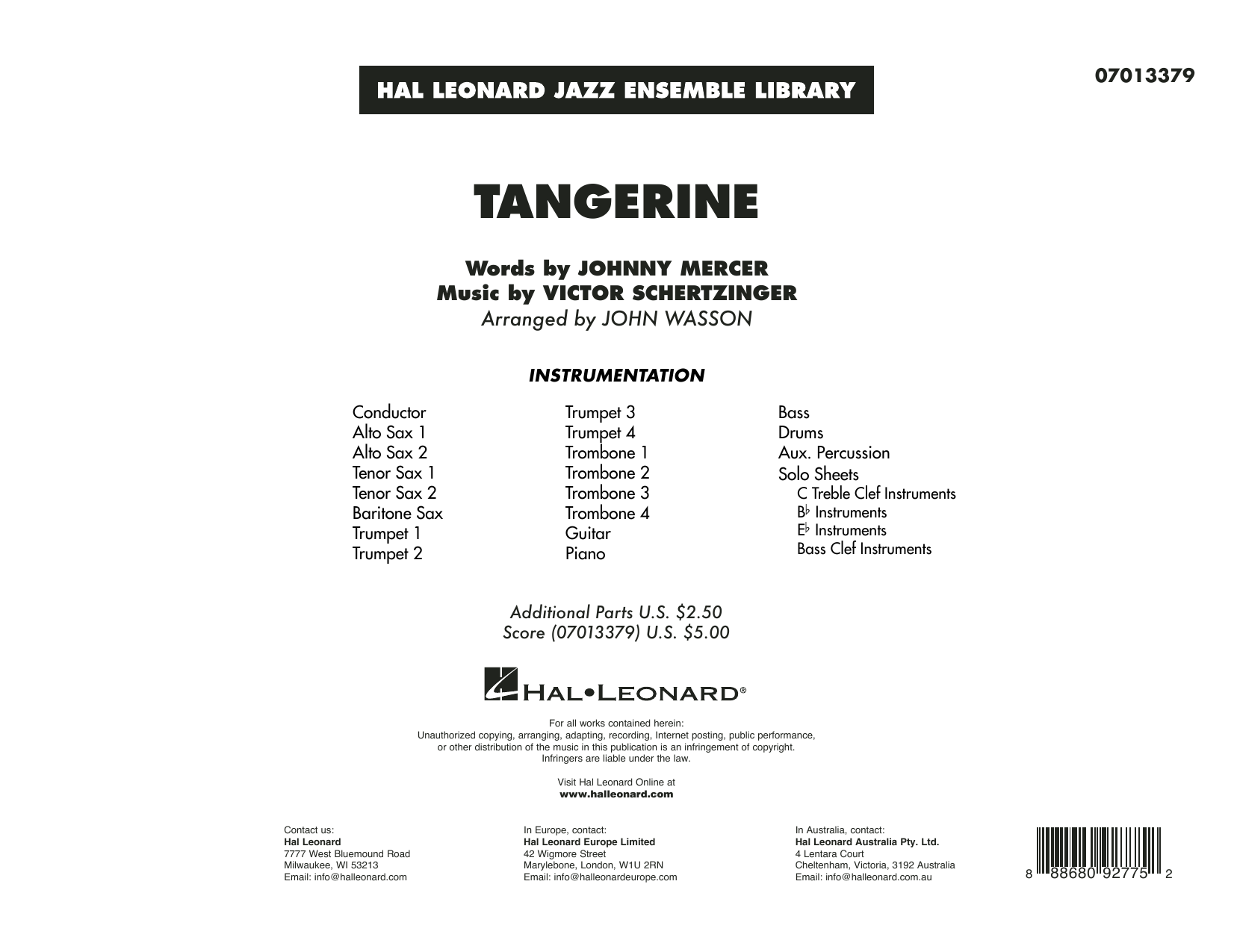

Tangerine (arr. John Wasson): Jazz Ensemble Conductor Score & Parts
As performed by Jimmy Dorsey His Orchestra / Arranged by John Wasson
Grade: 4
Item: 35-PK00441233
$55.00
Pickup currently not available
Buy Extra Parts (Digital PDF Download)
Parts Added to Cart!
Description
Arranged here in a funky New Orleans style, the full ensemble takes the first statement after the piano intro. The spotlight then moves between the saxes amd the brass before a feature solo spot for trombone. A classic and unique take on a familiar standard.


Tangerine (arr. John Wasson): Jazz Ensemble Conductor Score & Parts isn't in MakeMusic Cloud just yet...but it could be. Let us know you'd like to see it, and you'll help shape what comes next. In the meantime, start a free trial and dive into thousands of interactive titles your students can play along with today.
Request This Title
Tell us you want it.
Start Your Free Trial
Explore everything that's ready to play right now.
Sample Audio
No sample audio found.
Sample Video
No sample videos found.
Additional Details
Publisher:
Hal Leonard
SKU:
35-PK00441233
More about this title
About the Artist: Jimmy Dorsey His Orchestra
Jimmy Dorsey led one of the most successful dance orchestras of the 1930s and 1940s, establishing himself as both a clarinetist and bandleader who understood how to balance commercial appeal with genuine musicianship. His orchestra became known for crisp ensemble playing, strong solo voices, and arrangements that showcased the individual colors of the band while maintaining tight, danceable grooves. Dorsey's influence on jazz ensemble writing remains relevant to educators seeking models of accessible, engaging big band repertoire.
Why we love this
Wasson's arrangement strips away the overstuffed orchestration of some standard treatments and leans into a grooving, New Orleans sensibility that keeps players engaged and audiences tapping their feet. The solo architecture (sax feature, then brass, then trombone spotlight) gives each section ownership of the tune while maintaining enough ensemble moments to balance the demands across your group.
What to expect
Warm, bouncy, and grounded. The New Orleans flavor brings a relaxed sophistication that feels more earthy than slick, with enough groove to keep the energy alive without demanding the breakneck tempos some arrangements require. There's personality in every section, and the solo opportunities give the band chances to breathe and play with individual character.
Who it's for
Jazz ensemble directors looking for a Grade 4 arrangement that walks the line between teaching musicianship and delivering genuine entertainment value. This works for ensembles that have solid fundamentals and understand swing feel but may still be building confidence around stylistically specific demands like New Orleans phrasing.
How to get the most out of it
- Lock the rhythm section into that New Orleans pocket first. The piano intro sets the groove, so your bass player and drummer need to commit to the laid-back articulation before the ensemble enters.
- Shape the first full ensemble statement with clear sectional balance. The saxes carry the melody initially, but the brass needs to sit just underneath with presence and warmth, not aggression.
- Treat each solo section as a conversation, not a showcase. When the spotlight shifts between sections, the ensemble behind them should complement and support rather than fade to autopilot.
- Breathe together during the transitions between features. The turns between sax, brass, and trombone solos feel natural only when the entire band executes them as one unit.
How to use it
Pair this with other swing-era standards if you're building a full jazz concert, or use it as the fun closer to a program that includes more complex or classical material. It's also an excellent choice for a spring pops concert, community event, or end-of-year celebration where the audience comes to enjoy rather than critique.
Skills your students will build
- Swing articulation and phrasing specific to New Orleans style
- Solo navigation in small group contexts (sax, brass, and trombone features)
- Ensemble balance when supporting featured soloists
- Groove awareness and rhythmic precision in jazz comping
- Sectional communication and independence within an arranged framework