
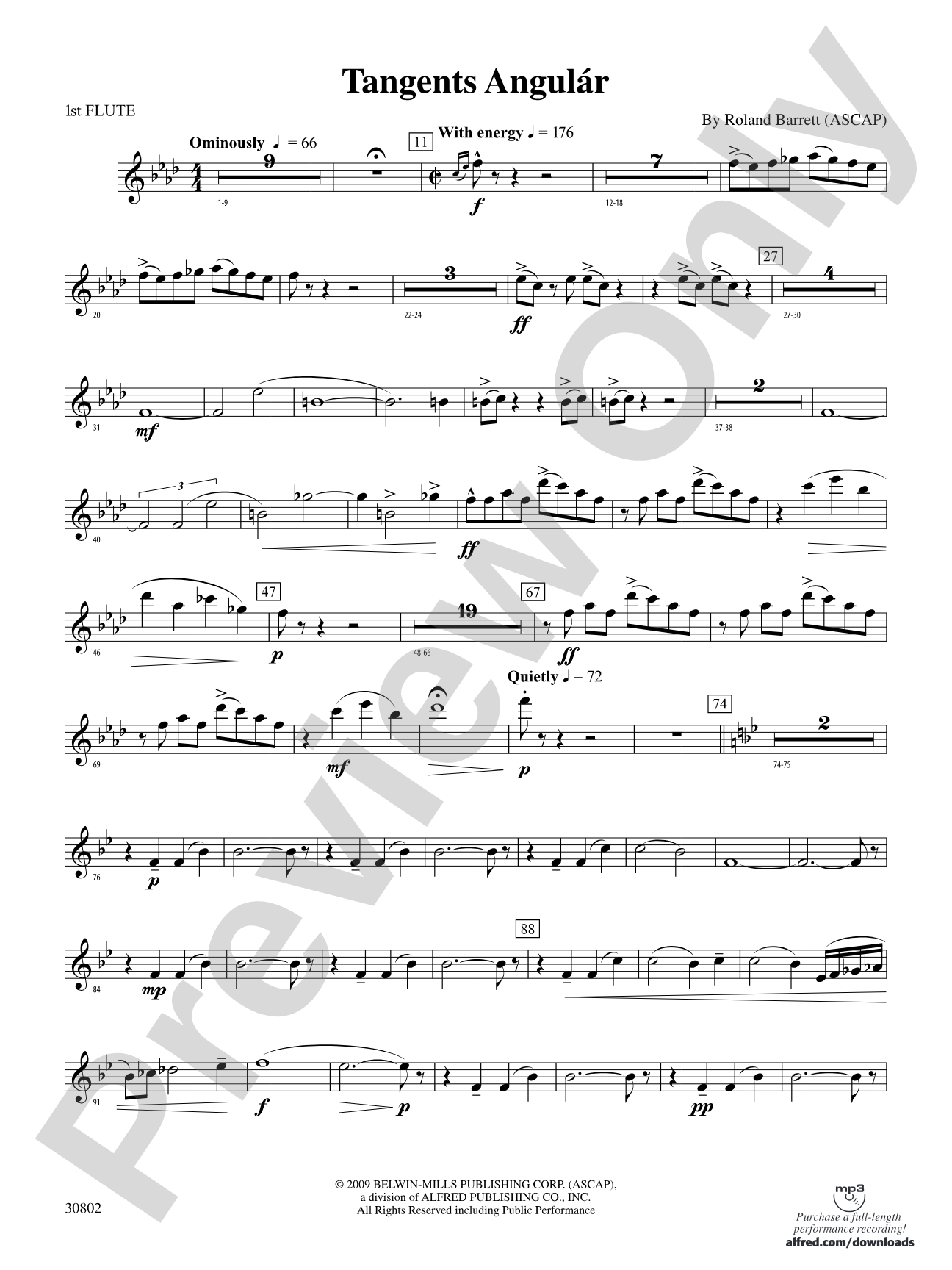

Tangents Angulár: Flute
By Roland Barrett
Grade: 3 (Medium Easy)
Item: 00-PC-0001683_F1
$3.00
Pickup currently not available
Description
Following a reflective introduction, the angular aspect of this contemporary work ensues. The percussion contribution to establish the pulse and drive with varied textures will make this work sparkle. Dramatic and bold this is an exciting addition to the contemporary literature affording opportunity for all sections to shine. A truly exciting choice! (6:00) This title is available in MakeMusic Cloud.


Don't just read it, hear it, play along with it, and watch your students grow with it. In MakeMusic Cloud, Tangents Angulár: Flute comes alive with professional accompaniment, adjustable tempo, and built-in practice tools that turn solo practice into real progress.
Open in the Player
Jump straight in and assign it today.
Start Your Free Trial
Open this title and explore the full library in minutes.
Sample Audio
1
Audio File
--:--
0:00
0:00
Sample Video
Additional Details
Series:
Belwin Concert Band
Publisher:
Alfred Music
Page Count:
256
SKU:
00-PC-0001683_F1
More about this title
About the Composer: Roland Barrett

Roland Barrett combines a deep knowledge of twentieth-century compositional techniques with over two hundred published works for concert band, chamber ensembles, and marching band. Since 2001, he has served on the composition and music theory faculty at the University of Oklahoma, where his teaching spans both undergraduate and graduate levels. His work as arranger for the Pride of Oklahoma marching band keeps him actively engaged with the ensemble writing that defines his compositional voice.
Barrett's music has reached audiences far beyond the university setting. His pieces are performed regularly by All-State and All-Region honor bands, have been featured on National Public Radio and the USA cable network, and have appeared at major conferences including the Midwest Band and Orchestra Convention and the International Trumpet Guild convention. He is a multiple recipient of the ASCAP Plus award, recognizing both the breadth and quality of his output.
Why we love this
Barrett crafts a work that respects the Grade 3 ensemble's capabilities while refusing to simplify the musical content. The percussion writing here is particularly inventive; rather than serving as mere timekeeping, the battery becomes a primary voice that shapes the overall sound and propels the narrative forward. The combination of a contemplative opening and the angular, contemporary material that follows creates a satisfying arc that keeps audiences and performers engaged throughout.
What to expect
Tangents Angulár opens with introspection and calm, creating space for reflection before shifting into sharp, geometrically-minded contemporary writing. The percussion textures glitter and propel; the angular harmonies feel modern but accessible, never harsh or alienating. There is an inherent excitement to the piece that builds from the contrast between its quiet opening and bold, driving central sections.
Who it's for
Concert bands at the Grade 3 level seeking substantive contemporary repertoire that challenges all sections without overwhelming technique. This piece works well for programs that want to feature percussion and showcase a band's musicality rather than virtuosity alone.
How to get the most out of it
- Allow the reflective introduction sufficient breathing room. The contrast will make the angular material that follows feel more dramatic and immediate.
- Emphasize the percussion section's role as a textural voice, not just a rhythmic backbone. The varied timbres should be clearly audible and intentional.
- Shape the bold, dramatic passages with dynamic clarity. Grade 3 ensembles sometimes rush exciting material; lock in the pulse while letting the excitement breathe.
- Balance the angularity of the contemporary writing with musical phrasing. The dissonance should feel purposeful, not chaotic.
How to use it
Program this as a mid-concert contemporary work that bridges a traditional opening and a finale of contrasting character. The six-minute duration and substantial musical content make it an ideal centerpiece for a concert built around exploring different compositional eras. It also works well in festival and contest contexts where contemporary selections are expected or encouraged.
Skills your students will build
- Interpreting contemporary harmonic language and angular melodic shapes
- Balancing rhythmic precision with expressive phrasing in syncopated passages
- Listening for layered percussion textures and their interaction with harmonic content
- Sustaining energy through harmonic movement that avoids traditional resolution
- Responding to nuanced dynamic and articulation changes across all sections