
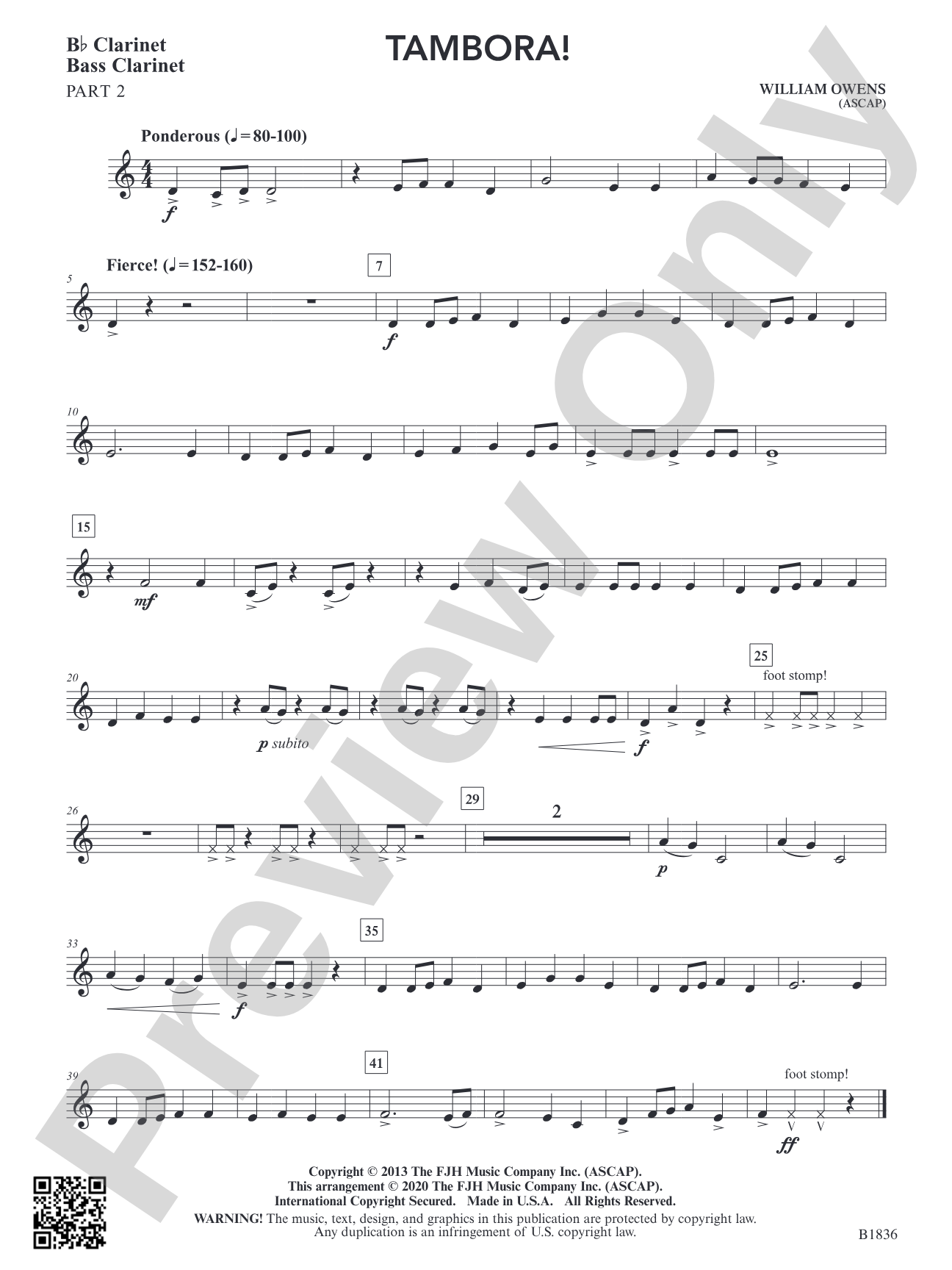

Tambora!: Part 2 Clarinet / Bass Clarinet
By William Owens
Level:.5
Item: 98-PC-DB1836_PART2_CL
$7.00
Pickup currently not available
Description
Using just six notes, this intense work evokes the power and ferocity of an active Indonesian volcano! After an epic opening, bold melodic lines intertwine with moments of clapping and stomping while an array of percussion colors paint a vivid picture of the 1815 Mount Tambora eruption and the tragic aftermath. Simply stunning!


Don't just read it, hear it, play along with it, and watch your students grow with it. In MakeMusic Cloud, Tambora!: Part 2 Clarinet / Bass Clarinet comes alive with professional accompaniment, adjustable tempo, and built-in practice tools that turn solo practice into real progress.
Open in the Player
Jump straight in and assign it today.
Start Your Free Trial
Open this title and explore the full library in minutes.
Sample Audio
1
Audio File
--:--
0:00
0:00
Sample Video
No sample videos found.
Additional Details
Series:
The ReImagine Initiative
Publisher:
The FJH Music Company, Inc.
SKU:
98-PC-DB1836_PART2_CL
Instrumentation:
3-Part Fully Adaptable with Percussion
More about this title
About the Composer: William Owens
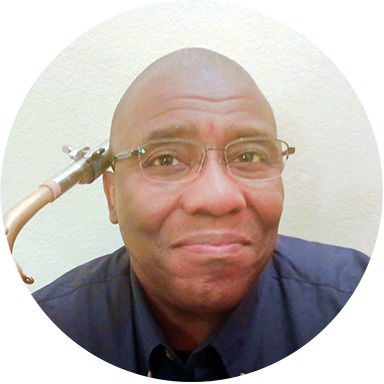
William Owens has spent decades building a compositional catalog specifically designed for young musicians. A VanderCook College of Music graduate who taught band in Texas for thirty years, he brings classroom experience directly into his writing, creating works that are both musically substantial and genuinely performable by developing ensembles. His three hundred-plus compositions span concert band, string orchestra, and small ensemble literature, and his work appears on festival and contest lists across the country.
Recognized by the Texas Bandmasters Association and honored as a Distinguished Alumnus of his alma mater, Owens has received commissions from major music organizations and maintains active involvement in the field as a clinician and conductor. His approach to composition emphasizes practical craftsmanship and musical integrity without sacrificing the joy of performance for young musicians.
Why we love this
Owens demonstrates remarkable restraint here, using just six notes to build something genuinely dramatic. The eruption metaphor drives real musical choices (clapping, stomping, percussion colors) rather than serving as mere window dressing. For a Level 0.5 ensemble, this piece delivers adult compositional sophistication without technical overload.
What to expect
Primal and visceral. The limited pitch palette channels energy rather than constraining it, building tension through rhythm, dynamics, and percussion texture. Moments of ensemble clapping and stomping ground the work in physical, communal sound making, while the depiction of volcanic force feels both powerful and respectful of a genuine historical tragedy.
Who it's for
Developing concert bands and flexible ensembles seeking substantial musical content that doesn't demand advanced technique. This works beautifully for groups building confidence with simpler harmonic and melodic material while exploring meaningful historical and cultural content.
How to get the most out of it
- Treat the opening as a true orchestral moment. Even with limited instrumentation, precise ensemble balance and clean attacks create theatrical impact.
- Shape the melodic lines expressively despite their simplicity. Six notes gain power through phrasing, dynamic control, and rhythmic clarity.
- Integrate the body percussion (clapping and stomping) as ensemble sound, not as an add-on. These contribute to the overall texture and energy, so rehearse them with the same attention you give pitched passages.
- Exploit the percussion color palette intentionally. Each percussion choice represents an aspect of the eruption, so let those timbral shifts drive the narrative forward.
How to use it
This piece shines as a centerpiece for a concert exploring global cultures or environmental themes. Its brevity and immediate impact make it an excellent choice for festival competitions or as a dramatic opener that commands audience attention without lengthy program notes. It also pairs naturally with other world music repertoire or as a standalone work that demonstrates how compositional craft transcends complexity.
Skills your students will build
- Reading and performing music with limited pitch content while maintaining expressive phrasing
- Coordinating body percussion (clapping and stomping) with pitched ensemble sound
- Interpreting percussion color choices and understanding timbre as a compositional tool
- Building ensemble balance and clarity across a flexible instrumentation
- Connecting musical material to historical and cultural context