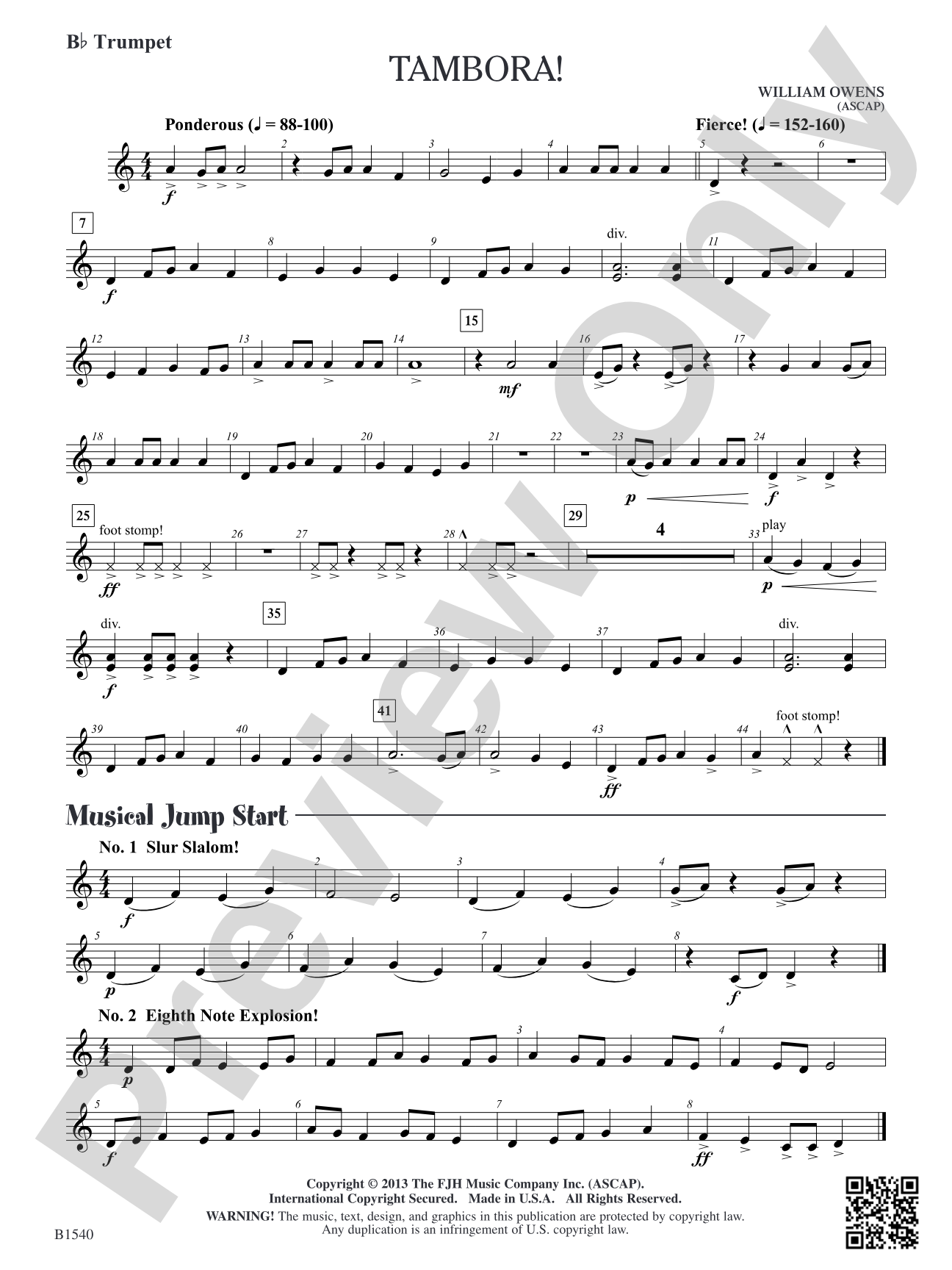
Tambora!: B-flat Trumpet Sheet Music Preview

Tambora!: B-flat Trumpet

By William Owens

Level:.5

Item: 98-PC-DB1540_T1

Digital Download
$7.00
Description
Using just six notes, this intense work evokes the power and ferocity of an active Indonesian volcano! After an epic opening, bold melodic lines intertwine with moments of clapping and stomping while an array of percussion colors paint a vivid picture of the 1815 Mount Tambora eruption and the tragic aftermath. Simply stunning!

Don't just read it, hear it, play along with it, and watch your students grow with it. In MakeMusic Cloud, Tambora!: B-flat Trumpet comes alive with professional accompaniment, adjustable tempo, and built-in practice tools that turn solo practice into real progress.

Sample Audio
0:00
0:00
Sample Video
Additional Details
Series: FJH Starter series
Publisher: The FJH Music Company, Inc.
SKU: 98-PC-DB1540_T1

More about this title

About the Composer: William Owens

William Owens

William Owens brings three decades of classroom experience to his compositional work. A 1985 graduate of VanderCook College of Music, Owens has built a catalog of over 300 pieces for young ensembles since 1993, establishing himself as a defining voice in accessible band writing. His works appear on festival lists and in music education texts across North America, and he has received commissions from the American Bandmasters Association, Phi Beta Mu International, and regional institutions.

Owens combines practical pedagogical insight with compositional craft. After retiring in 2014 from 30 years as a Texas band director, he remains active as a clinician and conductor. His professional affiliations include ASCAP and the Texas Music Educators Association, and he holds recognition as a Distinguished Alumnus of VanderCook and a recipient of the Texas Bandmasters Association's Meritorious Achievement Award.

Why we love this

Owens strips the concept down to its essence: six notes, maximum dramatic impact. The piece channels volcanic energy through rhythmic drive and percussion color rather than harmonic complexity, making it accessible for developing bands while remaining genuinely engaging to conduct and perform. This is starter-level writing that doesn't condescend.

What to expect

Raw elemental force contained within clear structure. The opening hits with volcanic intensity; what follows is a calculated unfolding of power through layered rhythms, unexpected percussion colors, and bold melodic gestures. There's a theatrical quality to the writing that keeps the band and audience engaged throughout.

Who it's for

Developing concert bands and young wind ensembles ready to tackle something with real musical substance and dramatic flair. This works for bands tackling festival or contest play lists, or any director looking for a piece that teaches concert performance skills without requiring advanced technical demands.

How to get the most out of it

  • Build the tension of the opening carefully. Let the eruption feel earned, not rushed. The contrast between that opening section and what follows depends on confident pacing from the podium.
  • Coordinate the clapping and stomping passages precisely with the ensemble so the rhythm section locks in. These moments ground the piece and create visceral momentum.
  • Balance the melodic lines against the percussion colors. The band should hear the interlocking phrases while the percussion underpaints the volcanic imagery without overwhelming.
  • Use dynamic contrast to paint different phases of the eruption. The 'tragic aftermath' section will land harder if the earlier moments build with clear shape.

How to use it

Open a concert with this to seize attention immediately, or place it alongside other programmatic starter-level works to build a thematic set around nature or history. Its brevity and dramatic arc make it ideal for festival or contest settings where you need a piece that finishes strong.

Skills your students will build

  • Dynamic contrast and shaping within a single dramatic arc
  • Rhythmic precision with body percussion (clapping and stomping)
  • Balance between melody and accompaniment
  • Unified ensemble response to conductor cues during tempo and intensity shifts
  • Performance of a concert-quality piece at entry-level technical demands

You May Also Like